Finding the best kids board games requires balancing educational value with pure entertainment. My top overall pick is Mouse Trap Board Game for its engaging mechanical payoff and accessibility for ages 6 and up. For families with younger children, Candy Land remains the gold standard for teaching color recognition without complex strategy, while Taco vs Burrito offers surprising depth for older kids who want quick, strategic rounds. The main tradeoff in this category is between complexity and attention span; simple games hold short attention spans but bore older siblings, while complex strategy games frustrate younger players. Continue reading to see which of these fifteen options aligns with your child’s age and interests.

Turn the school run and nap time into listening time
- Thousands of audiobooks, podcasts and originals
- Listen on your phone, tablet or Echo — also offline
- Cancel anytime
Complete the kit


Key Takeaways
- Cooperative games like Outfoxed! significantly reduce sibling rivalry and tears compared to competitive titles like Sorry!
- Card-based games such as Taco Cat Goat Cheese Pizza offer superior portability and setup speed over traditional board games like Twister
- Electronic games like Operation provide immediate feedback but often lack the tactile satisfaction of physical components found in Mouse Trap
- Games designed by children, such as Taco vs Burrito, often feature more intuitive rules than traditional adult-designed children’s games
- Classic titles like Connect 4 remain unbeatable for teaching basic pattern recognition without the need for reading skills
| Mouse Trap Board Game for Kids Ages 6 and Up |  | Best for Hands-On Play | Brand: Hasbro Gaming | Players: 2–4 | Recommended age: 6 years and up | VIEW LATEST PRICE | See Our Full Breakdown |
| Hasbro Gaming Candy Land Board Game for Kids, Ages 3+ |  | Best First Board Game | Brand: Hasbro Gaming | Players: 2–4 | Recommended age: 3 years and up | VIEW LATEST PRICE | See Our Full Breakdown |
| Taco vs Burrito – Strategic Card Game Created by a 7‑Year‑Old (5 Ways to Play) |  | Best Portable Pick | Manufacturer: Hot Taco | Age range: 6 years and up | Players: 2–4 | VIEW LATEST PRICE | See Our Full Breakdown |
| Hasbro Twister Party Classic Board Game – 2-4 Players, Indoor/Outdoor, Ages 6+ |  | Best for Active Family Play | Brand: Hasbro Gaming | Age range: 6 years and up | Players: 2–4 | VIEW LATEST PRICE | See Our Full Breakdown |
| Hasbro Connect 4 Game, 2025 Edition |  | Best for Two-Player Strategy | Brand: Hasbro Gaming | Edition: 2025 Edition | Players: 2 | VIEW LATEST PRICE | See Our Full Breakdown |
| The Uzzle 3.0 Family Board Game |  | Best for Puzzle-Loving Families | Age range: 4 years and up | Players: 1–4 | Challenges: 100 | VIEW LATEST PRICE | See Our Full Breakdown |
| Taco Cat Goat Cheese Pizza Card Game, Age 7+, 2-8 Players | 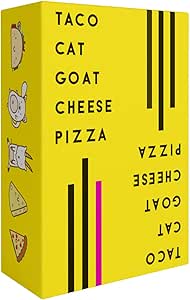 | Best for Fast Family Gatherings | Age range: 7+ | Players: 2–8 | Game type: Card game | VIEW LATEST PRICE | See Our Full Breakdown |
| Hasbro Sorry! Classic Board Game |  | Best for Competitive Family Play | Brand: Hasbro Gaming | Players: 2–4 | Recommended age: 6 years and up | VIEW LATEST PRICE | See Our Full Breakdown |
| Outfoxed! Cooperative Mystery Board Game |  | Best Cooperative Game for Younger Kids | Brand: Gamewright | Game type: Cooperative mystery board game | Players: 4 | VIEW LATEST PRICE | See Our Full Breakdown |
| Hasbro Gaming Trouble Board Game for Ages 5 and Up |  | Best for Simple, Hands-On Races | Age range: 5 years and up | Players: 2–4 | Included components: Gameboard, plastic game unit with Pop-O-Matic die roller, 16 pegs, and instructions | VIEW LATEST PRICE | See Our Full Breakdown |
| Hasbro Gaming Battleship Classic Board Game for 2 Players, Ages 7+ |  | Best for Head-to-Head Strategy | Brand: Hasbro Gaming | Players: 2 | Recommended age: 7 years and up | VIEW LATEST PRICE | See Our Full Breakdown |
| Hasbro Gaming Battleship with Planes Strategy Board Game for Ages 7+ |  | Best Battleship Variant | Brand: Hasbro Gaming | Players: 2 | Recommended age: 7 years and up | VIEW LATEST PRICE | See Our Full Breakdown |
| Hasbro Gaming Operation Electronic Board Game |  | Best for Fine-Motor Play | Brand: Hasbro Gaming | Age range: 6 years and up | Players: 1 or more | VIEW LATEST PRICE | See Our Full Breakdown |
| Hasbro Gaming Clue Junior: Case of the Broken Toy Board Game |  | Best for Young Detectives | Brand: Hasbro Gaming | Age range: 5 years and up | Players: 2–6 | VIEW LATEST PRICE | See Our Full Breakdown |
| Spin Master Games Hedbanz Classic Edition Picture Guessing Game |  | Best for Fast Family Rounds | Brand: Spin Master Games | Age range: 6 years and up | Players: 2–6 | VIEW LATEST PRICE | See Our Full Breakdown |
| kids board game | Players | Included components | Brand | Age range |
|---|---|---|---|---|
| Mouse Trap Board Game for Kids | 2–4 | Game board, 4 plastic mice, 2 metal marbles, 25 trap-building parts and accessories, 52 cheese pieces | Hasbro Gaming | — |
| Hasbro Gaming Candy Land Board | 2–4 | Gameboard, 4 gingerbread pawns, card deck, instructions in English and Spanish | Hasbro Gaming | — |
| Taco vs Burrito | 2–4 | Instruction booklet, 3 quickstart cards, 4 taco/burrito card holders, 56 game cards | — | 6 years and up |
| Hasbro Twister Party Classic B | 2–4 | — | Hasbro Gaming | 6 years and up |
| Hasbro Connect 4 Game | 2 | Grid and tray, 42 discs (21 red and 21 yellow), game rules | Hasbro Gaming | — |
| The Uzzle 3.0 Family Board Gam | 1–4 | 4 sets of 10 blocks; 100 challenges | — | 4 years and up |
| Taco Cat Goat Cheese Pizza Car | 2–8 | — | — | 7+ |
| Hasbro Sorry! Classic Board Ga | 2–4 | Gameboard, 12 pawns, 45 cards, and instructions | Hasbro Gaming | — |
| Outfoxed! Cooperative Mystery | 4 | Board game | Gamewright | — |
| Hasbro Gaming Trouble Board Ga | 2–4 | Gameboard, plastic game unit with Pop-O-Matic die roller, 16 pegs, and instructions | — | 5 years and up |
| Hasbro Gaming Battleship Class | 2 | 2 portable battle cases, 10 plastic ships, 73 red hit pegs, 168 green miss pegs, instructions | Hasbro Gaming | — |
| Hasbro Gaming Battleship with | 2 | 2 portable battle cases, 10 plastic ships, 2 plastic planes, 84 red hit pegs, 168 white miss pegs, label sheet, instructions | Hasbro Gaming | — |
| Hasbro Gaming Operation Electr | 1 or more | Gameboard with Cavity Sam, tweezers, 26 cards, 12 Funatomy parts, play money, rubber band, instructions | Hasbro Gaming | 6 years and up |
| Hasbro Gaming Clue Junior: Cas | 2–6 | Gameboard, 6 character pawns, 6 furniture tokens, 7 white bases, 7 yellow bases, detective notepad, die, label sheet, game guide | Hasbro Gaming | 5 years and up |
| Spin Master Games Hedbanz Clas | 2–6 | 6 headbands, 6 headplates, 16 scoring badges, 1 timer, 69 picture cards, 3 sample question cards, instructions | Spin Master Games | 6 years and up |
More Details on Our Top Picks
Mouse Trap Board Game for Kids Ages 6 and Up
Mouse Trap suits kids who want to build something as well as move pieces around a board. Players collect cheese and assemble a chain-reaction trap, turning cause and effect into part of the game rather than relying only on card draws, as in Candy Land. That construction gives this pick more physical engagement, but it also means setup takes longer and the many trap parts need attention during play. With room for up to four players and a recommended age of six and up, it fits family game time better than a very young child’s first board game. I’d choose it for children who enjoy mechanisms and playful competition; families seeking quick, low-fuss rounds may prefer Connect 4.
Pros:- Chain-reaction trap adds construction and cause-and-effect play.
- Supports two to four players.
- Combines movement, cheese collection, and trap building for varied activity.
- Instructions are included in English and Spanish.
Cons:- Assembling the many trap parts adds setup and handling time.
- Recommended for ages six and up, so it is not suited to younger preschoolers.
- The small components require care during play and cleanup.
Best for: Families with children ages six and up who enjoy building, cause-and-effect play, and a hands-on challenge.
Not ideal for: Caregivers seeking a simple first game for preschoolers or a quick setup with few loose components.
- Brand:Hasbro Gaming
- Players:2–4
- Recommended age:6 years and up
- Playing time:30 minutes
- Edition:Standard Edition
- Included components:Game board, 4 plastic mice, 2 metal marbles, 25 trap-building parts and accessories, 52 cheese pieces
- Instructions:English and Spanish
- Skills:Counting, cooperation, construction, cause and effect, decision-making
Our verdict“Choose Mouse Trap for ages-six-and-up families who want a board game with building and action, not the simplest setup.”
Hasbro Gaming Candy Land Board Game for Kids, Ages 3+
Candy Land is the most accessible starting point in this group for young children: players match color-coded cards to spaces, with no reading required. That makes it easier to introduce than Mouse Trap, which asks children to handle and build a multi-part mechanism, and its roughly 15-minute play time suits shorter attention spans. The tradeoff is that turns depend on the cards drawn and following a path, so children looking for meaningful choices may soon want more challenge. I’d pick it for preschoolers learning colors and turn-taking, rather than as a game meant to hold older siblings’ interest. For an older child ready to make tactical choices, Connect 4 offers more direct decision-making.
Pros:- Color-coded cards make play accessible without reading.
- Supports color recognition, matching, and turn-taking.
- Designed for two to four players.
- Instructions are included in English and Spanish.
Cons:- Card draws and a fixed path leave players with limited strategic control.
- The simple gameplay may not hold older children’s interest.
- Play can feel repetitive for children seeking more varied decisions.
Best for: Families introducing board games to children ages three and up who are learning colors, matching, and turn-taking.
Not ideal for: Families looking for strategy, player choices that affect the outcome, or a game that will challenge older children.
- Brand:Hasbro Gaming
- Players:2–4
- Recommended age:3 years and up
- Estimated playing time:15 minutes
- Included components:Gameboard, 4 gingerbread pawns, card deck, instructions in English and Spanish
- Skills:Color recognition, matching, turn-taking
Our verdict“Choose Candy Land as a low-reading first game for preschoolers; pick Connect 4 instead when children are ready for strategy.”
Taco vs Burrito – Strategic Card Game Created by a 7‑Year‑Old (5 Ways to Play)
Taco vs Burrito is a compact, card-led alternative for families who want a game they can carry beyond the table. Its five ways to play offer more variation than the fixed-path format of Candy Land, while its roughly 15-minute rounds keep the commitment short. The meal-building theme gives players a reason to think about how cards fit together, so it offers more tactical involvement than a simple color match. In exchange, the paper cards may wear with frequent handling, and play tops out at four people. I’d favor it for families with children six and up who like quick choices and a small box; for physical group play, Twister serves a very different purpose.
Pros:- Five play modes add variety beyond a single fixed format.
- Approximate 15-minute rounds fit short family game sessions.
- Compact box is easy to carry.
- Encourages strategic thinking and social interaction.
Cons:- Paper cards can wear with frequent use.
- The game supports no more than four players.
- Card-based play may not suit children seeking a larger, physical board-game setup.
Best for: Families with children ages six and up who want a compact, quick card game with multiple ways to play.
Not ideal for: Larger groups, or households looking for a durable board-and-piece game with more substantial components.
- Manufacturer:Hot Taco
- Age range:6 years and up
- Players:2–4
- Estimated playing time:15 minutes
- Included components:Instruction booklet, 3 quickstart cards, 4 taco/burrito card holders, 56 game cards
- Material:Paper
- Dimensions:7 x 5 x 2 inches
- Ways to play:5
Our verdict“Choose Taco vs Burrito for portable, short strategic rounds, but skip it if you need space for a larger group.”
Hasbro Twister Party Classic Board Game – 2-4 Players, Indoor/Outdoor, Ages 6+
Twister stands apart from the lineup by making movement the main event: players follow the spinner and stretch to colored circles without falling. Unlike the seated turns in Connect 4 or Candy Land, it adds balance and coordination, making it a better fit for an energetic family gathering than a quiet game session. The vinyl mat and spinner keep the setup straightforward, and the game can be played indoors or outdoors. Its main limits are practical: it supports only two to four players and needs enough clear floor space for everyone to move safely. I’d choose it when activity matters more than tactical board play; Mouse Trap is a better match for children who prefer building at the table.
Pros:- Encourages movement, balance, and coordination.
- Can be played indoors or outdoors.
- Includes the mat, spinner, and instructions for setup.
- Suitable for players ages six and up.
Cons:- Requires ample clear floor space.
- Supports only two to four players per game.
- Outdoor play can make the mat messy.
Best for: Families with children six and up who have clear floor space and want an active alternative to seated board games.
Not ideal for: Small rooms, larger groups wanting everyone to play at once, or children who prefer strategic tabletop turns.
- Brand:Hasbro Gaming
- Age range:6 years and up
- Players:2–4
- Components:Vinyl mat, spinner, instructions
- Play setting:Indoor or outdoor
- Warranty:No warranty
Our verdict“Choose Twister for active play when you have space; choose Connect 4 for a compact, seated two-player game.”
Hasbro Connect 4 Game, 2025 Edition
Connect 4 is the clearest pick here for two children who want a quick game with real tactical choices: each player places a disc while trying to make four in a row and block the other. Compared with Candy Land, where card draws dictate movement, this format gives players more direct control over each turn. The foldable grid, carrying handle, and storage for all 42 discs also make it easier to put away or take along than Mouse Trap with its many separate trap parts. Its defining limitation is also its audience: it is strictly for two players, and small discs can go missing if they are left outside the tray. I’d choose it for sibling matchups, not larger family groups.
Pros:- Simple rules lead into tactical choices about connecting and blocking.
- Foldable grid with a carrying handle supports portable play.
- Storage inside the game unit keeps all 42 discs together.
- Built-in score trackers help track wins across rounds.
Cons:- Designed for only two players.
- Small discs may be misplaced when left outside the storage tray.
- The head-to-head format offers less group participation than Mouse Trap.
Best for: Two-player households or siblings ages six and up who want a portable game with simple rules and tactical choices.
Not ideal for: Families who need a game for three or more players, or who expect small pieces to stay out during travel.
- Brand:Hasbro Gaming
- Edition:2025 Edition
- Players:2
- Recommended age:6 years and up
- Included components:Grid and tray, 42 discs (21 red and 21 yellow), game rules
- Storage:Discs store inside the foldable game unit
- Features:Carrying handle, built-in score trackers
- Model number:G1500
Our verdict“Choose Connect 4 for portable, strategic head-to-head play, but look elsewhere when more than two children need to play together.”
The Uzzle 3.0 Family Board Game
The Uzzle 3.0 is the most puzzle-focused pick in this group: players flip, spin, and arrange patterned blocks to match a challenge card. Its 100 challenges across four difficulty levels give children room to build skill, while solo play lets one child work at their own pace. Compared with the quick, reflex-driven Taco Cat Goat Cheese Pizza, this game rewards careful visual matching rather than speed and noise. It also offers a different kind of shared play from the competitive race in Sorry!, since players can tackle puzzles together or separately. The tradeoff is that the harder cards may frustrate younger players, and the listed setup supports no more than four players; larger groups need another set.
Pros:- Four difficulty levels let players take on challenges suited to their current skills.
- One hundred puzzles offer varied repeat play.
- Supports solo play and groups of up to four.
- Larger blocks are designed to be easier for children to handle.
Cons:- The hardest challenges may be too difficult for younger players.
- Groups larger than four need additional sets.
Best for: Families with children who enjoy visual puzzles and want a game that works for solo practice as well as small-group play.
Not ideal for: Large households seeking one game for a group bigger than four, or young children who may find the higher-level challenges frustrating.
- Age range:4 years and up
- Players:1–4
- Challenges:100
- Difficulty levels:4
- Included components:4 sets of 10 blocks; 100 challenges
- Material:Plastic
- Dimensions:8 x 8 x 4 in
- Weight:1.7 lbs
Our verdict“Choose The Uzzle 3.0 for flexible, hands-on puzzle play rather than a noisy party game or a conventional race around a board.”
Taco Cat Goat Cheese Pizza Card Game, Age 7+, 2-8 Players
Taco Cat Goat Cheese Pizza is the lively choice when a group wants a quick round instead of a longer sit-down game. Players chant the title and slap the pile when a spoken word matches the card, so attention and timing matter more than planning. Its 10–15-minute rounds and compact card format make it easier to bring along than board-based picks such as Sorry! or Outfoxed!. It also accommodates up to eight players, giving it an advantage over games limited to smaller groups. That energy comes with a real tradeoff: the slap mechanic can get loud and wear the cards, while younger children may struggle to react quickly enough. Families after calm, cooperative deduction should choose Outfoxed! instead.
Pros:- Simple rules make it quick to teach and start.
- Short rounds fit between other activities or into travel breaks.
- Supports groups of up to eight players.
- Compact card format is easier to carry than a full board game.
Cons:- The fast slap mechanic may be difficult for younger children.
- Slapping can be noisy and may wear the cards over time.
Best for: Families with children aged seven and up who want a portable, short party game for gatherings of up to eight players.
Not ideal for: Households with younger children who find quick reactions difficult, or players who prefer quiet, thoughtful turns.
- Age range:7+
- Players:2–8
- Game type:Card game
- Playing time:About 10–15 minutes
- Set name:Original
- Number of packs:1
- Manufacturer:Dolphin Hat Games
- Language:English
Our verdict“Pick this for quick, high-energy group play; choose Outfoxed! instead if your family prefers cooperative clue-solving.”
Hasbro Sorry! Classic Board Game
Sorry! suits families who enjoy a straightforward race with the chance to disrupt an opponent’s progress. Players draw cards to move pawns toward home, but a pawn can also be sent back to start, so fortunes can change quickly. Compared with Trouble, which centers on a Pop-O-Matic die roller and moving pegs, Sorry! uses cards to shape movement and adds a direct take-that element. It is more openly competitive than cooperative Outfoxed!, where players work together to solve a mystery. That rivalry can be fun for children who like unpredictable turns, but it may disappoint players who dislike losing progress. The listed playing time is 120 minutes, much longer than the short rounds of Outfoxed! or Taco Cat Goat Cheese Pizza, so it is not the best fit for a quick game.
Pros:- Card-based movement gives turns a different feel from Trouble’s die roller.
- Sending opponents back creates direct interaction and changing fortunes.
- Includes pawns and cards for up to four players.
- Race-to-home rules are easy to explain.
Cons:- A pawn can be sent back to the starting point, which may frustrate some children.
- The listed playing time of 120 minutes is long compared with shorter family games.
Best for: Families with children aged six and up who enjoy card-driven races and playful competition among two to four players.
Not ideal for: Families seeking a short game or children who become upset when an opponent sends their pawn back to start.
- Brand:Hasbro Gaming
- Players:2–4
- Recommended age:6 years and up
- Playing time:120 minutes
- Included components:Gameboard, 12 pawns, 45 cards, and instructions
- Edition:Standard
- Language:English
Our verdict“Choose Sorry! for a competitive, card-driven family race, but skip it if your group needs a reliably short session.”
Outfoxed! Cooperative Mystery Board Game
Outfoxed! gives children a shared mystery to solve: players gather clues and use an evidence decoder to identify the fox before it escapes with Mrs. Plumpert’s pot pie. Because everyone works together, it avoids the pawn-sending setbacks of Sorry! and the reflex competition in Taco Cat Goat Cheese Pizza. The 15–20-minute playtime also makes it easier to fit into a family game session than Sorry!, whose listed duration is much longer. Dice, clues, and deduction give young players something active to discuss rather than simply waiting for a turn. Its main limitation is its stated four-player format, which is less flexible than games that support a wider player range. The family-focused mystery may also feel too simple for older children seeking more complex strategy.
Pros:- Cooperative play gives players a shared goal rather than direct competition.
- Clues and deduction invite children to explain their reasoning.
- Dice and an evidence decoder add hands-on elements.
- A 15–20-minute playing time suits shorter family sessions.
Cons:- Designed for four players, limiting flexibility for other group sizes.
- The family-oriented gameplay may be too simple for older children seeking more complexity.
Best for: Families with children aged five and up who want a short, cooperative mystery that encourages discussing clues together.
Not ideal for: Households that need a game for more or fewer than four players, or older children looking for complex strategy.
- Brand:Gamewright
- Game type:Cooperative mystery board game
- Players:4
- Recommended age:5 years and up
- Playing time:15–20 minutes
- Language:English
- Included components:Board game
Our verdict“Choose Outfoxed! when your family would rather solve a short mystery together than compete in a race.”
Hasbro Gaming Trouble Board Game for Ages 5 and Up
Trouble keeps the focus on a simple race: press the Pop-O-Matic bubble to roll the die, then move pegs toward the Finish zone. The built-in roller helps keep the die contained, which makes turns easy for younger players to follow. Compared with Sorry!, Trouble has no card-driven movement; its appeal is the tactile die press and a more direct path around the board. An optional Power Up Spaces variation adds a little extra challenge without changing the basic format. The tradeoff is that a peg can be sent back when another player lands on its space, creating the same kind of setback that can frustrate children in Sorry!. Families wanting teamwork and clue-solving may prefer Outfoxed!, while Trouble is better suited to straightforward, competitive play.
Pros:- Pop-O-Matic roller keeps the die attached to the game unit.
- Simple rules make it approachable for younger players.
- Optional Power Up Spaces variation adds another way to play.
- Supports two to four players.
Cons:- An opponent can send a peg back to the beginning by landing on its space.
- Die-driven movement offers less control than the card choices in Sorry!.
Best for: Families with children aged five and up who want a simple, hands-on race for two to four players.
Not ideal for: Children who dislike losing progress when a peg is bumped back, or families seeking cooperative play or varied decision-making.
- Age range:5 years and up
- Players:2–4
- Included components:Gameboard, plastic game unit with Pop-O-Matic die roller, 16 pegs, and instructions
- Edition:Classic Edition
- Model number:A5064
- Model year:2017
Our verdict“Pick Trouble for an easy-to-start, tactile race, but choose Outfoxed! if your children prefer working together over bumping opponents back.”
Hasbro Gaming Battleship Classic Board Game for 2 Players, Ages 7+
Battleship Classic is the pick here for two children who enjoy quiet, competitive play built around planning and deduction. Players call grid coordinates, record hits and misses with pegs, and try to locate the other fleet; the Salvo option gives experienced players a more advanced way to play. Its portable cases keep the ships and pegs together, a practical advantage over the loose cards and headbands in Hedbanz. The tradeoff is that this game is strictly for two, while Clue Junior can accommodate a larger group. Coordinate tracking also asks for more patience and organization than quick, silly games such as Hedbanz. I’d choose this version over Battleship with Planes if I wanted the more straightforward naval game without extra aircraft pieces.
Pros:- Portable battle cases store the ships and pegs between games.
- Coordinate calls and hit-or-miss tracking give players a clear strategy challenge.
- Salvo option adds a more advanced way to play.
- A straightforward alternative to the added aircraft rules in Battleship with Planes.
Cons:- Designed for exactly two players, so it does not suit a whole family group.
- Players need to keep track of coordinates and plan attacks.
- The many small pegs can require care during setup and cleanup.
Best for: Two children ages 7 and up who like tactical guessing games and want a compact, self-contained game for one-on-one play.
Not ideal for: Families with three or more children hoping to play together, or younger kids who may find coordinate tracking frustrating.
- Brand:Hasbro Gaming
- Players:2
- Recommended age:7 years and up
- Playing time:30 minutes
- Edition:Classic
- Included components:2 portable battle cases, 10 plastic ships, 73 red hit pegs, 168 green miss pegs, instructions
- Language:English
Our verdict“Choose Battleship Classic for two players who want a focused strategy game, but pick Clue Junior or Hedbanz for a larger group.”
Hasbro Gaming Battleship with Planes Strategy Board Game for Ages 7+
Battleship with Planes keeps the coordinate-hunting contest of Battleship Classic but adds aircraft as extra targets. That variation gives repeat players another element to track, making this a better fit for children who already enjoy the basic ship-versus-ship format than for first-time players. The portable cases with built-in storage make it easy to pack away the ships, planes, and pegs, though the small pieces can still go missing. Unlike Clue Junior, this is a direct duel rather than a group deduction game, and it needs exactly two players. Compared with Battleship Classic, the planes add variety but also add pieces and complexity; choose the classic edition if a simpler setup matters more than an extra target type.
Pros:- Adds planes to the familiar ship-targeting format for a change from Battleship Classic.
- Portable cases include storage for ships, planes, and pegs.
- Coordinate-based play gives both players a clear strategic task.
- Works well as a head-to-head option alongside group games such as Clue Junior.
Cons:- Requires exactly two players.
- Extra aircraft and pegs add small pieces that are easy to lose.
- More pieces to track may feel less approachable than the classic version.
Best for: Two players ages 7 and up who already like coordinate-based games and want a variation on classic Battleship.
Not ideal for: Families seeking a game for more than two players, or children who prefer simple rules and fewer small pieces.
- Brand:Hasbro Gaming
- Players:2
- Recommended age:7 years and up
- Playing time:30 minutes
- Edition:Standard Edition
- Included components:2 portable battle cases, 10 plastic ships, 2 plastic planes, 84 red hit pegs, 168 white miss pegs, label sheet, instructions
- Model number:C3890
Our verdict“Pick this version for two Battleship fans who want extra targets; choose Battleship Classic for a simpler setup.”
Hasbro Gaming Operation Electronic Board Game
Operation shifts the challenge from deduction to careful hand control: players use tweezers to remove 12 ailments without touching the metal edges, which sets off a buzzer and flashing nose. That immediate feedback makes each turn easy for spectators to follow, while solo or group play offers more flexibility than the two-player Battleship games. It also asks for steadier hands than Hedbanz, where the main challenge is asking useful yes-or-no questions before time runs out. The main tradeoff is practical: this edition needs two D batteries, and those are not listed as included. Younger players who struggle with precise tweezer control may find the central task frustrating, even though the game is designed for ages 6 and up.
Pros:- Supports solo play as well as group turns, unlike the two-player Battleship games.
- Twelve removable ailments give the game a range of hands-on tasks.
- Buzzer and light-up nose make mistakes easy for other players to see.
- Cards and play money add structure beyond the tweezers challenge.
Cons:- Requires two D batteries, which are not listed among the included components.
- Removing pieces demands steady hand coordination.
- The buzzer can make mistakes feel conspicuous for children who dislike pressure.
Best for: Families with children ages 6 and up who enjoy hands-on challenges, want a solo-play option, and can keep batteries on hand.
Not ideal for: Children who find fine-motor tasks frustrating, or households that want a game with no battery requirement.
- Brand:Hasbro Gaming
- Age range:6 years and up
- Players:1 or more
- Included components:Gameboard with Cavity Sam, tweezers, 26 cards, 12 Funatomy parts, play money, rubber band, instructions
- Batteries:2 D batteries required
- Skills:Fine motor coordination and strategy
- Instruction languages:English and Spanish
Our verdict“Choose Operation for a tactile, replayable challenge and flexible player count, provided the battery and fine-motor requirements suit your family.”
Hasbro Gaming Clue Junior: Case of the Broken Toy Board Game
Clue Junior: Case of the Broken Toy brings deduction to younger players, with a mystery about which toy broke, who broke it, and when. Players gather clues and mark what they learn on a detective notepad, so the game offers more structured reasoning than the quick picture guessing in Hedbanz. Its ages 5 and up guidance makes it a younger starting point than Battleship Classic, which is aimed at ages 7 and up, and its two-to-six-player range fits a family group. The tradeoff is that the notepad and clues call for reading comprehension, so some younger children may need help. The case also centers on one broken-toy scenario rather than offering a range of mysteries, making this a better first deduction game than a choice for families seeking lots of thematic variety.
Pros:- Designed for younger players than Battleship Classic, with an age range starting at 5.
- Clue gathering and detective notes encourage deduction and problem-solving.
- Supports 2–6 players, making it more group-friendly than either Battleship edition.
- Pawns and furniture tokens give players visible pieces to inspect and discuss.
Cons:- The notepad and clues require reading comprehension that may challenge some younger players.
- The mystery focuses on a single broken-toy scenario.
- Players must track findings to make a reasoned accusation.
Best for: Families with children around age 5 and up who want a group mystery game that introduces clue gathering and deduction.
Not ideal for: Children who are not yet comfortable with the reading and note-taking involved, or families seeking multiple mystery scenarios.
- Brand:Hasbro Gaming
- Age range:5 years and up
- Players:2–6
- Theme:Mystery
- Educational objectives:Critical thinking, problem-solving, deductive reasoning, and reading comprehension
- Included components:Gameboard, 6 character pawns, 6 furniture tokens, 7 white bases, 7 yellow bases, detective notepad, die, label sheet, game guide
- Item weight:1.3 pounds
- Item dimensions:1.63 x 13.13 x 10.5 inches
- Model number:C1293
Our verdict“Choose Clue Junior for a young family group ready to gather clues, but look elsewhere if reading support or varied mysteries are priorities.”
Spin Master Games Hedbanz Classic Edition Picture Guessing Game
Hedbanz Classic Edition is a lively pick for families who want short, social turns rather than the longer planning of Battleship Classic or the note-taking in Clue Junior. One player wears a picture card and asks yes-or-no questions to identify it before time runs out. The rules are easy to grasp, but success depends on asking useful questions quickly, so the timer adds a little pressure. With 2–6 players and six headbands, it suits a group better than the two-player Battleship games. The set’s paper material and loose cards mean it needs careful handling and storage, and it cannot provide the quieter strategy challenge of Battleship or the clue-solving structure of Clue Junior. I’d choose it for energetic family interaction, not for children seeking a solo game.
Pros:- Simple yes-or-no questions make the core game easy to learn.
- Supports 2–6 players, compared with the strict two-player limit of Battleship.
- Six themed headbands and 69 picture cards support group play.
- Guessing encourages deductive reasoning and clear questions.
Cons:- Requires at least two players.
- The timer may frustrate players who need more time to think or speak.
- Paper components and loose cards call for careful handling and storage.
Best for: Families with children ages 6 and up who want quick, talkative rounds for two to six players.
Not ideal for: Solo players, children who dislike timed guessing, or families looking for a quiet strategy or mystery game.
- Brand:Spin Master Games
- Age range:6 years and up
- Players:2–6
- Included components:6 headbands, 6 headplates, 16 scoring badges, 1 timer, 69 picture cards, 3 sample question cards, instructions
- Material:Paper
- Model:6067050
- Edition:Classic Edition
Our verdict“Pick Hedbanz for quick, conversational family rounds; choose Clue Junior for slower clue-based deduction or Battleship for a two-player strategy contest.”
How We Picked
I evaluated these fifteen games based on three primary criteria: age appropriateness, replayability, and ease of setup. Age appropriateness was not just about the manufacturer’s recommendation; I considered whether the rules were intuitive for the target age group without constant parental intervention. Replayability mattered because a game that is played once and shelved is a poor investment for a family budget. I also prioritized games with robust components that can withstand the rough handling typical of children’s play sessions.
The ranking logic places emphasis on versatility. Games that appeal to a wide age range or multiple player counts rank higher than those limited to specific scenarios. For instance, Mouse Trap ranks high because it combines physical interaction with simple rules, appealing to both 6-year-olds and adults who enjoy the mechanical spectacle. Conversely, games with high luck factors and low strategic depth are ranked lower for older children, though they may be ideal for toddlers.
| kids board game | Brand |
|---|---|
| Mouse Trap Board Game for Kids | Hasbro Gaming |
| Hasbro Gaming Candy Land Board | Hasbro Gaming |
| Taco vs Burrito | — |
| Hasbro Twister Party Classic B | Hasbro Gaming |
| Hasbro Connect 4 Game | Hasbro Gaming |
| The Uzzle 3.0 Family Board Gam | — |
| Taco Cat Goat Cheese Pizza Car | — |
| Hasbro Sorry! Classic Board Ga | Hasbro Gaming |
| Outfoxed! Cooperative Mystery | Gamewright |
| Hasbro Gaming Trouble Board Ga | — |
| Hasbro Gaming Battleship Class | Hasbro Gaming |
| Hasbro Gaming Battleship with | Hasbro Gaming |
| Hasbro Gaming Operation Electr | Hasbro Gaming |
| Hasbro Gaming Clue Junior: Cas | Hasbro Gaming |
| Spin Master Games Hedbanz Clas | Spin Master Games |
Factors to Consider When Choosing Best Kids Board Games
Choosing the right board game involves more than just picking a fun theme. You must consider the developmental stage of the players and the practical constraints of your household.Match Complexity to Attention Span
The most common mistake parents make is buying a game that exceeds their child’s current attention span. A 4-year-old will not enjoy Clue Junior if they cannot sit still for ten minutes, regardless of how clever the mystery mechanic is. Look for games with turn times under thirty seconds for younger children. Candy Land works because the turns are instant and the visual path provides constant progress. If your child struggles to wait their turn, prioritize cooperative games like Outfoxed! or fast-paced card games like Taco Cat Goat Cheese Pizza over turn-heavy strategy games.
Consider Storage and Portability
Board games with large boards and numerous small pieces, such as Twister or Battleship, require significant storage space and are difficult to transport. If you travel frequently or have limited shelf space, card games like Taco vs Burrito or compact box games like Hedbanz offer superior practicality. Assess where the game will live in your home. A game that is hard to set up and store will gather dust. Connect 4 strikes a balance with a sturdy, self-contained base that is easy to store yet durable enough for frequent play.
Evaluate Educational Value Versus Fun
While many parents seek educational benefits, forcing a game to be purely educational often kills the fun. The best games embed learning naturally. Candy Land teaches color matching without feeling like a lesson. Mouse Trap introduces basic physics concepts through play. Avoid games that feel like schoolwork in disguise. Instead, choose titles where the learning is a byproduct of the gameplay loop. If the primary goal is family bonding, prioritize games that encourage interaction and laughter, such as Hedbanz, over strictly competitive strategy games.
Account for Player Count Flexibility
Many classic games, like Battleship and Connect 4, are strictly two-player experiences. This limits their utility in families with three or more children. If you often play as a large group, prioritize games that support 4 to 8 players, such as Taco Cat Goat Cheese Pizza or Twister. For smaller families, two-player games are fine, but be aware that they can become repetitive quickly. Consider buying one flexible group game and one dedicated two-player game to cover all social scenarios.
Assess Durability and Component Quality
Children are not gentle with game components. Card games with thin, uncoated cards will wear out quickly. Look for games with thick, coated cards or sturdy plastic components. Operation features delicate plastic parts that can break if mishandled, whereas Mouse Trap uses robust plastic tracks. Clue Junior uses cardboard tokens that can be durable if stored correctly, but they are susceptible to water damage. If your children are rough players, invest in games with high-quality, replaceable components or those designed for outdoor use.
Frequently Asked Questions
Are cooperative games better than competitive games for young children?
Cooperative games like Outfoxed! are generally better for children under 6 because they eliminate the emotional volatility of losing. Young children often struggle with the concept of fairness and may cry or quit if they lose repeatedly. Cooperative play teaches teamwork and shared problem-solving without the sting of defeat. However, introducing mild competition, such as in Connect 4, is healthy for older children to learn resilience and sportsmanship. Start with cooperative titles and gradually introduce competitive ones as emotional maturity develops.How do I keep board games engaging for siblings with different ages?
The best approach is to choose games with simple rules that scale in difficulty or allow for handicaps. Hedbanz works well because younger children can guess easier categories while older kids tackle harder ones. Taco vs Burrito is another excellent option because the strategic depth is low enough for a 5-year-old to grasp, but the decision-making offers enough nuance for a 10-year-old. Avoid games that rely heavily on reading skills or complex math, as these create inherent advantages for older siblings.Is it worth buying electronic board games like Operation?
Electronic games offer immediate feedback and novelty that can captivate children who lose interest in traditional mechanics. Operation provides a unique tactile challenge that physical games cannot replicate. However, they rely on batteries and have components that can break more easily than analog games. They are best as occasional treats rather than core family staples. If you want long-term value and durability, stick to analog games like Mouse Trap or Candy Land, which have stood the test of time for decades.What is the best board game for a 3-year-old?
Candy Land is widely considered the best entry-point for 3-year-olds because it requires no reading and minimal decision-making. The game focuses on color recognition and taking turns, which are key developmental milestones at this age. Another strong option is Outfoxed!, which uses simple deduction and bright visuals. Avoid games with small parts that pose choking hazards or complex rules. At this age, the goal is to establish the habit of sitting together and following simple instructions, not to develop strategic thinking.How many board games does a family actually need?
Most families do not need a large library to stay entertained. A core set of four to six games covers almost all scenarios. You need one cooperative game for rainy days, one fast-paced card game for travel, one strategy game for older kids, and one classic for casual play. Taco vs Burrito, Outfoxed!, Connect 4, and Candy Land form a solid foundational kit. Adding more games is only useful if they cater to specific new interests or age milestones.Conclusion
Selecting the right game depends entirely on your family’s dynamic. For Best Overall versatility and engagement, Mouse Trap stands out with its blend of physical play and simple rules. If you need Best Value and portability, Taco vs Burrito offers endless strategic fun in a tiny box. For Best for Beginners and toddlers, Candy Land remains the undisputed champion of simplicity and color learning. Best Premium experience goes to Clue Junior for families wanting a deeper mystery-solving narrative. Finally, for Best for Large Groups, Taco Cat Goat Cheese Pizza keeps everyone engaged with fast-paced action.