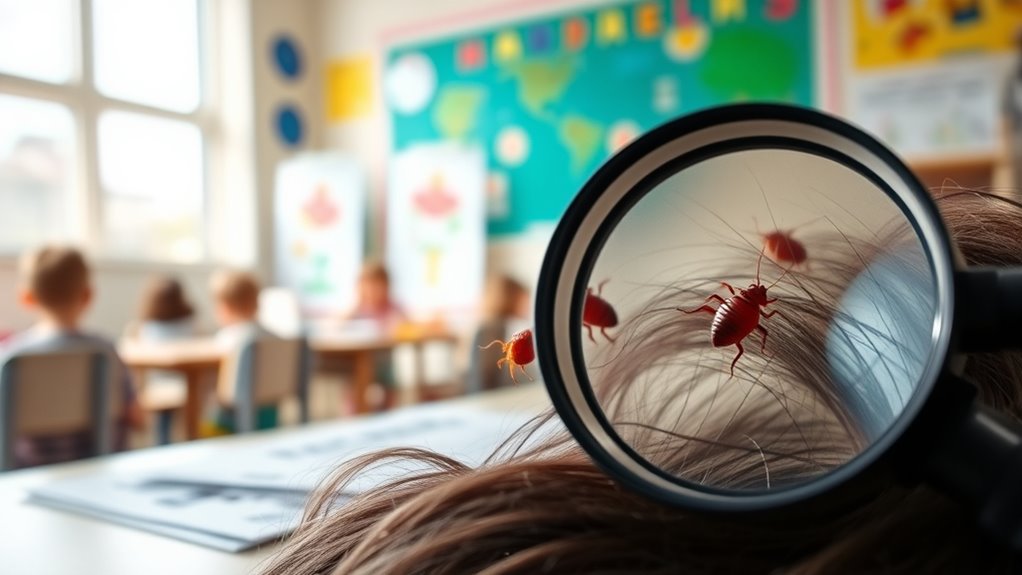

When a head lice case occurs, your school likely has a policy requiring you to keep your child home until they’re lice-free and cleared by staff. They’ll notify you immediately and may ask for proof of treatment and a lice check upon return. The goal is to prevent outbreaks and protect everyone’s health. Proper treatment, cleaning, and following school guidelines help stop the spread—continue on to learn more about managing head lice effectively.
Key Takeaways
- Schools typically require students with active lice to stay home until lice and nits are fully removed.
- A lice-free check is often needed before a student can return to school.
- Prompt treatment and thorough cleaning are essential to prevent spread and re-infestation.
- Schools provide guidelines and support for effective lice management and checking techniques.
- Communicating with school staff ensures proper handling and adherence to lice policies.
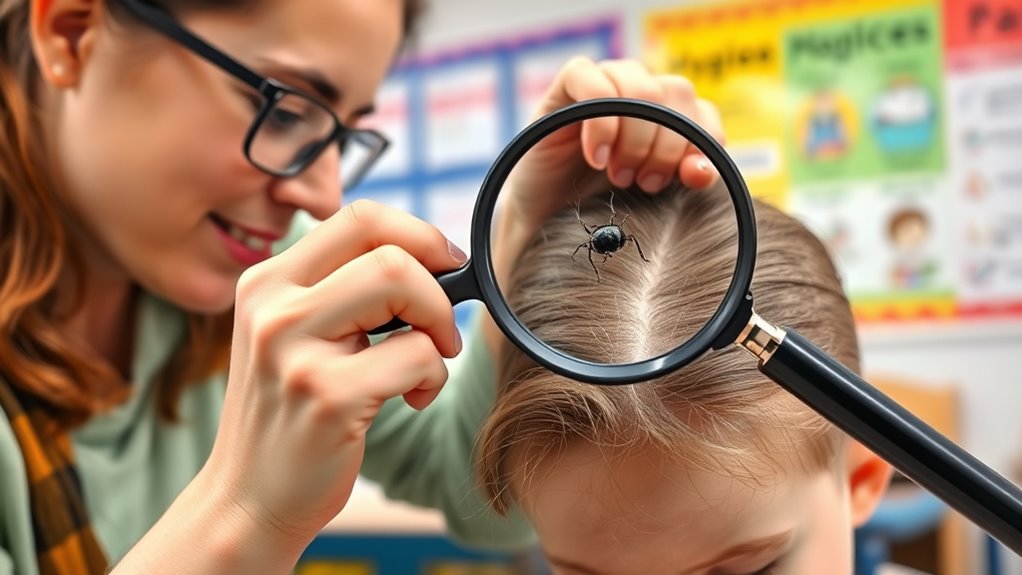
Dealing with head lice can be stressful for students, parents, and schools alike. It’s a common issue that triggers concern about health, hygiene, and, sometimes, school policies. When lice are discovered, the immediate focus often shifts to lice treatment—how to effectively eliminate the pests and prevent their spread. You need to act quickly, using proven methods like medicated shampoos, fine-tooth combs, and thorough cleaning of bedding and clothing. The goal is to eradicate the lice and nits completely, but it’s equally important to understand your school’s approach to head lice. Many schools require students with active lice to stay home until they’re lice-free, which is often referred to as school exclusion. This policy aims to prevent the lice from spreading to other students, but it can also cause frustration and inconvenience for families trying to manage the situation responsibly.
Head lice policies help prevent spread but can be inconvenient for families managing treatment responsibly.
When a student is identified with head lice, schools typically notify parents immediately and may request that the child be excluded from school until proper lice treatment is completed. This exclusion isn’t meant to shame or punish but to safeguard the health of everyone in the school community. During this period, parents are expected to follow the school’s guidelines, which usually involve conducting thorough lice treatment, removing nits, and ensuring the child is clear of lice before returning. Some schools require a lice check upon return, giving peace of mind that the student is lice-free and less likely to pass the pests on again. It’s also helpful to know that proper lice management** can significantly reduce the chances of re-infestation** and support a quicker return to school.
You should know that current best practices emphasize that lice infestation isn’t a reflection of poor hygiene or cleanliness. It’s simply a common, temporary problem that can happen to anyone. The key is prompt lice treatment and adherence to school policies. Many schools also provide information on lice management, including tips on how to check for lice regularly and how to minimize the risk of re-infestation. Keeping personal belongings separate and avoiding sharing hats or hair accessories can go a long way in preventing lice spread.
Understanding your school’s policies on lice and school exclusion helps you prepare and respond calmly. You’ll feel more confident in managing lice treatment and supporting your child through the process. Remember, the primary goal is to eliminate lice quickly and safely, ensuring your child can return to school healthy and lice-free, while also protecting classmates from future outbreaks. Clear communication with school staff and following established protocols will make the process smoother for everyone involved.

Vamousse Head Lice Defense Daily Shampoo, Use After Exposure or Treatment, Prevents Lice Infestation, No Parabens, Sulfates or Dyes, Family Size, 13.5 Oz
Daily Lice Defence: Vamousse Head Daily Defense Lice Shampoo is super effective in getting rid of residual lice…
As an affiliate, we earn on qualifying purchases.
As an affiliate, we earn on qualifying purchases.
Frequently Asked Questions
Can Students With Head Lice Attend School?
Yes, you can attend school if you have head lice, but you need to follow your school’s policy on lice prevention. Usually, this means you should get treatment promptly and notify the school. Many schools require students to be lice-free or have no live lice on their scalp before returning. Staying informed about your school’s policy helps you manage head lice effectively and minimizes the risk of spreading to others.
Are There Legal Requirements for Reporting Head Lice?
You don’t typically have a legal obligation to report head lice, but schools often require you to inform them to prevent spread. When reporting, consider privacy concerns, as health information is sensitive. Schools may have policies on handling cases discreetly. While legal reporting isn’t usually mandatory, staying transparent with the school helps protect student health without violating privacy laws. Always check your local regulations for specific requirements.
How Do Schools Handle Head Lice Outbreaks?
When a head lice outbreak occurs, schools act swiftly by notifying parents and implementing lice prevention strategies. For example, they may conduct thorough school disinfection, including cleaning common areas and shared items. They often encourage students with lice to stay home until treated. These measures help contain the spread, ensuring a safe environment for everyone. Clear policies guide staff and parents, making outbreaks manageable and minimizing disruption.
What Are the Recommended Home Treatments for Lice?
You should start with OTC treatments like permethrin or pyrethrin shampoos, following the instructions carefully. For natural remedies, try applying essential oils such as tea tree or neem, which may help repel lice. Comb hair thoroughly with a fine-toothed lice comb after treatment to remove nits. Repeat treatments as recommended, usually after 7-10 days, to make certain all lice and eggs are gone.
Do Lice Spread Through Shared School Supplies?
Yes, lice can spread through sharing personal belongings like hats, brushes, or headphones. They can also transfer via classroom hygiene practices such as shared seating or towels. To prevent this, you should avoid sharing personal items and encourage good hygiene habits. Regularly clean and disinfect classroom supplies, and remind students not to share items that touch their head or hair. This helps reduce lice transmission in school settings.

OWNHEALER Professional Lice Comb Kit – for Lice, Nits, and Dandruff Removal. Quick Results for Head Lice Treatment – Suitable for All Hair Types. Peine para piojos y liendres.
SUITABLE FOR ALL HAIR TYPES: Designed with varied tooth designs and lengths, the OwnHealer fine-tooth comb set efficiently…
As an affiliate, we earn on qualifying purchases.
As an affiliate, we earn on qualifying purchases.
Conclusion
Dealing with head lice can feel like steering a stormy sea, but with the right policies and care, you can steer through it smoothly. Stay informed, follow school guidelines, and keep communication open. Remember, lice are just temporary visitors on your child’s head, not permanent residents. With patience and proactive steps, you’ll find calmer waters ahead, transforming a challenging situation into an opportunity for education and teamwork. Together, you can turn the tide and restore peace at home and school.

Nix Lice Treatment & Prevention Kit, All-in-One Shampoo, 4 fl oz, with Lice Removal Comb and Lice Prevention Daily Leave-in Spray, 6 fl oz
PESTICIDE-FREE TREAT & PREVENT KIT: The Nix Ultra Lice Treatment & Prevention Kit contains both the Nix Ultra…
As an affiliate, we earn on qualifying purchases.
As an affiliate, we earn on qualifying purchases.

Hair Ties for Healty hair care – Infused with Essential Oils for Natural Prevention – Girls Hair Ties with Long-Lasting Protection – Safe & Non-Toxic Repellent Ties for Daily Use – (4-Pack)
Powerful Protection: Keep hair secure and away with these essential oil-infused hair ties, designed to create a natural…
As an affiliate, we earn on qualifying purchases.
As an affiliate, we earn on qualifying purchases.