
To safely defrost foods, use the refrigerator for slow, even thawing at temperatures below 40°F, or submerge sealed food in cold water, changing the water every 30 minutes for faster thawing. You can also use a microwave’s defrost setting for quick results, but cook the food immediately afterward. Never leave food at room temperature for too long. Discover more tips on keeping your food safe and fresh.
Key Takeaways
- Thaw foods in the refrigerator at or below 40°F for safe, even defrosting.
- Use cold water in leak-proof bags, changing water every 30 minutes for quick, safe thawing.
- Microwave small portions using defrost setting and cook immediately afterward.
- Avoid thawing foods at room temperature to prevent bacteria growth.
- Plan ahead and thaw large items gradually in the fridge to maintain food safety and quality.
Defrosting foods safely is essential to prevent foodborne illnesses and guarantee your meals stay fresh. When you’re ready to thaw frozen items, understanding the best thawing methods and maintaining proper temperature control are key to keeping your food safe. The goal is to prevent bacteria from multiplying during the thawing process, which can happen if foods sit at unsafe temperatures for too long.
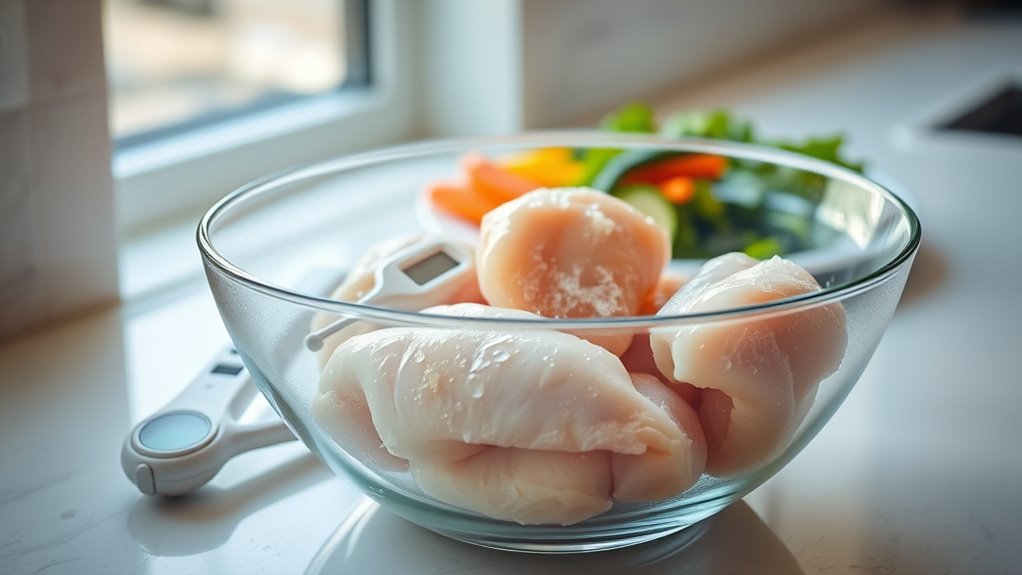
Your first step is to choose the right method for thawing your food. The safest options include thawing in the refrigerator, using cold water, or employing a microwave. Refrigerator thawing is considered the best because it keeps food at a consistent, safe temperature—below 40°F (4°C). When you plan ahead, you can move your frozen items to the fridge the night before or early in the day, allowing them to thaw slowly and evenly. This method requires no special equipment and minimizes the risk of bacteria growth, as the temperature remains controlled throughout.
Thaw foods safely in the fridge for steady, bacteria-free temperatures.
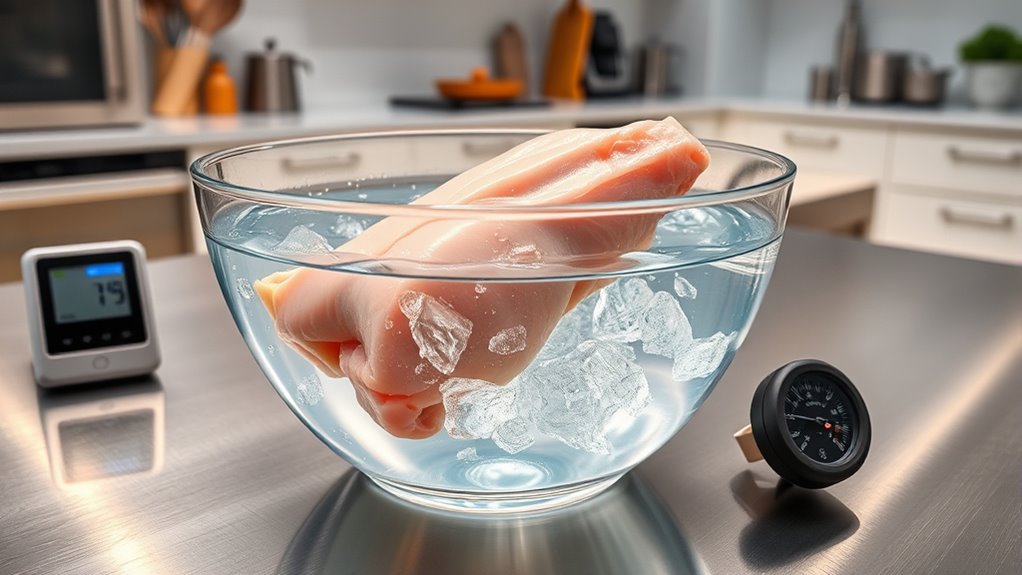
If you’re short on time, cold water thawing can be effective. Place your food in a leak-proof plastic bag, ensuring it’s properly sealed to prevent water from seeping in and contaminating the food. Submerge the bag in cold tap water, changing the water every 30 minutes to keep it cold. This method speeds up thawing while maintaining temperature control, but it’s crucial to cook the food immediately after thawing to prevent bacteria from developing.
Microwave thawing is the quickest option, especially when you need to defrost a small portion quickly. Use your microwave’s defrost setting, which automatically adjusts the power level to avoid partially cooking the food. Keep a close eye on the process and rotate or flip the food as needed. Once thawed in the microwave, cook the food immediately to ensure safety, since some areas might start to cook during the process, creating an uneven temperature.
Throughout all these methods, maintaining proper temperature control is essential. Once your food has thawed, it should be cooked promptly or stored in the fridge if you’re not ready to cook. Never leave thawed food sitting at room temperature for more than two hours, as bacteria can multiply rapidly at temperatures between 40°F and 140°F (4°C to 60°C). Additionally, proper storage containers help prevent cross-contamination and maintain quality during thawing and storage. By choosing appropriate thawing methods and controlling temperatures carefully, you protect yourself and your family from potential foodborne illnesses, ensuring your meals are both safe and delicious.

ProKeeper Deli Food Storage Container with Air-Tight Silicone Seal and Dry Erase Compatible Lid
Preserve Freshness: Air-tight seal keeps deli items fresh and tasty for longer
As an affiliate, we earn on qualifying purchases.
As an affiliate, we earn on qualifying purchases.
Frequently Asked Questions
Can I Defrost Foods at Room Temperature Safely?
You shouldn’t defrost foods at room temperature because it encourages bacterial growth. When you leave food out, bacteria can multiply quickly, increasing the risk of foodborne illnesses. Instead, defrost foods safely in the refrigerator, in cold water, or in the microwave. These methods keep the food at a safe temperature and prevent bacteria from thriving, ensuring your food stays safe to eat.
How Long Can Frozen Foods Stay in the Fridge Before Spoiling?
Your fridge acts like a vigilant guardian, keeping your frozen foods safe. Generally, once thawed, you should consume most foods within 1 to 2 days to prevent spoilage. For proper food storage and freezer safety, always label and date items, and keep your fridge at or below 40°F. This way, you safeguard your meals from turning into spoiled treasures and ensure they’re safe to enjoy.
Is It Safe to Refreeze Foods After Defrosting?
Yes, you can refreeze leftovers after defrosting if you follow food safety concerns. Make sure the food was thawed in the fridge and hasn’t been left out at room temperature for over two hours. If the leftovers are still cold and haven’t developed an off smell or appearance, refreezing is safe. Just note that refreezing may affect the quality, but it’s generally safe when proper precautions are taken.
What Are the Signs of Food Gone Bad After Defrosting?
You’ll know food has gone bad after defrosting if you notice signs of spoilage, like a slimy texture or discoloration. Unusual odors are a clear warning—if it smells sour, rotten, or off, don’t risk eating it. Always trust your senses; if anything seems off, it’s safest to discard the food. Staying alert to these signs helps prevent foodborne illnesses and keeps your meals safe.
Can I Speed up Defrosting With Hot Water?
Using hot water isn’t recommended for speeding up defrosting because it can cause uneven thawing and promote bacteria growth. Instead, you should opt for safer methods like cold water or the refrigerator. Hot water may seem quick, but it risks compromising food safety and quality. To improve defrost speed safely, submerge the food in cold water, changing it every 30 minutes, or plan ahead to thaw in the fridge.

Belinlen 6 Pack Reusable Ice Bags for Cooler 5lb Cooler Ice Cube Bag with Sealed Sliding Handle, Long Lasting Cold Dry Freezer Packs Leakproof Ice Bag for Camping, Hiking, Fishing and Drinks(11 x 14)
Package contains: 6 packs of 11 x 14 inch ice bag for cooler. The reusable ice bags with…
As an affiliate, we earn on qualifying purchases.
As an affiliate, we earn on qualifying purchases.
Conclusion
Remember, defrosting food safely is like guiding your meals on a smooth journey to the table. By choosing the right method—whether in the fridge, cold water, or microwave—you guarantee your food stays fresh and safe to eat. Don’t rush the process; patience is your best ally. When you follow these steps, you’re steering clear of foodborne dangers and keeping your meals as delicious and safe as a lighthouse guiding ships through stormy seas.
microwave defrost setting
As an affiliate, we earn on qualifying purchases.
As an affiliate, we earn on qualifying purchases.
food safe storage containers
As an affiliate, we earn on qualifying purchases.
As an affiliate, we earn on qualifying purchases.