

To improve sleep as a new mother, create a calming, comfortable environment by keeping your bedroom cool, dark, and quiet. Stick to a consistent sleep routine, including relaxing rituals, and coordinate your schedule with your baby’s naps. Avoid screens and caffeine close to bedtime, and keep clutter to a minimum. Using supportive bedding and adjusting your sleep position can also help. For more tips on making sleep easier during postpartum, continue exploring effective strategies.
Key Takeaways
- Create a cool, dark, quiet sleep environment with blackout curtains and white noise to promote restful sleep.
- Establish a consistent bedtime routine aligned with your baby’s schedule to signal your body for sleep.
- Keep the bedroom tidy and free of electronics to reduce distractions and stress.
- Take short naps during your baby’s sleep times, ensuring they occur in a comfortable, optimized space.
- Use supportive bedding and adjust your sleep position to enhance comfort and reduce postpartum discomfort.
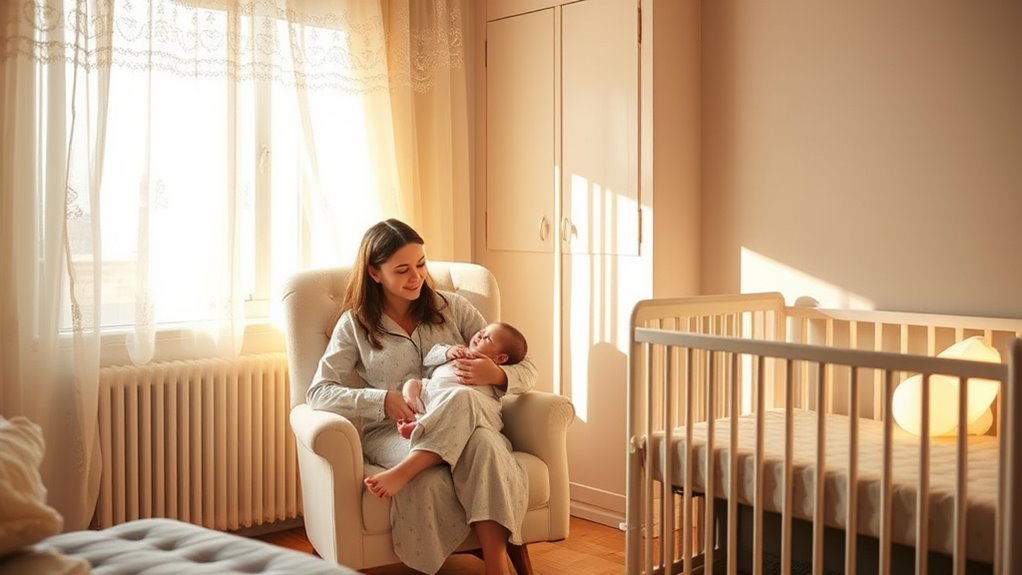
Becoming a new mother can be both exciting and exhausting, especially when it comes to getting enough sleep. The rush of caring for your newborn often leaves you battling postpartum fatigue, which can drain your energy and make restful sleep seem out of reach. One of the most effective ways to combat this is by creating a sleep environment that promotes rest, even amidst the chaos of new motherhood. Your sleep environment should be a sanctuary, designed to minimize disruptions and signal to your body that it’s time to rest. Keep your bedroom cool, dark, and quiet—these elements are essential for quality sleep. Invest in blackout curtains to block out early morning light, and use a white noise machine or fan to drown out household sounds. Making your sleep space inviting and comfortable encourages your body to relax and settle into deeper sleep cycles, helping you recover from postpartum fatigue more efficiently.
Create a calming sleep space with darkness, coolness, and quiet to help recover from postpartum fatigue.
Prioritizing your sleep environment also involves managing clutter and distractions. Keep your bedroom tidy and free of unnecessary electronics or work-related items that can cause stress or tempt you to stay awake longer than necessary. If your baby’s nursery is near your bedroom, consider soundproofing or using a baby monitor with a gentle nightlight to avoid frequent trips or disturbances. Remember, a clutter-free space not only reduces stress but also promotes a sense of calm, making it easier to drift off and stay asleep. Additionally, understanding the importance of quality sleep can motivate you to invest in creating the most restful environment possible.
Another key aspect is establishing a sleep routine that aligns with your baby’s schedule. While newborns often wake frequently, try to create consistent sleep cues for yourself, like dimming the lights or practicing calming rituals before bed. Taking short naps when your baby sleeps can help combat postpartum fatigue, but make sure these are in your optimized sleep environment to maximize their restorative effects.
Lastly, be mindful of your sleep position and bedding. Use supportive pillows and a comfortable mattress to prevent aches and discomfort that can interfere with quality sleep. Avoid caffeine or screen time close to bedtime, as these can disrupt your ability to fall asleep quickly. Even small adjustments to your sleep environment and routine can make a significant difference, helping you feel more rested and better equipped to handle the demands of new motherhood. Remember, taking care of your sleep isn’t just about survival—it’s about giving yourself the best chance to thrive during this challenging yet beautiful phase.
Frequently Asked Questions
How Can I Sleep Train My Newborn Effectively?
To effectively sleep train your newborn, establish consistent baby sleep routines and create a calming sleep environment. Keep the room dark, quiet, and at a comfortable temperature, which helps signal sleep time. Use gentle cues like a lullaby or a soft massage to help your baby associate these routines with sleep. Be patient and consistent, gradually encouraging your newborn to fall asleep independently, building healthy sleep habits early on.
What Are Quick Ways to Recover Sleep After Night Awakenings?
When you wake up at night, try quick relaxation techniques like deep breathing or gentle stretching to help you fall back asleep faster. Keep breastfeeding tips in mind—stay hydrated and comfortable—to prevent unnecessary awakenings. Limit screen time before bed and create a calming environment. These small steps, combined with relaxation methods, can help you recover sleep quickly and feel more rested for the day ahead.
How Do I Handle Sleep Regression Phases?
Sleep regression phases can feel like the end of the world, but you can handle them by maintaining a consistent sleep environment and trying dream feeding to soothe your baby. Keep the room dark, quiet, and cool, which helps reset their sleep patterns. Be patient and flexible, knowing this is temporary. Trust your instincts and remember, with time, your little one will settle back into a peaceful sleep routine.
Are There Safe Sleep Aids for New Mothers?
You can find safe remedies and sleep accessories to help improve your rest, but always choose options approved by healthcare professionals. Avoid medications without medical advice, and consider natural remedies like herbal teas or lavender essential oils. Use supportive pillows, blackout curtains, or white noise machines to create a calming sleep environment. Prioritize your safety and comfort, and consult your doctor before trying any new sleep aids or accessories.
How Can Partners Support Better Sleep for New Moms?
You can support better sleep for new moms through clear partner communication and by sharing household routines. Talk openly about her needs, listen actively, and offer help without hesitation. Take on chores, handle nighttime duties, and create a calm environment that fosters rest. By working together and maintaining consistent routines, you help her relax and recharge, ensuring both of you stay healthier and more connected during this demanding time.
Conclusion
Remember, every new mother’s sleep journey is unique. While some believe that sleep training can drastically improve rest, recent studies suggest it’s not a one-size-fits-all solution. Trust your instincts and experiment with different strategies to find what works best for you and your baby. Prioritize self-care and accept that challenging nights are temporary. With patience and flexibility, you’ll discover a rhythm that brings more restful nights and smoother days ahead.