For people who need to gain weight through tube feeding, Nutren 2.0 stands out as the best overall option in this lineup because its 2.0 Cal/mL density can provide more energy in less volume. Jevity 1.5 and Isosource Complete Nutrition with Fiber offer alternatives for buyers weighing calorie density against fiber and formula format. The main tradeoffs are calories per milliliter, protein and fiber content, tolerance, and whether the product is intended for tube feeding or oral use. The right choice depends on an individual care plan, not calorie density alone. Read on for the full comparison and guidance on what to discuss with a clinician or dietitian.

Turn the school run and nap time into listening time
- Thousands of audiobooks, podcasts and originals
- Listen on your phone, tablet or Echo — also offline
- Cancel anytime
Complete the kit


Key Takeaways
- Nutren 2.0 leads on energy density: Its 2.0 Cal/mL formulation stands apart from the 1.5 Cal/mL options when prescribed volume is limited.
- Many picks share the 1.5 Cal/mL profile: Jevity 1.5, Osmolite 1.5, and other 1.5-calorie formulas make fiber, protein, format, and individual tolerance more useful differentiators than calorie density.
- Fiber is a meaningful dividing line: Jevity, Isosource, and some whole-food-style options differ from fiber-free formulas, so bowel patterns and clinical advice matter when choosing.
- Not every product listed is a tube-feeding formula: Peptamen 1.5 Vanilla Oral Supplement and Boost Very High Calorie are oral products, so buyers should verify route suitability rather than assume they can be used through a feeding tube.
- Packaging changes day-to-day convenience: Small cartons or cans can suit measured portions, while the 1000 mL Jevity RTH format may better fit a prescribed routine; handling and storage instructions still apply.
| Nutren 2.0 Complete Nutrition Tube Feeding Formula, 8.45 Fl Oz, 24pk |  | Best for Maximum Calories in Less Volume | Calories per mL: 2.0 | Calories per 1,000 mL: 2,000 | Protein per 1,000 mL: 84 g | VIEW ON AMAZON | See Our Full Breakdown |
| Nestle Peptamen 1.5 Vanilla Oral Supplement, 250 mL Carton, 6 Count |  | Best for Digestive-Absorption Needs | Volume per carton: 250 mL | Pack size: 6 cartons | Calories per serving: 375 | VIEW ON AMAZON | See Our Full Breakdown |
| HN High Nitrogen Complete Nutrition, Unflavored, 8.45 Fl Oz | 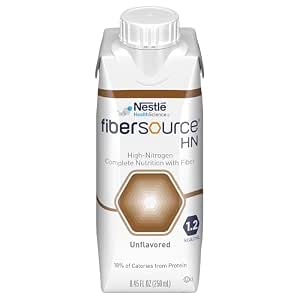 | Best for Fiber and Higher Protein Needs | Flavor: Unflavored | Container volume: 8.45 fl oz | Protein sources: Milk and soy | VIEW ON AMAZON | See Our Full Breakdown |
| 1.5 Cal Unflavored High-Protein, High-Calorie Nutrition 8 oz Cans – Case of 24 |  | Best for Oral-or-Tube Flexibility | Calories per mL: 1.5 | Volume per can: 8 oz | Package quantity: 24 cans | VIEW ON AMAZON | See Our Full Breakdown |
| Jevity 1.5 Cal High Protein Nutrition with FOS, 8-Ounce Cartons (Pack of 24) |  | Best for Fiber in a Familiar 1.5-Calorie Formula | Calories per mL: 1.5 | Container size: 8 oz | Pack size: 24 cartons | VIEW ON AMAZON | See Our Full Breakdown |
| Boost Very High Calorie Very Vanilla Nutritional Drink – 22g Protein, 530 Calories, 8 Fl Oz (Pack of 24) |  | Best Oral Calorie Boost | Serving size: 8 fl oz | Calories: 530 per serving | Protein: 22g per serving | VIEW ON AMAZON | See Our Full Breakdown |
| Abbott Jevity 1.5 Cal RTH 1000 mL Tube Feeding Formula, Unflavored, Gluten-Free with Fiber |  | Best High-Calorie Formula with Fiber | Calories: 1,500 kcal per 1,000 mL | Volume: 1,000 mL | Fiber: 22g per liter | VIEW ON AMAZON | See Our Full Breakdown |
| Functional Formularies Liquid Hope Tube Feed Formula, 24 Pack |  | Best Whole-Food Plant-Based Option | Type: Enteral formula / meal replacement | Serving size: 12 oz | Calories: 450 per serving | VIEW ON AMAZON | See Our Full Breakdown |
| Isosource Complete Nutrition with Fiber, Unflavored, 8.45 Fl Oz, 24 Pack |  | Best for Limited Fluid Tolerance | Brand: Isosource | Type: Tube-feeding formula | Caloric density: 1.5 Cal/mL | VIEW ON AMAZON | See Our Full Breakdown |
| Abbott Osmolite 1.5 Cal Tube Feeding Formula 8 oz (Model 64837) |  | Best for Specialized Fat Absorption Needs | Manufacturer: Abbott Nutrition | Model number: 64837 | Calories per serving: 355 | VIEW ON AMAZON | See Our Full Breakdown |
| feeding tube formula to gain weight | Dietary suitability | Pack size | Flavor |
|---|---|---|---|
| Nutren 2.0 Complete Nutrition | Lactose-intolerant, gluten-free, kosher | — | — |
| Nestle Peptamen 1.5 Vanilla Or | Gluten-free, lactose-free | 6 cartons | Vanilla |
| HN High Nitrogen Complete Nutr | Gluten-free, kosher, suitable for lactose intolerance | — | Unflavored |
| 1.5 Cal Unflavored High-Protei | — | — | Unflavored |
| Jevity 1.5 Cal High Protein Nu | Lactose-free, gluten-free | 24 cartons | — |
| Boost Very High Calorie Very V | — | 24 bottles | Very Vanilla |
| Abbott Jevity 1.5 Cal RTH 1000 | — | — | — |
| Functional Formularies Liquid | — | 24 | — |
| Isosource Complete Nutrition w | — | 24 | Unflavored |
| Abbott Osmolite 1.5 Cal Tube F | Kosher, halal, and lactose-intolerant diets | — | — |
More Details on Our Top Picks
Nutren 2.0 Complete Nutrition Tube Feeding Formula, 8.45 Fl Oz, 24pk
For a weight-gain plan where fluid volume is a limiting factor, Nutren 2.0 stands out with 2.0 calories per mL and 2,000 calories per liter. Its concentrated formula can provide substantial energy in less volume than Jevity 1.5 Cal, which is a useful distinction when a care team has set fluid limits. The 84 g of protein per liter from a casein-soy blend also gives this option a clear role when protein intake matters alongside calories. Canola oil supplies monounsaturated fat and omega-3 ALA. The tradeoff is that this is a tube-feeding formula for use under medical supervision, not a flexible oral supplement; it is also unsuitable for people with galactosemia or milk or soy allergies.
Pros:- Provides 2.0 calories per mL for high energy in a smaller volume.
- Contains 84 g of protein per liter from a casein-soy blend.
- Canola oil provides monounsaturated fat and omega-3 ALA.
- Listed as suitable for lactose-intolerant, gluten-free, and kosher diets.
Cons:- Requires medical supervision and is not intended for intravenous use.
- Not suitable for individuals with galactosemia.
- Contains milk- and soy-derived protein, which can rule it out for people with those allergies.
Best for: People with a clinician-directed weight-gain plan who need concentrated tube feeding because fluid volume is restricted.
Not ideal for: People who need an oral supplement, have galactosemia or milk or soy allergies, or need a formula selected without clinical guidance.
- Calories per mL:2.0
- Calories per 1,000 mL:2,000
- Protein per 1,000 mL:84 g
- Primary fat source:Canola oil
- Container volume:8.45 fl oz
- Package size:24 pack
- Dietary suitability:Lactose-intolerant, gluten-free, kosher
- Not suitable for:Individuals with galactosemia
Our verdict“Choose Nutren 2.0 when a clinician recommends high calorie delivery in a limited fluid volume and its ingredients fit your needs.”
Nestle Peptamen 1.5 Vanilla Oral Supplement, 250 mL Carton, 6 Count
Peptamen 1.5 Vanilla is the most specialized choice here for someone whose weight-gain plan also needs a formula with hydrolyzed protein and MCT fats. Each 250 mL carton supplies 375 calories, while the whey protein is hydrolyzed rather than intact; that makes this a different fit from Nutren 2.0, whose stronger distinction is greater calorie concentration for fluid restriction. Peptamen is ready to use and can be taken orally or by tube, giving it more flexibility than the tube-feeding-only HN High Nitrogen Complete Nutrition. The limits are real: it comes in vanilla only, the six-carton pack is smaller than the 24-count options, and MCT fats may not suit every person. Follow the care team’s guidance on route and serving amount.
Pros:- Provides 375 calories in a 250 mL carton.
- Uses hydrolyzed whey protein and MCT fats.
- Ready to use for oral consumption or tube feeding.
- Listed as gluten-free and lactose-free.
Cons:- Available only in vanilla flavor.
- MCT fats may not be appropriate for every person.
- Requires refrigeration after opening, and the pack contains six cartons.
Best for: People whose clinician recommends a hydrolyzed whey and MCT formula and who want the option of oral or tube feeding.
Not ideal for: People who need the highest calorie concentration for fluid restriction, dislike vanilla, or have been advised to avoid MCT fats.
- Volume per carton:250 mL
- Pack size:6 cartons
- Calories per serving:375
- Protein source:Hydrolyzed whey protein
- Fat source:MCT
- Flavor:Vanilla
- Dietary suitability:Gluten-free, lactose-free
- Ready to use:Yes
Our verdict“Pick Peptamen 1.5 when a clinician recommends hydrolyzed protein and MCT fats and oral-or-tube flexibility matters more than maximum calorie density.”
HN High Nitrogen Complete Nutrition, Unflavored, 8.45 Fl Oz
HN High Nitrogen Complete Nutrition is a tube-feeding-only option for people whose care plan calls for complete nutrition with added fiber and protein from milk and soy. That makes it a distinct alternative to Nutren 2.0: Nutren gives a clearly stated 2.0 calories per mL for calorie concentration, while the supplied HN details emphasize fiber and elevated protein needs without providing a calorie-density figure. Its unflavored format may also suit feeding routines where flavor is not a priority. The limits are substantial for some buyers: it is not described for oral use, contains milk and soy allergens, and is unsuitable for people with galactosemia. Since the provided product data does not give calorie or protein amounts, I would not choose it for a specific weight-gain target without confirming those figures with the clinician or manufacturer.
Pros:- Nutritionally complete and includes fiber.
- Designed for normal or elevated calorie and protein requirements.
- Unflavored and listed as gluten-free and kosher.
- Listed as suitable for lactose intolerance.
Cons:- Intended for tube feeding only, not oral use.
- Contains milk and soy protein, which may be unsuitable for people with those allergies.
- The supplied product data does not state calorie density or a specific protein amount.
Best for: Tube-fed patients whose care team wants a complete formula with fiber and a focus on protein needs.
Not ideal for: People needing an oral formula, those with milk or soy allergies or galactosemia, or buyers who need a verified calorie-per-mL figure before selecting a weight-gain formula.
- Flavor:Unflavored
- Container volume:8.45 fl oz
- Protein sources:Milk and soy
- Fiber:Included
- Dietary suitability:Gluten-free, kosher, suitable for lactose intolerance
- Intended use:Tube feeding only
- Contraindication:Not for individuals with galactosemia
- Not for:Intravenous use
Our verdict“Consider HN when fiber and protein are priorities in a tube-feeding plan, but verify its calorie density before relying on it for weight gain.”
1.5 Cal Unflavored High-Protein, High-Calorie Nutrition 8 oz Cans – Case of 24
This 1.5 Cal unflavored formula suits buyers who need one ready-to-serve product for either oral or tube feeding, with a stated energy density of 1.5 calories per mL. Its case of 24 eight-ounce cans offers a larger supply than the six-carton Peptamen 1.5 Vanilla, though Peptamen provides more detail about hydrolyzed protein and MCT fats. Compared with Nutren 2.0, this formula is less concentrated, so it may require more volume to deliver the same calories; that can matter if fluid intake is restricted. The product description identifies it as high in protein and includes vitamins and minerals, but does not give exact protein amounts or dietary certifications. The unflavored profile allows flexibility, yet may be less appealing for someone drinking it orally.
Pros:- Provides 1.5 calories per mL.
- Can be used for oral or tube feeding.
- Unflavored format offers flexibility across feeding routines.
- Includes vitamins and minerals in a case of 24 cans.
Cons:- Less calorie-dense than Nutren 2.0, so it may take more volume to provide the same calories.
- Exact protein amounts and specific dietary suitability are not stated in the supplied product data.
- Unflavored taste may be unappealing for oral use.
Best for: Households seeking a 24-can supply of a 1.5-calorie-per-mL formula that can be used orally or through a feeding tube.
Not ideal for: People with fluid restrictions who need greater calorie concentration, or buyers who require confirmed allergen and dietary certification details.
- Calories per mL:1.5
- Volume per can:8 oz
- Package quantity:24 cans
- Flavor:Unflavored
- Use:Oral or tube feeding
- Nutrition additions:Vitamins and minerals
- Protein description:High-protein; specific amount not provided
Our verdict“Choose this 1.5 Cal formula for a larger oral-or-tube supply when its lower calorie density and unspecified dietary details fit the care plan.”
Jevity 1.5 Cal High Protein Nutrition with FOS, 8-Ounce Cartons (Pack of 24)
Jevity 1.5 Cal with FOS is a practical fit for a clinician-directed plan that calls for a 1.5-calorie formula with high protein and a fiber ingredient. Its 24 eight-ounce cartons create a steady supply, unlike Peptamen 1.5 Vanilla, which comes in a six-carton pack and is differentiated by hydrolyzed whey and MCT fats. Jevity is listed as lactose-free and gluten-free and can serve as sole or supplemental nutrition, though the supplied description particularly frames it for oral feeding and altered taste perception. For weight gain, its stated 1.5-calorie designation is less concentrated than Nutren 2.0, so it may be a poorer match when fluid volume is tightly limited. Milk and soy ingredients remain a concern for people with those allergies, and flavor details are limited.
Pros:- Listed as a high-protein formula containing FOS.
- Lactose-free and gluten-free according to the supplied product data.
- Can be used as sole or supplemental nutrition.
- Comes in a 24-carton pack of eight-ounce servings.
Cons:- At 1.5 calories per mL, it is less concentrated than Nutren 2.0 for fluid-limited plans.
- Contains milk and soy ingredients, which can rule it out for people with those allergies.
- The supplied product details do not specify flavor options or exact protein content.
Best for: People with a care-team-approved plan who want a 24-carton, high-protein formula with FOS and listed lactose-free and gluten-free suitability.
Not ideal for: People with milk or soy allergies, those needing 2.0-calorie-per-mL concentration, or buyers who need clear flavor and detailed nutrient specifications before purchase.
- Calories per mL:1.5
- Container size:8 oz
- Pack size:24 cartons
- Protein:High protein; exact amount not provided
- Fiber ingredient:FOS
- Dietary suitability:Lactose-free, gluten-free
- Use:Sole or supplemental nutrition
- Ingredients of concern:Contains milk and soy
Our verdict“Choose Jevity 1.5 when FOS, high protein, and a larger carton supply suit the prescribed plan, but not when maximum calorie concentration is the priority.”
Boost Very High Calorie Very Vanilla Nutritional Drink – 22g Protein, 530 Calories, 8 Fl Oz (Pack of 24)
Boost Very High Calorie Very Vanilla is the oral-drink pick for adults who need a substantial calorie boost in a small serving: each 8 fl oz bottle provides 530 calories and 22g of protein. That makes it more calorie-dense per bottle than Abbott Osmolite 1.5 Cal’s listed 355 calories per 8 oz, but the products serve different purposes: Boost is a nutritional drink, not a tube-feeding formula. Its vitamins and minerals add meal-replacement convenience, while the vanilla flavor may suit people who prefer a flavored drink to the unflavored formulas in this roundup. The tradeoff is its thick texture and concentrated calories, which may not fit every person’s needs or tolerance. Use it for tube feeding only if a clinician confirms that route is appropriate.
Pros:- Provides 530 calories and 22g of protein in an 8 fl oz serving.
- Includes essential vitamins and minerals.
- Vanilla flavor offers an alternative to the unflavored tube-feeding formulas in this roundup.
- Compact serving can add substantial calories without a large volume.
Cons:- It is described as a nutritional drink, not a tube-feeding formula; administration route should be confirmed with a clinician.
- The thick texture may be difficult for some people to tolerate.
- A 24-bottle pack may be excessive for someone who needs only occasional servings.
Best for: Adults seeking a small-volume, high-calorie oral nutritional drink who have clinician guidance on whether it fits their nutrition plan.
Not ideal for: People who need a formula specifically designated for tube administration, dislike thick drinks, or need to limit calorie intake per serving.
- Serving size:8 fl oz
- Calories:530 per serving
- Protein:22g per serving
- Flavor:Very Vanilla
- Pack size:24 bottles
Our verdict“Choose this for a clinician-approved oral calorie boost, not as a substitute for a prescribed tube-feeding formula.”
Abbott Jevity 1.5 Cal RTH 1000 mL Tube Feeding Formula, Unflavored, Gluten-Free with Fiber
Abbott Jevity 1.5 Cal RTH pairs elevated calorie density with a clearly stated fiber amount: 1,500 kcal and 22g of fiber per liter. That combination may suit adults whose prescribed feeding plan calls for added calories while retaining fiber, unlike Boost Very High Calorie, which is an oral nutritional drink rather than a listed tube-feeding formula. Jevity also supplies 24 essential vitamins and minerals at 100% of the RDI, making its nutrition profile more fully specified than Isosource Complete Nutrition with Fiber, whose supplied details do not quantify fiber or vitamin coverage. The ready-to-use 1,000 mL carton avoids preparation, but its size can be cumbersome to handle. Its unflavored profile may also be less appealing for anyone wanting a flavored oral drink.
Pros:- Provides 1,500 kcal per liter for calorie-dense feeding.
- Contains 22g of fiber per liter.
- Lists 24 essential vitamins and minerals, meeting 100% of the RDI.
- Ready-to-use and identified as gluten-free, halal, and kosher.
Cons:- The 1,000 mL carton can be heavy and awkward to handle during administration.
- Unflavored formula may not suit people seeking an enjoyable oral drink.
- Its fiber content may not match every individual’s prescribed feeding plan.
Best for: Adults prescribed a calorie-dense tube-feeding formula who want quantified fiber and a stated full daily profile of essential vitamins and minerals.
Not ideal for: People who need smaller, easier-to-handle containers or want a flavored drink; confirm suitability with a clinician if dietary certification or fiber content affects care.
- Calories:1,500 kcal per 1,000 mL
- Volume:1,000 mL
- Fiber:22g per liter
- Vitamins and minerals:24 essential; meets 100% of the RDI
- Dietary claims:Gluten-free, halal, kosher
- Packaging:Ready-to-use Tetra Carton
- Case size:8 cartons
Our verdict“Choose Jevity when a prescribed plan calls for a ready-to-use, 1.5 Cal/mL formula with quantified fiber and broad micronutrient coverage.”
Functional Formularies Liquid Hope Tube Feed Formula, 24 Pack
Functional Formularies Liquid Hope stands apart from the more conventional Abbott Jevity 1.5 Cal and Isosource formulas by using 16 organic, plant-based whole-food ingredients. Each 12 oz serving provides 450 calories and 9g of fiber, so it offers a whole-food profile but less calorie concentration per stated serving than Jevity’s 1,500 kcal per liter. That distinction matters for buyers balancing ingredient preferences against the volume needed to meet a calorie target. Liquid Hope also avoids added sugar and artificial ingredients and is listed as free from dairy, soy, corn, and gluten. However, the manufacturer notes that it is produced in a facility that also processes gluten, a concern for severe celiac sensitivity. It is formulated for adults, and the larger serving size may be less practical when volume is limited.
Pros:- Uses 16 organic, plant-based whole-food ingredients.
- Provides 450 calories and 9g of fiber per 12 oz serving.
- Listed as dairy-free, soy-free, corn-free, and free of added sugar and artificial ingredients.
- Designed as both an enteral formula and an oral meal replacement.
Cons:- Its 450 calories per 12 oz serving is less calorie-dense than Jevity 1.5 Cal by volume.
- Facility cross-contact with gluten may be a concern for people with severe celiac sensitivity.
- Formulated for adults, so it may not be appropriate for pediatric feeding.
Best for: Adults prescribed enteral nutrition who prioritize an organic, plant-based whole-food formula and can accommodate a 12 oz serving.
Not ideal for: People with severe celiac sensitivity, pediatric patients, or adults whose prescribed plan requires greater calorie density in a smaller volume.
- Type:Enteral formula / meal replacement
- Serving size:12 oz
- Calories:450 per serving
- Dietary fiber:9g per serving
- Ingredients:16 whole-food ingredients
- Dietary claims:Organic, plant-based, gluten-free, dairy-free, soy-free, corn-free, lactose-free
- Pack size:24
Our verdict“Choose Liquid Hope when whole-food, plant-based ingredients matter more than maximizing calories in the smallest volume.”
Isosource Complete Nutrition with Fiber, Unflavored, 8.45 Fl Oz, 24 Pack
Isosource Complete Nutrition with Fiber is aimed at people whose calorie needs are increased while fluid volume is restricted: its listed 1.5 Cal/mL density packs more energy into a smaller volume than Liquid Hope’s 450 calories per 12 oz serving. It also includes fiber, though the supplied product details do not state the amount, so buyers who need a specific fiber target may prefer Jevity 1.5 Cal, which lists 22g per liter. The 8.45 fl oz unflavored carton is a practical format for prescribed tube feeding, but the product is described specifically for that use and should not be treated as an oral drink without clinical direction. Its nutrition details are less complete here than Jevity’s, including no stated calories per carton or vitamin-and-mineral breakdown.
Pros:- A 1.5 Cal/mL density suits plans that limit fluid volume while providing calories.
- Contains fiber to support digestive health and bowel function.
- Designed for people with increased calorie needs.
- Compact 8.45 fl oz cartons offer a smaller package size than Jevity’s 1,000 mL carton.
Cons:- Unflavored taste may not suit people looking for an oral nutritional drink.
- The supplied product details do not quantify fiber or calories per carton.
- Tube-feeding formulation may not be suitable for oral use without clinician direction.
Best for: Tube-fed adults with increased calorie needs and limited fluid tolerance whose clinician has prescribed a 1.5 Cal/mL formula with fiber.
Not ideal for: People seeking a flavored oral supplement or those who need a stated fiber quantity, per-carton calorie count, or detailed micronutrient profile before choosing.
- Brand:Isosource
- Type:Tube-feeding formula
- Caloric density:1.5 Cal/mL
- Volume:8.45 fl oz
- Flavor:Unflavored
- Fiber:Contains fiber; amount not stated in supplied data
- Pack size:24
Our verdict“Choose Isosource for a prescribed, compact 1.5 Cal/mL tube-feeding option when fluid volume is a concern.”
Abbott Osmolite 1.5 Cal Tube Feeding Formula 8 oz (Model 64837)
Abbott Osmolite 1.5 Cal is a tube-feeding option for buyers comparing calorie density with a formula’s fat sources. Its listing highlights MCT oils to aid lipid absorption, alongside high-oleic safflower and canola oils. That gives it a different emphasis from Jevity 1.5 Cal, whose supplied details specify fiber and a broad vitamin-and-mineral profile, while Osmolite’s information focuses on oils and dietary suitability. The listed 355 calories per 8 oz serving provides a concrete serving reference, but the data supplied here do not state protein grams, so buyers prioritizing a verified protein amount should compare the full label rather than rely on the general claim. The unflavored formula may be practical for tube administration, yet it is less suited to anyone seeking a tasty oral supplement.
Pros:- Provides 355 calories per 8 oz serving.
- Includes MCT oils described as supporting lipid absorption.
- Uses high-oleic safflower and canola oils.
- Listed as suitable for kosher, halal, and lactose-intolerant diets.
Cons:- The supplied product data do not state protein grams per serving.
- Unflavored formula may be unappealing for oral consumption.
- The supplied specifications do not quantify fiber or vitamin-and-mineral coverage.
Best for: Adults with a prescribed tube-feeding plan who want a 1.5 Cal formula featuring MCT oils and need a formula identified as suitable for kosher, halal, or lactose-intolerant diets.
Not ideal for: People who need a stated protein amount, prefer flavored oral nutrition, or need quantified fiber and micronutrient details before selecting a formula.
- Manufacturer:Abbott Nutrition
- Model number:64837
- Calories per serving:355
- Serving volume:8 oz
- Formula type:Tube-feeding formula
- Fat sources:High-oleic safflower oil, canola oil, and MCT oils
- Dietary suitability:Kosher, halal, and lactose-intolerant diets
Our verdict“Choose Osmolite when its MCT-oil profile and stated dietary suitability match a clinician-directed feeding plan, and verify protein needs on the full label.”

How We Picked
I compared the ten listed products through the needs behind the search for feeding tube formula to gain weight: energy density, stated protein and fiber features, intended route, package format, and how clearly each product could fit a clinician-directed feeding plan. I gave priority to formulas explicitly presented for tube feeding and to products with clear calorie-density information. I also treated tolerance, hydration, and suitability for a specific medical condition as individualized clinical questions, not claims that a product can answer on its own.
The ranking favors tube-feeding suitability and practical calorie delivery first, then considers fiber, protein emphasis, and format. That puts Nutren 2.0 ahead for cases where a care team wants more calories in a smaller volume; it does not make it the right formula for everyone. Products with similar 1.5 Cal/mL profiles are separated by their stated features and package formats, while oral-only products rank lower for a tube-feeding-focused roundup. Product names and labels should be checked at purchase, since formulations and package details can change.
| feeding tube formula to gain weight | Dietary suitability | Flavor |
|---|---|---|
| Nutren 2.0 Complete Nutrition | Lactose-intolerant, gluten-free, kosher | — |
| Nestle Peptamen 1.5 Vanilla Or | Gluten-free, lactose-free | Vanilla |
| HN High Nitrogen Complete Nutr | Gluten-free, kosher, suitable for lactose intolerance | Unflavored |
| 1.5 Cal Unflavored High-Protei | — | Unflavored |
| Jevity 1.5 Cal High Protein Nu | Lactose-free, gluten-free | — |
| Boost Very High Calorie Very V | — | Very Vanilla |
| Abbott Jevity 1.5 Cal RTH 1000 | — | — |
| Functional Formularies Liquid | — | — |
| Isosource Complete Nutrition w | — | Unflavored |
| Abbott Osmolite 1.5 Cal Tube F | Kosher, halal, and lactose-intolerant diets | — |
Factors to Consider When Choosing Feeding Tube Formula To Gain Weight
Choosing a formula for weight gain is not just a matter of selecting the highest calorie number. I would match the product to the prescribed daily volume, feeding method, tolerance, and nutrition goals, then confirm any changes with the care team. These broader checks can prevent a formula that looks suitable on paper from creating practical problems.
Match Calorie Density to the Prescribed Volume
Calorie density tells you how much energy a given volume provides, but it does not determine how much a person should receive. A 2.0 Cal/mL formula can be useful when fluid volume is limited or a care plan calls for concentrated nutrition, while a 1.5 Cal/mL option may fit a different volume and schedule. A common mistake is switching to a denser formula without reviewing total water needs and the feeding schedule. Ask the dietitian how the prescribed calories and fluids are divided across the day. Compare labels using the same unit, such as calories per milliliter, rather than relying on package size alone.
Check Whether the Product Is Intended for Tube Feeding
Product names can blur the difference between a tube-feeding formula and an oral nutrition drink. That distinction matters because consistency, packaging, and directions may not be designed for administration through a feeding tube. This roundup includes oral products, including Boost Very High Calorie and Peptamen 1.5 Vanilla Oral Supplement, so I would not assume they are appropriate for a tube without explicit label directions and approval from the care team. Confirm the intended route before buying a case. If a product is being considered for a tube, ask the clinician or supplier to verify compatibility with the specific tube and feeding method.
Treat Protein and Fiber as Separate Goals
Weight gain goals do not automatically mean every person needs the same protein level or fiber profile. Protein needs depend on the care plan, while fiber can affect bowel habits and may not suit every medical situation. Jevity 1.5 and Isosource are examples in this lineup with fiber-related features, while other products have different formulations. Avoid choosing based on a single front-label claim; review the full nutrition panel and discuss symptoms or restrictions with a dietitian. If adding or changing fiber, ask whether fluid intake and the feeding schedule also need adjustment.
Account for Tolerance and Feeding Method
A formula that meets calorie goals may still be a poor practical fit if it is not tolerated or does not match the prescribed delivery method. Consider whether feeding is continuous, intermittent, or bolus-based, and ask the clinician whether the formula’s thickness and administration directions fit that plan. Do not assume that a formula described as complete or high-calorie will resolve nausea, fullness, diarrhea, constipation, or other feeding concerns. Keep a record of symptoms and feeding changes to share with the care team. That information can help distinguish formula issues from rate, medication, hydration, or other factors.
Compare Package Format With Storage and Routine
Small cartons and cans can make it easier to work with prescribed portions, while a larger ready-to-hang or ready-to-use container may suit a different setup. Packaging can affect storage space, preparation steps, and how much product is opened at once. Do not choose solely by container size: check whether the formula requires preparation, how long an opened container may be kept, and whether the delivery equipment matches the package. Follow the product’s storage and handling directions, including any instructions for use after opening. A format that fits the home routine may reduce waste and make scheduled feeds easier to manage.
Plan for a Clinician-Guided Change
Changing formula, concentration, or feeding volume can affect fluid balance, tolerance, and overall nutrient intake. Before switching, ask the dietitian or prescriber to confirm the target calories, protein, water, and feeding rate. A frequent mistake is comparing only calories per carton while overlooking the full daily prescription and any additional water flushes. Have the product label available when you ask, since similarly named formulas may have different formulations or package directions. If weight changes unexpectedly or feeding symptoms worsen, report that promptly rather than making repeated adjustments without guidance.
Frequently Asked Questions
Is a 2.0 Cal/mL formula always better for gaining weight than a 1.5 Cal/mL formula?
No. A denser formula provides more calories in a given volume, which can help when a care plan limits fluid or volume, but it is not automatically the right choice for every person. The prescribed calorie target, hydration plan, feeding method, and tolerance all matter. Nutren 2.0 is the clearest high-density option in this roundup, while several alternatives are 1.5 Cal/mL. Ask the dietitian whether concentration or another factor is the main issue before switching.
Can I put an oral nutrition drink through a feeding tube?
Do not assume an oral drink is suitable for tube administration. This roundup includes products labeled as oral supplements, and their directions may differ from formulas intended for tube feeding. Tube compatibility can depend on the product, tube size, delivery method, and the person’s care plan. Check the product label and ask the prescribing clinician or dietitian before using any oral product through a tube. A product’s calorie or protein content alone does not establish that it is appropriate for tube feeding.
Should I choose a formula with fiber when weight gain is the goal?
Fiber is not a weight-gain requirement by itself, and the right choice depends on bowel patterns, medical needs, and the prescribed nutrition plan. Fiber-containing options such as Jevity 1.5 or Isosource may suit some people, while others may need a different formulation. More fiber is not always better, especially if symptoms or fluid restrictions are part of the care plan. Review the full label and discuss current bowel symptoms with a dietitian. Avoid changing formula and fiber intake at the same time without clinical guidance, since that can make the cause of new symptoms harder to identify.
How do I compare a small carton with a 1000 mL ready-to-hang container?
Compare the intended feeding schedule, package directions, and the amount prescribed per feed—not just the container’s total volume. Smaller packages can be convenient for measured portions, while a 1000 mL format may suit some routine setups. The larger container does not mean that the full amount should be given at once; follow the prescribed rate and handling directions. Check storage requirements and how long a container can be used after opening. If you are unsure which format matches the pump or feeding method, ask the home-care supplier or clinical team.
What should I do if weight is not increasing on the current formula?
Contact the clinician or dietitian rather than raising the volume or changing formula on your own. They can review actual intake, missed or shortened feeds, feeding rate, tolerance, hydration, and whether the weight target remains appropriate. Bring a record of feeds, water flushes, symptoms, and recent weights, along with the exact product label. The issue may involve the schedule or total intake rather than calorie density alone. Seek prompt clinical advice if weight loss is rapid or accompanied by worsening symptoms.
Conclusion
Best overall: Nutren 2.0 is the leading choice in this roundup when a care team wants higher calorie density in less volume. Best value-oriented format: compare the 24-pack 1.5 Cal/mL cartons or cans that fit the prescribed routine, with Jevity and Isosource standing out for buyers also weighing fiber. Best premium-style alternative: Functional Formularies Liquid Hope may interest buyers seeking a whole-food-style formula, but suitability and tolerance need clinical review. Best for beginners: start with the exact tube-feeding formula and package format recommended by the dietitian rather than choosing based on front-label claims. Best for specific needs: consider Jevity or Isosource when fiber is part of the care discussion, and consider a concentrated formula only when the plan calls for it. Before ordering, verify that the product is intended for the planned route and confirm the full feeding prescription with a clinician.