
Many parents make common mistakes when installing a car seat that can compromise your child’s safety. These include relying only on the seat belt without tightening it properly, misusing the LATCH system, ignoring the correct seat angle, and not checking the seat’s stability. You also might forget to make certain the harness is snug and positioned correctly. To keep your child safe, it’s important to avoid these pitfalls—continue on to learn more about proper installation techniques.

Turn the school run and nap time into listening time
- Thousands of audiobooks, podcasts and originals
- Listen on your phone, tablet or Echo — also offline
- Cancel anytime
Key Takeaways
- Relying solely on the seat belt without verifying tightness and proper threading.
- Not locking or properly tightening LATCH connectors, leading to loose installation.
- Failing to check that the seat wiggles no more than an inch when tugged.
- Overlooking correct seat angle and recline adjustments for safety and comfort.
- Neglecting daily safety checks like harness position and secure installation before trips.
As an affiliate, we earn on qualifying purchases.
How to Properly Install a Car Seat to Keep Your Child Safe
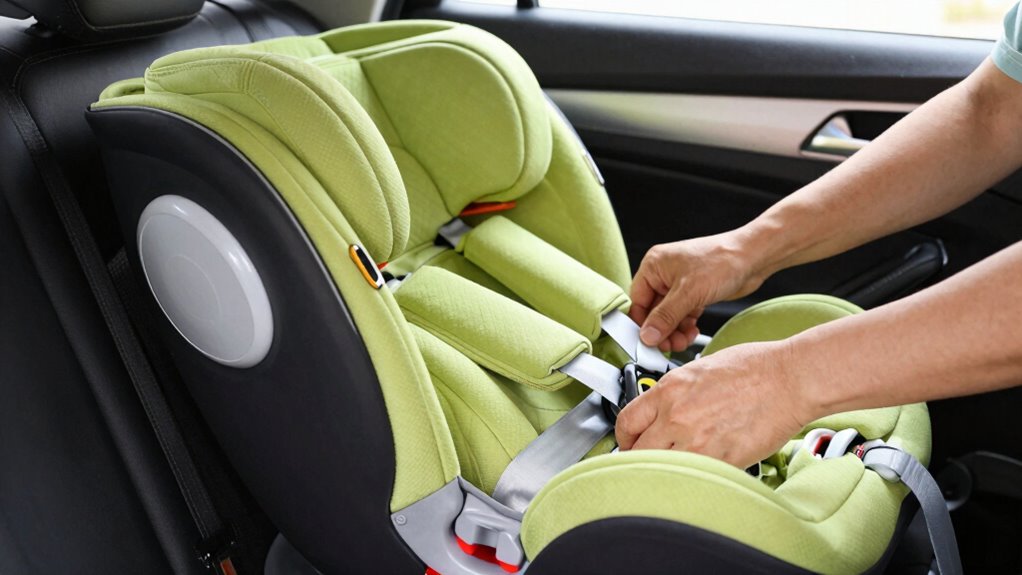
Installing a car seat correctly is essential for keeping your child safe in the vehicle. Start by checking your car’s manual for vehicle compatibility and specific installation instructions. Secure the seat using the seat belt, ensuring it’s threaded properly through the designated path. The seat belt should sit flat and snug around the seat, with no slack. If your car has LATCH anchors, consider using them for easier installation, but always verify compatibility with your car seat. Once installed, give the seat a firm shake to confirm it’s secure and doesn’t move more than an inch side to side or front to back. Proper installation minimizes risks and guarantees your child’s safety during every trip. Additionally, understanding the importance of contrast ratio can help you choose a car seat with better visibility and safety features. Being aware of personality assessments can also assist in selecting the most suitable safety accessories for your child’s needs. Recognizing common installation mistakes can further improve your setup and ensure maximum safety. It’s also helpful to consult installation guidelines regularly to stay updated on best practices for securing your child’s seat.
Common Mistakes to Avoid When Installing a Car Seat
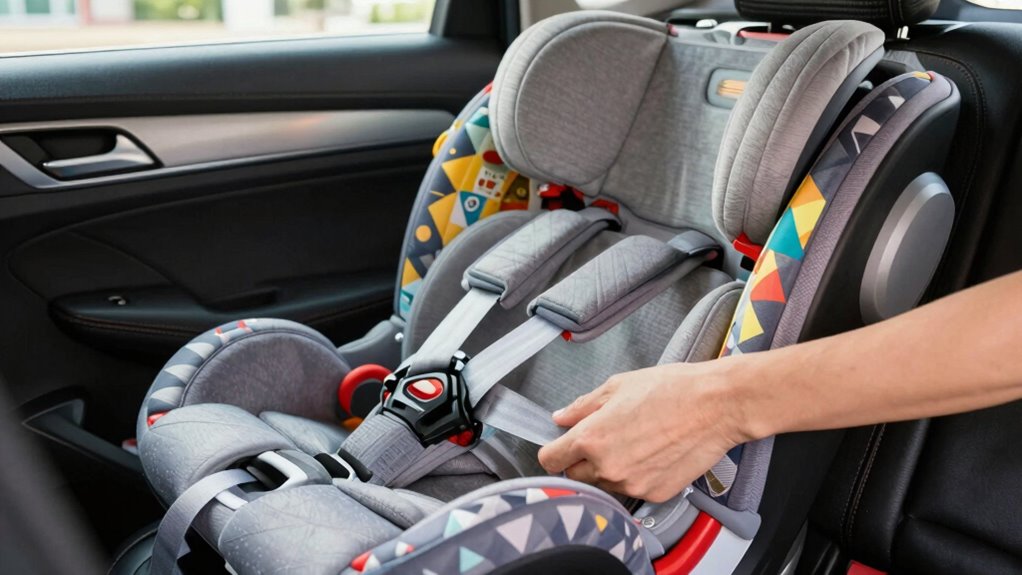
Even with the best intentions, many parents and caregivers make common mistakes when installing a car seat that can compromise your child’s safety. One mistake is relying solely on the seat belt without ensuring it’s tight enough; a loose belt can cause the seat to shift during a crash. Similarly, misusing the LATCH system is a frequent error—failing to lock the connectors or not tightening them properly leaves the seat unstable. Always double-check that the seat belt or LATCH system is secured tightly and the seat doesn’t wiggle more than an inch side to side. Proper installation techniques are essential to ensure the safety of your child. Additionally, many overlook the importance of proper seat angle adjustment to ensure your child’s comfort and safety. Ensuring compatibility of installation hardware with your vehicle can prevent potential issues and ensure a secure fit. Proper installation is vital for your child’s safety, so take your time and follow the manufacturer’s instructions carefully. Ensuring correct installation can significantly reduce the risk of injury in an accident.
How to Check and Fix Car Seat Installation Errors Before You Drive
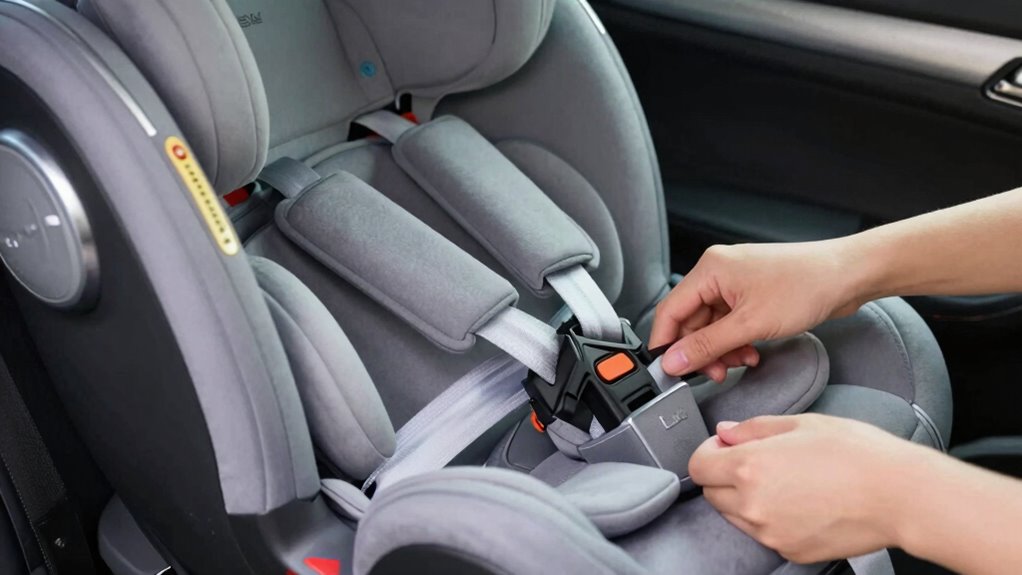
Before you hit the road, make sure to double-check your car seat installation to guarantee your child’s safety. Start by ensuring the latch system is secure; you should hear a click and feel minimal movement when you tug on the seat. If your car seat uses a seat belt instead, confirm it’s tightly fastened with no slack. Check for any signs of looseness—rock the seat side to side and front to back. Re-tighten the latch anchors or seat belt as needed, following the manufacturer’s instructions. Look for proper angle and recline, and ensure the seat is snug against the vehicle seat. Proper installation methods are essential for safety and can often be verified with a best gear and knife roundup for smart shopping. Ensuring the seat is correctly installed reduces the risk of injury and keeps your child safe during the drive. Additionally, consulting the vehicle owner’s manual can provide specific guidance tailored to your car model. Taking the time to properly install your car seat can prevent common mistakes and give you peace of mind on every trip. Remember, a secure car seat is vital for your child’s safety and can make a significant difference in case of an accident.
Ensuring Your Child Fits Correctly in the Car Seat
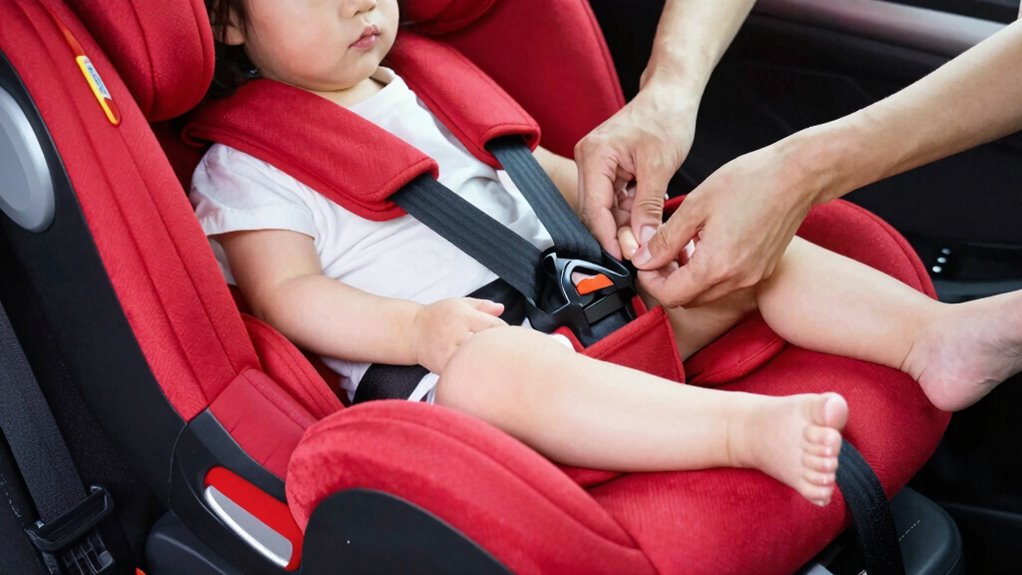
Ensuring your child fits correctly in the car seat is essential for their safety and comfort. Start by adjusting the harness so it’s snug against their body, with the straps lying flat and not twisted. The child harnessing system should secure your child at the shoulders, chest, and hips, providing ideal protection. Check that the seat positioning supports your child’s head and neck, with the harness clip at armpit level. The seat should sit firmly against the vehicle seat without any slack or excessive movement. Make sure your child’s legs are comfortably bent and not forced. Proper seat positioning and child harnessing considerably reduce the risk of injury in an accident, ensuring your little one is both safe and comfortable during every trip. Additionally, understanding easy conversion tools can help you interpret safety instructions or measurements more effectively. Being aware of vehicle safety standards can further enhance your confidence in proper installation. Remember that correct installation techniques are crucial for maximizing safety benefits. Ensuring proper fit is vital to prevent slipping or improper restraint, which can compromise safety.
Safety Checks to Do Before Every Trip to Protect Your Child
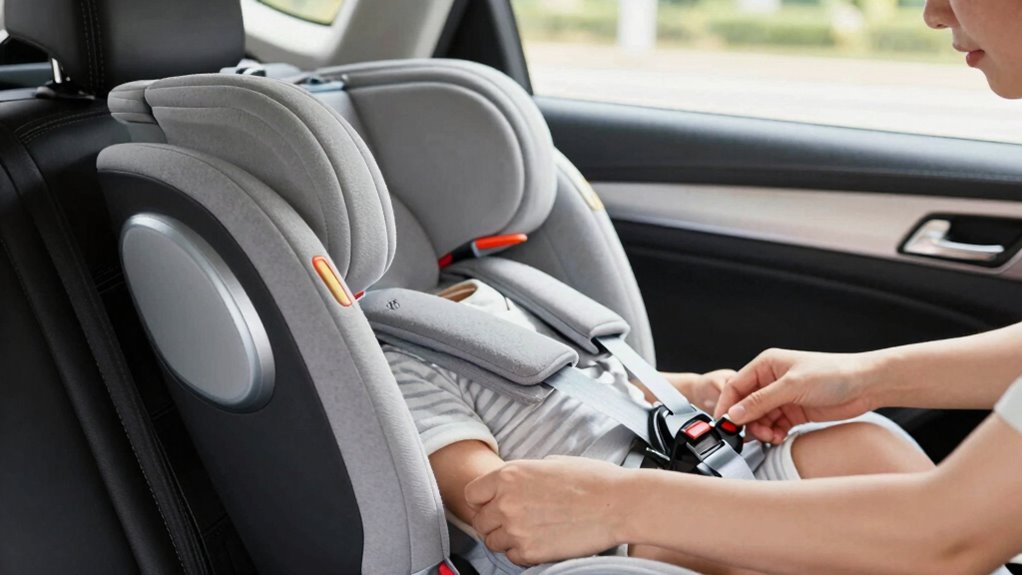
Performing a quick safety check before each trip helps guarantee your child’s car seat is correctly installed and secure. Start by ensuring the seat belt is snugly fastened and properly threaded through the car seat’s designated path. Confirm that the seat belt locks and doesn’t loosen with gentle pressure. Check that your child’s harness is correctly positioned, with the chest clip at armpit level. Make sure the seat is tightly secured, with minimal movement when you try to rock it side to side or front to back. Verify that your child’s harness is correctly positioned, with the chest clip at armpit level. Regularly reviewing installation techniques can help you stay informed about proper installation practices and ensure compliance with car seat safety regulations. Additionally, water safety guidelines can prevent accidents around pools and other water sources.
Frequently Asked Questions
Can I Install a Car Seat Without Using the Vehicle’s Seat Belt?
You shouldn’t install a car seat without using the vehicle’s seat belt unless the manufacturer specifically provides and approves an alternative installation method. Most seat belt alternatives, like LATCH systems, are designed to work with the vehicle’s seat belt, not replace it. Always follow the instructions, and check the car seat’s manual to make certain of proper installation. Using the correct seat belt alternatives guarantees your child’s safety and compliance with regulations.
How Do I Choose the Best Car Seat for My Child’s Age and Size?
Think of choosing a car seat like finding the perfect pair of shoes—comfort and support matter. You should prioritize choosing safety by looking for seats that meet safety standards and fit your child’s age and size. Proper positioning is key; make sure the seat fits snugly and supports your child’s head and body correctly. Always follow manufacturer guidelines to guarantee your child’s safety and comfort during every ride.
What Should I Do if the Car Seat Belt Doesn’T Fit Properly?
If the seat belt doesn’t fit properly, you should first check for common seat belt issues like slack or misalignment. Use installation tips such as ensuring the belt’s snug and flat against the car seat, and make sure the lap belt sits low on your child’s hips. If it still doesn’t fit, consider switching to a different seating position or using a harness booster seat to guarantee proper security.
Are There Specific Car Seat Models That Are Easier to Install Correctly?
Some car seat models are definitely easier to install correctly because they come with helpful features and clear installation guides. Look for seats with easy-to-use indicators, color-coded straps, and built-in lock-offs. Brands like Chicco, Britax, and Graco often include detailed installation guides and features designed for simpler setup. When choosing, focus on those car seat features that make installation straightforward, ensuring your child’s safety without the hassle.
How Often Should I Review and Adjust My Car Seat Installation?
You should review your car seat installation every few months and after any car trip to guarantee seat belt tension remains secure. Regularly checking the tightness helps prevent accidental loosening and keeps your child safe. Adjustments might be necessary if you notice any movement or if your child grows. By staying proactive, you maintain proper installation and reduce the risk of common mistakes, ensuring your child’s safety on every ride.
Conclusion
By avoiding these common mistakes, you can guarantee your child’s safety is as secure as a fortress. Always double-check your installation and fit before every trip — think of it as giving your little one a safety net that’s as strong and reliable as a trusted friend. Remember, a little extra effort now can make all the difference in protecting your child on every journey. Stay vigilant, stay safe, and keep those smiles shining bright.
Cold & flu season Picks
humidifiers
As an affiliate, we earn on qualifying purchases.