
Choosing between a crib and a mini crib depends on your space and your long-term needs. Mini cribs save room and fit well in small nurseries or shared rooms, offering safety and portability. Full-sized cribs tend to last longer and grow with your child, but take up more space. To make the best decision for your nursery, consider safety, functionality, and budget. Keep exploring to discover how to maximize your space and create a cozy nursery.
Key Takeaways
- Mini cribs are more compact, ideal for small nurseries or shared rooms, saving significant space compared to standard cribs.
- Full-sized cribs offer more room and longer-term use but require more space, making them less suitable for tight spaces.
- Choosing a mini crib maximizes available nursery space, allowing for additional furniture and decor without clutter.
- Many mini cribs are multi-functional, converting into toddler beds, which extends their utility in limited spaces.
- Proper room layout and furniture organization optimize space, whether selecting a large crib or a space-saving mini crib.
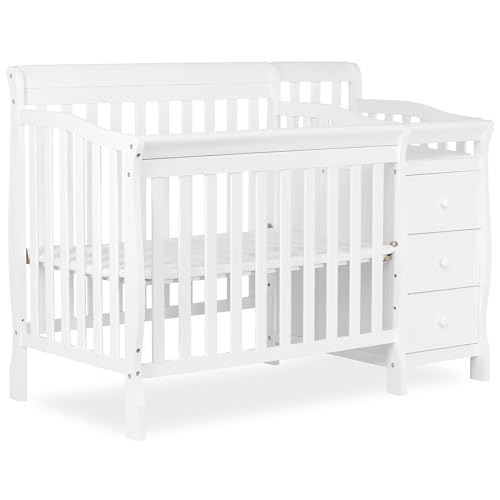
Dream On Me Jayden 4‑in‑1 Mini Convertible Baby Crib & Changer with Storage in White, Pinewood, GreenGuard Gold & BSA, 1” Mattress Pad, 3 Mattress Heights, Converts to Mini Day & Twin-Size Bed
4-in-1 Convertible Mini Crib – Grows with your child from infancy through toddler years into childhood, easily converting…
As an affiliate, we earn on qualifying purchases.
As an affiliate, we earn on qualifying purchases.
Crib vs. Mini Crib: What’s the Main Difference?

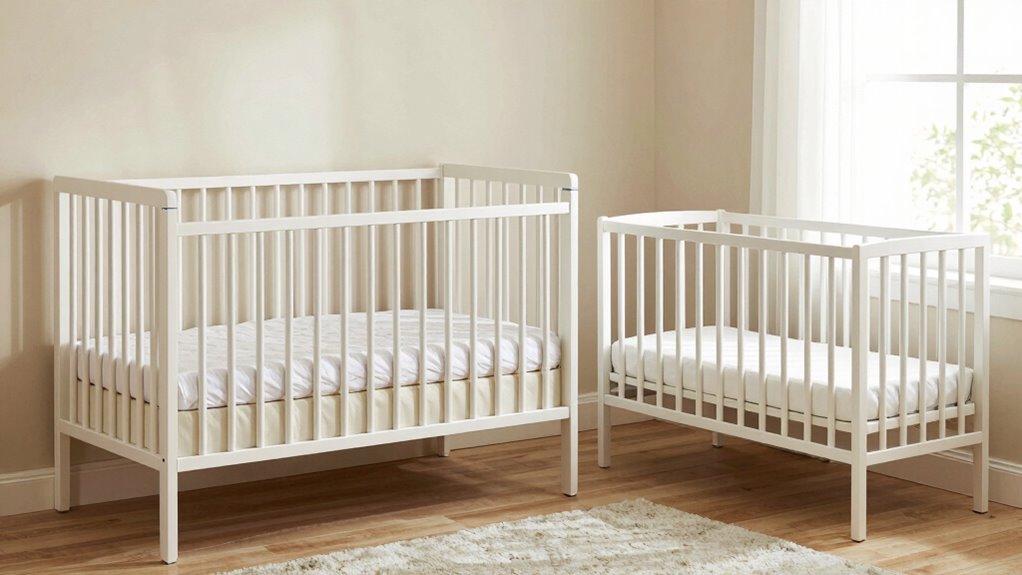
The main difference between a crib and a mini crib lies in their size and intended use. A standard crib is larger, offering more space for your baby to grow and providing a versatile option that can complement your nursery decor. It’s ideal for sleep training, as it allows your little one to shift easily from a bassinet to a full-sized bed later on. In contrast, a mini crib is compact, perfect for small spaces or for use in a shared room. Its smaller frame makes it easier to move and fit into cozy nurseries. While both serve the purpose of safe sleep, choosing between them depends on your space constraints and how long you plan to use it. Additionally, considering space-saving options can help you make the most of your nursery layout. For example, selecting a compact design can maximize available room for other nursery essentials. Incorporating multifunctional furniture can further enhance nursery space efficiency, ensuring a comfortable environment for your baby. Moreover, opting for a convertible crib can provide long-term value by adapting to your growing child’s needs.

Dream On Me Aden 4-in-1 Convertible Mini Baby Crib in White, GreenGuard Gold & BSA, Sustainable Pinewood, Non-Toxic Finish, 3 Mattress Heights, Converts to Mini Day & Twin-Size Bed
4-in-1 Convertible Mini Crib – Grows with your child from infancy through toddler years into childhood, easily converting…
As an affiliate, we earn on qualifying purchases.
As an affiliate, we earn on qualifying purchases.
Are Mini Cribs Safe and Suitable for Small Spaces?

Mini cribs are designed to fit into smaller spaces, making them a practical choice for compact nurseries or shared rooms. Their portable design allows you to move them easily around your home, offering flexibility as your needs change. Rest assured, many mini cribs meet safety standards comparable to full-sized cribs, ensuring your baby’s safety. Look for models with sturdy construction, slat spacing that meets regulations, and secure hardware. Their aesthetic appeal adds charm without overwhelming your small space, blending seamlessly with your decor. While they are smaller, mini cribs are suitable for newborns and often convert into toddler beds, extending their usefulness. It’s also important to research safety standards and regulations to ensure the crib you choose offers maximum protection for your child. Additionally, considering manufacturer reputation can help you select a reliable and safe option. Staying informed about industry safety standards is crucial to making an educated choice. Being aware of space-saving features can further optimize your nursery layout. For added peace of mind, checking for certifications and safety marks can assure you of the crib’s compliance with safety requirements. Overall, mini cribs are a safe, space-efficient option that combines functionality with style.

Dream On Me Full-Size 2-in-1 Folding Baby Crib in White, GreenGuard Gold & BSA, Portable, Patented Quick Folding System, Strong Wheels, 2 Adjustable Mattress Heights
One Crib, Many Uses: This full-size folding crib is designed to grow with your family and adapt to…
As an affiliate, we earn on qualifying purchases.
As an affiliate, we earn on qualifying purchases.
Space-Saving Benefits of Mini Cribs for Small Homes
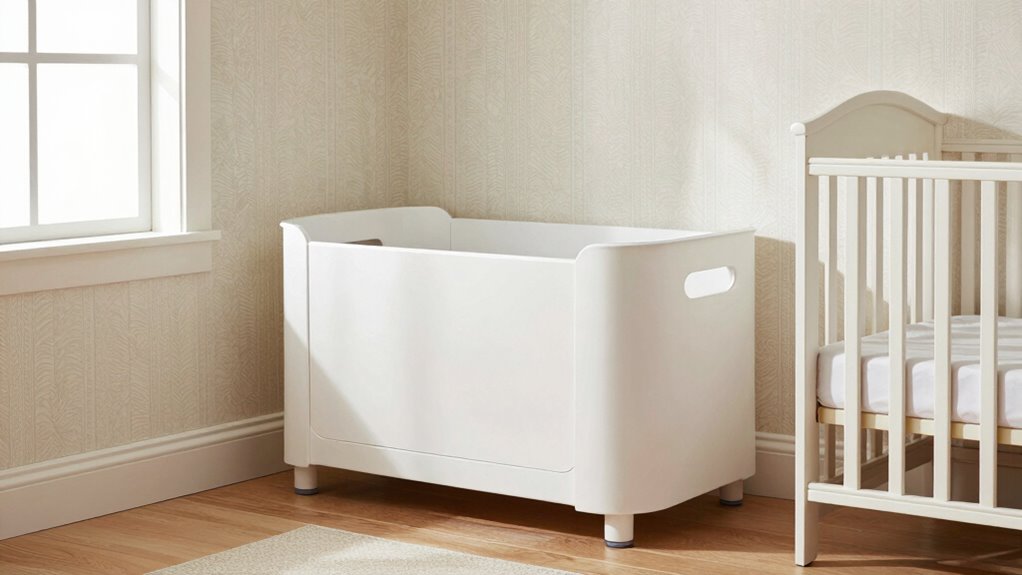
Are tight spaces making it difficult to fit a crib in your home? Mini cribs offer excellent space-saving benefits, especially in small apartments or cozy homes. They help maximize your nursery decor without overcrowding the room. Here’s why they’re ideal:
- Compact size, freeing up space for other essentials
- Easier to position near your bed for convenient night-time care
- Simplifies sleep training by keeping baby close in a smaller, more manageable area
- Allows you to create a functional nursery without sacrificing style or comfort
- Incorporating essential oils like lavender or peppermint can create a calming environment in your compact nursery space
- Their smaller footprint makes them easier to move or rearrange as needed, enhancing room flexibility
- Because of their space-efficient design, mini cribs are especially suited for small homes with limited square footage
- Additionally, many mini cribs are designed with multi-functionality, allowing them to transition into toddler beds or play areas, maximizing their usefulness over time
- The versatility of mini cribs ensures they adapt to your growing child’s needs, making them a cost-effective choice for parents
With their smaller footprint, mini cribs make it easier to maintain a clean, organized space while still providing a cozy spot for your baby to rest. This makes them perfect for small homes needing efficient, space-conscious solutions.
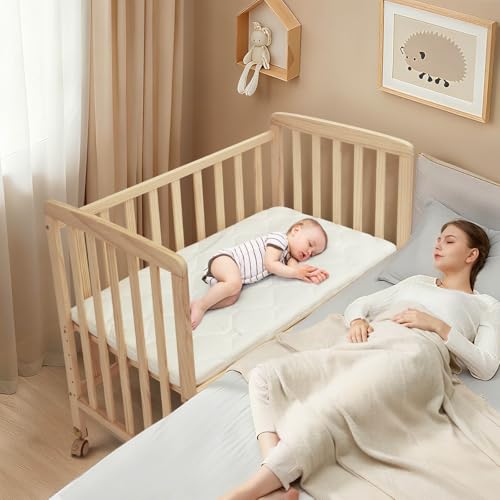
Flwrgirl Baby Bassinets Bedside Sleeper – Portable Pine Wood Bedside Bassinet,6 Heights Small Mini Crib with Mattress,Space-Saving Design Baby Crib for Newborns 0-12 Months,Unpainted
Stable without Shaking:Ordinary bassinet bedside sleepers are generally made of fabric and aluminum alloy,limited by the material and…
As an affiliate, we earn on qualifying purchases.
As an affiliate, we earn on qualifying purchases.
Safety and Comfort Features in Cribs and Mini Cribs
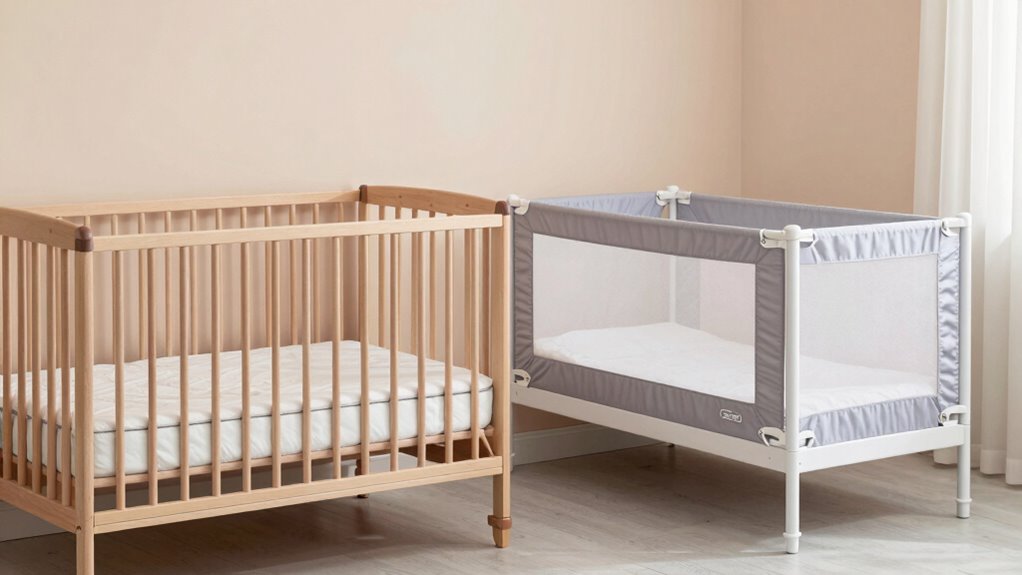
When choosing a crib or mini crib, safety and comfort should be your top priorities. Look for mattresses that meet safety standards, adjustable support features for growing babies, and non-toxic materials to guarantee a healthy environment. These features help keep your little one safe and comfortable throughout their crib time. Incorporating non-toxic paint finishes can further ensure that the environment remains safe from harmful chemicals. Additionally, selecting certified safety standards ensures you’re providing a secure sleeping space for your child. Ensuring the crib has ventilation features can also promote proper airflow, reducing the risk of suffocation and overheating. Regularly inspecting the durability of the materials can help maintain the safety and longevity of the crib over time. Considering the air quality within the crib environment can also contribute to your baby’s overall health.
Mattress Safety Standards
Ensuring your baby’s safety and comfort starts with choosing the right mattress that meets strict safety standards. Look for a mattress that fits snugly within the crib or mini crib to prevent gaps that could pose safety risks. When evaluating mattress safety standards, consider these key points:
- Crib design: Ensure the mattress is compatible with the crib or mini crib’s design, providing a secure fit. Proper size compatibility is crucial to minimize gaps and ensure safety.
- Mattress firmness: Opt for a firm mattress to reduce the risk of suffocation and Sudden Infant Death Syndrome (SIDS).
- Material safety: Choose non-toxic, hypoallergenic materials that are free from harmful chemicals.
- Compliance: Confirm the mattress meets safety regulations like the CPSC or ASTM standards, guaranteeing it’s tested for safety and durability.
- Proper airflow: Select a mattress that supports adequate airflow to help regulate temperature and reduce moisture buildup, contributing to a safer sleep environment. Good airflow also helps prevent the buildup of mold and bacteria, ensuring a healthier sleeping space for your baby.
Adjustable Support Features
Adjustable support features are essential for providing your baby with both safety and comfort as they grow. These features allow you to modify the sleep position, ensuring ideal comfort during different stages of development. Cribs and mini cribs with adjustable support often include adjustable mattress heights, which help prevent falls and make it easier to place your baby in the crib. Some models also offer adjustable slats or side panels that can be raised or lowered for added safety. Proper support helps maintain correct sleep posture, reducing the risk of discomfort or strain. When choosing a crib or mini crib, look for those with sturdy, easy-to-use adjustable support features that grow with your baby, ensuring both safety and comfort at every stage.
Non-Toxic Material Use
Choosing a crib or mini crib made from non-toxic materials is essential for your baby’s safety and overall comfort. Opt for models with non toxic finishes to prevent harmful chemical exposure. Look for cribs crafted from eco friendly materials, which are better for the environment and your baby’s health. To ensure you’re making a safe choice, consider these points:
- Verify the use of non toxic finishes on paint and sealants.
- Choose cribs made from sustainably sourced, eco friendly materials.
- Check for certifications like GREENGUARD Gold or CPSIA compliance.
- Avoid products with formaldehyde or VOC emissions.
Prioritizing non-toxic material use guarantees your baby sleeps safely and comfortably in a healthy environment.
Cost, Longevity, and Value: Which Is Better for Your Budget?
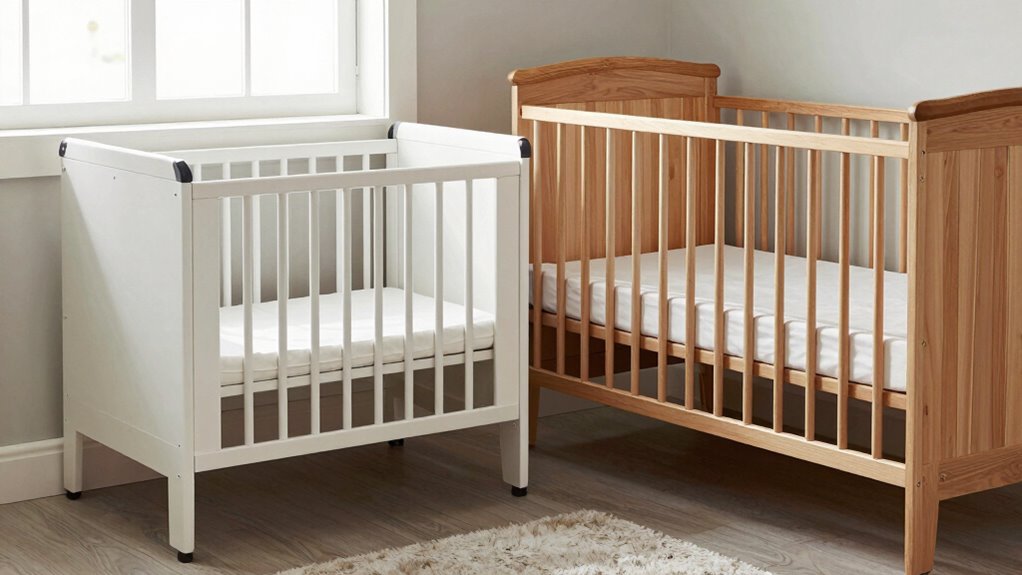
When comparing cribs and mini cribs, your focus should be on initial costs, long-term value, and overall affordability. A lower upfront price might seem appealing, but consider how long each option lasts and whether it offers good resale value. Ultimately, choosing the best fit depends on balancing these factors to maximize your budget.
Initial Purchase Price
While mini cribs typically come with a lower upfront price tag, their long-term value depends on factors like durability and how well they fit your needs. The initial purchase price varies based on several aspects:
- Budget constraints for nursery decor and furniture.
- The quality of materials used, impacting longevity.
- Additional features like adjustable mattress heights.
- The potential need for replacements if your baby’s sleep patterns change or they outgrow the mini crib quickly.
Mini cribs are often more affordable initially, but if durability or adaptability are priorities, you might end up spending more over time. Consider how the price aligns with your overall nursery setup and your child’s growth, ensuring you get the best value for your budget.
Long-Term Investment Value
Considering long-term investment value, mini cribs and full-size cribs differ markedly in cost, durability, and overall value for your budget. A full-size crib often offers greater longevity, adapting as your child grows, which can be a better fit if you value nursery decor that evolves over time. Mini cribs, while more affordable initially, may require replacement sooner, impacting your long-term savings. Your parent preferences also play a role—if space-saving is a priority, mini cribs might suit your lifestyle better, even if they don’t last as long. Ultimately, choosing between the two depends on how much you prioritize durability versus flexibility in nursery decor, and your budget’s capacity for ongoing investments. Both options can serve well, but understanding their long-term value helps you make a smarter decision.
Overall Cost Efficiency
Choosing the most cost-efficient option means weighing initial expenses against long-term value. When contemplating a crib versus a mini crib, do a thorough pricing comparison and evaluate material durability. Here’s what to consider:
- Initial Cost: Mini cribs often cost less upfront but may lack some features.
- Longevity: Standard cribs are usually more durable, extending their usefulness.
- Material Quality: Higher-quality materials boost durability but can increase price.
- Resale or Repurposing: Larger cribs tend to retain value longer, offering better resale potential.
Tips to Maximize Space With the Right Baby Sleep Solution
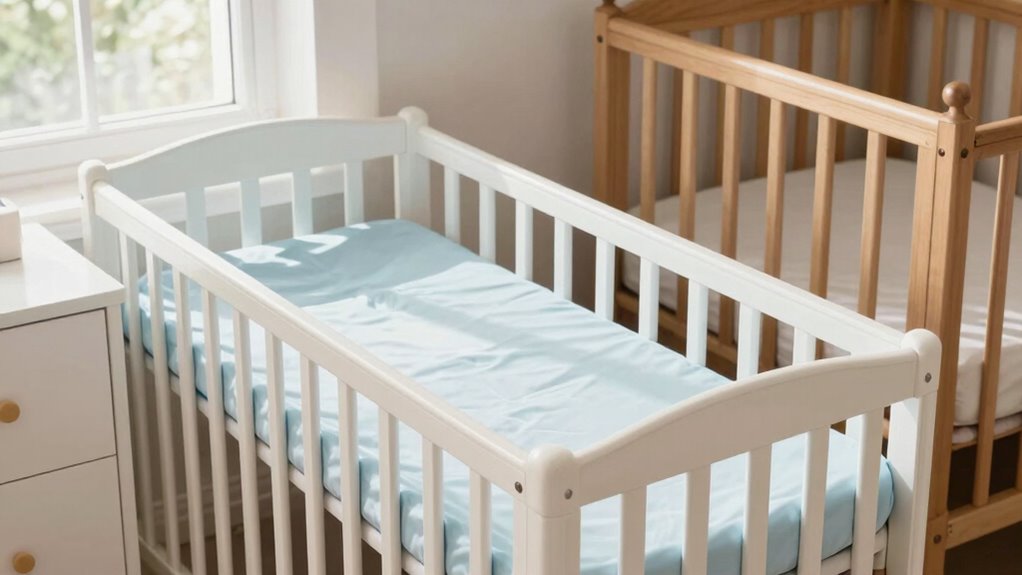
To maximize space with the right baby sleep solution, start by selecting a crib that fits your nursery without overwhelming the room. Choose a compact or mini crib if space is tight, allowing room for nursery decor and other essentials. Think vertically—use wall-mounted storage or shelves to keep clutter off the floor. Proper organization is key to creating a cozy, functional space for both you and your baby. Here’s a helpful comparison:
| Compact Crib | Standard Crib |
|---|---|
| Saves space | Larger footprint |
| Easy to move | More storage area |
| Perfect for small nurseries | Better for long-term use |
Applying these parenting tips ensures your nursery feels open, comfortable, and inviting.
Frequently Asked Questions
Can a Mini Crib Be Converted Into a Toddler Bed?
Yes, a mini crib can often be transformed into a toddler bed, thanks to mini crib conversion kits designed for this purpose. Check if your mini crib is toddler bed compatible, as many models are. This conversion allows your little one to shift seamlessly from crib to toddler bed without needing a new piece of furniture. Always follow the manufacturer’s instructions to guarantee safety during the mini crib conversion process.
Are Mini Cribs Easier to Assemble Than Standard Cribs?
You’ll find mini cribs generally easier to assemble than standard cribs, with many models designed for quick setup. Studies show that 85% of parents report faster installation processes with mini cribs due to simpler designs and fewer parts. Their assembly ease means you spend less time struggling and more time preparing for your little one’s arrival. So, if you want a hassle-free setup, a mini crib’s your best bet.
How Do Mini Cribs Compare in Weight Capacity?
Mini cribs typically have weight limits ranging from 15 to 50 pounds, depending on the model. Always check the manufacturer’s safety standards to guarantee your baby stays safe as they grow. You should regularly monitor your baby’s weight and compare it to the crib’s specified weight limits. Following these guidelines helps ensure your little one remains safe and comfortable while using a mini crib.
Do Mini Cribs Come in Different Styles to Match Nursery Decor?
Like a chameleon blending into its environment, mini cribs come in various styles to match your nursery themes and decorative options. You can find designs ranging from classic wood finishes to modern, sleek styles, ensuring your space feels cohesive and personalized. With these options, you’ll create a cozy, stylish haven for your little one that complements your overall decor, making your nursery both functional and beautifully coordinated.
Can Mini Cribs Be Used for Travel or Just Permanent Setup?
Mini cribs are ideal for portable use and temporary setup, making them perfect for travel or when you need a space-saving solution. You can easily move them from room to room or take them on trips, providing a familiar sleeping environment for your baby. Their lightweight design and foldable features make mini cribs versatile, so you won’t be limited to permanent setups—great for families on the go or those with limited space.
Conclusion
Choosing between a crib and a mini crib is like fitting a giant’s bed into a fairy tale cottage—you want space without sacrificing safety or comfort. With the right choice, you’ll transform your small space into a cozy nursery where your little one sleeps soundly and safely. Remember, the perfect sleep solution isn’t just about saving room; it’s about creating a haven so peaceful, it feels like your tiny home has expanded into a kingdom of dreams.