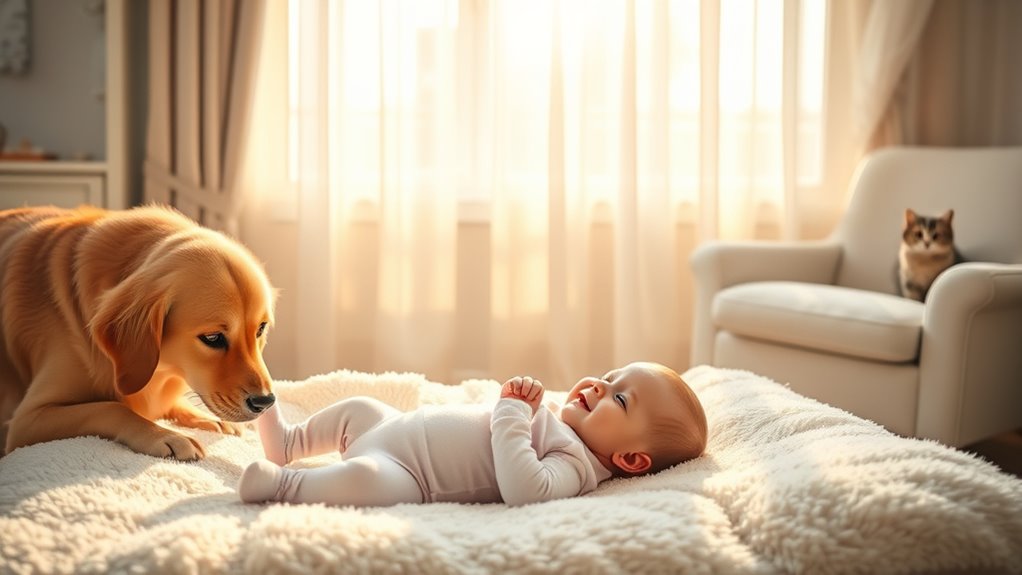

To introduce your baby to pets safely, start by training your pets with basic commands like “sit” and “leave it,” using positive reinforcement. Keep your pets clean and groomed to reduce health risks, and gradually introduce them to baby items and routines. Make certain your pets remain calm and relaxed during initial interactions. If you want to learn detailed steps to make this transition smooth, there’s more useful guidance you can explore.
Key Takeaways
- Train pets with basic commands and positive reinforcement before the baby’s arrival to ensure calm interactions.
- Groom pets regularly to maintain hygiene and reduce health risks during initial meetings with the baby.
- Introduce pets to baby items gradually, allowing them to familiarize themselves with new objects and routines.
- Schedule controlled, supervised interactions between pets and the baby, emphasizing calmness and respect for boundaries.
- Maintain consistent routines and provide reassurance to pets to promote comfort and reduce stress during the transition.
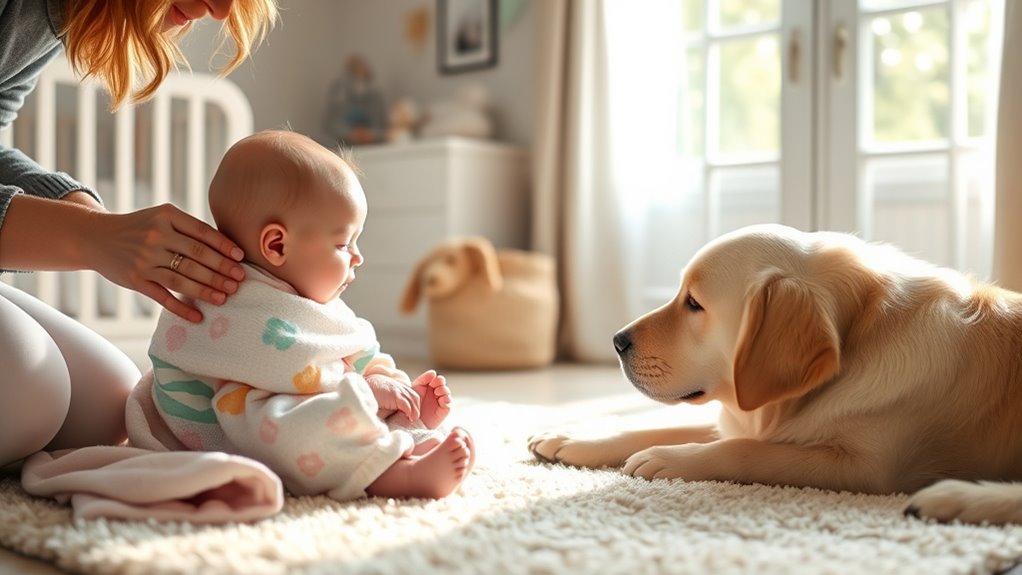
Bringing a new baby into a home with pets requires careful planning to guarantee everyone stays safe and comfortable. You’ll need to focus on pet training and pet grooming to make the transition smooth. Proper pet training helps your animals understand boundaries and gentle behaviors around the baby, reducing the risk of accidental injuries or stress. Start by teaching your pets basic commands like “sit,” “stay,” and “leave it.” Use positive reinforcement, such as treats or praise, to encourage good behavior. This way, your pets learn to respect the baby’s space and handle new situations calmly. Consistency is key; practice these commands regularly, and gradually introduce controlled interactions with baby items, like blankets or toys, so they become familiar and less anxious.
Pet grooming also plays a significant role in this process. Keep your pets clean and well-maintained to prevent the spread of germs or parasites that could pose health risks to your newborn. Regular baths, brushing, and nail trims ensure your pets are hygienic and less likely to scratch or accidentally harm the baby. If your pet has long hair, focus on trimming it to prevent hair ingestion or tangling around the baby’s crib or play area. A well-groomed pet is not only healthier but also more comfortable, which reduces their stress levels during this big change.
Incorporate pet training and grooming into your routine well before your baby arrives. This gives your pets time to adapt to new commands and grooming habits, making them more relaxed around the baby’s arrival. When introducing your pet to the baby for the first time, ensure they’re calm and relaxed. Use training cues to maintain control and prevent overexcited behavior. Keep in mind that some pets might need extra reassurance, so give them plenty of attention and praise for calm behavior. Grooming sessions can be a bonding experience, helping your pet associate positive feelings with the new routines.

Pet Botanics 20 oz. Pouch Training Rewards Soft & Chewy, Bacon Flavor, with 500 Treats Per Bag, The Choice of Top Trainers
BIG MOTIVATION IN EACH MINI BITE. Each of these 3 calorie treats are packed with flavor from pork…
As an affiliate, we earn on qualifying purchases.
As an affiliate, we earn on qualifying purchases.
Frequently Asked Questions
How Can I Prepare My Pet Before the Baby’s Arrival?
You should start pet training early by reinforcing good behavior and setting boundaries. Schedule a health check-up to guarantee your pet is healthy and up-to-date on vaccinations. Gradually introduce baby-related items, like blankets or toys, to familiarize your pet with new scents. Maintain a routine to reduce stress, and provide plenty of attention to your pet before the baby’s arrival, so they feel secure and loved.
What Signs Indicate a Pet Is Stressed Around the Baby?
When your pet’s acting out of sorts, it’s a sign they’re stressed around the baby. Look for body language and stress signals like flattened ears, raised hackles, or a tucked tail. They might also avoid eye contact, growl, or hiss. If you notice these signs, it’s time to provide them space and reassurance. Recognizing these cues early helps you address their feelings and ensures everyone stays safe and comfortable.
Are There Specific Toys or Items to Introduce Pets to Baby Scents?
You should use pet scent toys and baby scent items to help your pets get familiar with the baby’s smell. Introduce these items gradually, allowing your pets to sniff and explore them at their own pace. This helps reduce anxiety and creates positive associations. Keep the items clean and safe, and always supervise interactions. Using pet scent toys and baby scent items is a gentle way to ease the progression for your pets.
How Do I Handle Pet Jealousy or Behavioral Changes After Baby’s Arrival?
When you notice pet jealousy or behavioral changes after your baby’s arrival, address it calmly and patiently. Spend quality time with your pet, giving them plenty of attention and reassurance. Establish routines to help them feel secure, and use positive reinforcement for good behavior. Avoid punishing them for jealousy, and gradually introduce your pet to the new family dynamics. Your consistent, loving approach helps reduce pet jealousy and eases behavioral changes.
Can Pets Transmit Germs or Diseases to the Baby?
Yes, pets can transmit germs or diseases to your baby. To minimize risks, make sure your pets are up-to-date on their vaccinations and practice good pet hygiene. Regularly bathe and clean their living areas, and wash your hands after handling them. Keep your baby away from pet waste and avoid letting them lick their face. These steps help protect your little one while still enjoying your pets’ companionship.

oneisall Dog Clipper Low Noise, Dog Grooming Kit with Rechargeable, Pet Shaver Cordless Electric Quiet Hair Clipper Set for Dogs Cats Pets(Gold)
Below 50 dB: The Oneisall silent motor reduces noise by 17%, ensuring that even the most sensitive pets…
As an affiliate, we earn on qualifying purchases.
As an affiliate, we earn on qualifying purchases.
Conclusion
Remember, a careful introduction sets the foundation for a loving bond. By respecting your pets’ boundaries and teaching your baby gentle interactions, you create a safe environment for everyone. Patience and consistency are key—trust that your efforts will pay off. As the saying goes, “Good fences make good neighbors.” With time and care, your little one and pets will build a trusting, lifelong friendship filled with love and respect.

Regalo Safety 29-38.5" Baby Gate for Doorways & Bottom of Stairs, Pressure Mounted Baby Gate with Door for Babies, Toddlers & Pets, Tested & Safe for 30 Years, American Designed, American Owned, White
✅ TESTED & TRUSTED BABY SAFETY GATE FOR OVER 30 YEARS: Parent-trusted baby safety product certified by the…
As an affiliate, we earn on qualifying purchases.
As an affiliate, we earn on qualifying purchases.

Bodhi Dog Natural Calming Spray for Dogs – Anxiety Relief for Grooming, Travel, Fireworks & More – Gentle Care for Pets – Made in USA – Calming Lavender Scent (8 Fl Oz)
Natural Calming Care for Pets: Help your dog or cat stay calm during vet visits, grooming, storms, travel,…
As an affiliate, we earn on qualifying purchases.
As an affiliate, we earn on qualifying purchases.