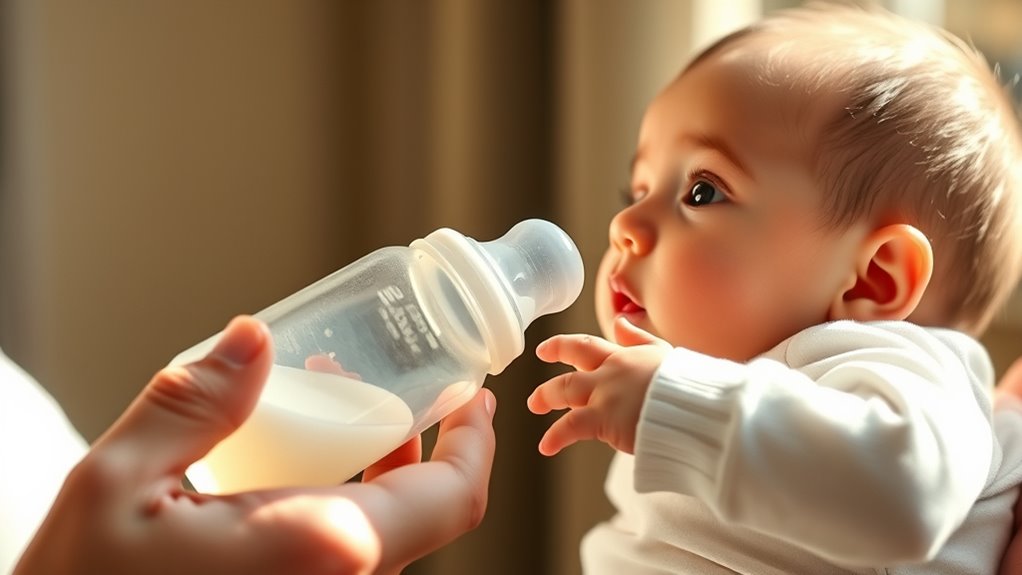

To introduce a bottle to your breastfed baby, wait until breastfeeding is well established, usually around 3-4 weeks, and watch for signs of readiness like curiosity and less fussiness. Choose a slow-flow, breast-like bottle and offer it calmly during relaxed times. Be patient and go gradually, increasing bottle feeds as your baby adapts. If challenges arise, experimenting with different options and maintaining a calm environment can help. Keep exploring for more helpful tips to make the shift smoother.
Key Takeaways
- Wait until breastfeeding is well established, typically around 3–4 weeks, and watch for baby’s readiness cues.
- Choose a bottle with slow-flow, breast-like nipples designed for breastfed babies to ease acceptance.
- Introduce the bottle gradually during calm, alert times and start with once daily, increasing as comfortable.
- Use a relaxed, consistent environment, and stay patient if the baby shows resistance or confusion.
- Experiment with nipple types and ensure comfortable milk temperature to promote successful transition.
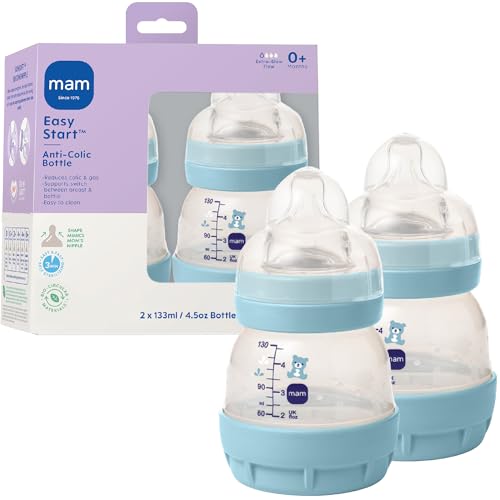
MAM 4.5oz Easy Start Anti-Colic Wide Neck Vented Baby Bottle, Extra Slow Flow Breastfeeding-Like Silicone Nipple, Reduces Colic, Gas & Reflux, Easy to Clean, BPA Free, 0+ Months, Made in Europe
DUAL ANTI-COLIC SYSTEM: These anti-colic baby bottles feature an engineered dual vented base clinically proven to reduce colic…
As an affiliate, we earn on qualifying purchases.
As an affiliate, we earn on qualifying purchases.
Choosing the Right Time to Start

Deciding when to introduce a bottle to a breastfed baby is an important step that can influence both their feeding experience and your breastfeeding journey. You should consider your baby’s feeding schedules and readiness cues, rather than rushing the process. Many parents prefer to wait until breastfeeding is well established, usually around 3 to 4 weeks, but this varies based on parental preferences and individual circumstances. Introducing a bottle too early might cause nipple confusion, while waiting too long could make bottle acceptance harder. Pay attention to your baby’s hunger cues and make certain they’re feeding consistently from the breast. Recognizing feeding readiness cues can help determine the optimal time for introduction. Additionally, some research suggests that waiting until breastfeeding routines are firmly established can help reduce the risk of nipple confusion and facilitate smoother acceptance of the bottle. Ultimately, choosing a time when both you and your baby are comfortable helps guarantee a smoother transition and supports ongoing breastfeeding success. Recognizing inspirational quotes about fatherhood can serve as a reminder of the importance of patience and support during this time.

Philips Avent Natural Baby Bottles with Natural Response Nipples (Slow Flow, Flow 2), 4oz, 4-Pack, SCY900/04
Philips Avent Natural bottle supporting your baby's natural drinking rhythm: baby controls the pace of the milk flow,…
As an affiliate, we earn on qualifying purchases.
As an affiliate, we earn on qualifying purchases.
Recognizing Signs of Readiness in Your Baby

Knowing when your baby is ready to try a bottle can make the changeover smoother. Look for signs like increased curiosity during feeding times or less fussiness when you’re not breastfeeding. If your baby’s sleep routines are becoming more predictable and they seem more alert during awake periods, it’s a good indicator they’re ready. Additionally, observe their breastfeeding frequency—if they’re feeding less often or seem to settle easily after feeds, they may be prepared for bottle feeding. Your baby should also show interest in different objects, including a bottle or nipple. These cues help you gauge readiness without rushing. Understanding feeding cues can further assist you in identifying the right moment to introduce a bottle. Recognizing these signs guarantees a more comfortable transition for both of you and supports your baby’s developmental cues. To better support this process, being aware of readiness signs can help you time the introduction more effectively. Engaging in developmental milestones can also provide additional clues about your baby’s preparedness for new feeding methods.

Lansinoh Anti-Colic Baby Bottles, BPA-Free Plastic, 5 Ounces, 3 Count, Slow Flow Nipples (Size S), Breastfeeding Bottle with NaturalWave Design
EASILY ACCEPTED BY BABY – A baby feeding essential, our BPA-free plastic bottles feature NaturalWave ultra-soft and strong…
As an affiliate, we earn on qualifying purchases.
As an affiliate, we earn on qualifying purchases.
Selecting the Appropriate Bottle and Nippee

Choosing the right bottle and nipple is essential for a smooth shift to bottle feeding. You want options that mimic breastfeeding and keep your baby comfortable. When selecting bottle types, consider those designed specifically for breastfed babies, such as anti-colic bottles or those with a breast-like shape. Nippee selection is equally important; look for slow-flow nipples that encourage a natural latch and prevent overfeeding. Keep these points in mind:
- Opt for bottles with wide mouths for easy cleaning
- Choose nipples with variable flow rates to match your baby’s sucking strength
- Consider bottles made from BPA-free, durable materials
- Test different nipple shapes to find the most natural feel for your baby
- Selecting appropriate materials for bottles can reduce potential chemical exposure and ensure safety.
- Additionally, choosing bottles with anti-colic features can help minimize discomfort and gas during feedings.
- Careful consideration of material safety can further promote your baby’s health and well-being.
Making thoughtful choices helps your baby transition smoothly and comfortably.

Bottle Warmer, Grownsy 8-in-1 Fast Baby Bottle Warmer with Timer, Safe for Breastmilk Nutrients, Accurate Temperature Control, with Defrost, Sterili-zing, Keep Warm, Heats Baby Food & Bottles
𝐅𝐚𝐬𝐭 𝐖𝐚𝐫𝐦𝐢𝐧𝐠 𝐢𝐧 𝟑 𝐌𝐢𝐧𝐬: 4oz/120ml milk only takes 3 minutes to reach 98.6°F/37°C. It heats up quick…
As an affiliate, we earn on qualifying purchases.
As an affiliate, we earn on qualifying purchases.
Tips for a Successful Transition

To facilitate a smooth progression from breastfeeding to bottle feeding, introduce the bottle gradually and at times when your baby is calm and alert. This helps minimize parental anxiety and makes the process less stressful. Be patient and consistent, offering the bottle once a day initially, then increasing as your baby adapts. Consider cultural considerations that may influence feeding practices; respecting these can ease your baby’s comfort and acceptance. Keep the environment relaxed, and avoid forcing your baby if they resist. Use a soothing tone and ensure the bottle and nipple are comfortable for your baby. Remember, every baby is different, so stay flexible and positive throughout the transition. Your calm attitude and patience will encourage a successful switch. Additionally, choosing the right bottle type can significantly impact your baby’s acceptance and feeding experience. Understanding feeding techniques can further support your baby’s adaptation process. Drawing on ancient wisdom about balance and harmony, maintaining a peaceful environment can also promote smoother feeding transitions.
Troubleshooting Common Challenges

Introducing a bottle to a breastfed baby can sometimes come with unexpected challenges. If your baby refuses the bottle or shows signs of confusion, don’t worry—pediatrician advice and breastfeeding support can help. To troubleshoot common issues:
- Try different bottle nipples to find one that mimics breastfeeding.
- Keep the feeding environment calm and familiar.
- Experiment with feeding times, offering the bottle when your baby is most receptive.
- Ensure the milk is at a comfortable temperature.
- Incorporating protective styling benefits such as using appropriate bottles and techniques can also ease the transition for your baby.
If problems persist, consult your pediatrician or a breastfeeding support specialist. They can provide personalized guidance and reassurance. Remember, patience is key, and with time and the right strategies, you’ll find what works best for you and your baby.
Frequently Asked Questions
How Can I Prevent Nipple Confusion When Introducing a Bottle?
To prevent nipple confusion when introducing a bottle, start by using a slow-flow nipple that mimics your breast. Limit pacifier use, so your baby doesn’t prefer it over the breast. If needed, try a nipple shield to help progress. Offer the bottle when your baby is calm and hungry but not overly fussy. Keep the feeding environment consistent, and avoid rushing or switching bottles frequently.
Is It Safe to Introduce a Bottle While Breastfeeding Is Still Establishing?
Yes, it’s safe to introduce a bottle while breastfeeding is still establishing, especially if you’re prepared for potential breastfeeding challenges and bottle preferences. You might face some initial difficulties, but gradual introduction can help your baby adapt. Just make certain you’re attentive to your baby’s cues, avoid overwhelming them, and maintain your milk supply. This approach supports a smooth shift and helps prevent issues like nipple confusion later on.
How Often Should I Offer the Bottle During the Initial Stages?
You should offer the bottle 2 to 3 times a day during the initial stages, aligning with your baby’s feeding schedule. Use different bottle types to find what works best for your baby and prevents nipple confusion. Keep the sessions short and responsive to your baby’s cues, gradually increasing frequency if needed. This approach helps your baby adjust comfortably without disrupting breastfeeding.
Can Introducing a Bottle Affect My Milk Supply?
Introducing a bottle can temporarily affect your milk supply if it interferes with your baby’s sucking reflex or reduces your milk flow. About 20% of breastfeeding moms notice a dip in supply after bottle introduction, especially if bottles replace frequent nursing. To minimize this, offer bottles carefully, ensuring your baby still stimulates your breasts regularly. This helps maintain your milk flow and keeps your supply steady.
Should I Introduce a Bottle Before or After Breastfeeding Sessions?
It’s best to introduce a bottle after breastfeeding sessions to avoid nipple confusion and maintain your baby’s feeding cues. You can offer the bottle when your baby is calm and not overly hungry. Use the right bottle types, like slow-flow nipples, to mimic breastfeeding. Keep feeding schedules consistent and observe your baby’s preferences, adjusting as needed to facilitate smooth transitions without disrupting your milk supply.
Conclusion
As you prepare to introduce a bottle, trust your instincts and stay patient. Your baby’s next steps could reveal a newfound independence or a gentle struggle, but every moment is part of the journey. Imagine the quiet anticipation in the room, the tiny pauses, and the subtle cues that guide you forward. With each attempt, you’re shaping a new chapter—full of hope, discovery, and the promise of what’s to come.