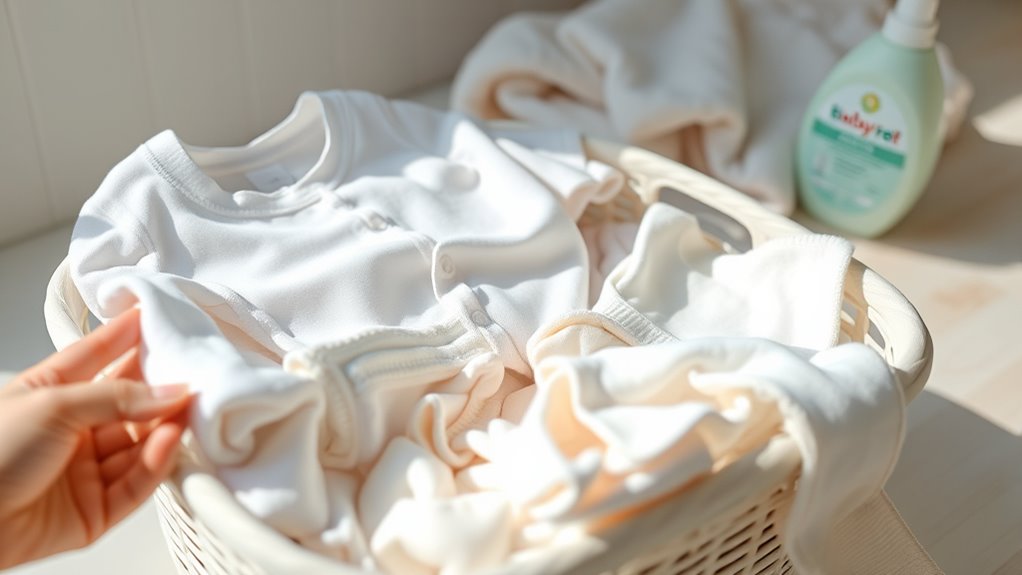
To keep your baby’s clothes soft, safe, and irritation-free, follow gentle laundry practices. Use mild detergent and avoid harsh chemicals or fabric softeners. Air drying outside helps prevent fabric damage caused by heat or UV rays, while tumble drying on low heat or using dryer balls speeds up the process without harming fabrics. Always check that clothes are completely dry before storing to prevent mold. Keep these tips in mind to guarantee your baby’s wardrobe stays fresh and safe.
Key Takeaways
- Use gentle, baby-safe detergents and avoid harsh chemicals or fabric softeners.
- Air dry clothes naturally in the shade to prevent fabric weakening from UV exposure.
- Ensure clothes are completely dry before storing to prevent mold and bacterial growth.
- Follow care labels for specific drying instructions and avoid overloading the dryer.
- Check for dryness before folding to maintain hygiene and prevent skin irritation.

Drying techniques also play a vital role in maintaining the safety and quality of baby clothes. High-heat dryers can sometimes cause fabrics to degrade faster or release tiny fibers that might irritate sensitive skin. To avoid this, you should consider air drying whenever possible. Hanging clothes outside in the fresh air not only helps them dry thoroughly but also naturally freshens them. If you need to use a dryer, opt for the lowest heat setting or a delicate cycle to prevent shrinking or damaging delicate fabrics. Using dryer balls can help improve airflow and reduce drying time, which is especially helpful if you’re in a rush. Be sure to check that clothes are completely dry before putting them away, as dampness can promote mold or bacteria growth, which isn’t safe for your baby. Folding and storing clothes in a clean, dry place ensures they stay fresh and hygienic. Proper laundry practices, including gentle drying methods, help preserve fabric integrity and keep your baby’s clothes safe from damage. In addition, always follow the care labels on baby clothes for specific drying instructions, as some fabrics may require special handling. Avoid overloading the dryer, which can prevent clothes from drying evenly and may lead to wrinkles or damp spots. When hanging clothes, try to avoid direct sunlight if possible, since prolonged exposure to UV rays could weaken certain fabrics over time. The goal is to keep clothes soft, clean, and free of irritants, so choosing gentle drying techniques and avoiding harsh chemicals in fabric softeners makes a big difference. Taking these steps guarantees that your baby’s wardrobe remains safe, comfortable, and gentle on their delicate skin. Proper laundry practices not only protect their health but also extend the life of their clothing, giving you peace of mind every time you do laundry.
baby laundry detergent hypoallergenic
As an affiliate, we earn on qualifying purchases.
As an affiliate, we earn on qualifying purchases.
Frequently Asked Questions
Can I Use Regular Detergent on Baby Clothes?
Yes, you can use regular detergent on baby clothes, but check the ingredients first. Look for gentle, hypoallergenic options that avoid harsh chemicals and fragrances, which can irritate sensitive skin. Fragrance concerns are important, so opt for unscented or mild scents. Always rinse thoroughly to remove any residue, and consider a detergent specifically formulated for babies if you’re unsure. This guarantees your baby’s clothes are clean and safe.
How Often Should I Wash Baby Clothes?
Washing frequency for baby clothes is like watering a plant—better to do it regularly. You should wash baby clothes after every wear or at least every 2-3 days to maintain proper hygiene. This ensures baby clothing hygiene stays superior, preventing bacteria buildup and irritation. Always check labels for specific instructions, and use gentle detergent to keep their delicate skin safe while keeping clothes fresh and clean.
Are Fabric Softeners Safe for Baby Clothes?
Fabric softener safety for baby clothes isn’t always guaranteed, as some contain chemicals that may irritate sensitive skin. You should consider avoiding fabric softeners altogether or choosing those specifically labeled safe for babies. Instead, opt for natural alternatives like vinegar or baking soda to soften clothes without risking irritation. Always check labels and consult your pediatrician if you’re unsure, ensuring your baby’s clothes stay safe and comfortable.
What Temperature Is Best for Washing Baby Clothes?
Think of your baby’s clothes as delicate treasures—set the water temperature to 30°C (86°F) for gentle cleaning. This temperature effectively removes stains and bacteria without risking fabric softener safety, which is essential since many softeners aren’t recommended for baby clothes. For stubborn stains, pre-treat with a safe stain removal tip, and always opt for gentle cycles to keep clothes soft and safe for your little one’s sensitive skin.
How Do I Remove Stubborn Stains From Baby Clothes?
To remove stubborn stains from baby clothes, you should use effective stain removal techniques combined with natural stain remedies. First, treat the stain promptly by gently blotting, not rubbing. Apply a mixture of baking soda and water or a natural stain remover like white vinegar. Let it sit for 15-30 minutes, then wash with warm water. Repeat if necessary until the stain lifts, ensuring your baby’s clothes stay fresh and spotless.
baby clothes air drying rack
As an affiliate, we earn on qualifying purchases.
As an affiliate, we earn on qualifying purchases.
Conclusion
Now that you know the best laundry tips for baby clothes, you’re all set to keep your little one’s wardrobe fresh and safe. Remember, gentle detergents and proper washing techniques make a big difference in preventing irritations. Isn’t it worth taking a little extra time to guarantee your baby’s comfort and health? With these simple steps, you can confidently handle laundry and give your baby the cleanest, safest clothes every time.
dryer balls for baby clothes
As an affiliate, we earn on qualifying purchases.
As an affiliate, we earn on qualifying purchases.
gentle baby fabric softener alternative
As an affiliate, we earn on qualifying purchases.
As an affiliate, we earn on qualifying purchases.