
TL;DR
Stephanie Roberson’s son Myles was born at 25 weeks and 6 days and spent 87 days in a neonatal intensive care unit. Her experience, shared in a Motherly column with the Chamber of Mothers, led her to advocate for policies and services that support families facing a NICU stay.
Stephanie Roberson is advocating for better support for mothers and babies after her son Myles was born nearly 14 weeks early and spent 87 days in a neonatal intensive care unit. In a Motherly column produced with the Chamber of Mothers, Roberson describes how paid leave, insurance and mental health care shaped her family’s experience—and how she saw other NICU parents struggle to get help.
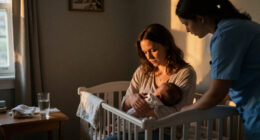
Roberson’s pregnancy had been normal until her water broke while she was 24 weeks pregnant. Her doctor directed her to a hospital with a higher level of NICU care. After 13 days on bed rest, she went into labor at 25 weeks and 6 days. Myles was born shortly after she and her care team left her hospital room for delivery.
Myles stopped breathing repeatedly for 77 days, a complication of prematurity that the report says was treated with caffeine and, at times, physical stimulation. He did not need surgery or intubation, and he was discharged after 87 days. Roberson said a neonatologist called him a “one-in-a-million miracle baby.” By 12 months, he had caught up on all milestones and was ahead on some; he is now four.
Roberson said her family had supports many NICU families lack, including a supportive partner, a job and paid family and medical leave. She took nine and a half months of combined leave. The report says Myles’ care was billed at nearly $1.5 million; her insurance covered all but $1,300 of her deductible. Roberson also described months of therapy to process the experience and said she was diagnosed with post-traumatic stress disorder.
The Supports NICU Parents Need
A prolonged NICU stay can bring costs and care demands at the same time parents are recovering from birth and worrying about a medically vulnerable infant. Roberson’s account highlights the gap between her own access to leave and the circumstances she observed among other families, including parents facing insurance denials, travel needs and responsibilities to children at home.
The Motherly report cites figures showing that about 27% of workers have access to paid family leave, while 14 states and Washington, D.C. have enacted state paid family and medical leave policies. It also says eligible workers can receive up to 12 weeks of unpaid leave under the federal Family and Medical Leave Act, which NICU parents may use while a baby remains hospitalized. These figures describe the policy landscape presented in the report; they do not establish the circumstances of every worker or family.
The report also cites research on financial and mental health burdens: families with infants in the highest-level NICUs average more than $3,000 in out-of-pocket costs during the first two years with private insurance, before related expenses such as travel and meals. It says about 75% of mothers with perinatal mental health conditions go untreated. Roberson’s story illustrates why access to leave, affordable care and trained mental health providers can matter beyond the hospital stay.
From Emergency Delivery to Advocacy
When Roberson’s water broke, her husband was traveling for work. A neighbor stayed with her two-year-old while her visiting mother drove her to the hospital. Roberson said she feared what an extremely premature birth could mean and tried to learn about prematurity so she could advocate for her son.
During the NICU stay, she heard alarms and witnessed other families’ distress. She recalled one mother who had been visiting from four hours away when she went into labor and then faced getting home, returning to work and caring for an older child. Roberson said she realized that her own family’s support made a major difference.
The column is part of “Mothering America,” a regular series by Motherly and the Chamber of Mothers that shares mothers’ experiences and connects them to calls for support and care. The supplied report describes Roberson’s advocacy but does not identify a specific bill, campaign or legislative action she is currently leading.
““I was just trying to learn as much as I possibly could, to be the best advocate that I could for him.””
— Stephanie Roberson, as quoted by Motherly
The Policy Details Still Open
The report does not specify what legislation, policy proposal or advocacy action Roberson is pursuing, or whether she is working with a particular organization beyond the column’s connection to the Chamber of Mothers. It also does not provide a timeline for any campaign or identify a next public event.
The figures cited in the column offer a broad picture of leave access, NICU costs and untreated perinatal mental health conditions. The report does not provide detailed methods or dates for each statistic, and individual costs and eligibility for leave vary. It is also unclear from the supplied material whether the figures have changed since the underlying data were collected.
Roberson’s Advocacy After the NICU
The published column presents Roberson’s experience as part of a continuing series about mothers and family support. The next step described in the source is continued storytelling and advocacy through that effort; it does not announce a specific policy vote, program launch or deadline.
Any further account of Roberson’s work would need to establish which proposals she supports and what actions she plans to take. For now, the report documents how her family’s access to leave, insurance and therapy differed from the difficulties she witnessed among other NICU parents.
Key Questions
How long did Myles spend in the NICU?
Myles spent 87 days in the neonatal intensive care unit after being born at 25 weeks and 6 days.
What complications did Myles experience?
Roberson told Motherly that Myles stopped breathing multiple times a day for 77 days. The report says he was treated with caffeine and sometimes physical stimulation. He did not need surgery or intubation.
What support did Roberson say helped her family?
She cited a supportive partner, a job and paid family and medical leave. She said she took nine and a half months of combined leave and had insurance that covered all but $1,300 of her deductible for the billed care.
What is Roberson advocating for?
The column frames her advocacy around improving support and care for mothers and families. The supplied report does not name a specific bill, policy proposal or campaign she is leading.
Source: rss