Have you ever wondered what’s inside your baby’s diaper? The mystery of a newborn’s poop can leave many parents feeling confused and unsure. But there’s no need to fret; understanding the specifics of your baby’s bowel movements is essential for their well-being.

Turn the school run and nap time into listening time
- Thousands of audiobooks, podcasts and originals
- Listen on your phone, tablet or Echo — also offline
- Cancel anytime
From deciphering colors to textures, our guide breaks down everything you need to know about newborn poop. So, are you ready to unravel the secrets behind your little one's diaper surprises?
Key Takeaways
- Meconium clears the intestines, appearing dark green or black, ensuring proper gastrointestinal function.
- Breastfed babies have seedy, mustard-like poop; formula-fed babies have yellow-tan, toothpaste-like poop.
- Poop color reflects digestive health, while textures indicate digestive function.
- Monitoring poop frequency and seeking medical advice for abnormal colors or textures are vital for newborn health.
As an affiliate, we earn on qualifying purchases.
Newborn Poop Color Guide
When examining a newborn's poop color, understanding the variations can provide valuable insights into their digestive health.
The first stool a baby passes is called meconium, appearing dark green or black due to a mix of amniotic fluid, bile, and skin cells.
For breastfed babies, normal poop is seedy and mustard-like in both color and consistency, indicating a healthy digestive system processing breast milk efficiently.
On the other hand, formula-fed babies' poop typically has a yellow-tan hue and a texture resembling toothpaste.
It's important for parents to keep an eye out for abnormal colors like red or black in their baby's poop, as these could be signs of gastrointestinal bleeding that require prompt attention.
Deciphering Baby Poop Textures
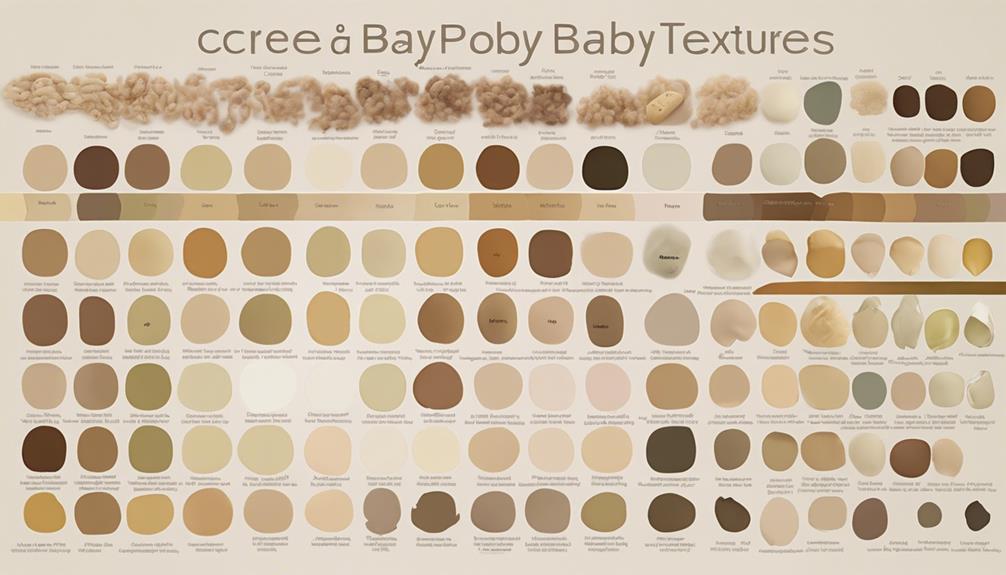
The textures of baby poop can provide valuable insights into their digestive health and overall well-being. When deciphering baby poop textures, here are some key points to bear in mind:
- Meconium: This is the first type of baby poop, characterized by its dark green and sticky appearance, usually passed in the first few days after birth.
- In-between Stool: Following meconium, in-between stool starts to show changes as the baby begins feeding, adjusting in color and consistency.
- Stool Color: Reflecting the baby's diet as they grow, stool color can vary based on what the baby is consuming.
- Bowel Movement Frequencies: Babies may have varying frequencies of bowel movements, with some passing meconium ideally within the first 24 hours after birth, and others experiencing changes due to feeding adjustments.
Understanding these nuances in baby poop textures can help parents gauge their baby's digestive health and make informed decisions about their care.
Meconium: What to Expect
Passing through the digestive system of a newborn, meconium is the initial dark green or black stool that signifies an important stage in their development. This first stool, meconium, is a unique substance composed of materials ingested in the womb, including amniotic fluid, mucus, and skin cells.
It's essential for newborns to pass meconium within the first 24 hours after birth, as this sticky and tar-like stool helps clear out the baby's intestines, paving the way for future bowel movements. The dark green or black color of meconium may seem alarming to new parents, but it's a normal and healthy occurrence.
The passage of meconium is a significant milestone in the digestive system development of newborns, ensuring that their gastrointestinal tract is functioning correctly. Understanding what to expect from meconium can assist parents in navigating this early stage of their baby's digestive health.
Baby Poop Frequency Insights
Understanding newborn care involves comprehending the frequency of a baby's poop, which provides valuable insights into their digestive health and overall well-being. When it comes to baby poop frequency, there are some key points to keep in mind:
- Breastfed Babies: Breastfed infants tend to have more frequent bowel movements, sometimes up to 5-10 times a day. This is because breast milk is easily digested, leading to more frequent output.
- Formula-Fed Babies: In contrast, formula-fed babies typically have fewer bowel movements, averaging around 1-2 per day. Formula milk is processed differently by the body, resulting in less frequent pooping.
- Meconium Passage: Newborns pass meconium, a dark, sticky substance, within the first 24 hours of birth. This changes to regular stools over the next few days as the baby's digestive system matures.
- Monitoring and Consultation: Monitoring your baby's poop frequency and consistency is important in ensuring they're receiving adequate nutrition and are healthy. Any changes in poop frequency or consistency should be discussed with a pediatrician promptly to address any potential concerns.
When to Seek Medical Help
Seek immediate medical attention if your newborn has not passed meconium within the first 24 hours after birth. Additionally, contact a healthcare provider if you observe consistently hard or pellet-like stools, as this could indicate an issue with digestion or hydration. Should you notice blood in your newborn's stool, it is essential to seek immediate medical attention to rule out any serious conditions. Consulting with a pediatrician is vital if your newborn's poop is consistently white, gray, or black, as these colors may signify underlying health issues. Moreover, if your newborn experiences persistent diarrhea or constipation, prompt medical intervention is necessary to address any potential imbalances or infections.
| Red Flags in Newborn Poop | Action Required |
|---|---|
| No meconium within 24 hours after birth | Seek immediate medical attention |
| Consistently hard or pellet-like stools | Contact a healthcare provider |
| Blood in stool | Immediate medical attention necessary |
| White, gray, or black poop | Consult with a pediatrician |
| Persistent diarrhea or constipation | Seek medical help promptly |
Frequently Asked Questions
What Is the 7 Second Poop Trick?
We apply gentle pressure while lifting the baby's legs for the 7 Second Poop Trick. This method aids in relieving constipation and assisting bowel movements naturally. It's a safe approach recommended before seeking medical help for newborns' constipation.
What Do I Need to Know About Newborn Poop?
When it comes to newborn poop, it's important to monitor color, texture, and frequency. Changes can signal health concerns, so consulting a pediatrician is essential. Keeping track guarantees your baby's digestive health is on track.
What Simple Trick Empties Your Bowels Immediately?
Drinking warm water on an empty stomach can quickly stimulate bowel movements by relaxing intestinal muscles. This simple trick promotes regularity, prevents constipation, and supports overall digestive health. It's a gentle, natural method without medications.
How Do You Stop the Never Ending Wipe?
When you're tired of the endless wipe struggle, consider upgrading to high-quality wipes, using liners for extra protection, and letting baby air dry. These simple steps can make diaper changes quicker and cleaner for everyone involved.
Conclusion
To start, understanding newborn poop is crucial for parents to monitor their baby's health. Just as a compass guides us through unknown terrain, knowing the signs and characteristics of baby poop can help navigate the unfamiliar world of newborn care.
By staying informed and proactive, parents can guarantee their baby's well-being and quickly address any concerns that may arise. Trust your instincts and seek help when needed, as you start on this exciting journey of parenthood.
Fall Picks
fall essentials
As an affiliate, we earn on qualifying purchases.