
TL;DR

Turn the school run and nap time into listening time
- Thousands of audiobooks, podcasts and originals
- Listen on your phone, tablet or Echo — also offline
- Cancel anytime
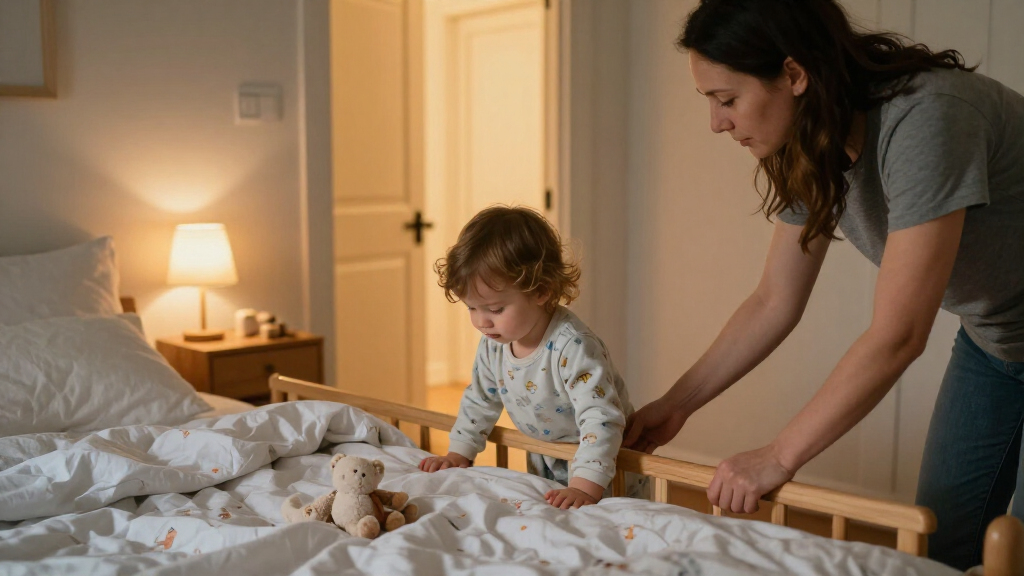
A MadeForMums report shares sleep consultants’ strategies for toddlers who leave bed at bedtime, during the night or early in the morning. Advice includes a predictable wind-down, gradual changes to parental presence and calmly returning a child to bed; the report says progress can take up to six weeks.
A MadeForMums report outlines sleep consultants’ strategies for toddlers who repeatedly get out of bed, recommending a steady bedtime routine, gradual changes to how parents settle a child and calm, consistent returns to bed. The advice addresses a common disruption for families, while noting that learning to stay in bed can take up to six weeks.
Children’s sleep consultants Mandy Gurney, founder of the Millpond Sleep Clinic, and Maryanne Taylor, founder of The Sleep Works, told MadeForMums that parents should choose a relatively settled period to make changes. Gurney cautioned against starting around major events such as beginning nursery, moving house or the arrival of a new baby, which may add upheaval for a toddler.
Taylor recommended an unvarying, calming routine before bed. Gurney’s example includes talking about the day, putting toys away, turning off screens, choosing quiet activities, then moving through a brief bath, getting ready in a dim bedroom, a cuddle and a story. The report presents this as practical guidance from the consultants, not a guarantee that a particular sequence will work for every child.
For children accustomed to falling asleep with a parent beside them or holding them, Gurney described reducing that support in small steps. A parent might first sit on the bed with a hand on the child, then move progressively farther away over several days. She said each stage may take four to seven nights, with the parent remaining until the child is asleep. When a toddler gets up, her advice is to return the child to bed calmly and repeat the response each time.
A Gradual Route to Staying in Bed
Repeated trips out of bed can interrupt sleep for both children and caregivers, and the report’s recommendations focus on making the response predictable rather than confrontational. A gradual approach may be more manageable for families than expecting a toddler to change sleep habits in one night. Gurney warned that rushing or skipping steps could lead to a child becoming unsettled and taking longer to fall asleep.
The advice also places expectations on adults: consistency between caregivers matters, and progress may be slow. Taylor suggested using praise or rewards to recognize a child’s efforts. These are recommendations from the consultants cited by MadeForMums; the supplied material does not present them as clinical findings or promise that they will resolve every sleep difficulty.
Products Worth Considering

Owlet Dream Sight 2K Smart Baby Monitor Camera with Floor Stand

LEGO Technic Lamborghini Revuelto Super Sports Car Building Set (42214), Ages 10+

LEGO Icons Golden Retriever Puppy Building Set (11384)
As an affiliate, we earn on qualifying purchases.
Choosing the Right Time and Routine
The report focuses on toddlers who leave bed at bedtime, wake during the night and seek a parent, or get up very early. It frames the challenge as helping a child settle in their own bed, rather than as a single bedtime problem. Its guidance centers on the connection between a familiar settling routine and what happens when the child wakes later.
Gurney said that children may look for a parent if they wake in the night after falling asleep with that parent’s help. Her proposed gradual reduction in parental presence is intended to change that pattern over time. MadeForMums also includes parents’ accounts of making a room feel appealing with familiar items, such as a favorite blanket, posters or a nightlight. These are personal experiences in the report, not evidence that buying a new bed or bedroom items will reliably solve the problem.
““Sticking to a predictable wind-down before bedtime is so important for toddlers.””
— Maryanne Taylor, founder of The Sleep Works
What the Advice Cannot Guarantee
The supplied report does not specify when it was first published, and it gives no study data comparing these methods or establishing how often they work. Its up-to-six-week estimate is presented as general guidance from the report, not a fixed timetable for every family. The source also does not explain how to adapt the strategies for children with medical, developmental or other individual needs.
Families may see different results, and the material does not establish that a room change, reward system or specific routine is necessary. Parents with concerns about a child’s sleep or health may want to seek advice from an appropriate health professional; the report itself is a practical feature, not individualized medical guidance.
Consistency Over the Coming Weeks
The next step described in the report is to choose a manageable period, agree on a response among caregivers and follow the new routine consistently. Parents using the gradual-settling method can move through its stages at a pace that suits their child, while returning the child to bed calmly whenever they get up. The report advises allowing time for adjustment rather than judging the approach after a night or two.
MadeForMums does not identify a scheduled follow-up, new research or formal guidance update. Whether these steps help a particular toddler will depend on the child and household, and the source offers no outcome data beyond the consultants’ recommendations and parents’ anecdotes.
Key Questions
How long might it take for a toddler to stay in bed?
The MadeForMums report says it can take up to six weeks for most children to learn to stay in bed independently. That is an estimate in the report, not a guarantee or deadline for an individual child.
What should parents do when a toddler gets out of bed?
Sleep consultant Mandy Gurney advises gently returning the child to bed each time and keeping the response calm and consistent. The report does not claim that this approach works for every child.
Should parents change the bedtime routine all at once?
The report recommends a predictable wind-down and describes changing parental presence in small, gradual steps. Gurney advises against rushing through those stages.
When might it be better to wait before changing sleep habits?
Gurney recommends avoiding a major change during an already unsettled period, such as starting nursery, moving house or expecting a new baby. The report does not set a specific waiting period.
Source: madeformums.com