To guarantee safe sleep for your baby, follow key guidelines like using a snug-fitting mattress with no more than two fingers’ width of space, placing your baby on their back, and keeping pillows, blankets, or bumper pads out of the crib. Avoid drop-side cribs, position the crib away from cords or furniture, and maintain a comfortable, smoke-free environment. Staying vigilant with these practices helps reduce risks—continue exploring for more tips on creating the safest sleep space.
Key Takeaways
- Ensure the crib has slats no more than 2 3/8 inches apart and sturdy, fixed sides for safety.
- Keep the sleep area free of pillows, blankets, stuffed animals, and bumper pads to prevent suffocation risks.
- Place the baby on their back to sleep in a room free from smoke, cords, curtains, and hazards.
- Maintain a consistent sleep routine with a calm environment and regular sleep times.
- Regularly check the sleep environment for hazards and ensure proper room temperature and ventilation.

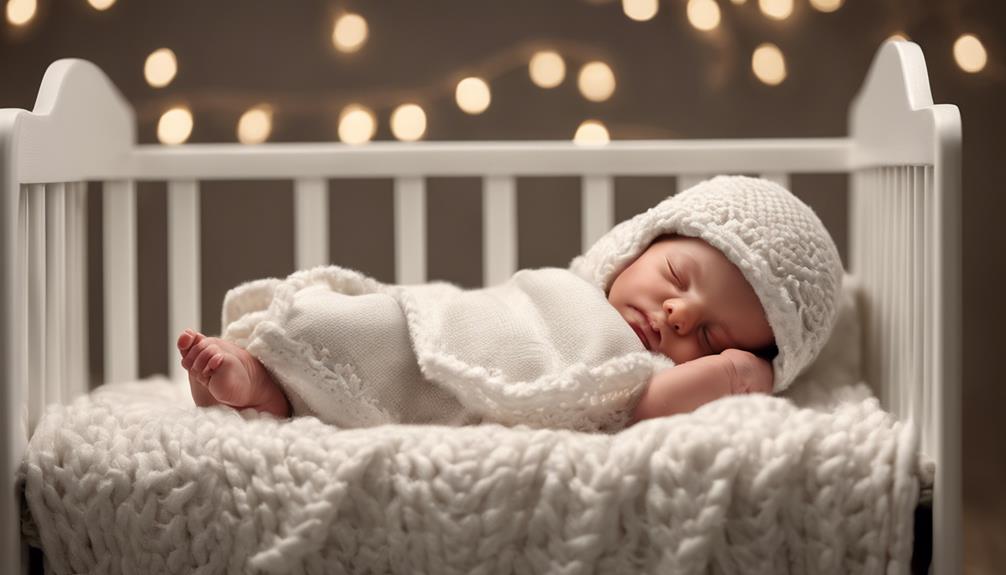
Have you ever wondered how to guarantee your baby sleeps safely? Ensuring a secure sleep environment is vital for your little one’s health and peace of mind. One of the most important aspects is crib safety, which involves creating a safe and secure sleep space that minimizes risks. When setting up your baby’s crib, make sure it meets current safety standards. The slats should be no more than 2 3/8 inches apart to prevent your baby’s head from slipping through. Avoid using drop-side cribs, as they’ve been linked to safety hazards, and opt for sturdy, fixed sides instead. The mattress should fit snugly within the crib, with no more than two fingers’ width of space between the mattress and the sides of the crib. This prevents your baby from getting trapped or suffocating on loose bedding. Remember, the sleep environment is more than just the crib itself; it’s about creating a safe, comfortable space conducive to restful sleep. Ensuring a cybersecurity approach to your baby’s sleep information can help protect your privacy and personal data shared online.
Keeping the sleep environment free of hazards is fundamental. Remove any pillows, blankets, stuffed animals, or bumper pads from the crib. These items can pose suffocation risks or cause your baby to overheat. Dress your baby in lightweight, breathable sleep clothing, and avoid overdressing to prevent overheating, which has been linked to sudden infant death syndrome (SIDS). Always place your baby on their back to sleep, as this position markedly reduces SIDS risk. The sleep area should be in a smoke-free zone, and the room temperature should be comfortable—not too hot or cold. Use a fan or open a window if needed, but avoid placing the crib in direct sunlight or near heating vents.
Establishing a consistent sleep routine also contributes to a safe sleep environment. Regular sleep times help your baby feel secure and promote healthier sleep patterns. Keep the crib in a safe location away from cords, curtains, or furniture that could pose a strangulation or falling hazard. When your baby is in their crib, stay nearby or check on them regularly, but avoid unnecessary disturbances once they fall asleep.
Ultimately, maintaining crib safety and a safe sleep environment requires attention to detail and a proactive approach. By following these guidelines, you’re creating a secure space where your baby can sleep peacefully and safely through the night. Your vigilance helps reduce risks and gives you peace of mind, knowing that your little one’s sleep space is as safe as possible.
Frequently Asked Questions
Are There Any Specific Sleep Positions to Avoid?
Yes, you should avoid placing your baby in unsafe sleeping positions. The safest sleep position is on their back, as it considerably reduces the risk of Sudden Infant Death Syndrome (SIDS). Avoid side sleeping or tummy sleeping, as these positions increase the risk of unsafe sleeping. Always guarantee your baby sleeps on a firm, flat surface and remove soft bedding or toys that could pose suffocation hazards.
How Can I Tell if My Baby Is Sleeping Safely?
To tell if your baby is sleeping safely, look for peaceful, alert breathing and a comfortable, snug sleep environment. Use a baby monitor to monitor movements and sounds, ensuring they’re calm and consistent. During sleep training, maintain routines that promote secure sleep habits. If your baby sleeps on their back in a bare, firm crib, and you observe no signs of distress, you’re fostering safe, sound sleep.
Are There Safe Sleep Practices for Co-Sleeping Arrangements?
Yes, there are safe sleep practices for co-sleeping arrangements. To guarantee shared sleep safety, always place your baby on their back on a firm, flat surface free of pillows and heavy blankets. Keep the sleep area close but separate from adult bedding to reduce suffocation risks. Co-sleeping benefits include bonding and easier feeding, but following these safety tips helps protect your baby during shared sleep and promotes healthy sleep habits.
What Are the Risks of Using Sleep Positioners?
Using sleep positioners can pose serious suffocation hazards for your baby. These devices are designed to keep your infant in a specific position, but they can accidentally cause suffocation if your baby rolls or slips into an unsafe position. The American Academy of Pediatrics advises against using sleep positioners, as they don’t reduce SIDS risk and may actually increase it. Always place your baby on a firm, flat sleep surface without extra bedding or devices.
How Do I Create a Safe Sleep Environment in Warm Climates?
Creating a safe sleep environment in warm climates is like building a cool oasis for your baby. Use breathable fabrics and lightweight, snug-fitting pajamas to help with temperature regulation. Keep the room at a comfortable, steady temperature—around 68-72°F—and avoid heavy blankets or soft bedding. Use a fan or air conditioner to maintain airflow, ensuring your little one stays cool and safe throughout the night.
Conclusion
Following safe sleep guidelines can considerably reduce the risk of Sudden Infant Death Syndrome (SIDS), giving your little one the safest start in life. Did you know that babies placed on their backs to sleep are 50% less likely to die from SIDS? By creating a safe sleep environment, you not only protect your baby but also gain peace of mind. Stick to these simple steps, and you’ll be taking important steps toward your child’s healthy, safe sleep.