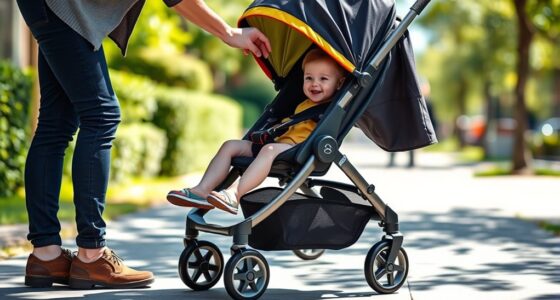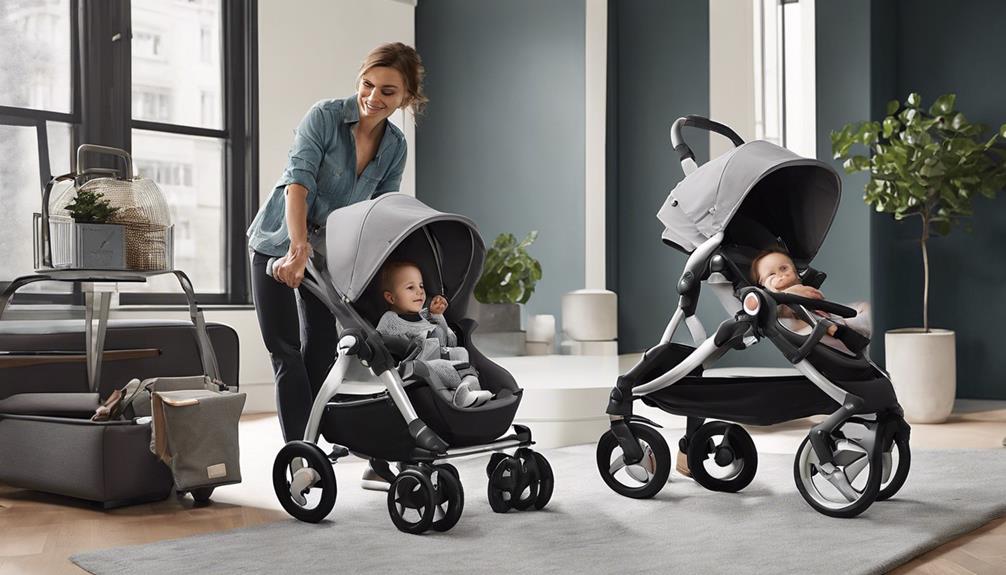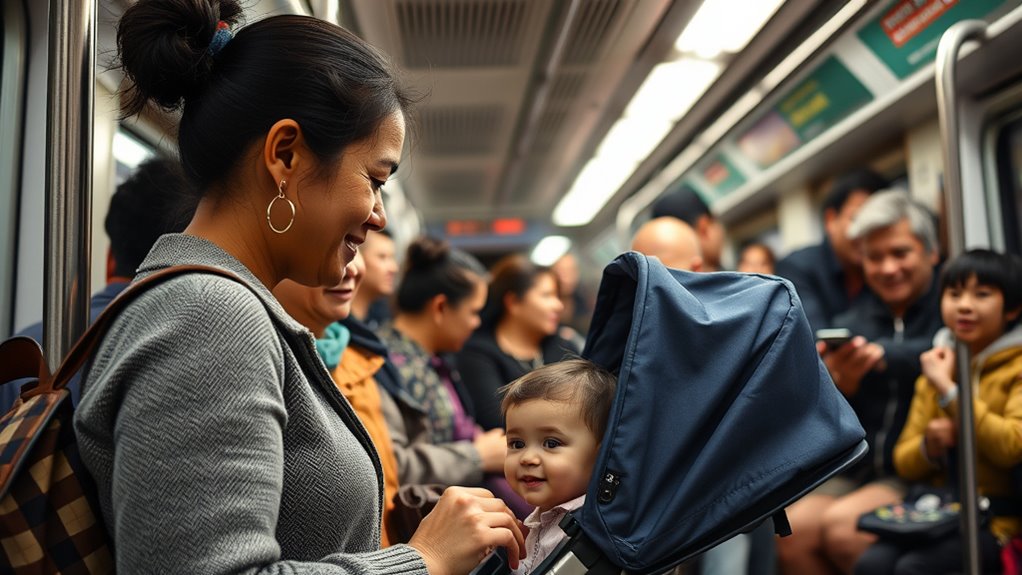

When riding public transit with a stroller, you should familiarize yourself with the system’s rules, wait for the vehicle to stop, and quickly move to designated stroller areas without blocking aisles or exits. Fold or secure your stroller to keep the space safe for everyone and practice patience with fellow passengers. Always offer help if needed and be courteous throughout your journey. Continuing will help you master all the ways to make your transit experience smooth and respectful for everyone involved.
Key Takeaways
- Always wait for the vehicle to fully stop and doors to open before approaching with a stroller.
- Use designated stroller areas and secure your stroller to prevent tipping or blocking aisles.
- Fold your stroller when necessary to maximize space and ensure safety for all passengers.
- Be courteous, patient, and offer help to others during busy boarding, disembarking, or seating.
- Gather belongings and clear pathways before exiting to maintain smooth flow and accessibility.
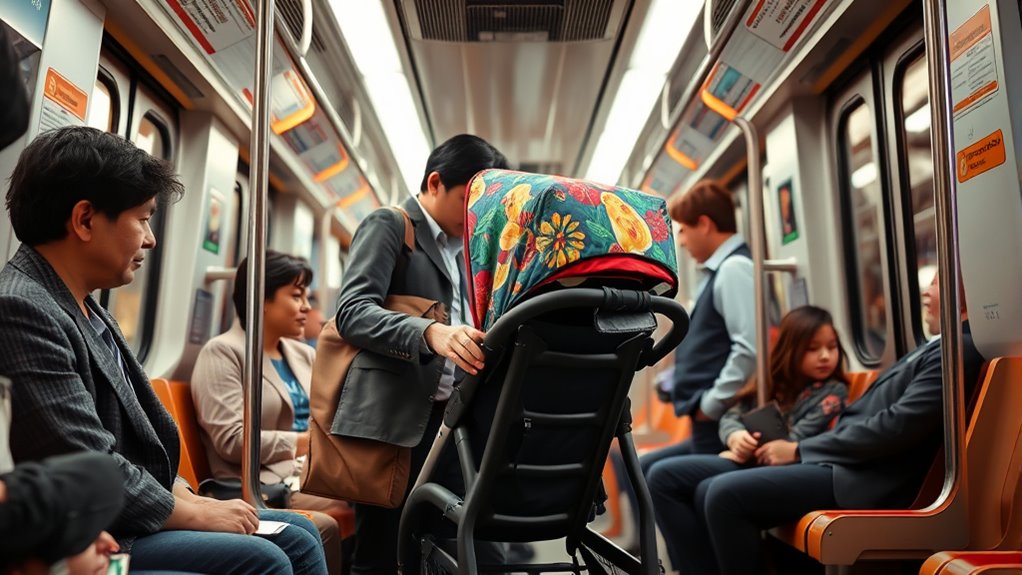
Taking a stroller on public transit can be challenging, but with some preparation, it becomes much easier. One of the most important steps is understanding the boarding procedures. Before you even step onto the bus or train, familiarize yourself with the transit system’s rules for strollers. Many transit agencies have specific areas designated for stroller storage, often near the entrance or in a dedicated compartment. When you arrive at the station or stop, wait until the vehicle comes to a complete stop and the doors open before approaching. Be courteous to other passengers, and if there’s a line, wait patiently. Once on board, move quickly to the designated stroller area if available. If not, find a spot that doesn’t block aisles or exits, ensuring you don’t obstruct foot traffic or emergency routes.
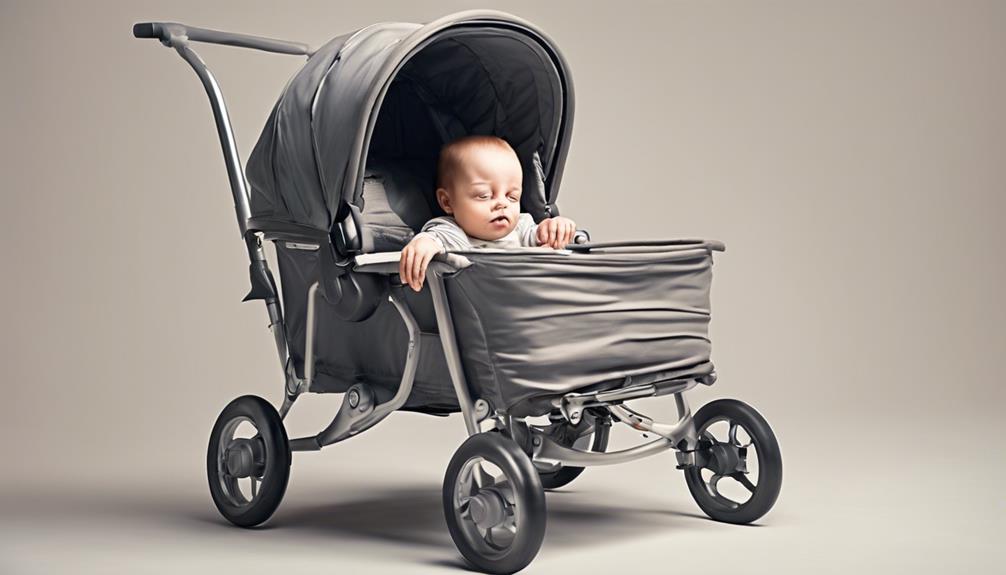
Stroller storage is a key part of managing public transit with a young child. Many transit vehicles have designated spaces for strollers, which are usually secured with straps or placed in corners to prevent tipping. If your transit system doesn’t have a specific stroller area, you’ll need to fold your stroller if possible. Folding your stroller not only makes it easier to store but also respects fellow passengers’ space. Keep in mind that some systems require you to fold your stroller before boarding or during the journey, so check those rules ahead of time. When storing your stroller, aim to keep it upright and stable, avoiding blocking aisles or doors. This way, you prevent inconvenience to others and reduce the risk of accidents. Additionally, some transit systems are now integrating robotics to assist with passenger flow and safety, which can impact boarding procedures.
Throughout the journey, be mindful of your child’s needs and the comfort of other riders. If your stroller doesn’t fold and space is tight, consider stepping off at the next stop to adjust or reposition it. Always be ready to assist others if they need extra space or help, especially during busy times. Remember, patience and courtesy go a long way in creating a positive experience for everyone. When disembarking, gather your belongings, unfasten or fold your stroller, and step aside to let others off the vehicle comfortably. By following proper boarding procedures and being considerate about stroller storage, you make public transit more accessible and pleasant for everyone, including your little one.

J.L. Childress Gate Check Bag for Single & Some Double Strollers – Travel Bag for Airplane, Fits Most Standard Baby Strollers, Airport Accessories for Gate Check, Flying Essentials – Red
GATE CHECK STROLLER BAG – Specially designed for gate check, the lightweight J.L. Childress Stroller Bag has been…
As an affiliate, we earn on qualifying purchases.
As an affiliate, we earn on qualifying purchases.
Frequently Asked Questions
Are There Specific Times to Avoid Bringing Strollers on Transit?
You should avoid bringing strollers on transit during peak hours and special events when buses and trains are crowded. These times make it harder to maneuver strollers and can inconvenience other passengers. If possible, plan your trips outside of rush hours, like early mornings or late evenings. This way, you can travel more comfortably and guarantee everyone, including your little one, has a smoother experience on public transit.
How Should I Handle Folding and Unfolding My Stroller Onboard?
You should handle folding and unfolding your stroller with care, as studies suggest smooth shifts improve everyone’s experience. To master stroller folding techniques, practice quickly and quietly, minimizing disruption. When unfolding, guarantee the stroller locks securely before use, and check for obstacles or tight spaces. Use stroller unfolding tips like positioning yourself for easy access and confirming stability. This approach keeps the process efficient and respectful to fellow passengers.
Can I Bring Multiple Strollers on the Same Trip?
You can usually bring multiple strollers on the same trip, but you should verify the transit system’s policies first. Many transit services have specific multiple stroller policies and stroller stacking guidelines to ensure safety and convenience. Follow these rules carefully, such as stacking strollers properly and not blocking aisles, to avoid inconveniencing other passengers. When in doubt, ask transit staff for clarification before boarding.
What Are the Rules for Securing My Stroller During Transit?
You should safeguard your stroller during transit by using the stroller locking mechanism to keep it stationary and prevent movement. Always engage the safety straps to ensure your child stays safe and secure. If the transit system provides designated areas or straps for strollers, make sure to utilize them. Properly locking your stroller and using safety straps not only protects your child but also keeps the aisle clear for other passengers.
Are There Designated Stroller Storage Areas on All Transit Vehicles?
Did you know over 70% of transit systems now offer designated stroller storage areas? Not all vehicles have these, but many do to make your trip smoother. You should check with your transit provider beforehand, as some buses or trains have designated areas specifically for strollers, making it easier to keep aisles clear. Always look for signage or ask staff about stroller storage options to guarantee a hassle-free journey.

Ingenuity 3D Mini Convenience Stroller – Lightweight Stroller with Compact Fold, Multi-Position Recline, Canopy with Pop Out Sun Visor – Umbrella Stroller for Travel & More, Blue/Black
LIGHTWEIGHT – A lightweight stroller makes any outing a little easier; The Ingenuity 3D Mini Convenience Stroller has…
As an affiliate, we earn on qualifying purchases.
As an affiliate, we earn on qualifying purchases.
Conclusion
Maneuvering public transit with a stroller is like sailing a small boat through busy waters—you’ll encounter waves of fellow travelers. By practicing patience, respecting space, and offering smiles, you become the steady captain guiding everyone safely ashore. Remember, each considerate act is a gentle ripple that smooths the journey for all aboard. When we navigate these shared spaces with kindness, we create a voyage everyone can enjoy, no matter how crowded the seas may seem.

5 Point Seat Belt Safety Strap Belt for Stroller Pushchair Pram Buggy Safe Protection, Adjustable High Chair Baby Straps, Safety Strap Belt
5 Point – The 5-point harness seat belt through the shoulders and hips, buckled on the clasp between…
As an affiliate, we earn on qualifying purchases.
As an affiliate, we earn on qualifying purchases.
Ingenuity 3D Mini Convenience Stroller – Lightweight Stroller with Compact Fold, Multi-Position Recline, Canopy with Pop Out Sun Visor – Umbrella Stroller for Travel & More, Blue/Black
LIGHTWEIGHT – A lightweight stroller makes any outing a little easier; The Ingenuity 3D Mini Convenience Stroller has…
As an affiliate, we earn on qualifying purchases.
As an affiliate, we earn on qualifying purchases.