To keep your child safe in a stroller, always check that the brakes lock securely before each use and engage them whenever you park. Regularly inspect and tighten the harness straps to ensure they fit snugly and aren’t twisted or damaged. Keep the stroller well-maintained by cleaning and tightening bolts, and review all safety features regularly. Staying vigilant about these basics helps prevent accidents. If you want to learn more about keeping your stroller safe, keep exploring these key safety practices.
Key Takeaways
- Always engage and test the stroller’s brakes before each use to prevent accidental rolling or movement.
- Regularly inspect and maintain the brakes, harnesses, and frame for wear, damage, and proper function.
- Use a secure, properly adjusted five-point harness to keep the child safely seated during outings.
- Confirm that all safety features, including brakes and harnesses, are functioning correctly before every trip.
- Keep the stroller clean and tighten loose bolts regularly to ensure overall safety and durability.
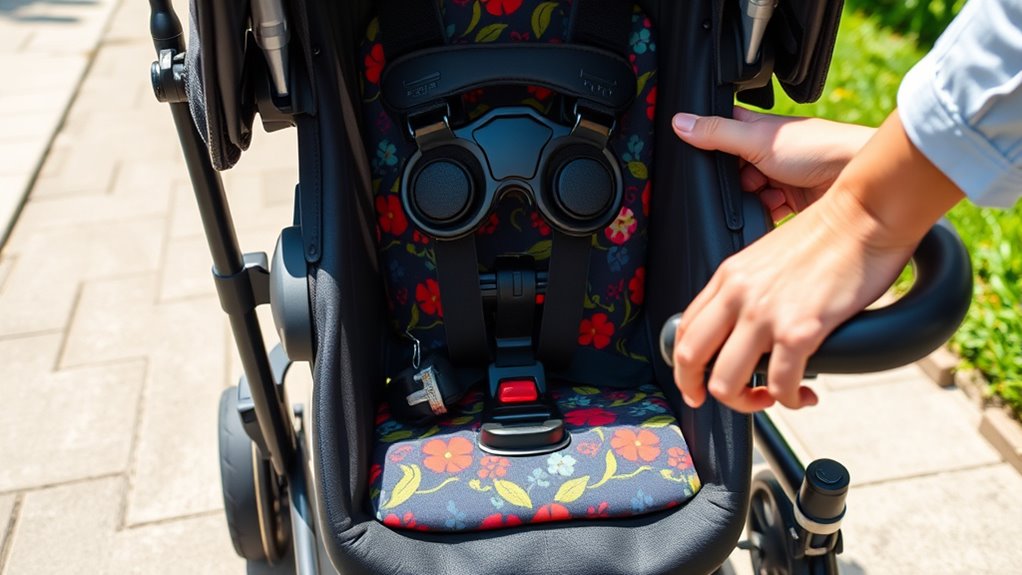
Are you confident that your stroller is as safe as it can be? Ensuring your child’s safety starts with understanding the essential features that keep them secure during outings. One of the first things to check is the stroller’s brake mechanisms. These are your primary line of defense against accidental rolling or movement when you need to stop or park the stroller. Test the brakes before every use by engaging and disengaging them to confirm they lock securely. If they feel loose or don’t hold firmly, it’s time to repair or replace them. Effective brake mechanisms prevent the stroller from rolling away unexpectedly, especially on inclined surfaces or uneven terrain. Always remember to engage the brakes whenever you park the stroller, even for short stops, to avoid any accidental slips.
Regularly test and maintain stroller brakes to ensure safety and prevent accidents during outings.
Along with brakes, harness adjustments play a essential role in keeping your child safe. Modern strollers come equipped with harness systems—usually five-point harnesses—that secure your child snugly in the seat. Regularly check that the harness straps aren’t twisted or frayed, and make sure they’re properly adjusted for your child’s size. The straps should lie flat against their shoulders and hips, with the buckle fitting snugly without causing discomfort. When adjusting the harness, ensure that it’s tight enough that you cannot pinch any excess slack at the shoulders. A loose harness can allow your child to wiggle free or slide down, increasing the risk of falling or injury. Conversely, a harness that’s too tight can be uncomfortable, so find that perfect balance for safety and comfort. Additionally, understanding the importance of stroller safety features can help you identify potential hazards and enhance overall security.
It’s also wise to routinely inspect the harness attachment points for signs of wear or damage. If any part looks compromised, replace the harness or have it repaired immediately. Additionally, always double-check the harness buckles to ensure they click securely into place and don’t easily come undone. Proper harness adjustments are essential because they keep your child securely seated during movement, preventing falls or ejections if the stroller hits a bump or makes a sudden stop.
Finally, combine these safety checks with overall stroller maintenance—cleaning, tightening loose bolts, and inspecting the frame. When you routinely verify that the brake mechanisms work correctly and the harness fits properly, you considerably reduce the risk of accidents. Remember, safety isn’t a one-time task; it’s an ongoing process that requires your vigilance and care. By paying close attention to these details, you ensure your little one is protected and comfortable, giving you peace of mind during every adventure.

Alarm Disc Lock Set, Brake Lock, Anti-Theft Waterproof 110 dB 7mm Pin 5ft Reminder Cable for Motorcycles Bike Scooter Carry Pouch (1pcs Black)
【1pcs Black Lock】- This alarm disc lock set includes 1pcs black alarm disc lock, 1pcs Allen wrench, 2pcs…
As an affiliate, we earn on qualifying purchases.
As an affiliate, we earn on qualifying purchases.
Frequently Asked Questions
How Often Should I Replace My Stroller’s Safety Harness?
You should replace your stroller’s safety harness whenever you notice signs of wear, damage, or fraying during harness maintenance. Following the replacement guidelines, it’s best to check the harness regularly and replace it immediately if it becomes compromised. Typically, manufacturers recommend replacing the harness every few years or after an accident. Regular inspections ensure your child’s safety and maintain the harness’s effectiveness, so don’t delay replacing it when needed.
Are There Specific Safety Standards for All Stroller Brands?
Yes, there are specific safety standards for all stroller brands. You should look for strollers that meet official safety certifications, which guarantee they comply with strict safety regulations. Reputable stroller manufacturing companies adhere to these standards, such as ASTM or EN tests, to guarantee your child’s safety. Always check for certification labels and consider reviews to confirm the stroller’s safety performance before making a purchase.
Can I Add Accessories to Improve Stroller Safety?
You can definitely add stroller accessories to boost safety, but make sure they’re compatible and approved by the manufacturer. Using stroller accessories designed for safety improvements, like reflective strips or secure harness covers, can enhance visibility and restraint. Just verify they don’t interfere with the stroller’s normal function. Always check that the accessories are properly installed and don’t create hazards, so your little one stays safe and secure during every ride.
What Should I Do if My Stroller’s Brakes Fail?
If your stroller’s brakes fail, stay calm and act quickly. Use emergency stopping techniques like grabbing the stroller frame to slow it down or pushing against a sturdy object nearby. To prevent brake failure, regularly check and maintain the brakes, avoiding overloading the stroller. Always test the brakes before each use, especially on inclines or uneven surfaces. Staying alert and prepared guarantees your child’s safety in unexpected situations.
How Do I Ensure the Stroller Is Safe on Uneven Terrain?
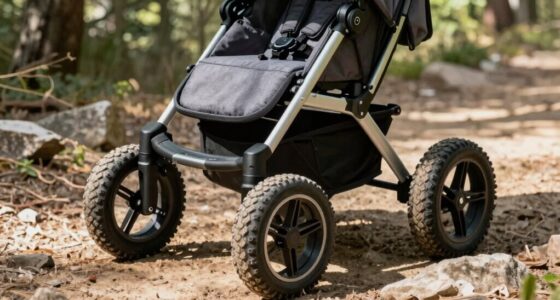
To guarantee your stroller is safe on uneven terrain, check its terrain stability and wheel traction before heading out. Adjust the suspension if possible and choose a stroller with larger, rugged wheels designed for rough surfaces. Keep your pace steady, avoid sudden sharp turns, and stay alert for loose debris or obstacles. Regularly inspect the wheels and suspension to maintain peak traction and stability, making your stroll safer and smoother.

Ingenuity 3D Mini Convenience Stroller – Lightweight Stroller with Compact Fold, Multi-Position Recline, Canopy with Pop Out Sun Visor – Umbrella Stroller for Travel & More, Blue/Black
LIGHTWEIGHT – A lightweight stroller makes any outing a little easier; The Ingenuity 3D Mini Convenience Stroller has…
As an affiliate, we earn on qualifying purchases.
As an affiliate, we earn on qualifying purchases.
Conclusion
By keeping these stroller safety basics in mind, you’re steering your little one in the right direction. Remember, safety isn’t just a quick check—it’s a continuous effort. Don’t let small details slide; they can make a big difference. When it comes to your child’s well-being, it’s better to be safe than sorry. Stay vigilant, stay prepared, and you’ll navigate parenthood smoothly—because a safe journey is worth its weight in gold.

Baby Stroller Safety Straps Anti-Wearing and Anti-Lost Wrist Leash for Stroller, Universal for Most Baby Carriages, Short Leash for Dog Security
GENTLE MATERIAL— The stroller hands wrist strap is made of soft and durable neoprene with slightly stretchy. Very…
As an affiliate, we earn on qualifying purchases.
As an affiliate, we earn on qualifying purchases.

kobeIeen Baby Carriages Repair Essential Replacement Spare Screws Set Maintenance Tool for Strollers
● Great repalcement for your lost or part.
As an affiliate, we earn on qualifying purchases.
As an affiliate, we earn on qualifying purchases.