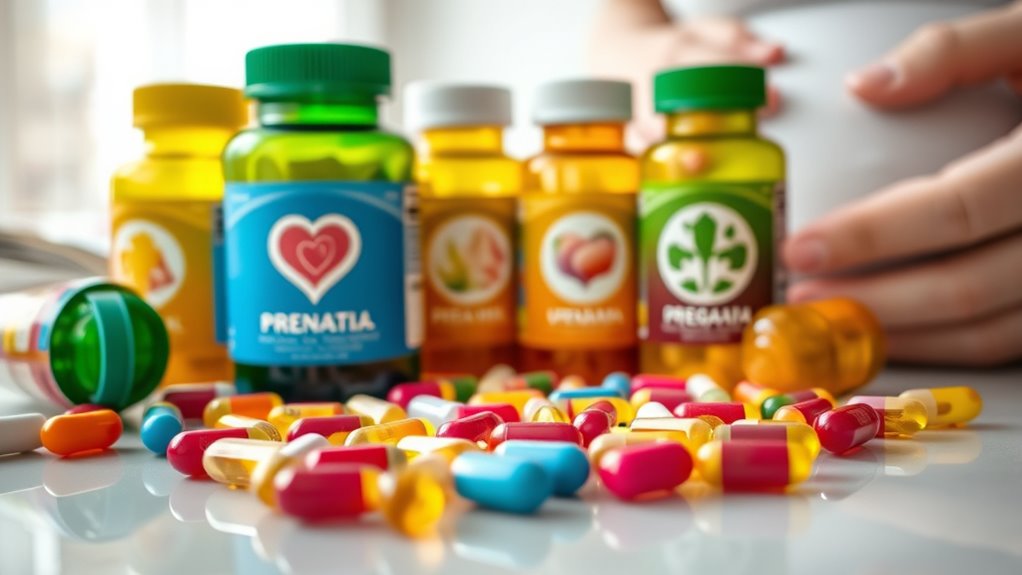

When choosing prenatal vitamins, look for key nutrients like folic acid, iron, calcium, vitamin D, and DHA to support your baby’s development and your health. Check the label for appropriate dosages—usually 400-800 micrograms of folic acid and about 27 milligrams of iron—and avoid unnecessary additives or artificial ingredients. Picking a supplement tested for safety and quality is essential. For more tips on selecting the best prenatal vitamins for you, keep exploring how to make an informed choice.
Key Takeaways
- Ensure the prenatal vitamin contains adequate folic acid (400-800 mcg) to prevent neural tube defects.
- Look for sufficient iron (around 27 mg) to support increased blood volume and prevent anemia.
- Choose products with calcium, vitamin D, and DHA for optimal fetal bone, growth, and brain development.
- Select supplements free from unnecessary additives, artificial colors, and preservatives, with safety testing or certification.
- Consult your healthcare provider for personalized recommendations based on your health needs and blood test results.
Are prenatal vitamins essential for a healthy pregnancy? The answer is yes, especially because they help fill nutritional gaps that might otherwise affect your baby’s development. When choosing a prenatal vitamin, it’s important to look for specific nutrients that support your health and your baby’s growth. Two key components to focus on are folic acid and iron supplementation. Folic acid is vital because it helps prevent neural tube defects, which can occur very early in pregnancy—sometimes even before you realize you’re pregnant. That’s why many healthcare providers recommend starting prenatal vitamins before conception if possible. Aim for at least 400 to 800 micrograms of folic acid daily, but your doctor may advise a higher dose if you have specific risk factors.
Iron supplementation is equally significant because it supports your increased blood volume during pregnancy and helps prevent anemia. Anemia can cause fatigue, weakness, and increase the risk of complications during delivery. Look for a prenatal vitamin that contains around 27 milligrams of iron, which is generally recommended during pregnancy. However, if your healthcare provider detects low iron levels, they might suggest a higher dose or additional supplements. Be aware that iron can sometimes cause constipation, so staying hydrated and eating fiber-rich foods can help manage this side effect.
Beyond folic acid and iron, check the label for other essential nutrients like calcium, DHA, and vitamin D. Calcium supports the development of your baby’s bones and teeth, and vitamin D enhances calcium absorption. DHA, an omega-3 fatty acid, is important for your baby’s brain development. Many prenatal vitamins now include these nutrients to promote overall health. Additionally, supplementing with prenatal vitamins can help ensure you meet nutritional requirements even if your diet is not perfectly balanced.
It’s also wise to choose a prenatal vitamin that’s free from unnecessary additives, artificial colors, or preservatives. Look for products that are tested for safety and quality, ideally those that are certified by reputable organizations. As every pregnancy is unique, consult your healthcare provider to determine the best supplement for your specific needs. They may recommend adjustments based on your dietary intake, health history, or blood test results.
Frequently Asked Questions
Can I Take Prenatal Vitamins if I’M Not Pregnant?
Yes, you can take prenatal vitamins even if you’re not pregnant. They may support fertility enhancement and prepare your body for early pregnancy by providing essential nutrients like folic acid, iron, and calcium. However, it’s a good idea to consult your healthcare provider before adding them to your routine, especially if you’re trying to conceive or have specific health concerns. Taking prenatal vitamins can be beneficial, but professional guidance guarantees they’re right for you.
Are There Any Side Effects From Prenatal Vitamins?
Yes, you might experience side effects from prenatal vitamins, but they often relate to how your body absorbs the nutrients. Common issues include nausea, constipation, or upset stomach. To manage these side effects, take your vitamins with food or at different times of day. If side effects persist, consult your healthcare provider to adjust your dosage or try a different supplement to improve vitamin absorption and reduce discomfort.
How Long Should I Continue Taking Prenatal Vitamins?
You should continue taking prenatal vitamins throughout your pregnancy and often for a few months postpartum. This guarantees proper vitamin absorption and supports your baby’s development. It’s best to take them at the same time each day to optimize supplement timing. Keep in mind, consulting your healthcare provider is important to determine the right duration for your specific needs and to avoid any deficiencies.
Can Prenatal Vitamins Replace a Healthy Diet?
Think of prenatal vitamins as the cherry on top of a healthy diet cake. They can’t replace a balanced diet because real food provides a wide array of nutrients and fiber that supplements can’t match. While prenatal vitamins support nutrient absorption, you should prioritize whole foods for overall health. Relying solely on supplements is like watering only the roots—eventually, the plant needs the whole garden to thrive.
Are There Specific Brands Recommended for Prenatal Vitamins?
You should look for brand recommendations that prioritize supplement quality, such as trusted brands with good reputations and clear ingredient lists. Popular options like Garden of Life, Thorne, and Nature Made often meet high standards. Always check for third-party testing and consult your healthcare provider to choose the best prenatal vitamin for your needs. Prioritizing quality guarantees you’re getting safe, effective nutrients essential for your pregnancy.
Conclusion
So, when choosing your prenatal vitamins, don’t settle for less—because your baby’s future depends on it! Get the right nutrients, avoid the fillers, and make sure you’re covered from A to Z. Think of these vitamins as the superhero shield protecting your little one’s growth, development, and happiness. Trust me, overlooking this tiny detail could mean missing out on the most important gift you’ll ever give—your baby’s healthiest start in life!