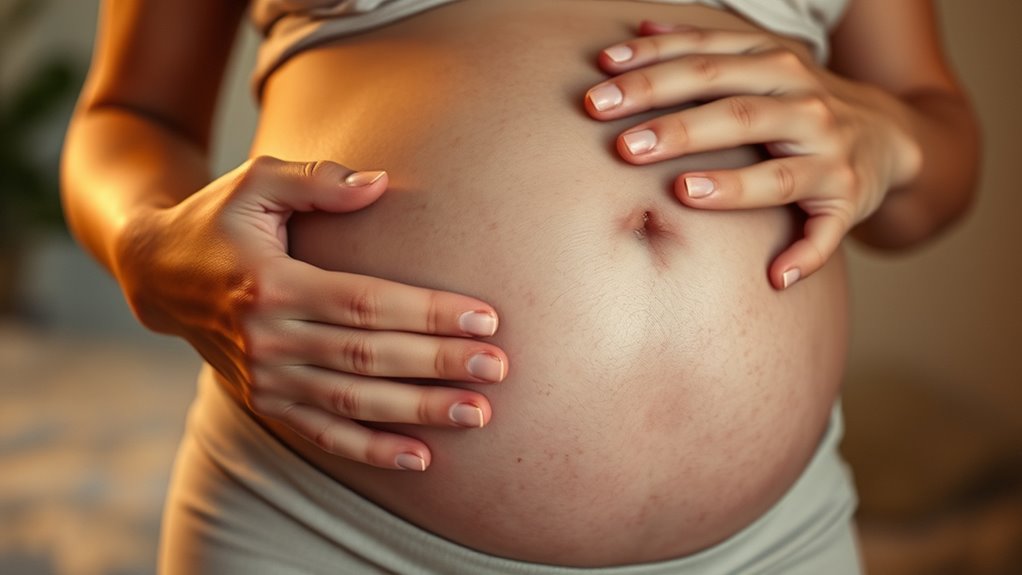

Round ligament pain is a common, harmless discomfort during pregnancy caused by the stretching of ligaments that support your growing uterus. You might feel sharp, quick pains on one or both sides, especially with movement, coughing, or laughing. Usually, these pains are brief and mild, but if they become severe or persistent, it’s important to seek medical advice. To learn more about managing and understanding this discomfort, keep exploring what your body is experiencing.
Key Takeaways
- Round ligament pain is caused by stretching of ligaments as the uterus expands during pregnancy.
- It presents as sharp, brief pains typically on one or both sides of the lower abdomen.
- Common triggers include sudden movements, coughing, laughing, or changing positions.
- Relief methods include gentle stretching, supporting belts, warm compresses, and staying hydrated.
- While usually harmless, persistent or severe pain should be evaluated by a healthcare provider.

Have you ever experienced sharp, stabbing pains in your lower abdomen during pregnancy? If so, you’re not alone. Many expectant mothers encounter this type of pregnancy discomfort, which is often caused by ligament stretching. As your pregnancy progresses, your body undergoes numerous changes to accommodate your growing baby, and one common source of discomfort is the round ligament. These ligaments are thin bands of tissue that run from your uterus to your groin, providing support and stability as your belly expands. When they stretch to keep up with the enlarging uterus, you might feel sudden, sharp pains that can catch you off guard.
Sharp, stabbing pains in your lower abdomen are common as your round ligaments stretch during pregnancy.
Ligament stretching is a natural part of pregnancy, especially during the second trimester when your uterus grows more rapidly. The sensation is usually described as a quick, stabbing pain on one or both sides of your lower abdomen. You might notice it when you change positions suddenly, cough, laugh, or even when you’re standing up from a sitting or lying position. This discomfort occurs because your body is adapting to the expanding uterus, which pulls on these ligaments and causes them to stretch. It’s important to understand that this type of pregnancy discomfort, while uncomfortable, is typically harmless and a normal part of pregnancy.
To minimize the discomfort, you can try gentle movements and stretches that help relieve tension in the ligaments. For example, gently bending your knees while lying on your side or doing pelvic tilts can ease the stretching sensation. Applying heat, like a warm compress, might also help relax the muscles and reduce pain. Remember, staying hydrated and avoiding sudden movements can prevent worsening the discomfort. Wearing supportive maternity belts or belly bands can provide extra support to your abdomen, helping distribute weight more evenly and alleviating ligament tension. Additionally, understanding ligament stretching can empower you to better manage these sensations and recognize when they are typical.
It’s also vital to distinguish ligament stretching pains from other more serious causes of abdominal pain. If the pain becomes persistent, severe, or is accompanied by bleeding, fever, or dizziness, you should consult your healthcare provider immediately. While ligament stretching is common, persistent or intense pain might require medical attention to rule out other issues like preterm labor or other complications.
Understanding that ligament stretching is a normal part of pregnancy can help you feel more prepared when these pains occur. Knowing some simple ways to manage the discomfort can make your pregnancy journey more comfortable. Keep in mind that as your body continues to change, these sensations will likely come and go. Staying informed and listening to your body will help you navigate pregnancy discomfort with greater confidence.

ChongErfei Maternity Belt, Pregnancy 3 in 1 Support Belt for Back/Pelvic/Hip Pain, Maternity Band Belly Support for Pregnancy Belly Support Band (L: Fit Ab 39.5"-51.3", Black)
✅RECOMMENDED BY OBSTETRICIANS: Medical studies show wearing a high quality maternity support belt, helps to promote a healthier…
As an affiliate, we earn on qualifying purchases.
As an affiliate, we earn on qualifying purchases.
Frequently Asked Questions
Can Round Ligament Pain Occur Outside Pregnancy?
Yes, round ligament pain can occur outside pregnancy due to non-pregnancy conditions like ligament strain or muscle pulls. You might experience sharp or stretching sensations in your groin or lower abdomen, especially during physical activity or sudden movements. These symptoms happen because your ligaments are strained or irritated, not necessarily linked to pregnancy. If pain persists or worsens, it’s best to consult a healthcare professional for proper diagnosis and treatment.
How Can I Distinguish It From Other Abdominal Pains?
You can tell round ligament pain from other abdominal pains by paying attention to pain characteristics. It’s usually sharp, stabbing, or pulling, often on one side, and tends to worsen with sudden movements or deep breaths. For differential diagnosis, consider if the pain intensifies with activity and eases with rest. If it feels different—persistent, dull, or worsening—don’t ignore it; consult your healthcare provider for proper diagnosis.
Is Round Ligament Pain Dangerous for My Baby?
Round ligament pain isn’t dangerous for your baby. It’s a common, temporary discomfort caused by stretching ligaments during pregnancy. To guarantee exercise safety and manage pain, avoid sudden movements and get plenty of rest. If the pain worsens or is accompanied by bleeding or other concerning symptoms, contact your healthcare provider. Otherwise, gentle stretching and proper posture help keep you comfortable as your body adapts.
Are There Specific Activities That Trigger the Pain?
You might notice that stretching exercises, sudden movements, and posture adjustments can trigger round ligament pain. Activities that involve bending, twisting, or standing for long periods often worsen the discomfort. To minimize pain, try gentle stretching, maintain good posture, and avoid abrupt movements. Listening to your body and taking breaks can help, so you stay comfortable and reduce the likelihood of flare-ups during your daily routine.
When Should I See a Doctor About the Pain?
You should see a doctor when the pain becomes severe, persistent, or worsens with activity, as these can be warning signs of a more serious issue. Seek medical guidance immediately if you experience bleeding, fever, chills, or dizziness along with the pain. Recognizing warning signs early helps guarantee proper care and peace of mind. Trust your instincts and consult your healthcare provider if you’re unsure about your symptoms.

Small Microwave Heating Pad Rice Hot Pack with Moist Warm Compress Packs Microwavable for Pain Relief Reusable Bean Bag Compresas Calientes Secented and Unscented Pack of 4
Versatile Microwave Heating Pad for Targeted Relief: This microwave heating pad delivers instant, penetrating warmth to ease muscle…
As an affiliate, we earn on qualifying purchases.
As an affiliate, we earn on qualifying purchases.
Conclusion
Understanding round ligament pain can feel like a weight lifted off your shoulders. Knowing it’s a common and harmless part of pregnancy helps you stay calm and confident through this phase. Remember, every cloud has a silver lining—these aches are temporary and a sign your body is doing its job. Keep listening to your body and stay positive. With a little patience, this too shall pass, and brighter days are just around the corner.
ChongErfei Maternity Belt, Pregnancy 3 in 1 Support Belt for Back/Pelvic/Hip Pain, Maternity Band Belly Support for Pregnancy Belly Support Band (M: Fit Ab 35.5"-47.3", Black)
✅RECOMMENDED BY OBSTETRICIANS: Medical studies show wearing a high quality maternity support belt, helps to promote a healthier…
As an affiliate, we earn on qualifying purchases.
As an affiliate, we earn on qualifying purchases.
ChongErfei Maternity Belt, Pregnancy 3 in 1 Support Belt for Back/Pelvic/Hip Pain, Maternity Band Belly Support for Pregnancy Belly Support Band (L: Fit Ab 39.5"-51.3", Black)
✅RECOMMENDED BY OBSTETRICIANS: Medical studies show wearing a high quality maternity support belt, helps to promote a healthier…
As an affiliate, we earn on qualifying purchases.
As an affiliate, we earn on qualifying purchases.