
In the second trimester, it’s generally safe to get certain vaccines like the flu shot and Tdap, which help protect both you and your baby from serious illnesses. Timing is important to make certain you get the right immunity without risking side effects or fetal harm. Live vaccines, like MMR and varicella, are usually avoided unless your healthcare provider recommends them. To learn how to navigate vaccination safely during this stage, consider exploring more about recommended options and guidance.
Key Takeaways
- The second trimester is an ideal time to receive certain vaccines, balancing safety and optimal immune response.
- Recommended vaccines during this period include the influenza vaccine and Tdap to protect mother and baby.
- Live vaccines like MMR and varicella are generally avoided unless specifically advised by a healthcare provider.
- Vaccinating in the second trimester can reduce side effects and establish immunity before the third trimester.
- Healthcare providers guide the timing and selection of vaccines to ensure safety and maximum benefit during pregnancy.
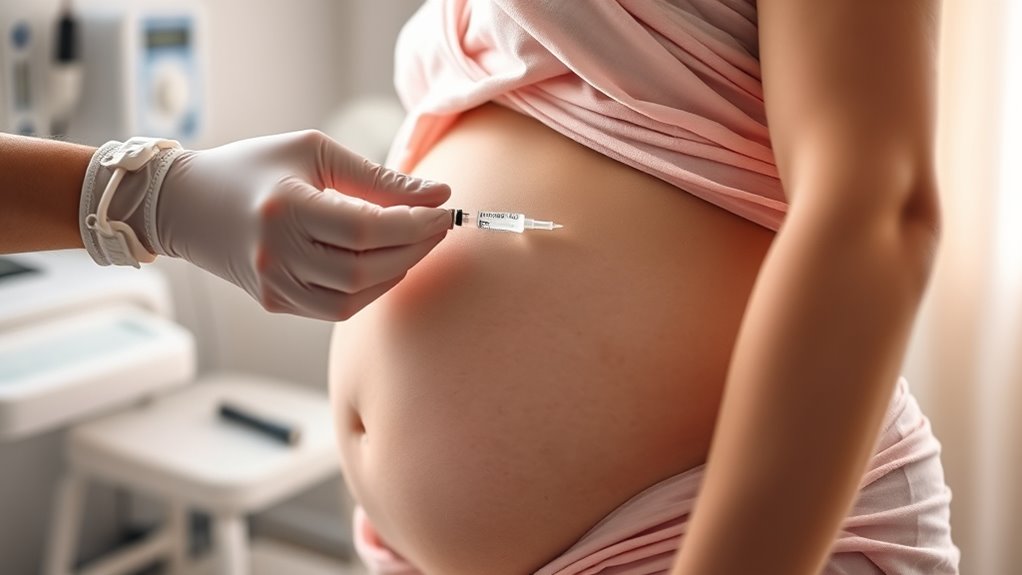
During the second trimester of pregnancy, many women find it an ideal time to receive certain vaccines, as it helps protect both mother and baby from preventable diseases. This period is often recommended because of the essential balance between vaccine timing and second trimester safety. You might wonder which vaccines are safe now and why this stage of pregnancy is considered the best window for immunizations. The second trimester is generally viewed as the safest time to receive vaccines because your body has already adjusted to pregnancy, reducing the risk of side effects. Plus, your immune system is better prepared to handle vaccines without putting you or your developing baby at unnecessary risk.
When considering vaccine timing, healthcare providers typically advise getting vaccines that protect against influenza, Tdap (tetanus, diphtheria, and pertussis), and other recommended immunizations during this trimester. These vaccines are proven to be safe and effective at this stage, helping you build immunity without exposing your baby to potential risks. The second trimester safety of these vaccines is well-documented, and they are vital in preventing serious illnesses that could harm both of you. For example, receiving the Tdap vaccine during this time helps protect your newborn from whooping cough during their first few vulnerable months.
It’s important to remember that not all vaccines are suitable during pregnancy, especially live vaccines, which are generally avoided in the second trimester unless specifically recommended by your healthcare provider. Live vaccines, like the MMR or varicella, are usually contraindicated because they contain weakened viruses that could pose a risk to the fetus. Your healthcare provider will guide you on which vaccines are appropriate and when to receive them, ensuring that vaccine timing aligns with second trimester safety guidelines.
Scheduling your vaccinations during the second trimester also means you’re less likely to experience common pregnancy-related side effects, such as nausea or fatigue, which might be exacerbated if vaccines are given earlier. It’s a strategic time to guarantee your immune system responds well without adding unnecessary discomfort. Moreover, getting vaccinated now helps establish immunity before the third trimester, when certain illnesses could become more hazardous.
pregnancy safe flu shot
As an affiliate, we earn on qualifying purchases.
As an affiliate, we earn on qualifying purchases.
Frequently Asked Questions
Are There Any Vaccines Recommended Specifically for Second Trimester Pregnancy?
You should consider getting the Tdap vaccine during your second trimester, as it helps protect your baby from whooping cough. The timing is important because it allows your fetal immune response to develop effectively. Talk to your healthcare provider about the best schedule for other vaccines, like the flu shot, to make certain you and your baby stay protected during this vital stage.
How Do Vaccines Impact Fetal Development During the Second Trimester?
You might think vaccines would disrupt fetal development, but ironically, they actually support it. During the second trimester, vaccines help stimulate your baby’s fetal immune response safely, without harming growth. Rest assured, vaccine safety studies show no adverse effects on fetal development, making them a wise choice. So, rather than risking illness, you’re actually protecting your baby’s future health by getting vaccinated at this stage.
Can Vaccines Cause Pregnancy Complications in the Second Trimester?
No, vaccines generally don’t cause pregnancy complications in the second trimester. Vaccine safety is well-established, and studies show that getting vaccinated doesn’t negatively impact pregnancy outcomes. You can confidently receive recommended vaccines, as they protect both you and your baby. It’s always best to consult your healthcare provider for personalized advice, but overall, vaccines are safe and beneficial during pregnancy.
What Are the Risks of Delaying Vaccines Until After the Second Trimester?
Delaying vaccination is like leaving a fragile seed in the shade; it risks missing the sunlight needed for growth. Postponing vaccines until after the second trimester can expose you to trimester risks, such as preventable illnesses that might harm both you and your baby. Without protection, you’re vulnerable to infections that could escalate, making timely vaccination essential to nurture a healthy pregnancy and avoid unnecessary complications.
Are There Any Vaccines Contraindicated During the Second Trimester?
During the second trimester, most vaccines are safe, but some, like live attenuated vaccines, are contraindicated due to safety concerns. You should avoid vaccines with uncertain safety profiles until further trimester timing is verified. Always consult your healthcare provider about vaccine safety during each trimester to ensure the timing aligns with medical guidelines and minimizes risks for both you and your baby.

The Hidden Dangers of Vaccines During Pregnancy: What Your OB/GYN Isn’t Telling You About Flu/Tdap/RSV/and COVID-19 Vaccines… (The Hidden Dangers of Vaccines (That Your Doctor Won't Tell You))
As an affiliate, we earn on qualifying purchases.
As an affiliate, we earn on qualifying purchases.
Conclusion
Now that you know about vaccines in the second trimester, you can make informed decisions for you and your baby. Remember, timing is everything, so don’t wait until it’s too late. Protecting yourself now means fewer worries later, and you’re the best advocate for your little one. Trust in your healthcare provider and stay proactive. When it comes to your pregnancy, it’s better to be safe than sorry—because a stitch in time saves nine.

The Vaccine-Friendly Plan: Dr. Paul's Safe and Effective Approach to Immunity and Health-from Pregnancy Through Your Child's Teen Years
As an affiliate, we earn on qualifying purchases.
As an affiliate, we earn on qualifying purchases.

Rumbly 2nd Trimester Mom-to-Be Essentials Box – Pregnancy Gifts for Expecting Mom – Care Package with Essential New Mommy Items & Pregnancy Must-Haves – Second Trimester
BEST-IN-CLASS PREGNANCY ESSENTIALS: Stand out with our 2nd Trimester Mom-To-Be Essentials box, featuring pregnancy must-haves. Each Rumbly box…
As an affiliate, we earn on qualifying purchases.
As an affiliate, we earn on qualifying purchases.