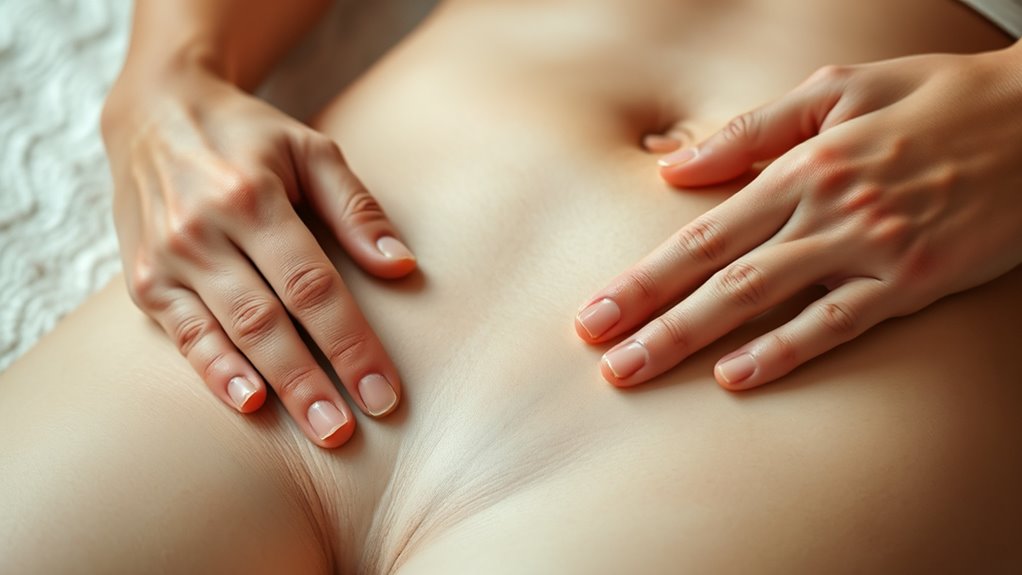

Perineal massage involves gently stretching and softening the tissue between your vagina and anus to help reduce tearing during childbirth. It’s best done regularly with water-based lubricant, in a calm, relaxed environment, using slow circular motions or gentle pressing. This practice can boost tissue flexibility, increase comfort, and promote mental readiness for labor. If you continue exploring, you’ll find more tips to make your experience even more effective and comfortable.
Key Takeaways
- Perineal massage involves gently stretching the area between the vagina and anus to increase flexibility before childbirth.
- It reduces the risk of tearing and the need for episiotomy during delivery.
- Regular massage with lubricant and relaxation techniques enhances tissue softness and comfort.
- Performing the massage consistently and mindfully prepares both physically and mentally for labor.
- Creating a calm environment and practicing deep breathing can improve relaxation during the massage.
Perineal Massage
Have you heard about perineal massage and wondered how it can help during childbirth? If so, you’re not alone. Many expectant mothers explore this technique to prepare their bodies for labor. Perineal massage involves gently massaging the perineum—the area between your vagina and anus—to increase its flexibility and comfort during delivery. The benefits of massage are significant; they include reducing the risk of tearing or needing an episiotomy, as well as promoting better blood flow to the area. When you incorporate regular perineal massage into your routine, you give your body a chance to adapt gradually, making the stretching process smoother and less traumatic.
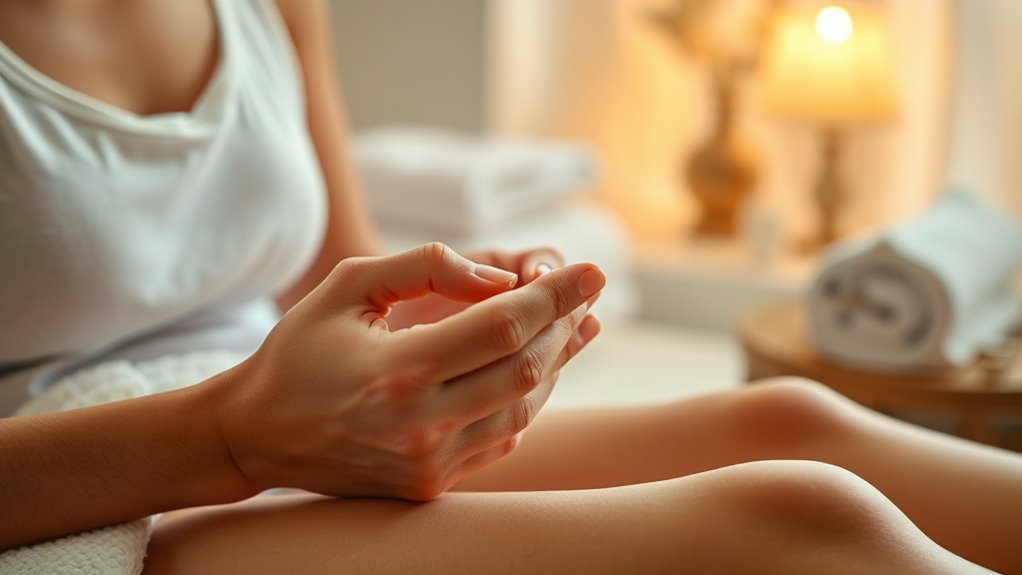
To maximize these benefits, understanding techniques for relaxation is vital. When you begin massaging, create a calm environment—dim the lights, play soothing music, and take slow, deep breaths to help ease tension. Relaxing your muscles makes the massage more effective and comfortable. Using a generous amount of a safe, water-based lubricant can help prevent discomfort and allow your fingers to glide smoothly. You might find it easier to sit or lie in a comfortable position, such as on your back with your knees bent or in a squat position, to access the perineal area easily. As you start, gently press your thumb or fingers against the perineum and gradually apply gentle pressure, moving in circular motions or along the edges. The goal is to gradually stretch and soften the tissues over time, not to cause pain. Incorporating mindfulness techniques can also enhance relaxation and improve the overall experience.
Consistency is key; performing the massage daily for a few minutes can make a noticeable difference. Many women find that incorporating techniques for relaxation during massage—like deep breathing, visualization, or focusing on calming thoughts—enhances the experience and helps prevent tension that could hinder the process. As your body becomes accustomed to the sensation, you’ll notice increased comfort and flexibility, which can make a significant difference during labor. Remember, the purpose of perineal massage isn’t just physical preparation but also mental readiness. Feeling relaxed and in control can boost your confidence and reduce anxiety when the time comes to give birth.

Lansinoh Organic Perineal Massage Oil, 1.7 Fl. Ounces
SUPPORTS SKIN ELASTICITY- During pregnancy, apply 2-3 drops to condition skin and support elasticity before perineal massage
As an affiliate, we earn on qualifying purchases.
As an affiliate, we earn on qualifying purchases.
Frequently Asked Questions
When Is the Best Time to Start Perineal Massage?
You should start perineal massage around 34 weeks of pregnancy, considering timing considerations to *guarantee* your body early. Beginning early preparation helps your tissues become more flexible, reducing tearing risks during delivery. Make sure to set aside time regularly, about two to three times a week, and follow proper techniques for comfort and effectiveness. Starting at the right time ensures you’re better prepared physically and mentally for labor.
Are There Any Risks or Side Effects?
Think of perineal massage as a gentle dance—usually safe, but watch out for potential discomfort or allergic reactions. You might feel some mild soreness or irritation, which is normal, but if you experience significant pain, redness, or swelling, stop immediately. Always test a small skin area first and use gentle, natural oils. If you have allergies or concerns, consult your healthcare provider to guarantee safe practice.
Can Perineal Massage Be Done During Pregnancy?
Yes, you can do perineal massage during pregnancy to improve pelvic flexibility and prepare for childbirth. Use gentle massage techniques, applying light pressure and gradually increasing comfort. It’s best to start around 34 weeks, but consult your healthcare provider first. Regularly practicing can help reduce tearing and improve your overall birthing experience. Always listen to your body and stop if you feel any discomfort or pain.
Do I Need Professional Guidance to Perform It?
You don’t need professional guidance to perform perineal self-massage techniques, but expert advice can enhance ease and safety. Whether you choose self-massage or partner assistance, learning proper methods helps prevent pain and promotes relaxation. Starting with simple, gentle techniques ensures comfort and confidence. If you’re unsure or experience discomfort, consulting a healthcare provider offers personalized pointers, making your perineal preparation feasible and pain-free.
How Does Perineal Massage Impact Labor and Delivery?
Perineal massage can positively impact your labor and delivery by increasing pelvic flexibility, which helps the perineum stretch more easily. It also responds to hormonal changes, softening tissues for smoother delivery. Regular massage may reduce tearing and the need for episiotomy. You might find it improves comfort and confidence as you prepare for birth. Just remember, consistency is key, and professional guidance can guarantee you perform it safely.

Perimom Perineal Massage kit for Birth Prep – The Premium Perineal Massage Tool for Ultimate Stretching
EASY TO USE: Perimom makes perineal massage simple to do on your own, without needing a partner’s help.
As an affiliate, we earn on qualifying purchases.
As an affiliate, we earn on qualifying purchases.
Conclusion
So, go ahead and give perineal massage a try—because who doesn’t love a little extra prep for the big day? Just remember, if you’re lucky, it might make things smoother; if not, at least you’ll have a hilarious story to tell. After all, it’s the ultimate DIY project. So, embrace the discomfort, laugh at the awkwardness, and trust that your future self will thank you—preferably with a pain-free, happy ending.

Ina May's Guide to Childbirth "Updated With New Material"
Childbirth
As an affiliate, we earn on qualifying purchases.
As an affiliate, we earn on qualifying purchases.

SAMYO Palm Shaped Massage Glove Body Massager with 9 360-degree-roller Metal Roller Ball Beauty Body Care (Blue)
WHOLE BODY MASSAGE TOOL – Palm shaped massager suitable for any point of your body, such as head,…
As an affiliate, we earn on qualifying purchases.
As an affiliate, we earn on qualifying purchases.