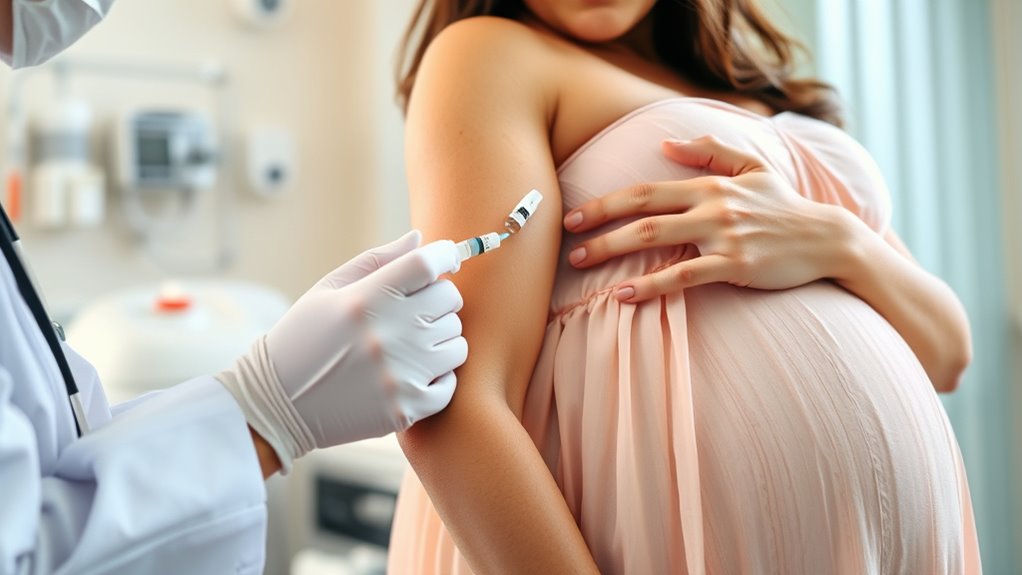

During pregnancy, certain vaccines are recommended to protect both you and your baby from serious illnesses. The flu shot is safe in any trimester and is advised annually, while the Tdap vaccine is best given between 27 and 36 weeks to guard against pertussis. It’s important to avoid live vaccines like MMR and varicella during pregnancy, but getting preconception shots helps. If you want to know more about which vaccines suit your pregnancy, stay with us for additional details.
Key Takeaways
- The influenza vaccine is safe and recommended during any trimester, administered annually.
- The Tdap vaccine is advised between 27 and 36 weeks to protect against pertussis.
- Live vaccines like MMR and varicella are generally avoided during pregnancy; preconception immunization is preferred.
- Vaccination plans should be personalized through healthcare provider guidance for optimal safety.
- Staying up-to-date with recommended vaccines helps protect both mother and baby from serious illnesses.
Pregnancy is a vital time when protecting both mother and baby becomes a top priority, and vaccines play an essential role in this. During this period, you need to be mindful of which vaccines are safe and beneficial for you and your developing baby. Confirming vaccine safety is key, and healthcare providers carefully evaluate each vaccine’s safety profile before recommending it during pregnancy. The goal is to prevent serious illnesses that could harm you or your unborn child while avoiding any unnecessary risks.
An important aspect to think about is the immunization schedule, which outlines the timing of vaccines during pregnancy. Following this schedule helps you optimize protection without exposing yourself or your baby to unnecessary doses at the wrong time. Typically, the vaccines recommended during pregnancy are those that protect against diseases that could cause severe complications, such as influenza and pertussis (whooping cough). The flu vaccine, usually administered annually, is safe during any trimester and is strongly recommended because pregnant women are at higher risk for severe flu complications. It not only protects you but also passes some immunity to your baby, giving them some defense after birth.
The Tdap vaccine, which protects against tetanus, diphtheria, and pertussis, is usually recommended between 27 and 36 weeks of pregnancy. Receiving this vaccine during pregnancy helps your body produce antibodies that are transferred to your baby, safeguarding them during their early months when they are most vulnerable.
Other vaccines, such as the MMR (measles, mumps, rubella) and varicella (chickenpox), are generally avoided during pregnancy because they are live vaccines with a small risk of infection. However, if you’re planning pregnancy, getting these vaccines beforehand is advisable. It’s also important to review your vaccination history with your healthcare provider to identify any gaps that need to be addressed prior to conception.
Additionally, understanding vaccine safety profiles is crucial for making informed decisions during pregnancy, as it ensures you choose the most appropriate and risk-averse options for you and your baby.
You should always discuss your specific health situation with your healthcare provider. They will help you create a tailored immunization plan that aligns with the recommended schedule and prioritizes safety. Remember, staying current with vaccines not only protects you but also reduces the risk of transmitting preventable diseases to your newborn. By following the immunization schedule and understanding vaccine safety, you take proactive steps to ensure a healthier pregnancy and a safer start for your baby.
flu vaccine for pregnancy
As an affiliate, we earn on qualifying purchases.
As an affiliate, we earn on qualifying purchases.
Frequently Asked Questions
Are There Any Vaccines Safe During Breastfeeding?
Yes, many vaccines are safe during breastfeeding. Breastfeeding safety is a priority, and most vaccines do not transmit harmful substances through breast milk. Live vaccines are generally avoided, but inactivated vaccines are considered safe and can even benefit your baby by providing passive immunity. Always consult your healthcare provider to guarantee vaccine transmission risks are minimized and to get personalized advice tailored to your health and your baby’s needs.
How Do Vaccines Affect Fetal Development?
Vaccines generally support fetal development by stimulating your immune system to create a fetal immune response, which can help protect your baby after birth. During pregnancy, antibodies transfer across the placenta, offering your baby passive immunity. This process is safe and beneficial, as it helps safeguard your infant from certain infections without harming fetal development. Always consult your healthcare provider to understand the best vaccine options during pregnancy.
Can Vaccines Cause Pregnancy Complications?
Think of vaccines as shields, not swords—when you get vaccinated, it’s unlikely to cause pregnancy complications. While some vaccine side effects, like soreness or mild fever, may occur, they rarely pose pregnancy risk factors. Medical studies show vaccines are safe and protect both you and your baby. Always consult your healthcare provider, but generally, the benefits of vaccination outweigh the minimal risks during pregnancy.
Are All Vaccines Recommended for Every Pregnant Woman?
Not all vaccines are recommended for every pregnant woman. You should consider vaccine timing and pregnancy safety to ascertain what’s appropriate for you. Some vaccines, like the flu shot and Tdap, are generally advised during specific pregnancy stages, while others may not be recommended due to potential risks. Always consult your healthcare provider to discuss your individual health situation and ensure you receive the safest, most effective vaccines during pregnancy.
What Should I Do if I Missed a Vaccine Dose?
They say better late than never, so if you missed a vaccine dose, don’t panic. Contact your healthcare provider to discuss your missed doses and how to update your vaccine schedule. They’ll guide you on the best way to catch up safely. Remember, staying on track with your vaccines protects both you and your baby, so follow their advice to keep your pregnancy health on course.
Tdap vaccine during pregnancy
As an affiliate, we earn on qualifying purchases.
As an affiliate, we earn on qualifying purchases.
Conclusion
By getting vaccinated during pregnancy, you not only protect your health but also shield your baby from serious diseases. Did you know that influenza vaccination reduces hospitalization risk for pregnant women by up to 50%? Staying current with recommended vaccines guarantees a safer pregnancy and a healthier start for your little one. Remember, talking with your healthcare provider about vaccines can make all the difference in safeguarding both your and your baby’s well-being.
pregnancy safe vaccines
As an affiliate, we earn on qualifying purchases.
As an affiliate, we earn on qualifying purchases.
prenatal immunization kit
As an affiliate, we earn on qualifying purchases.
As an affiliate, we earn on qualifying purchases.