
When cleaning your car seat, you can safely wash fabric covers made from polyester or nylon, but avoid soaking foam padding, cushioning, and electrical components like sensors or seat heaters. Use appropriate cleaners for leather, fabric, or vinyl, and dry thoroughly with fans or open windows. Spot clean stains promptly and consider professional help for heavy stains or odors. To learn more about safe cleaning techniques, explore the tips that follow.
Key Takeaways
- Wash fabric or polyester/nylon seat covers, but avoid soaking foam padding, cushions, and electrical components.
- Use fabric-specific cleaners for cloth seats; leather seats require gentle, leather-safe products.
- Always dry seats thoroughly with air and fans, avoiding direct heat or sunlight to prevent mold and damage.
- Spot clean stains promptly with appropriate solutions; avoid rubbing to prevent embedding stains.
- Seek professional cleaning for deep stains, odors, or extensive wear, and maintain seats regularly with vacuuming and spot cleaning.
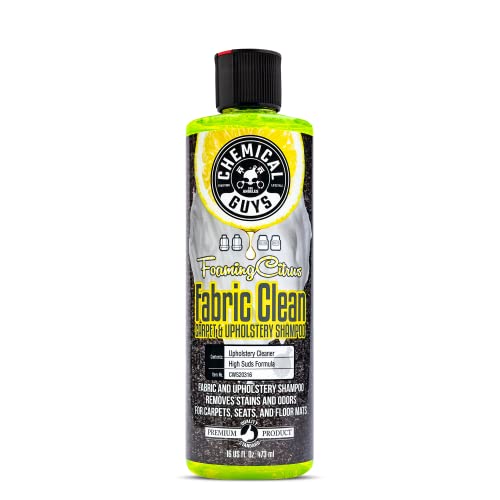
Chemical Guys Foaming Citrus Fabric Clean, Carpet and Upholstery Cleaner – Car Carpet Cleaner for Seats, and Floor Mats, Safe for Home, Office & More, Citrus Scent – 16 oz
FOAMING FABRIC CLEAN (CWS20316) – High-foaming carpet and car upholstery cleaner penetrates deep into carpet, upholstery, and floor…
As an affiliate, we earn on qualifying purchases.
As an affiliate, we earn on qualifying purchases.
Which Car Seat Materials Are Safe to Wash?

Not all car seat materials can be cleaned the same way, so it’s important to know which ones are safe to wash. For child safety, you want to ensure the materials are durable and won’t degrade with regular cleaning. Typically, fabric covers made from polyester or nylon are safe to wash, but always check the manufacturer’s instructions first. These materials can handle frequent cleaning, which is essential for maintaining a hygienic environment for your child. Foam padding, on the other hand, is usually not washable and can lose its cushioning if submerged. Knowing which materials are safe to clean allows you to maintain a healthy, safe car seat while respecting cleaning frequency guidelines to prevent wear and tear. Proper care helps keep your child safe and comfortable during every ride. Additionally, understanding cleaning safety procedures can help extend the lifespan of your car seat. Being aware of material durability can guide you in selecting the best cleaning methods to avoid damage, especially when dealing with delicate fabrics. Recognizing proper cleaning techniques is key to maintaining the integrity of the seat’s materials over time, and understanding the manufacturer’s recommendations ensures you don’t inadvertently void your warranty or compromise safety.

Chemical Guys Leather Cleaner and Conditioner Detailing Kit – Leather Care Kit For Natural, Synthetic, Faux, Pleather, and More for Car Interiors, Apparel, Furniture, Boots & Accessories – 9 Items
SAFE FOR MULTIPLE LEATHER TYPES (HOL303) – Works with a microfiber towel on natural leather, synthetic, faux, and…
As an affiliate, we earn on qualifying purchases.
As an affiliate, we earn on qualifying purchases.
What Parts of Your Car Seat Should Never Be Washed?

You should avoid soaking foam and padding, as excess moisture can cause mold or damage their structure. Electrical components, like seat heaters or sensors, are also sensitive and can short out if exposed to water. Always be cautious and keep these parts dry to prevent costly repairs. Additionally, consider the ethical implications of using cleaning products that may contain harmful chemicals, ensuring your cleaning methods align with environmentally responsible choices. Proper cleaning techniques also involve understanding material sensitivities to avoid deterioration or discoloration of your car seats. Being aware of heat buildup in the cleaning process can help prevent damage to sensitive parts. Recognizing the importance of safe cleaning practices can further protect your vehicle’s interior and prolong its lifespan. Moreover, understanding indoor air quality can help you choose safer cleaning agents that do not contribute to microplastic contamination or dust accumulation inside your vehicle.
Foam and Padding Risks
While cleaning your car seat can freshen up the interior, it is crucial to avoid soaking the foam and padding, as they are prone to damage. Excess moisture can cause foam damage, leading to sagging or crumbling over time. Padding deterioration occurs when water seeps into the foam’s porous structure, weakening its support and comfort. Using too much liquid or aggressive cleaning methods can also trap moisture, promoting mold and bacteria growth. To prevent this, focus on spot cleaning surfaces and avoid saturating the seat’s cushioning layers. If you need to clean foam or padding, consider professional cleaning methods or gentle spot treatments that don’t involve soaking. Protecting these components ensures your seat retains its shape, support, and longevity. Additionally, being aware of material properties can help you choose safer cleaning techniques. A thorough understanding of moisture absorption tendencies can guide you in selecting proper cleaning methods to prevent damage. Proper ventilation and thorough drying after cleaning are essential to prevent moisture buildup and ensure the longevity of your car seat. Recognizing manufacturing materials can also help in selecting cleaning products that won’t degrade the seat’s fabric or foam.
Electrical Components Danger
Because electrical components are sensitive to water, you should never spray or soak these parts when cleaning your car seat. Electrical components, such as seat heaters, sensors, and wiring, are vulnerable to water damage, which can cause malfunctions or safety hazards. To avoid damaging these parts, always follow safety precautions by avoiding direct contact with liquids. Instead, use a damp cloth or specialized cleaner for areas near electrical systems, and never use excessive moisture. If you’re unsure which parts contain electrical components, consult your vehicle’s manual or a professional. Prioritizing safety precautions helps prevent costly repairs and ensures your car seat remains safe and functional. Understanding electrical sensitivities helps you recognize why water and electrical parts don’t mix—treat these components with caution. Additionally, being aware of electrical system vulnerabilities can guide you in safer cleaning practices. Recognizing component placement within your seat can further prevent accidental damage during cleaning. Being informed about electrical component locations is key to avoiding unintended water exposure during maintenance. Furthermore, understanding proper cleaning techniques ensures you maintain your car seat safely without risking electrical damage.
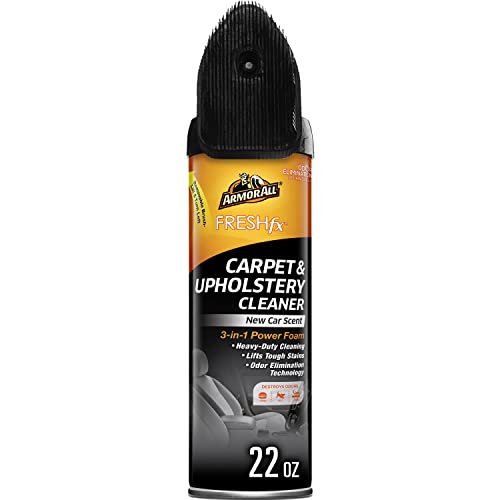
Armor All Carpet and Upholstery Cleaner Spray , Car Upholstery Cleaner for Tough Stains, 22 Fl Oz, 1 Count (Pack of 1)
FOAM UPHOLSTERY CLEANER: One 22 oz can of Armor All Carpet and Upholstery Cleaner With New Car Scent
As an affiliate, we earn on qualifying purchases.
As an affiliate, we earn on qualifying purchases.
How Can You Properly Clean Fabric and Cloth Car Seats?
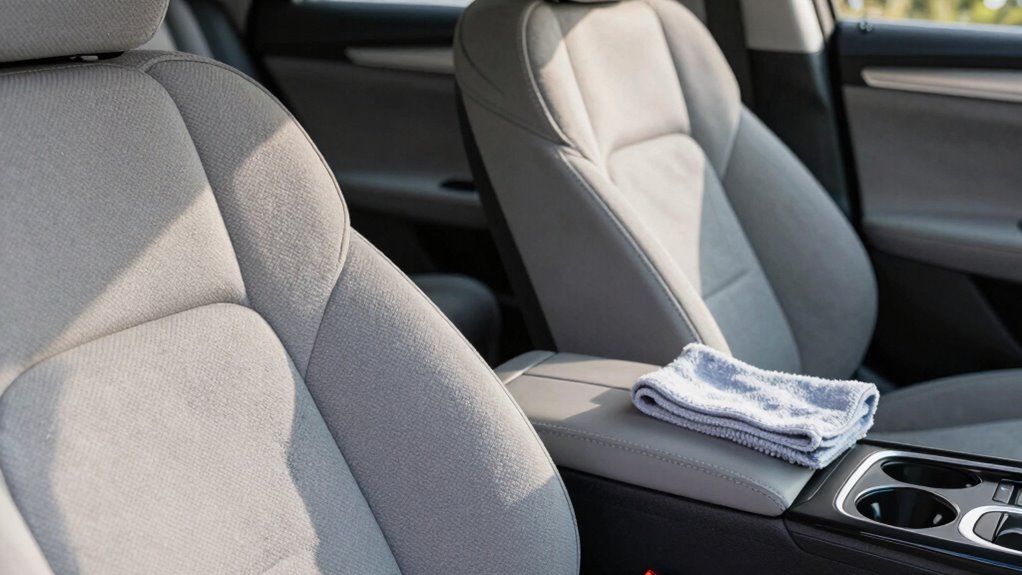
Before you start cleaning, remove any loose debris from the fabric seats to prevent scratching. Use cleaners specifically designed for cloth upholstery to avoid damage, and follow the instructions carefully. After cleaning, dry the seats thoroughly using a towel or a fan to prevent mold and odors. Additionally, understanding proper cleaning techniques] can help you preserve fabric quality and maintain your car’s interior.
Remove Loose Debris
To effectively clean fabric and cloth car seats, start by removing loose debris like crumbs, dirt, and pet hair. This step is vital for proper vacuum maintenance and debris removal, preventing dirt from settling deeper into the fabric. Use a handheld or upholstery vacuum to thoroughly pick up surface particles. Focus on seams, crevices, and under the seats, where debris tends to hide. For best results, consider using a brush attachment to loosen stubborn dirt before vacuuming. Regularly empty your vacuum to maintain suction power and guarantee efficient debris removal. Remember, skipping this step can make deep cleaning less effective and lead to lingering stains or odors. Keep your car seats fresh and clean by prioritizing the removal of loose debris before moving on to deeper cleaning steps.
Use Appropriate Cleaners
Choosing the right cleaner is essential for effectively cleaning fabric and cloth car seats without causing damage. Use gentle, fabric-specific cleaners that focus on fabric care to avoid harsh chemicals that could weaken or discolor the material. Always check the manufacturer’s instructions and test a small, hidden area first. For regular cleaning, follow a consistent cleaning schedule to prevent dirt buildup and stains. Avoid bleach or ammonia-based products, as they can damage the fabric’s fibers. Instead, opt for mild detergents or upholstery cleaners designed for car seats. Remember, using the proper cleaner not only preserves the appearance but also extends the lifespan of your seats. Proper cleaning schedules combined with suitable cleaning agents keep your car seats fresh and well-maintained over time.
Proper Drying Techniques
After selecting the right cleaner and thoroughly treating your fabric or cloth seats, focusing on proper drying techniques guarantees the best results. To avoid mold and odors, it’s essential to let the seats air dry completely. Use air drying techniques by opening windows or turning on fans to promote circulation. Avoid direct heat exposure, as heat exposure risks can damage fabric fibers or cause shrinking. Here are some tips to ensure proper drying:
- Use fans or open windows to increase airflow
- Wait until seats are fully dry before using the car
- Steer clear of direct sunlight or high heat sources
These methods help prevent moisture buildup and preserve your seats’ condition, ensuring your cleaning effort lasts longer.

Vacmaster SCB301 400 Series Portable Carpet & Upholstery Spot Cleaner Machine, 15Kpa Power Suction with Versatile Tools for Pets, Area Rugs and Couches
Powerful Stain Removal: Deep clean spots and stains on carpets, rugs, furniture, and auto interiors
As an affiliate, we earn on qualifying purchases.
As an affiliate, we earn on qualifying purchases.
How Do You Clean Leather Car Seats Without Damage?
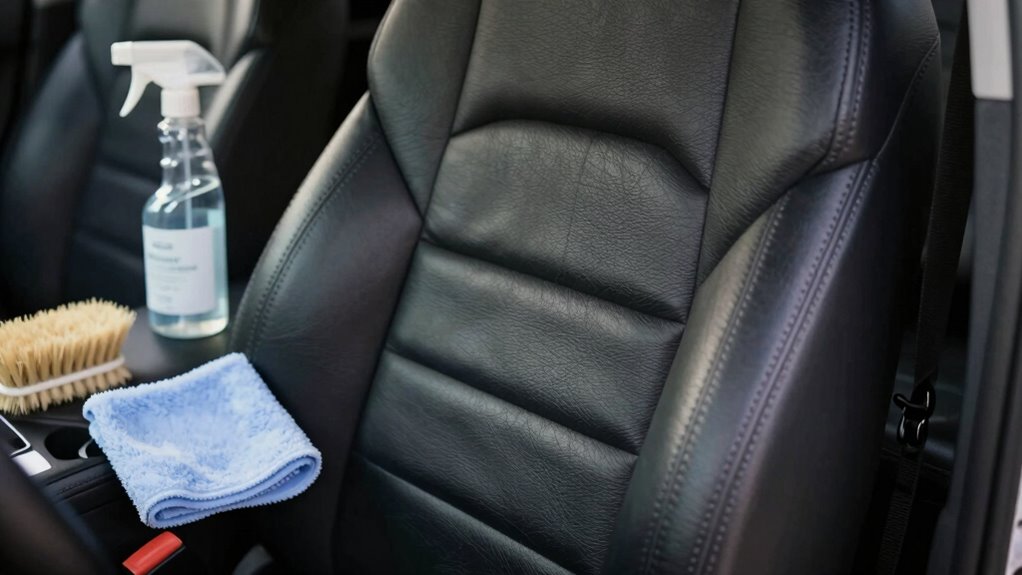
Cleaning leather car seats without causing damage requires gentle and deliberate care. Start by vacuuming the seats to remove loose dirt and debris. Use a soft microfiber cloth slightly dampened with a leather-safe cleaner, avoiding harsh chemicals that can strip the material. Wipe gently to prevent scratching or cracking. After cleaning, apply a quality leather conditioner to keep the material supple and prevent it from drying out or cracking over time. Consistent conditioning not only preserves the leather’s appearance but also acts as a barrier against stains, aiding in stain prevention. Always test cleaning products on a small, inconspicuous area first. Regular maintenance with gentle cleaning and conditioning ensures your leather seats stay pristine without damage.
What Are the Best Cleaning Products for Different Car Seat Materials?

Different car seat materials require specific cleaning products to maintain their appearance and durability. For cloth seats, a gentle fabric cleaner or mild soap works best, especially when using seat cover options that are washable. For vinyl seats, a mixture of mild soap and water or a vinyl-specific cleaner can effectively remove grime without damaging the material. Leather seats benefit from specialized leather cleaners and conditioners to keep them soft and prevent cracking. For different car seat accessories like headrests or armrests, choose products compatible with their material. Consider these options:
- Fabric upholstery cleaners for cloth seats
- Vinyl-safe sprays for vinyl surfaces
- Leather conditioners to preserve leather seats
Using the right products guarantees your seats stay clean and in top shape without unnecessary damage.
How Can You Safely Spot and Treat Stains on Your Car Seats?
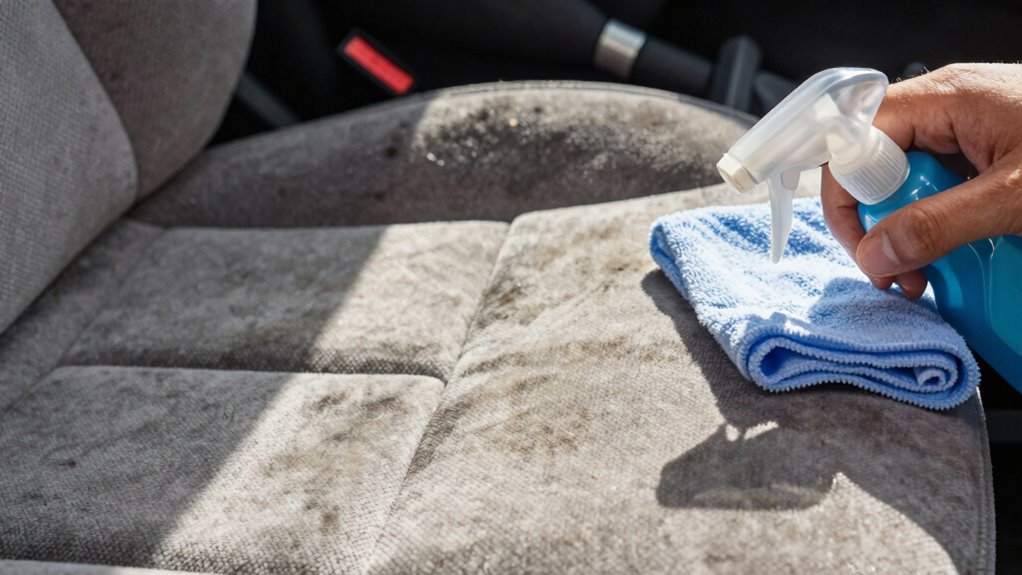
Stains on your car seats can be unsightly, but you can safely remove them by acting promptly and carefully. Start with a gentle spot treatment by blotting the stain with a clean, damp cloth to lift excess residue. Avoid rubbing, which can spread the stain or damage the fabric. Use a mild stain removal solution suitable for your seat material—test it on a hidden area first. Apply the solution directly to the stain and let it sit for a few minutes. Then, gently blot with a clean cloth until the stain lifts. Repeat if necessary, ensuring you don’t oversaturate the fabric. Proper spot treatment minimizes damage and helps maintain your car seats’ appearance without requiring full cleaning.
When Should You Consider Professional Car Seat Cleaning?

While regular spot cleaning can keep your car seats looking good, there are times when professional cleaning is the best option. If your seats are heavily stained, have persistent odors, or show signs of wear, professional detailing can make a big difference. Consider professional seat restoration when stains won’t lift, or if the fabric has become discolored over time. Also, if you notice mold or mildew, it’s safest to seek expert help. Professional cleaners use specialized equipment and cleaning solutions that aren’t available to consumers, ensuring a deep clean and extending the life of your seats. Ultimately, professional cleaning can restore your seats’ appearance and hygiene, saving you time and effort while maintaining your vehicle’s value.
How Can You Maintain Your Car Seats Between Washes?

Maintaining your car seats between professional cleanings helps preserve their appearance and prolong their lifespan. Regular vacuum maintenance is essential; vacuum your seats weekly to remove loose dirt, dust, and debris that can cause wear and staining over time. Pay special attention to seams and crevices where dirt tends to accumulate. To protect your fabric, consider applying a fabric protection spray, which creates a barrier against spills and stains. Wipe up spills immediately with a clean cloth, avoiding harsh cleaners that could damage the fabric. Use gentle brushes or microfiber cloths for spot cleaning, and avoid over-wetting the seats. Consistent care keeps your seats looking fresh and reduces the frequency of deep cleanings needed.
What Are Common Mistakes to Avoid When Cleaning Car Seats?

Avoid making common mistakes that can damage your car seats during cleaning. One mistake is using harsh chemicals that can harm fabric care or cause discoloration. Another is over-wetting seats, which can lead to mold or odors if not dried properly. Also, neglecting the recommended cleaning frequency can result in dirt buildup or fabric wear. Be mindful of the cleaning method you choose, ensuring it’s suitable for your seat material. Using the wrong tools or scrubbing too hard can damage delicate fibers. Remember, quick spot cleanings are effective between thorough washes, but avoid excessive moisture. By paying attention to these pitfalls, you’ll protect your seats and extend their lifespan while maintaining a clean, fresh interior.
Frequently Asked Questions
Can I Use Household Cleaning Products on Car Seats?
You shouldn’t use household chemicals on car seats because they may damage the fabric or foam. Instead, opt for gentle cleaning methods like a mixture of mild soap and water or a fabric-safe upholstery cleaner. Always test a small hidden area first, and avoid harsh chemicals that aren’t designed for car interiors. Protect your seats by sticking to recommended cleaning products and methods for safe, effective results.
How Often Should I Deep Clean My Car Seats?
Did you know that dirty car seats can harbor up to 10 times more germs than your bathroom? You should deep clean your car seats every 3 to 6 months, depending on usage and exposure to dirt or spills. Follow a regular cleaning schedule, especially if you have kids or pets, to keep your vehicle fresh and hygienic. Consistent maintenance not only prolongs the life of your seats but also keeps your car healthier.
Is It Safe to Use a Steam Cleaner on Car Seats?
Yes, it’s safe to use a steam cleaner on car seats if you follow safety precautions. Steam cleaner benefits include deep cleaning and disinfecting without harsh chemicals. Before use, check your seat material for heat sensitivity, and avoid over-saturating. Keep the steamer moving to prevent damage, and make sure proper ventilation. When used carefully, steam cleaning effectively removes dirt, allergens, and bacteria, making your car seats fresh and safe.
What Tools Are Best for Cleaning Car Seat Crevices?
To clean car seat crevices effectively, you should use vacuum attachments like a narrow crevice tool to suction out dirt and debris. Follow up with toothbrush scrubbing to loosen and remove stubborn grime in tight spots. This combination guarantees thorough cleaning without damaging your seats. Make sure to use gentle pressure and avoid harsh brushes that could harm fabric or leather, keeping your seats fresh and spotless.
Can I Wash Car Seat Covers Separately From the Seats?
You can wash car seat covers separately from the seats if they’re detachable. Just remove the upholstery and check the care label first—some covers are machine washable, while others need hand washing or spot cleaning. Detachable covers make the job easier and prevent damage to the seat’s padding. Think of it as hitting two birds with one stone: keep your car fresh without much hassle.
Conclusion
So, next time you decide to toss your car seat in the washing machine, remember—some things are better left untouched. Don’t turn your car interior into a sudsy chaos or a leather disaster. Follow the right methods, avoid common pitfalls, and maybe, just maybe, your car seats will survive your cleaning spree. Because nothing says “I care” like knowing when to call in the pros before your DIY attempt turns into a costly lesson.