To help your toddler recover from cold and flu, keep them well-hydrated with fluids like water and broths. Use a humidifier, saline spray, and suction to ease nasal congestion, and offer comfort with gentle warm compresses. Make certain they’re up-to-date on vaccinations, including flu shots. Watch for signs of trouble, such as difficulty breathing or persistent high fever, and seek medical help if needed. Continue exploring for more tips to support your child’s recovery.
Key Takeaways
- Ensure proper hydration with fluids like water and electrolyte solutions to prevent dehydration.
- Use age-appropriate fever reducers and comfort measures, such as warm cloths and saline nasal spray.
- Maintain vaccination schedules, including flu and pneumococcal vaccines, to prevent severe illness.
- Watch for signs like difficulty breathing, high fever, or lethargy, and seek medical attention promptly.
- Support recovery with rest, supportive care, and monitoring for worsening symptoms or complications.

When your toddler catches a cold or the flu, it can be worrying, but knowing how to care for them can make a big difference. Rest assured, most illnesses are manageable with simple home remedies and a good understanding of preventive measures like maintaining an up-to-date vaccination schedule. Keeping your child comfortable and supported during their recovery is key to helping them get better faster.
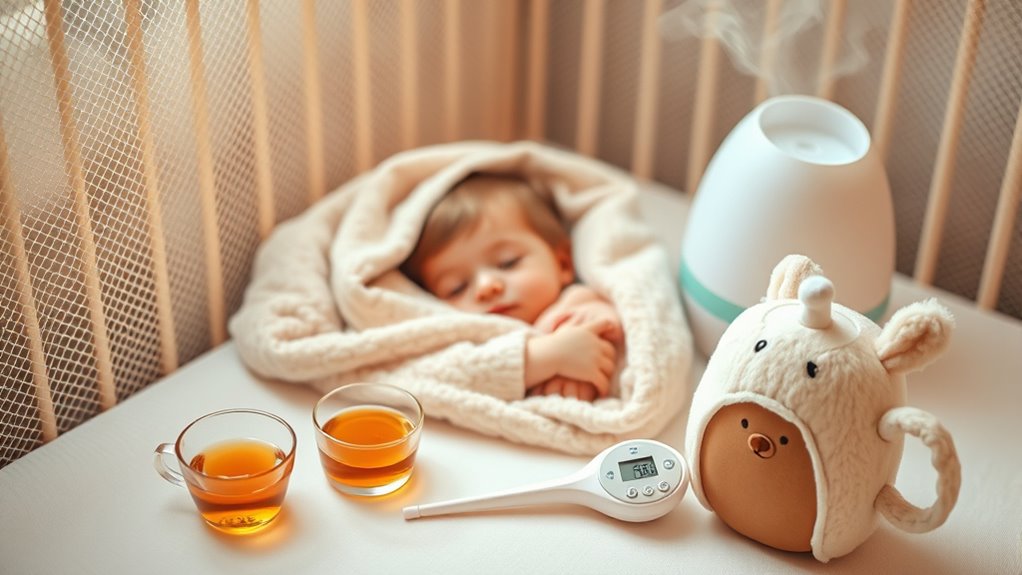
Start by focusing on comfort and hydration. Offer plenty of fluids like water, clear broths, or electrolyte solutions to keep your toddler hydrated, especially if they have a fever or are losing fluids through a runny nose or sweating. Using a humidifier in their room can also ease congestion and soothe irritated airways. When your child is congested, a saline nasal spray or drops can help loosen mucus, making it easier for them to breathe. Gentle suction with a bulb syringe, if necessary, can clear nasal passages further, especially for younger toddlers who can’t blow their nose.
Keep your toddler comfortable and hydrated with fluids, humidifiers, and gentle nasal care during cold and flu recovery.
Home remedies can be effective in alleviating some symptoms. Honey, for children over one year old, can soothe a sore throat and suppress coughs. A warm, damp cloth applied to their forehead or chest can provide comfort and reduce fever. When your toddler develops a fever, you can use age-appropriate doses of acetaminophen or ibuprofen, but always follow your pediatrician’s guidance. Avoid giving aspirin, as it can cause Reye’s syndrome in children. Rest is essential—encourage your toddler to sleep as much as they need, as this helps their immune system fight off the infection. Additionally, vaccination remains a crucial tool in preventing severe illness.
Prevention plays an important role in minimizing the impact of colds and flu. Ensuring your child’s vaccination schedule is up-to-date is one of the most effective ways to protect them. The flu vaccine, in particular, is recommended annually for toddlers and helps reduce the severity and duration of illness if they do catch the flu. Other vaccines, like the pneumococcal and Haemophilus influenzae type b (Hib) vaccines, can prevent secondary bacterial infections that often complicate viral illnesses.
While home remedies and vaccinations are essential, always watch for signs that require medical attention. If your toddler has difficulty breathing, a high fever that won’t subside, persistent vomiting, or seems unusually lethargic, seek medical care promptly. Remember, your goal is to support your child’s recovery, keep them comfortable, and prevent complications. With attentive care and preventive measures, you’ll help your toddler bounce back more quickly from cold and flu symptoms.
Frequently Asked Questions
When Should I Give My Toddler Over-The-Counter Medication?
You should give your toddler over-the-counter medication only if advised by their doctor, following dosage guidelines carefully. Always check the label for age-appropriate doses and never give medication intended for older children or adults. Prioritize medication safety by consulting your healthcare provider before administering any drugs, especially if your toddler has other health conditions or is taking additional medicine. When in doubt, seek professional guidance to guarantee your child’s safety.
Are There Natural Remedies That Effectively Treat Toddler Colds and Flu?
You wonder if natural remedies can soothe your toddler’s cold or flu. Yes, herbal teas like chamomile can offer comfort, but always check age restrictions first. Honey remedies may help soothe a sore throat, but never give honey to children under one year old. These gentle options might ease symptoms, but remember, you should always consult your pediatrician before trying anything new to guarantee safety and effectiveness.
How Can I Prevent My Toddler From Spreading Germs to Others?
You can prevent your toddler from spreading germs by practicing good hand hygiene and teaching proper cough etiquette. Encourage frequent handwashing with soap and water, especially before meals and after coughing or sneezing. Show your toddler how to cover their mouth and nose with their elbow or a tissue when coughing or sneezing. These simple steps help reduce germ transmission and keep others healthier.
What Are the Signs of Dehydration in a Sick Toddler?
You’ll notice signs of dehydration in your sick toddler if they have dry mouth, no tears when crying, fewer wet diapers, or sunken eyes. They might also seem unusually tired or irritable. To prevent dehydration, make certain they stay hydrated with fluids like water or electrolyte solutions, offer small frequent drinks, and encourage rest. Keeping an eye on these signs and hydration tips helps your toddler recover comfortably and safely.
Is It Safe to Give My Toddler a Flu Vaccine During Illness?
You shouldn’t give your toddler a flu vaccine during illness, as it’s like trying to light a fire in a rainstorm—your child’s immune system needs to be at its strongest. Vaccine timing is vital; administering it while they’re sick can reduce effectiveness and cause unnecessary discomfort. Always wait until your little one recovers fully, and consult your pediatrician to guarantee proper illness considerations before vaccination.
Conclusion
Taking care of your toddler during cold and flu season can feel overwhelming, but remember, even a little rest and comfort go a long way. Sometimes, the tiniest changes—like extra cuddles or a warm drink—make all the difference. You might find that what works best is simply being there, offering love and patience. After all, in those quiet moments, you realize how small acts of care can turn a sick day into a time of closeness and healing.