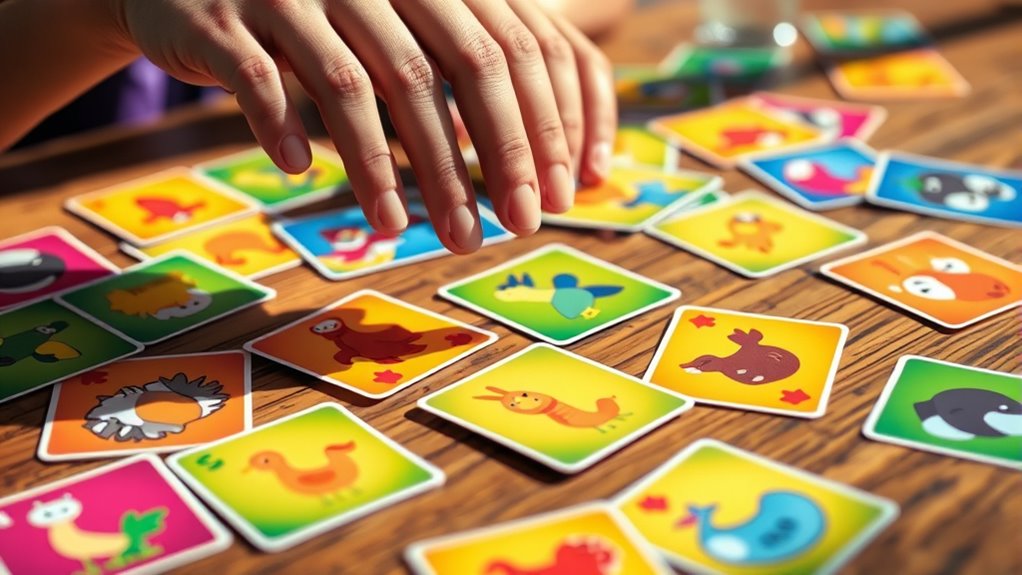

Matching games are a fun and effective way to boost your memory and strengthen your cognitive skills. By regularly playing these games, you improve your focus, quick recall, and visual recognition, all while enjoying yourself. They’re accessible in many forms, whether online, with physical cards, or DIY projects. With consistent practice, you’ll notice enhanced concentration and mental agility. Keep exploring, and you’ll discover even more ways to supercharge your brain with engaging activities.
Key Takeaways
- Matching games improve memory, attention, and problem-solving skills through regular practice.
- They are accessible and can be easily created at home or played online for convenience.
- Playing enhances cognitive functions like processing speed, visual recognition, and pattern recognition.
- Consistent engagement in matching games reinforces brain connections and long-term mental performance.
- These games foster social interaction and collaboration, further stimulating cognitive health.

Matching games are a fun and effective way to improve your memory skills. When you play these games regularly, you’re engaging in brain training that can lead to noticeable cognitive enhancement over time. These games challenge your ability to remember patterns, recognize similarities, and recall information, all of which are vital components of a sharp mind. They work by stimulating neural pathways, encouraging your brain to develop stronger connections, and keeping your memory sharp as you age. Whether you’re a student aiming to boost your learning or an adult seeking to maintain mental agility, matching games provide a simple yet powerful tool to keep your brain active.
Matching games boost memory by stimulating neural pathways and sharpening cognitive skills over time.
The beauty of matching games lies in their accessibility and versatility. You can find countless options online or create your own at home, using cards, images, or even digital apps. As you engage with these games, you’re fundamentally training your brain to improve its capacity for cognitive enhancement, which can translate into better concentration, quicker recall, and improved problem-solving skills. The more consistently you play, the more your brain adapts, making these mental exercises even more effective. Plus, because matching games are enjoyable, you’re more likely to stick with them, turning brain training into a fun daily habit rather than a chore.
In addition to boosting your memory, matching games can help with other cognitive functions, such as attention span and processing speed. When you focus on finding matching pairs, you’re practicing sustained attention, which is vital for many daily tasks. Over time, this can help you become more attentive in other areas of your life, whether at work, school, or in personal relationships. Moreover, the visual and pattern recognition skills you develop through matching games can enhance your ability to process and analyze information quickly. This broad cognitive enhancement can make a tangible difference in your overall mental performance. Additionally, engaging in activities like electric bike maintenance or riding can also stimulate your brain, contributing to overall cognitive health.
Playing matching games also offers social benefits if you choose to play with friends or family. Competing or collaborating adds a social element that can motivate you to play more frequently and with greater enthusiasm. This social interaction can further reinforce your mental sharpness, as discussing strategies and sharing victories keep your mind engaged. Ultimately, incorporating matching games into your routine provides a simple yet effective way to give your brain the mental workout it needs, helping you stay sharp, alert, and cognitively healthy for years to come.
Frequently Asked Questions
Can Matching Games Improve Memory in Children With Learning Disabilities?
Matching games can improve memory in children with learning disabilities by enhancing cognitive development and providing sensory stimulation. When you encourage children to play these games, they practice recognizing patterns and strengthening neural connections. This active engagement helps boost their memory skills, attention, and problem-solving abilities. By making learning fun and interactive, matching games support their overall development and build confidence in their learning process.
How Long Should I Play Matching Games to See Memory Benefits?
You should aim for about 15-20 minutes of matching games per session, 3-4 times a week, to see memory benefits. Studies suggest that consistent, moderate playtime enhances cognitive skills without causing fatigue. Following duration guidelines ensures maximum playtime, maximizing memory improvements while keeping children engaged and motivated. Keep sessions fun and varied, and you’ll notice progress in just a few weeks.
Are Digital Matching Games More Effective Than Physical Card Games?
Digital matching games can be just as effective as physical card games, especially if they utilize engaging digital interfaces that stimulate your brain. However, physical card games offer tactile engagement, which can enhance memory retention through sensory input. So, if you prefer digital, choose games with interactive features; if tactile engagement helps you focus, stick to physical cards. Both methods can boost your memory effectively with regular play.
What Age Groups Benefit Most From Matching Games for Memory?
You’ll find that children and older adults benefit most from matching games, as they support age-related cognitive development and help strengthen memory skills. For kids, these games boost early learning and attention, while seniors enjoy maintaining mental agility. Engaging in matching games fosters lifelong learning benefits, keeping your mind active and sharp across all ages. Whether digital or physical, these games are a fun, effective tool for cognitive growth at any stage.
Can Matching Games Help With Memory Decline in Seniors?
Imagine your brain as a superhero fighting off memory villains—that’s what matching games do for seniors. They offer powerful brain training and cognitive stimulation, which can slow or even reverse memory decline. By engaging in these games regularly, your mind becomes sharper, more resilient, and better at recalling important details. So yes, matching games are a fun, effective way to bolster mental agility and keep your memory superhero strong!
Conclusion
Think of your memory as a garden, with each matching game planting seeds that grow stronger over time. As you play, you’re watering and nurturing these seeds, helping your mind flourish with vibrant, well-organized blossoms of recall. Just like a gardener tends to their plants daily, regularly engaging in matching games cultivates a lush, resilient mental landscape. Keep playing, and watch your memory bloom brighter with each game you enjoy.