
To explore engaging play dough learning ideas, combine sensory play with creative activities to boost your child’s development. Use scented or textured dough to stimulate senses, incorporate themed projects like animals or letters, and introduce tools such as cutters and stamps to build fine motor skills. Encourage storytelling and problem-solving through open-ended play, helping improve focus and emotional regulation. Keep experimenting with different techniques and themes to discover even more ways to make play dough both fun and educational.
Key Takeaways
- Incorporate themed activities like animals or letters to promote creativity and learning.
- Use tools such as cutters, stamps, and knives to develop fine motor skills and control.
- Add scented or textured dough to enhance sensory engagement and exploration.
- Challenge children with construction tasks and patterns to improve problem-solving abilities.
- Combine storytelling or educational themes with play dough for combined cognitive and emotional growth.
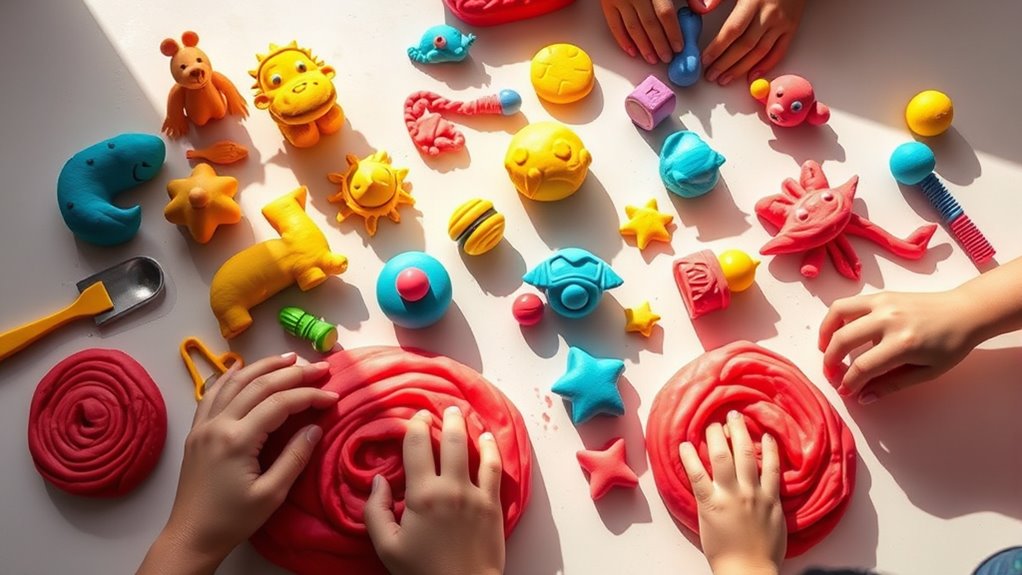
Have you ever wondered how play dough can be more than just a fun activity? It’s a versatile tool that can boost your child’s development in surprising ways. One of the most powerful benefits of play dough is its ability to promote sensory play. As your child squishes, rolls, and pinches the soft material, they engage their senses—touch, sight, and even smell if you add scented varieties. This sensory engagement helps build neural connections, making them more aware of textures and sensations they encounter daily. Sensory play with play dough is especially beneficial for young children, as it lays the foundation for cognitive development and helps regulate their emotions. When they manipulate the dough, they learn to focus and stay engaged, which can improve their attention span over time.
In addition to sensory benefits, playing with dough is an excellent way to develop fine motor skills. When your child pinches tiny pieces, rolls out coils, or presses shapes into the dough, they strengthen the small muscles in their fingers, hands, and wrists. These movements are fundamental for tasks like holding a pencil, buttoning a shirt, or tying shoelaces. The act of squeezing and shaping helps improve hand-eye coordination and dexterity, essential skills as they grow. You can enhance this development by offering different tools—cookie cutters, plastic knives, or stamps—that challenge their precision and control. These activities don’t just make playtime more fun; they prepare your child for more complex tasks that require careful hand movements.
You can also encourage your child’s creativity and problem-solving skills during play dough sessions. Challenge them to create specific objects—like animals, letters, or numbers—using their imagination and fine motor control. This not only makes the activity educational but also helps them learn about shapes, patterns, and spatial relationships. Incorporating themes or storytelling into play dough activities can deepen their engagement and language development. For instance, you might ask them to make a zoo and describe each animal they create, combining sensory play with language skills.
As an affiliate, we earn on qualifying purchases.
Frequently Asked Questions
What Are Some Safety Tips for Using Play Dough With Children?
To keep children safe while using play dough, always supervise play sessions closely and make sure the workspace is child-proofed, free of choking hazards or sharp objects. Teach kids not to put play dough in their mouths, and wash hands afterward. Keep small tools away from very young children, and store play dough safely when not in use. Regular supervision and a safe environment help prevent accidents and ensure fun, safe play.
How Can I Prevent Play Dough From Drying Out Too Quickly?
Think of your play dough like a sponge that needs to stay moist. To prevent it from drying out too quickly, always store it in an airtight container, like sealing in a secret. Use a damp cloth to cover it if you’re taking a break. Proper play dough preservation and moisture retention are key—adding a tiny bit of water or lotion can help keep it soft and pliable longer.
Are There Allergen-Free Play Dough Options Available?
Yes, you can find allergen-free play dough options. Look for gluten-free options made with alternative flours like rice or oat flour, and choose nut-free alternatives to avoid common allergens. Many brands offer safe, non-toxic, allergen-free play dough that’s perfect for sensitive kids. Always check labels to confirm the ingredients meet your child’s allergy needs. Making your own at home is also a great way to control ingredients and prevent allergic reactions.
What Age Groups Are Best Suited for Play Dough Activities?
You’ll find that play dough activities are perfect for children aged 2 to 8 years old. During this stage, they develop sensory skills and fine motor control as they squeeze, roll, and shape the dough. Younger kids benefit from sensory exploration, while older children enhance their dexterity and creativity. These activities support their overall development, making play dough an engaging tool for fostering sensory growth and fine motor skills at various ages.
How Can I Store Homemade Play Dough Effectively?
You should store homemade play dough in airtight containers to keep it fresh and prevent it from drying out. For longer storage, place the containers in the refrigerator, which helps preserve the dough’s texture and extend its usability. Before each use, let the dough come to room temperature. This simple method guarantees your homemade play dough stays soft, pliable, and ready for creative fun whenever you need it.
Conclusion
So, next time you pull out play dough, remember it’s more than just a fun activity. It can boost creativity, improve fine motor skills, and even help with early learning concepts. Studies show hands-on play like this engages your child’s brain in unique ways, making learning enjoyable. Embrace these ideas and watch your child develop confidence and curiosity. After all, play dough isn’t just play—it’s a powerful tool for growth and discovery.