
To boost language skills through pretend play, create themed play spaces like markets or cafes with signs, costumes, and props that inspire storytelling and conversation. Set up role-playing areas with realistic items such as toy tools or digital devices to encourage descriptive language and social interaction. Incorporate everyday themes and imaginative scenarios to promote vocabulary development. Preparing engaging environments with varied themes and materials helps children expand their language naturally—keep exploring for more ideas to enhance their play experience.
Key Takeaways
- Create themed play areas like marketplaces or farms with signs and props to encourage descriptive conversations.
- Incorporate realistic props and costumes to inspire role-playing and expand vocabulary naturally.
- Use digital tools and interactive murals to stimulate imagination and prompt language development.
- Design outdoor or indoor environments with seasonal or nature themes to introduce new related vocabulary.
- Set up storytelling corners with puppets and figurines to practice narrative skills and foster expressive language.

36Pcs Pretend Play Restaurant Menus Set for Kids Kitchen Food Diner Order Pads 4 Pretend Menus 1 Open/Close Sign 30 Play Money 1 Erasable Pen for Toddlers Girl Boy Role Plays Accessory Birthday Gift
Pretend Play Restaurant Menu Set: This set includes 4 pretend restaurant menus for kids—2 double-sided customer menus (1…
As an affiliate, we earn on qualifying purchases.
As an affiliate, we earn on qualifying purchases.
How Pretend Play Supports Language Development
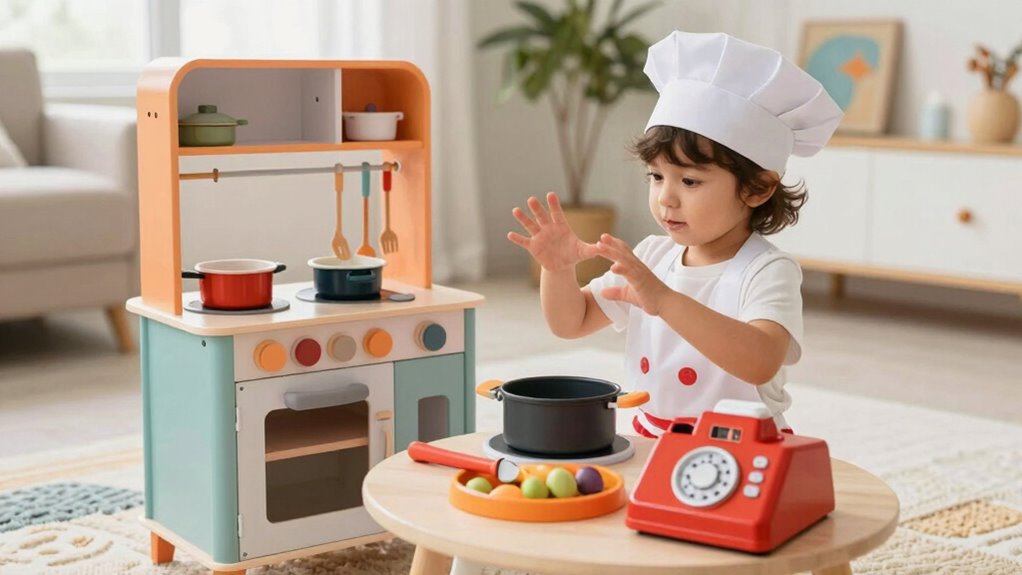
Have you ever noticed how children often mimic conversations and invent new words during pretend play? This behavior plays a vital role in supporting language development. As kids act out roles and scenarios, they hit important language milestones, like using complete sentences and expanding their vocabulary. Pretend play encourages children to experiment with words, phrases, and tone, helping them understand context and social cues. The more they practice, the more their vocabulary expands naturally. This active engagement fosters better communication skills and confidence in expressing themselves. By creating imaginative scenarios, children also learn new words related to roles, objects, and actions, which enriches their language skills and prepares them for more complex conversations as they grow. Additionally, engaging in pretend play with toys like bike sets can introduce children to new vocabulary related to movement, equipment, and activities, further enhancing their language development. Exploring different pretend scenarios can also stimulate creativity and help children connect words with real-world experiences, making language learning more meaningful. Moreover, incorporating vibration therapy and temperature-based pretend scenarios can stimulate sensory experiences that support cognitive and language growth in playful ways.
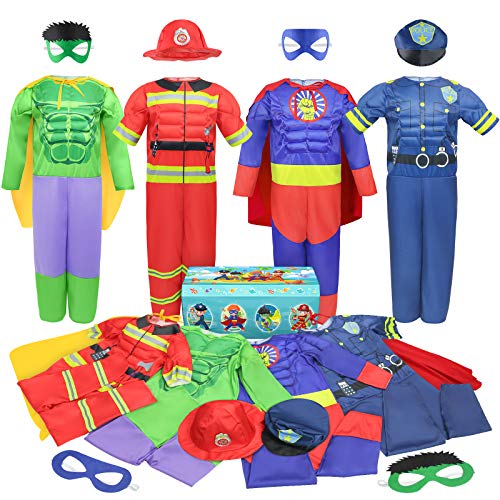
Teuevayl Boys Muscle Chest Dress up Costumes Trunk with Superhero, Policeman, Fireman Costume, Kids Pretend Role Play Costumes Set, Boys Dress up Clothes for Kids Ages 3 4 5 6 7
Boys Dress Up Clothes Size: One size suitable for most kids ages 4-7, and all dress up clothes…
As an affiliate, we earn on qualifying purchases.
As an affiliate, we earn on qualifying purchases.
Create a Themed Play Space to Boost Language Skills
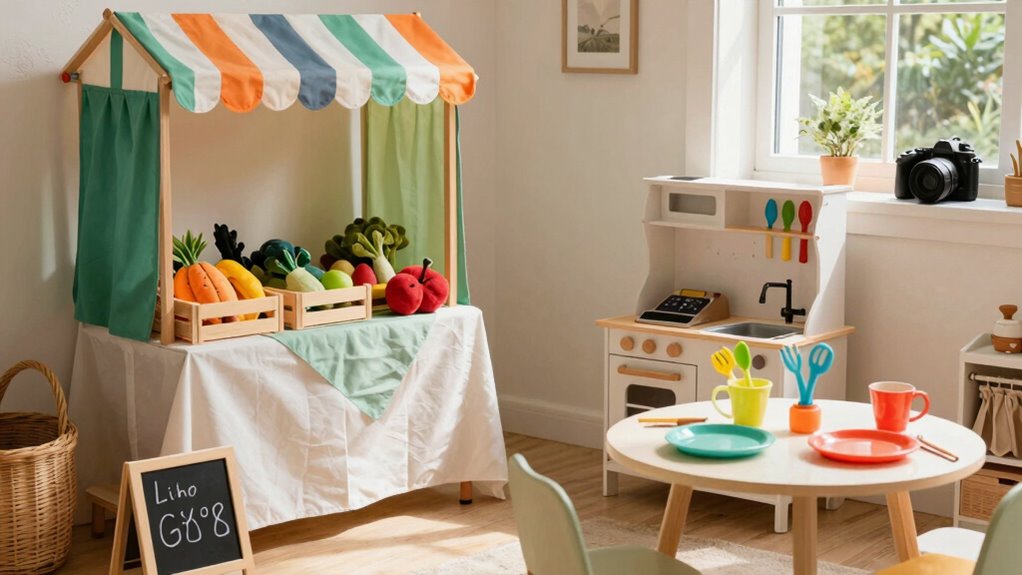
Creating a themed play space can considerably enhance your child’s language development by providing a rich environment filled with relevant vocabulary and engaging scenarios. To make it effective, consider these ideas:
- Design a mini marketplace using diy crafts like homemade signs and pretend money to encourage shopping dialogues. Incorporating seasonal variations can keep the environment fresh and introduce new vocabulary related to different times of the year.
- Set up an outdoor activity zone with plants, tools, and weather elements to teach nature-related words.
- Create a cozy corner with costumes and props that match the theme, inspiring storytelling and descriptive language.
- Incorporate natural elements into the play area to foster a connection with the environment and introduce related vocabulary.

Three Little Pigs Finger Puppets Set, 7PCS – Storytelling Felt Finger Puppets with Wolf & Houses, Interactive Role Play Toy for Classroom Teaching & Bedtime Stories
1. Complete “Three Little Pigs” Story Set: This 7-piece finger puppet set includes 3 little pigs, 1 big…
As an affiliate, we earn on qualifying purchases.
As an affiliate, we earn on qualifying purchases.
Set Up Role-Playing Areas That Encourage Conversation
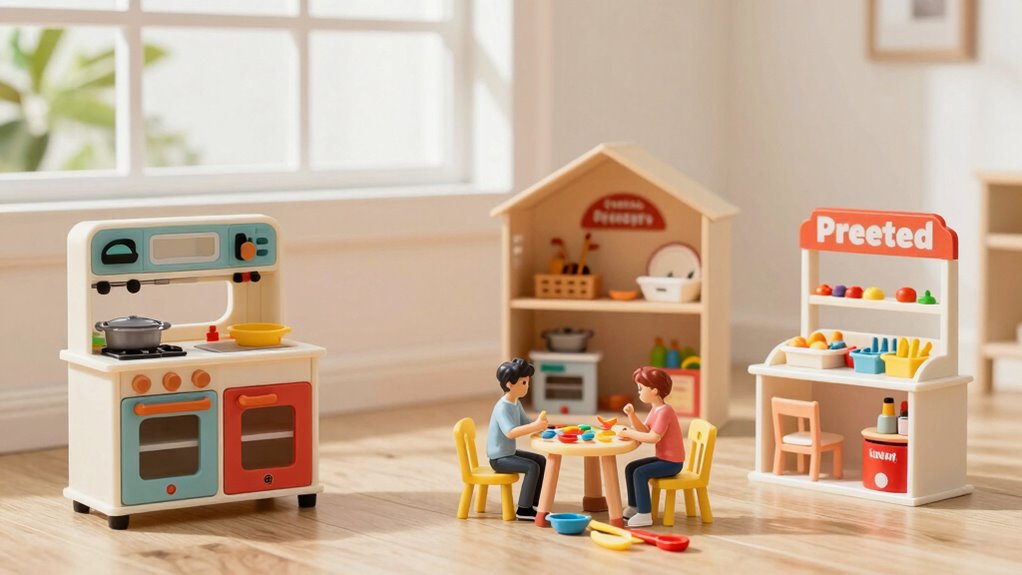
To encourage meaningful conversation, you should create themed role-playing areas that invite kids to imagine different scenarios. Incorporate realistic props to make the setting feel authentic and engaging. Promoting open-ended dialogue helps children explore ideas and develop language skills naturally within these inviting spaces. Incorporating smart home devices can also enhance the play environment by adding interactive elements that support learning and imagination. Additionally, using accessible features like Guided Access can help children stay focused and engaged during play sessions. Integrating digital content formats can further diversify the activities, making playtime both educational and entertaining. Being mindful of child-friendly technology ensures that digital tools are safe and appropriate for young learners, enriching their play experience and supporting digital wellbeing.
Designate Themed Spaces
Designating themed spaces in your play area invites children to immerse themselves in role-playing and spark meaningful conversations. You can create engaging environments that inspire storytelling and interaction. For example, set up an indoor gardening corner where kids pretend to be gardeners, discussing plant care and growth. Use an outdoor scavenger hunt area to encourage exploration and descriptive language as they search for items. To make the space more dynamic, consider these options:
- Transform a corner into a pretend café or restaurant for role-playing meals and customer interactions.
- Designate a small area as a fire station or police station to foster emergency response scenarios.
- Create a cozy reading nook that doubles as a storytelling stage.
- Incorporate interactive murals or digital frames that enhance imaginative play and provide visual cues for conversation starters.
- Adding themed decorations that reflect different professions or settings can further stimulate language development and engagement. Incorporating artistic complexities through themed decor can also inspire children to describe and discuss their surroundings, enriching their vocabulary and storytelling skills. Additionally, careful attention to spatial arrangement can optimize the flow of play and encourage more sustained interactions. Incorporating visual cues can further enhance communication opportunities and inspire descriptive language.
Incorporate Realistic Props
Incorporating realistic props into your role-playing areas makes the experience more engaging and encourages children to communicate more naturally. Using items like fake food and toy tools helps children practice everyday vocabulary and develop their storytelling skills. For example, setting up a pretend kitchen with plastic vegetables or a repair station with miniature hammers invites children to describe actions and objects. To add depth, consider these options:
| Prop Type | Role-Playing Use | Language Development Focus |
|---|---|---|
| Fake Food | Grocery shopping, cooking, serving | Food names, verbs, descriptive language |
| Toy Tools | Fixing, building, construction scenes | Action words, tool names |
| Miscellaneous | Cash register, cleaning supplies | Transaction language, chores vocabulary |
These props make scenarios more realistic, sparking conversation and expanding vocabulary effortlessly. Incorporating role-play with varied props can also support social language skills and turn-taking. Understanding the importance of visual aids can further enhance engagement and learning during play. Additionally, incorporating realistic props can help children connect play scenarios to real-life situations, fostering practical language use and understanding. Using props that mimic real objects can deepen the child’s connection to everyday experiences, making language learning more meaningful. Furthermore, integrating contextual prompts into play can guide children to develop more complex narratives and conversational skills.
Encourage Open-Ended Dialogue
Setting up role-playing areas that promote open-ended dialogue invites children to explore their imagination and communicate more freely. This encourages natural language acquisition, helping kids express ideas and emotions. To foster meaningful conversations, consider these steps:
- Provide versatile props and costumes that inspire different scenarios, sparking creative thinking.
- Include prompts or question cards that challenge children to describe actions or make decisions.
- Use elements like artificial intelligence-powered toys that adapt and respond, prompting children to engage in more complex conversations.
- Incorporate educational technology tools that enhance interaction and support language development during play.
- Integrating culturally relevant Indigenous wellness practices into play themes can enrich children’s understanding of diverse traditions and enhance their communicative skills through storytelling and role-play.
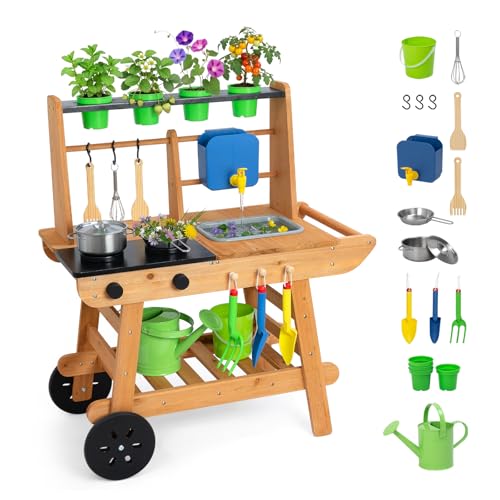
Great Sheep Mud Kitchen for Kids Outdoor with Wheels, Wooden Outdoor Play Kitchen with Removable Sink, Flipable Stove, Ideal Toy for Toddlers Ages 3+
Mud Kitchen with Wheels:This mud kitchen features a pushable cart design, allowing kids to freely move it to…
As an affiliate, we earn on qualifying purchases.
As an affiliate, we earn on qualifying purchases.
Use Costumes and Props to Expand Kids’ Vocabulary
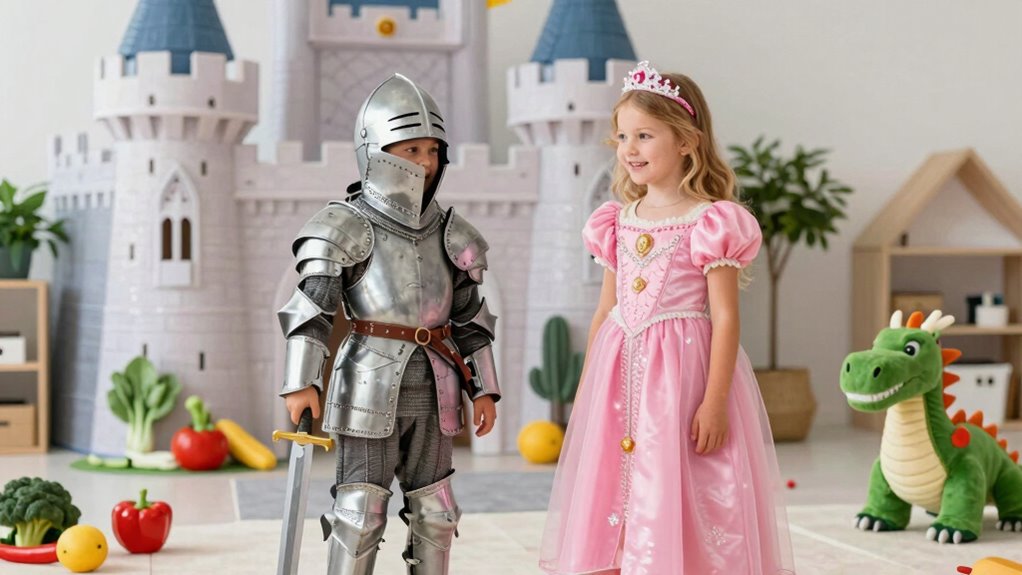
Using costumes and props sparks kids’ imaginations and encourages them to take on new roles. Themed outfits introduce specific words related to different characters or settings, expanding their vocabulary. Dress-up games also foster conversations as children describe what they’re pretending to be and share ideas with friends.
Themed Costumes Encourage Role Play
Themed costumes and props can turn any play session into a lively language-learning experience. When kids wear costumes that fit well and reflect different roles, they’re more likely to engage deeply in role play. High-quality costumes with realistic details boost their confidence and immersion. To maximize learning, consider these tips:
- Choose a costume variety that includes different characters and professions to spark imagination.
- Prioritize costume quality to ensure durability and comfort for extended play.
- Incorporate accessories and props to expand vocabulary and encourage storytelling.
These elements make role play more engaging and educational, helping children practice new words and concepts naturally. When costumes are fun and authentic, your child will be motivated to explore different roles and expand their language skills.
Props Inspire New Vocabulary Words
Props can be powerful tools for expanding your child’s vocabulary because they provide tangible, visual cues that make new words come alive. When you introduce costumes and props, they inspire your child to explore and describe their pretend scenarios, naturally leading to vocabulary enrichment. For example, a firefighter helmet or a stethoscope can prompt questions like “What is this?” or “What does a firefighter do?” As your child interacts with these items, they learn new words related to professions, objects, and actions. Using props intentionally helps solidify understanding and encourages descriptive language. This hands-on approach makes learning fun and memorable, turning everyday items into opportunities for expanding your child’s word bank and enhancing their overall language skills.
Dress-Up Games Promote Conversation
Dress-up games naturally encourage children to engage in conversations that expand their vocabulary. When kids try on costumes and use props, they practice describing outfits, roles, and actions, which enhances their speech and comprehension. To maximize these benefits, focus on:
- Introducing new vocabulary related to costume design, like “cape,” “helmet,” or “gloves,” to expand their descriptive language.
- Playing role-specific scenarios that promote speech therapy techniques, encouraging kids to articulate and organize their thoughts clearly.
- Asking open-ended questions about their costumes and characters to foster conversation and deepen language skills.
These activities turn dressing up into a playful way to develop vocabulary, improve speech clarity, and build confidence in communication through imaginative role-play.
Design Fun Scenarios for Imaginative Dialogue Practice
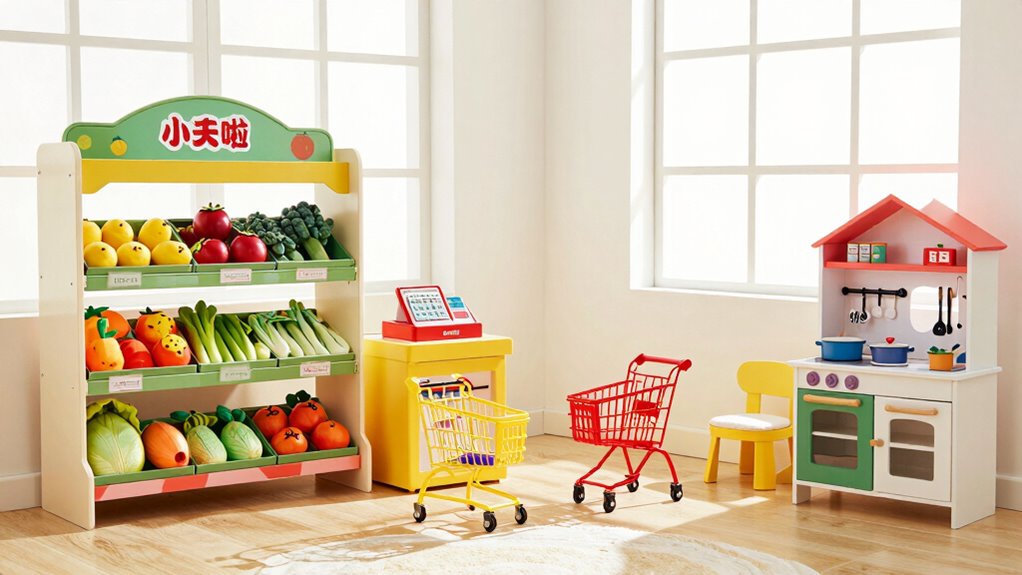
Creating engaging scenarios for imaginative dialogue helps children develop their language skills and creativity. You can craft fantasy worlds where kids pretend to be wizards, explorers, or mythical creatures, encouraging rich storytelling and descriptive language. Outdoor adventures, like a jungle safari or mountain expedition, inspire children to use new vocabulary and practice conversational skills in dynamic settings. By designing these fun scenarios, you give children a chance to role-play different characters, solve problems, and express their ideas confidently. Keep the scenarios flexible, allowing kids to add their own twists and details. This approach not only sparks their imagination but also provides meaningful opportunities for practicing dialogue, turn-taking, and vocabulary expansion in a playful environment.
Incorporate Everyday Themes to Foster Descriptive Language
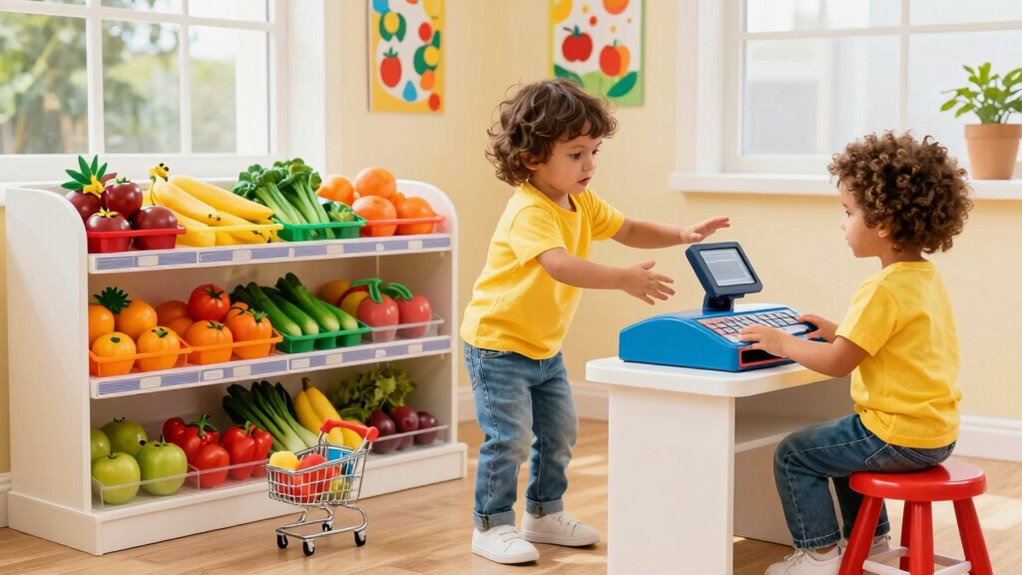
Incorporating everyday themes into pretend play encourages children to use descriptive language that relates directly to their real experiences. You can do this by engaging them in activities like naming colors, describing animals, and mimicking sounds. For example, you might ask your child to:
- Identify the colors of objects around them and describe their shades.
- Reproduce animal sounds like “moo” for a cow or “quack” for a duck.
- Talk about their favorite animals, describing features and behaviors.
These activities promote the use of vivid language, helping your child connect words to real-life objects and experiences. By focusing on familiar themes, you make language learning fun and meaningful.
Build Small-World Play Areas for Social and Narrative Skills
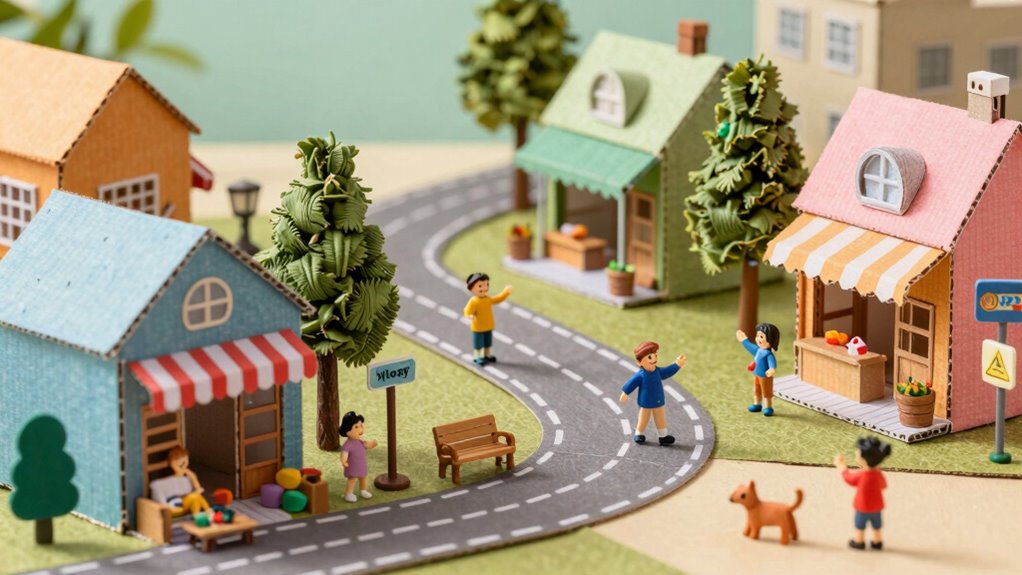
Building small-world play areas provides children with a tangible space where they can develop social and narrative skills through imaginative interaction. These setups encourage kids to role-play scenarios, fostering cooperation, sharing, and empathy. When engaging in small world play, children practice storytelling, sequencing, and problem-solving naturally. To maximize benefits, create themed environments like farms, markets, or towns that reflect real life.
| Small-World Play Benefits | Social Skills Development |
|---|---|
| Sparks imagination | Promotes cooperation and teamwork |
| Encourages storytelling | Builds empathy and understanding |
| Develops problem-solving | Enhances communication skills |
| Reinforces real-life roles | Strengthens sharing behaviors |
| Boosts language skills | Fosters social confidence |
Use Storytelling Corners to Practice Sentences and Narratives
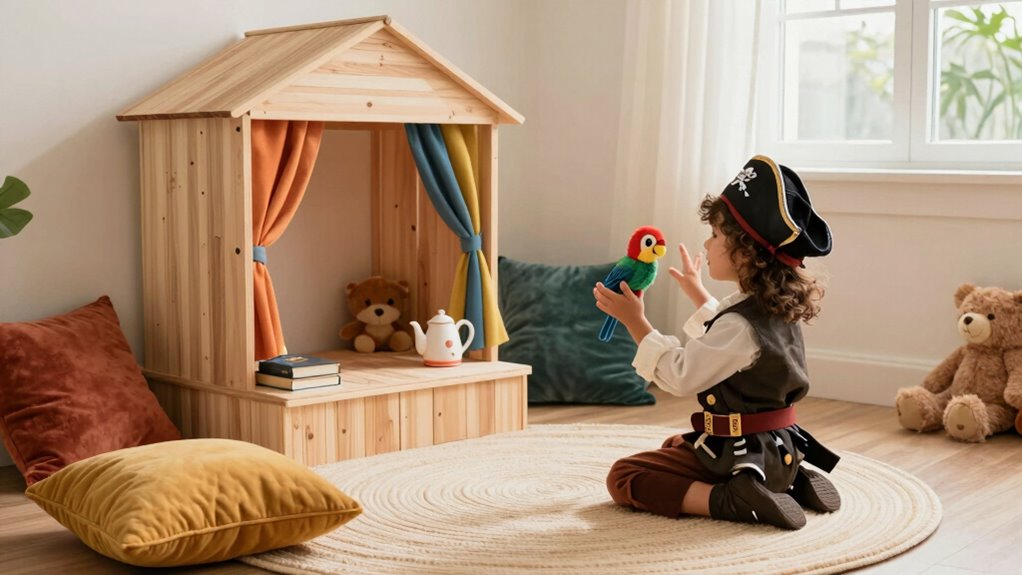
After setting up small-world play areas that boost social and narrative skills, you can further support language development by establishing storytelling corners. These spaces encourage children to practice storytelling techniques and strengthen their narrative development. To make the most of this setup:
- Provide prompts or picture cards to inspire stories.
- Use puppets or figurines to animate storytelling and engage children.
- Encourage children to retell familiar stories or create new ones, focusing on sentence structure and sequencing.
Integrate Daily Routines Into Play for Practical Language Use
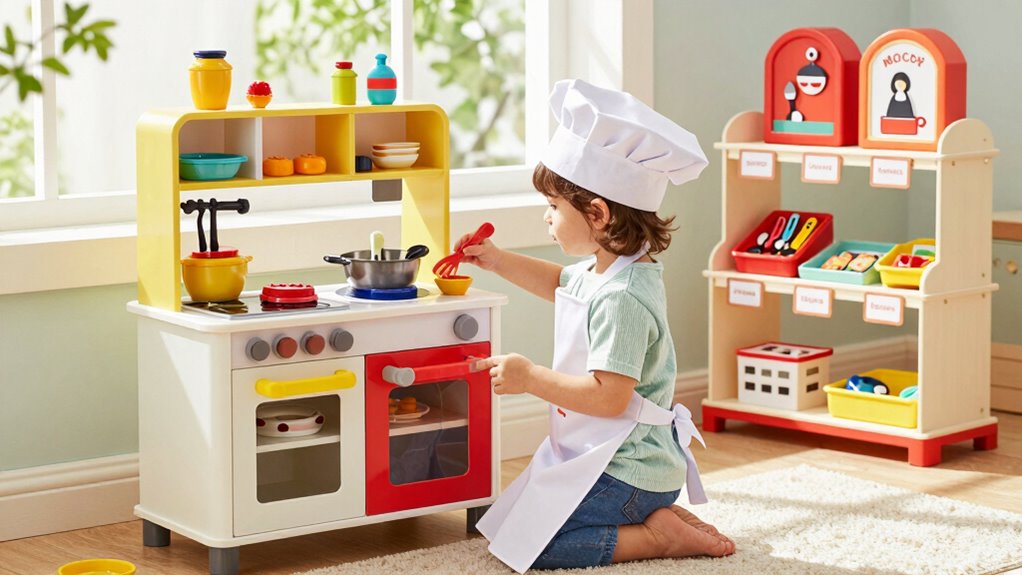
Integrating daily routines into play creates practical opportunities for children to use language in meaningful contexts. During mealtime conversations, you can encourage your child to name foods, describe tastes, and express preferences. Turn breakfast into a role-playing activity, asking them to serve imaginary dishes or set the table, prompting them to use relevant vocabulary. Incorporate morning routines into play by simulating brushing teeth, getting dressed, or packing bags. These scenarios help your child practice sequencing words like “first,” “next,” and “then,” while also practicing polite requests and social phrases. By blending daily routines with play, you create real-life language experiences that boost your child’s communication skills and confidence, making learning both fun and functional.
Frequently Asked Questions
How Can I Adapt Pretend Play Setups for Children With Speech Delays?
You can adapt pretend play setups for children with speech delays by using visual aids like picture cards or props to guide their interactions. Simplify your language, using clear and repetitive phrases to encourage understanding. Incorporate their interests to make play engaging, and give plenty of wait time for responses. These strategies help children feel confident, support language development, and make pretend play a fun, effective learning experience.
What Safety Precautions Should I Consider When Creating Themed Play Areas?
Imagine you’re assembling a play area that’s as safe as a medieval fortress. You should use age-appropriate furniture to prevent accidents and opt for non-toxic materials to keep children safe from harmful chemicals. Make certain all furniture has smooth edges, secure any loose parts, and keep small objects out of reach to prevent choking. Regularly inspect the space for hazards, creating a secure environment where kids can explore and learn freely.
How Can I Encourage Quieter Children to Participate in Pretend Play?
To encourage quieter children to participate in pretend play, use participation strategies like offering specific roles that match their interests or comfort levels. You can gently invite them with open-ended questions or props that spark their curiosity. Create a relaxed environment by giving them time to observe before joining in, and praise their efforts. These strategies help build confidence and make quieter children feel valued in the play scenario.
What Are Some Cost-Effective Ways to Create Engaging Pretend Play Environments?
You can create engaging pretend play environments using DIY props made from recycled materials. Gather cardboard boxes, bottle caps, fabric scraps, and paper rolls to craft costumes and accessories. Use old containers for pretend kitchens or shops. These cost-effective options encourage imagination and interaction. Plus, involving kids in making these props fosters creativity and language skills, making playtime both fun and educational without spending much.
How Can I Involve Siblings or Peers in Language-Rich Pretend Play?
Oh, what a novel idea—getting siblings or peers to join in! You just need to encourage sibling collaboration and peer interaction by setting up themed pretend play scenarios, like a doctor’s office or grocery store. Prompt them with roles and dialogue, then step back. Watch as their language skills flourish through shared storytelling, negotiation, and laughter. It’s simple, fun, and turns playtime into a language-boosting adventure!
Conclusion
By creating engaging pretend play setups, you actively support your child’s language growth. Do you realize how these imaginative environments turn everyday moments into rich language opportunities? With themed spaces, role-playing, costumes, and storytelling, you’re not just playing—you’re nurturing their vocabulary, conversation skills, and social understanding. So, why not transform playtime into a powerful tool for language development? After all, isn’t the best learning often wrapped in the most fun and imaginative experiences?