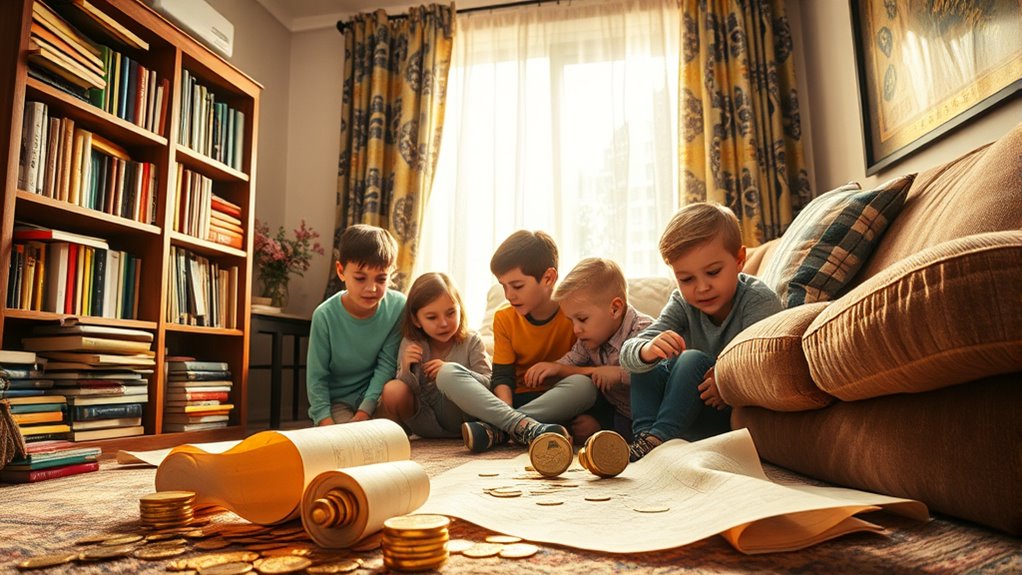

Indoor treasure hunts are a fantastic way to turn your home into an adventure zone. You can create clues using riddles, images, or physical challenges, hiding objects behind furniture or inside household items. Vary the difficulty to match players’ ages and use themes like pirates or detectives to boost excitement. Incorporate small rewards along the way, leading to a big prize at the end. Keep exploring for more tips on making your indoor hunt truly memorable.
Key Takeaways
- Design clear, escalating clues using riddles, images, or physical challenges to guide players through the indoor hunt.
- Use household items and creative hiding spots to make the game engaging and fun for all ages.
- Set safe boundaries and organize the space to prevent accidents and ensure smooth exploration.
- Incorporate themed elements and small rewards at each stage to motivate participants and enhance excitement.
- Tailor the difficulty and clues to suit different age groups, making the hunt educational and inclusive.
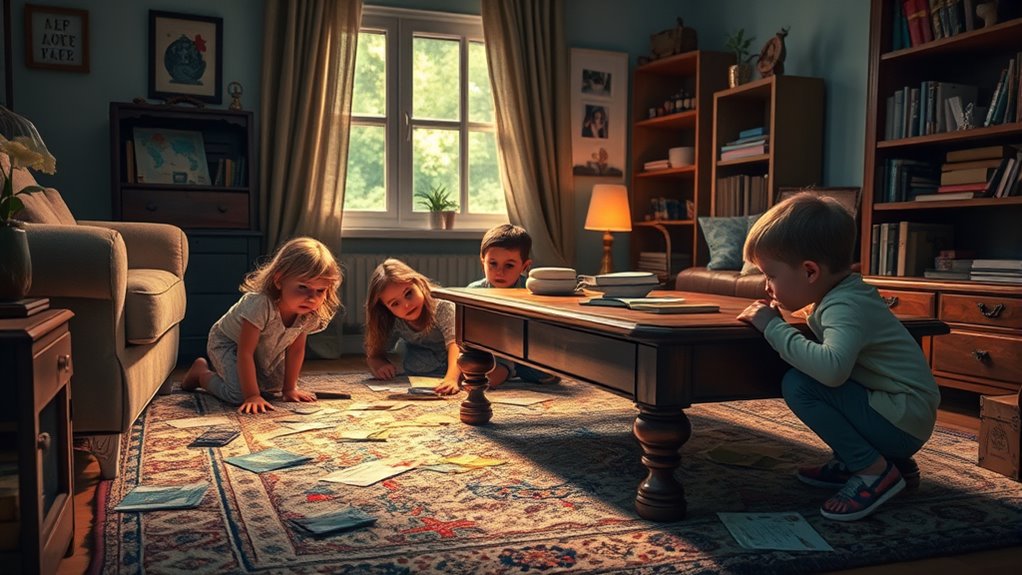
Have you ever considered turning a rainy day or a lazy weekend into an exciting indoor adventure? A treasure hunt is the perfect way to do that, transforming ordinary spaces into a thrilling playground. To make it successful, you’ll want to focus on effective scavenger hunt strategies that keep everyone engaged and motivated. Start by planning clear clues that lead participants from one hidden object to the next, gradually increasing difficulty to keep the game challenging but not frustrating. Mix up the types of clues—use riddles, images, or even physical challenges—to add variety. Remember, the key is balancing fun and challenge to suit everyone’s age and skill level. When designing your indoor game ideas, think about hiding objects in clever spots that require some problem-solving or exploration. For example, tuck a small item behind a book on a shelf or inside a pillowcase. Use household items to create clues or riddles that lead players around your home, fostering a sense of discovery with each find. Incorporating themes related to nature or marine life can also inspire creative hiding spots, even indoors, adding an educational twist.
As you set up your treasure hunt, consider the space you have available. The beauty of indoor game ideas is their flexibility—you can turn a living room, basement, or even a closet into a treasure trove. Make sure to set safe boundaries so no one trips or knocks over furniture in the heat of the chase. You can also incorporate themed hunts, such as pirates searching for gold coins or detectives solving a mystery, to add an extra layer of excitement. To keep the game lively, plan small surprises or prizes at each clue point, or save a special treasure for the finale. This keeps everyone motivated and enthusiastic to see what’s next.
Using clever scavenger hunt strategies, you can make your indoor treasure hunt a memorable experience for kids and adults alike. It’s a fantastic way to bond, get some light exercise, and release everyone’s inner explorer. Plus, these indoor game ideas are easy to customize based on your space and participants. Whether you’re playing with young children or teenagers, adjusting clues and difficulty levels ensures everyone stays involved. With a little creativity, your indoor treasure hunt will become a cherished activity that brightens any gloomy day or adds a fun twist to your weekend routine. So gather your supplies, plan your clues, and get ready for an adventure that turns your home into a treasure island. Exploring different coastal zones and their unique features can also inspire themed hunts related to marine environments.

KNASON Pirate Treasure Chest Sensory Bin,Play Sand Kit for Boys with Pirate Accessories,2.2lbs Sand,Glow in The Dark Gems and Map,Pretend Play Adventure Sensory Toys for Toddlers Kids Ages 3 4 5 6 7 8
Pirate Quest Sensory Bins:Hands-on ultimate treasure hunt with 2.2lbs color sand,6 pirate themed accessories, spyglass, compass, 30 diamonds…
As an affiliate, we earn on qualifying purchases.
As an affiliate, we earn on qualifying purchases.
Frequently Asked Questions
What Are the Best Age Groups for Indoor Treasure Hunts?
You’ll find indoor treasure hunts suit a wide age range, but they’re especially great for kids aged 6 to 12. They enjoy age-appropriate puzzles that challenge their problem-solving skills and love thrill-seeking activities that keep them engaged. For younger children, simplify clues, and for teens, add more complex riddles. This way, everyone stays entertained and active, making indoor treasure hunts a perfect family or group activity.
How Can I Ensure Safety During Indoor Treasure Hunts?
You might find it funny how a simple indoor treasure hunt can turn into a safety concern if you’re not careful. To guarantee safety, keep a close eye on child supervision and prevent hazards like sharp objects or slippery surfaces. Arrange the game in safe, clutter-free areas, and set clear boundaries. With attentive supervision and hazard prevention, everyone can enjoy the fun without any worries.
What Are Creative Themes for Indoor Treasure Hunts?
You can make your indoor treasure hunt exciting by choosing fun themes like pirates, detectives, or fairy tales. Use themed clues that fit your chosen story, and incorporate decorative props like maps, hats, or fairy lights to enhance the experience. This creative approach keeps everyone engaged, sparks imagination, and makes the hunt memorable. Just guarantee your clues and props match the theme for a seamless, immersive adventure.
How Do I Tailor Hunts for Small or Large Groups?
For small groups, simplify clues and increase challenge level modifications to keep everyone engaged. Use more puzzles or riddles to make it exciting. For large groups, adjust by creating multiple teams and adding hiding spots or tasks, which encourages teamwork. You can also incorporate group activities or relay-style challenges to manage the group size effectively, ensuring everyone stays involved and the game remains fun for all participants.
What Supplies Are Essential for an Indoor Treasure Hunt?
Imagine you’re the captain steering a ship—your supplies are your crew. To host an indoor treasure hunt, you’ll need paper and markers for treasure map creation, small prizes for motivation, and clues or riddles to guide participants. Make sure to have tape or pens handy for hiding and marking. These essentials keep the adventure fun and organized, ensuring everyone’s enthusiastic to find the hidden treasures and celebrate their discoveries.

HEZNZXQ Easter Treasure Hunt Clues Game Cards, Bunny Scavenger Hunt Card Game(21 Cards With Envelopes), Indoor Ourdoor Party Games Supplies Activities for Adults Family Teachers Students(A05)
Quantity: Total 21 cards and 21 envelopes. 1 instruction, 16 clue cards and 4 blank cards that you…
As an affiliate, we earn on qualifying purchases.
As an affiliate, we earn on qualifying purchases.
Conclusion
So, after all this indoor treasure hunting, you might think it’s just a simple game. But here’s the irony: the real treasure isn’t the prize at the end, it’s the fun and surprises you encounter along the way—hidden in your own walls. Who knew that exploring your home could turn into an adventure? Next time, maybe you’ll find more than just lost socks; maybe you’ll find a new way to see your familiar space.

Eureka Back to School Treasure Hunt Mini Reward Charts for Kids with Stickers, 736pc, 5'' W x 6'' H
Includes (36) charts and (700) stickers per pack
As an affiliate, we earn on qualifying purchases.
As an affiliate, we earn on qualifying purchases.

Asmodee Choose Your Own Adventure: House of Danger Board Game – Embark on a Perilous Journey in this Cooperative Narrative Adventure, Ages 10+, 1+ Players, 1+ Hour Playtime
Number of players: 8
As an affiliate, we earn on qualifying purchases.
As an affiliate, we earn on qualifying purchases.