Water play with household items offers a fun and educational way to boost your child’s sensory, motor, and cognitive skills. Using objects like spoons, funnels, and spray bottles, you can create engaging activities that encourage exploration, problem-solving, and fine motor development. This versatile approach allows you to turn everyday items into learning tools, making water play adaptable for all ages. Keep exploring how simple household items can turn playtime into a learning adventure.
Key Takeaways
- Household items like spoons, funnels, and spray bottles can be used to explore pouring, splashing, and transferring water.
- Using common objects transforms routine household items into engaging educational water play tools.
- Water play with household items supports fine motor skills, coordination, and sensory development in children.
- Incorporate household items into water activities to teach concepts like volume, measurement, and cause-and-effect.
- Customizable water play activities with household objects promote creativity, problem-solving, and environmental awareness.
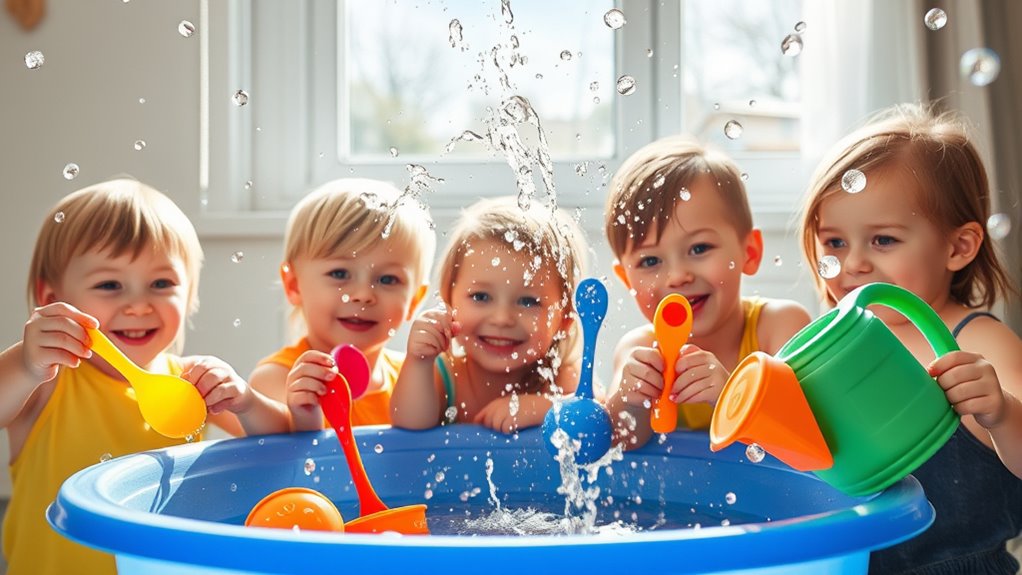
Water play with household items offers a fun and easy way to engage kids in sensory and STEM activities without needing special equipment. When you encourage your child to explore water with everyday objects, you open the door to rich sensory experiences that stimulate their senses and promote learning. Through this kind of play, they’ll naturally develop not only their curiosity but also their fine motor skills, which are essential for tasks like writing, dressing, and other daily activities.
Water play with household items boosts sensory, STEM skills, and fine motor development through fun, simple exploration.
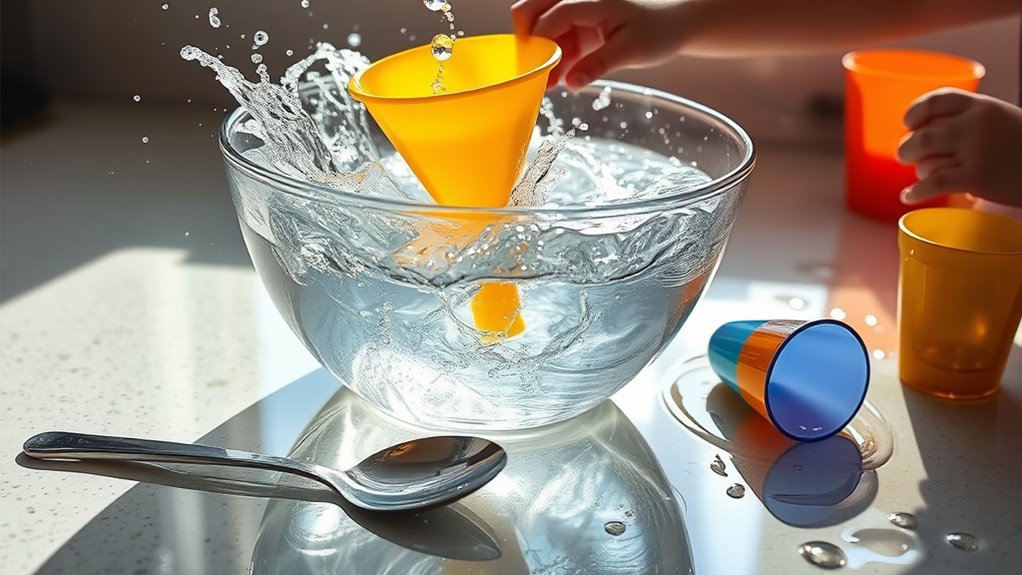
As your child manipulates cups, spoons, or bottles filled with water, they begin to refine their grasp and hand-eye coordination. Pouring water from one container to another, for example, requires precise movements and control. These actions strengthen small muscles in their hands and fingers, laying a solid foundation for more complex tasks in the future. Plus, the tactile sensation of water—its temperature, movement, and resistance—enhances sensory exploration, helping children understand different physical properties of liquids. This hands-on interaction encourages them to observe cause-and-effect relationships, like how water splashes or how filling a container makes it heavier.
You can turn simple household items into versatile tools for water play. Use spoons, funnels, basters, or even spray bottles for pouring, transferring, and splashing. These activities turn routine household objects into engaging learning tools, making playtime educational and dynamic. As your child experiments with different containers and tools, they learn about volume, measurement, and spatial awareness, all while refining their fine motor skills. The process of grasping a slippery spoon or controlling a spray bottle also enhances their dexterity and coordination.
Furthermore, water play fosters concentration and patience. Watching water flow or observing how different objects behave in water helps children develop focus and attention to detail. It also encourages problem-solving, like figuring out how to transfer water without spilling or how to make a water wheel spin. These challenges stimulate their cognitive development and inspire creative thinking. Additionally, incorporating water purification concepts can help children understand the importance of clean water and environmental awareness while they play. Because water play is so adaptable, you can easily customize activities to match your child’s age and interests, making learning both accessible and enjoyable.
Frequently Asked Questions
What Safety Precautions Should I Take During Water Play?
You should always prioritize water safety by keeping a close eye on children during water play, never leaving them unattended. Supervise actively to prevent accidents like slipping or drowning, even with shallow water. Guarantee the area is safe, free of hazards, and that kids wear appropriate floatation devices if needed. By staying vigilant and supervising constantly, you help create a fun and safe environment for water play.
How Can I Prevent Water Spills and Messes?
Imagine a gentle stream flowing smoothly—your goal is to keep water play just like that. Use spill-proof containers and water-resistant storage to catch drips and splashes before they reach the floor. Place mats underneath and keep a towel nearby for quick cleanup. By organizing supplies and sealing water in secure containers, you prevent messes and spills, ensuring a fun, safe experience without turning your space into a watery chaos.
Are There Age Restrictions for Water Play Activities?
Yes, there are age restrictions for water play activities. You should follow supervision guidelines based on your child’s age to guarantee safety. For infants and toddlers, constant supervision is essential, and activities should be age-appropriate to prevent accidents. Older children can handle more complex water play, but you still need to monitor them closely. By adhering to these guidelines, you help prevent spills, messes, and potential hazards during water play.
What Are Eco-Friendly Options for Water Play?
For eco-friendly water play, you should focus on recycling materials and natural alternatives. Use recycled bottles, bowls, and sponges to reduce waste, and opt for natural water sources like rainwater or spring water instead of tap water. Encourage your kids to explore natural elements like mud, leaves, and stones for sensory fun. Reusing, repurposing, and choosing natural options make water play safer for the environment and more enriching for your children.
How Can I Clean Household Items After Water Play?
To clean household items after water play, start with simple cleaning tips like rinsing items thoroughly with warm water and mild soap. For deeper cleaning, use vinegar or baking soda as natural disinfectants. Dry your items using air drying or towel drying methods to prevent mold. Make sure to dry completely before storing to keep everything clean and ready for next time.
Conclusion
Did you know that kids can improve their fine motor skills by just playing with water and household items? Engaging in simple water play not only sparks creativity but also boosts learning and development. So next time you’re looking for a fun activity, grab some cups, spoons, or bottles and get splashing. It’s a cost-effective way to entertain and educate at the same time—plus, you’ll be surprised how much fun everyone has!