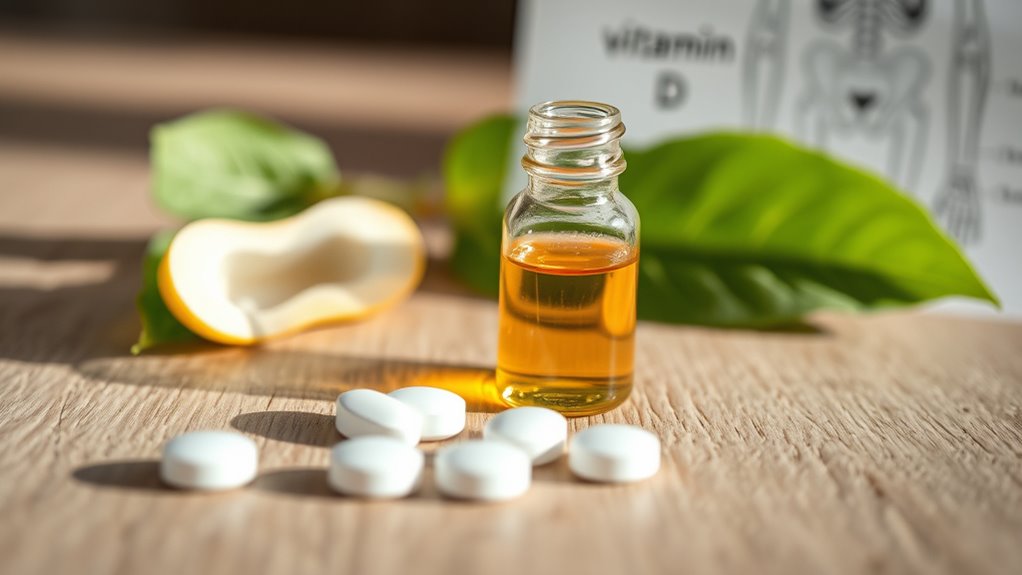

To build and keep strong bones, you need enough calcium and vitamin D. Calcium helps your bones stay dense and sturdy, while vitamin D improves calcium absorption from your intestines. Sun exposure, foods like fatty fish and eggs, or supplements can boost your vitamin D levels. Without enough vitamin D, calcium may not reach your bones effectively, risking weakness. Keep going to discover more about how balancing these nutrients supports your bone health.
Key Takeaways
- Calcium and vitamin D are essential nutrients that strengthen and maintain healthy bones.
- Vitamin D enhances calcium absorption in the intestines, crucial for bone mineralization.
- Sun exposure and vitamin D-rich foods help maintain adequate vitamin D levels for bone health.
- Without enough vitamin D, calcium absorption decreases, risking weakened bones and osteoporosis.
- Balancing sufficient calcium intake with proper vitamin D levels optimizes bone strength and reduces fracture risk.

Have you ever wondered why calcium and vitamin D are often called the building blocks of strong bones? The truth is, both nutrients play vital roles in maintaining bone density and strength. When you consume calcium-rich foods, your body needs to absorb this mineral efficiently to incorporate it into your bones. But calcium absorption isn’t a straightforward process; it heavily depends on vitamin D. Without enough vitamin D, your body struggles to absorb calcium properly, even if you’re eating plenty of calcium-rich foods.
Vitamin D is unique because your skin can produce it when exposed to sunlight, a process known as vitamin D synthesis. During sun exposure, ultraviolet rays convert a cholesterol compound in your skin into vitamin D3, the active form your body uses. However, factors like limited sun exposure, skin age, or geographic location can impair vitamin D synthesis, leading to less available vitamin D in your system. When vitamin D levels are low, calcium absorption from your intestines drops markedly. This means that despite consuming adequate calcium, your bones may not receive the mineral they need to stay strong.
Your skin produces vitamin D from sunlight, but limited exposure can reduce its levels and impair calcium absorption.
To optimize calcium absorption, it’s essential to maintain healthy vitamin D levels. You can do this by spending a few minutes in the sun daily, eating vitamin D-rich foods like fatty fish, eggs, and fortified products, or taking supplements if recommended by your healthcare provider. When your body efficiently synthesizes vitamin D, it produces a hormone called calcitriol, which signals your intestines to absorb calcium more effectively. This process guarantees that calcium gets into your bloodstream and eventually makes its way into your bones, helping to preserve bone density and prevent conditions like osteoporosis.
Understanding the link between calcium absorption and vitamin D synthesis highlights why these nutrients are so interconnected. Without sufficient vitamin D, your body can’t make the most of the calcium you consume, weakening your bones over time. Conversely, if you have enough vitamin D but don’t consume enough calcium, your bones still remain vulnerable. Balancing both is key to maintaining strong, healthy bones throughout your life. So, guaranteeing adequate sun exposure, a balanced diet, and possibly supplementation can make a meaningful difference in how well your body absorbs calcium and keeps your bones resilient and healthy. Additionally, ensuring enough sun exposure can support your body’s natural vitamin D production, further aiding calcium absorption.

B002FH5I0I
As an affiliate, we earn on qualifying purchases.
As an affiliate, we earn on qualifying purchases.
Frequently Asked Questions
Can Calcium and Vitamin D Prevent Osteoporosis Entirely?
Calcium and vitamin D can’t prevent osteoporosis entirely, but they play a vital role in osteoporosis prevention. You should focus on a balanced diet and proper supplementation, as their efficacy supports bone health and reduces fracture risk. However, other factors like exercise and lifestyle also matter. While supplements help, they aren’t a guaranteed solution, so combining them with healthy habits offers the best protection against osteoporosis.
Are Supplements Better Than Natural Food Sources for Calcium and Vitamin D?
Supplements can be convenient, but dietary sources often provide better nutrient absorption and additional health benefits. You get calcium and vitamin D from foods like dairy, leafy greens, and fatty fish, which support overall health. While supplements are effective when you can’t meet your needs through food, they may not offer the same synergy found in natural sources. Focus on a balanced diet first; supplements should complement, not replace, good nutrition.
How Much Calcium and Vitamin D Should Children and Seniors Consume?
You should follow dietary requirements for calcium and vitamin D tailored to your age group. Children need about 700-1,000 mg of calcium daily, and seniors require around 1,200 mg. For vitamin D, children need 600 IU, while seniors should aim for 800-1,000 IU. Keep in mind that absorption efficiency varies with age and health, so consult your healthcare provider to guarantee you’re meeting your specific needs effectively.
Do Calcium and Vitamin D Interact With Other Medications?
Think of calcium and vitamin D as key allies in your body’s fortress. They can interact with medications, potentially causing drug interactions that may hinder your treatment. Some drugs, like certain antibiotics or anticonvulsants, can reduce calcium and vitamin D absorption, decreasing medication effectiveness. Always consult your healthcare provider before adding supplements, ensuring these nutrients support, rather than hinder, your overall health and medication plan.
Can Excess Calcium and Vitamin D Cause Health Problems?
Yes, excess calcium and vitamin D can cause health problems. If you take too much calcium, you risk a calcium overdose, which can lead to kidney stones, constipation, and interfere with your body’s ability to absorb other minerals. Too much vitamin D can cause toxicity, resulting in symptoms like nausea, weakness, and elevated calcium levels. Always follow recommended doses to avoid these issues and consult your healthcare provider.

Nature Made Vitamin D3 1000 IU (25 mcg), Vitamin D Supplement for Bone, Teeth, Muscle and Immune Health Support, 300 Softgels, 300 Day Supply
Immune, muscle, teeth and bone health support supplement: contains one 300 count bottle of Nature Made Vitamin D3…
As an affiliate, we earn on qualifying purchases.
As an affiliate, we earn on qualifying purchases.
Conclusion
By ensuring you get enough calcium and vitamin D, you’re helping your bones stay strong and healthy. Imagine Sarah, who started taking supplements after her doctor’s advice; within months, her bone density improved, reducing her risk of fractures. You can do the same by incorporating dairy, leafy greens, and sunlight into your routine. Taking these simple steps now can make a big difference in maintaining your bone health for years to come.

Calcium Rich Foods Chart,Magnetic High Calcium Foods List for Bone Health,Healthy Eating Nutrition Guide Magnet (High Calcium)
Our Calcium food chart quickly identify 50+ calcium-rich foods (dairy, greens, nuts) with clear icons and color-coded sections…
As an affiliate, we earn on qualifying purchases.
As an affiliate, we earn on qualifying purchases.
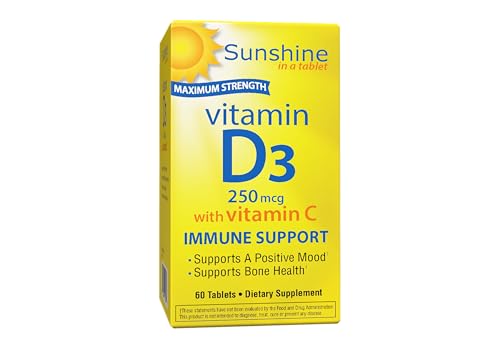
Sunshine Vitamin D 10,000 IU, Healthy and Strong Bones, 30 Servings
MOST ACTIVE FORM OF VITAMIN D. Sunshine Vitamin D provides 250 mcg of cholecalciferol per tablet. This vitamin…
As an affiliate, we earn on qualifying purchases.
As an affiliate, we earn on qualifying purchases.