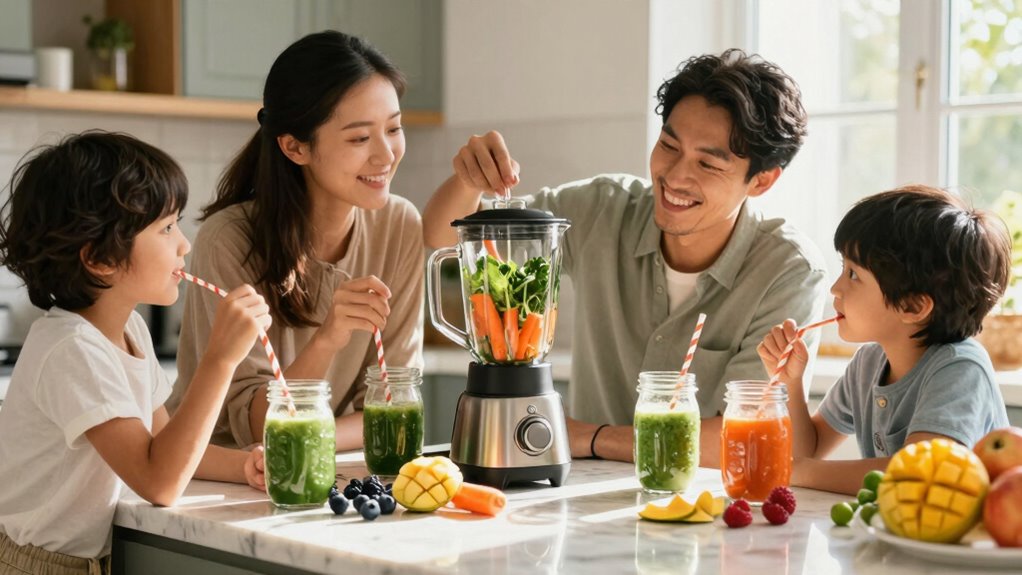

Adding vegetables to smoothies is a great way to boost your family’s nutrition without the fuss. Use mild greens like spinach and sneaky options such as zucchini or cauliflower that blend smoothly with fruits. Incorporate colorful, tasty toppings, involve your kids in mixing, and experiment with flavor combos to make smoothies appealing. If you keep it fun and simple, sneaking veggies becomes easy—and there’s plenty more tips to help you succeed.

Turn the school run and nap time into listening time
- Thousands of audiobooks, podcasts and originals
- Listen on your phone, tablet or Echo — also offline
- Cancel anytime
Key Takeaways
- Use mild-flavored vegetables like spinach or zucchini blended thoroughly with sweet fruits to mask taste.
- Incorporate colorful, visually appealing toppings and layers to make smoothies more enticing for kids.
- Involve children in selecting ingredients and blending to boost engagement and acceptance of veggies.
- Gradually add new vegetables, pairing them with familiar fruits to build taste buds’ adaptation.
- Keep smoothies smooth and appealing by blending well and adjusting with liquids or sweeteners as needed.
As an affiliate, we earn on qualifying purchases.
Why Veggies in Smoothies Can Help Picky Eaters (and How to Get Started)
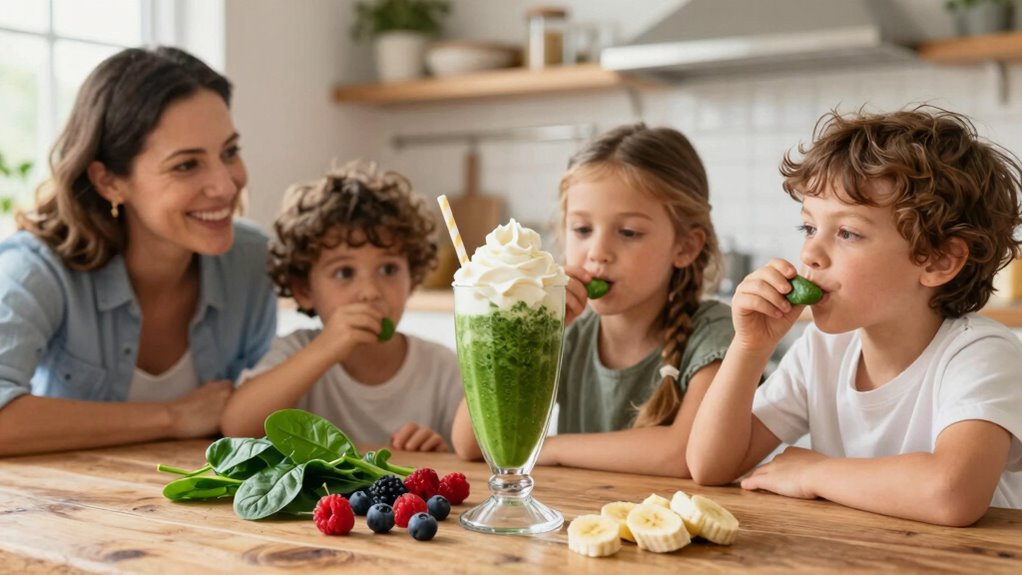
Adding veggies to smoothies can be a smart way to help picky eaters get more nutrients without noticing. By choosing the right fruit pairings, you can mask the taste of vegetables, making the smoothie more appealing. For example, bananas and berries blend well with spinach or zucchini, creating a naturally sweet flavor. Texture modifications also play a vital role; blending veggies until smooth prevents any gritty or fibrous bits that might turn someone off. You can start with small amounts of veggies and gradually increase as taste buds adapt. Incorporating visual appeal in the presentation of smoothies can make them more appetizing. Understanding nutrient absorption can help you select the most beneficial vegetables to include over time. Additionally, being aware of health benefits can motivate you to include a wider variety of vegetables. Using flavor masking techniques such as adding natural sweeteners or spices can further help in making the smoothies more appealing. Over time, they may even begin to enjoy the added variety, all while consuming more vegetables effortlessly.
Which Vegetables Are Best for Family Smoothies?
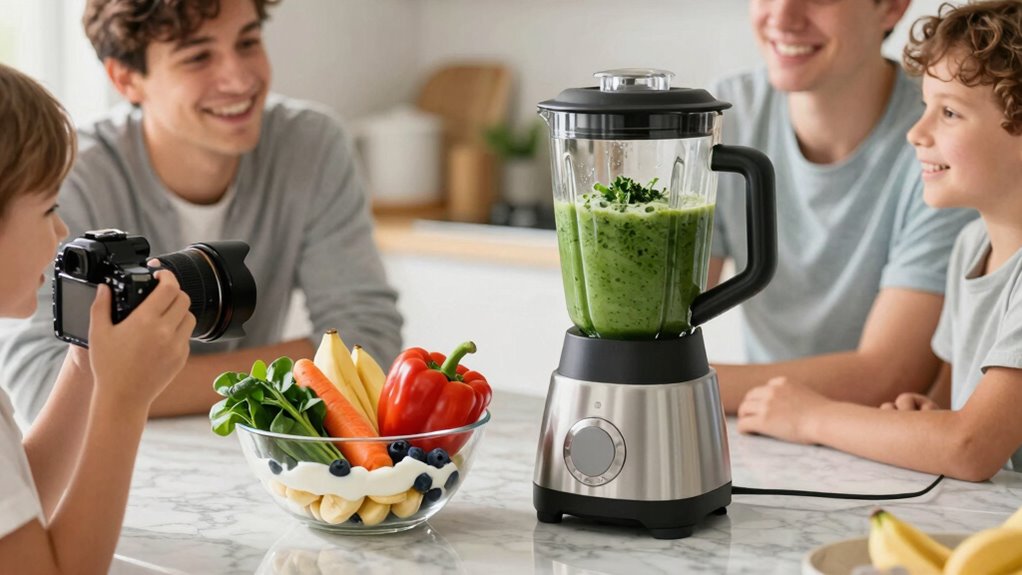
When choosing vegetables for family smoothies, it’s best to start with options that blend seamlessly and have mild flavors. This approach helps maintain a balanced taste profile and encourages family members to enjoy their drinks. This guarantees good vegetable diversity without overpowering the drink’s taste. Spinach is a popular choice because its flavor is subtle and it mixes well with fruits. Cucumbers add hydration and a mild taste that’s easy to accept. Zucchini is another versatile option that blends smoothly and offers a neutral flavor. Carrots provide natural sweetness and vibrant color, while cauliflower adds creaminess without strong taste. These vegetables have high flavor compatibility with fruits like bananas, berries, and apples, making them perfect for creating tasty, nutritious smoothies that even picky eaters will enjoy. Incorporating smoothie-friendly vegetable textures can further enhance the blending process and overall consistency. Using versatile ingredients can help you build confidence and expand vegetable diversity gradually. Exploring nutrient-rich vegetables can also boost the health benefits of your smoothies while keeping flavors mild and appealing. Additionally, selecting vegetables that are easy to prepare and store can streamline your smoothie-making routine and encourage more frequent consumption. Considering safety tips for handling raw vegetables can help ensure your ingredients are clean and safe before blending.
Easy Recipes to Sneak Greens Into Your Kids’ Drinks
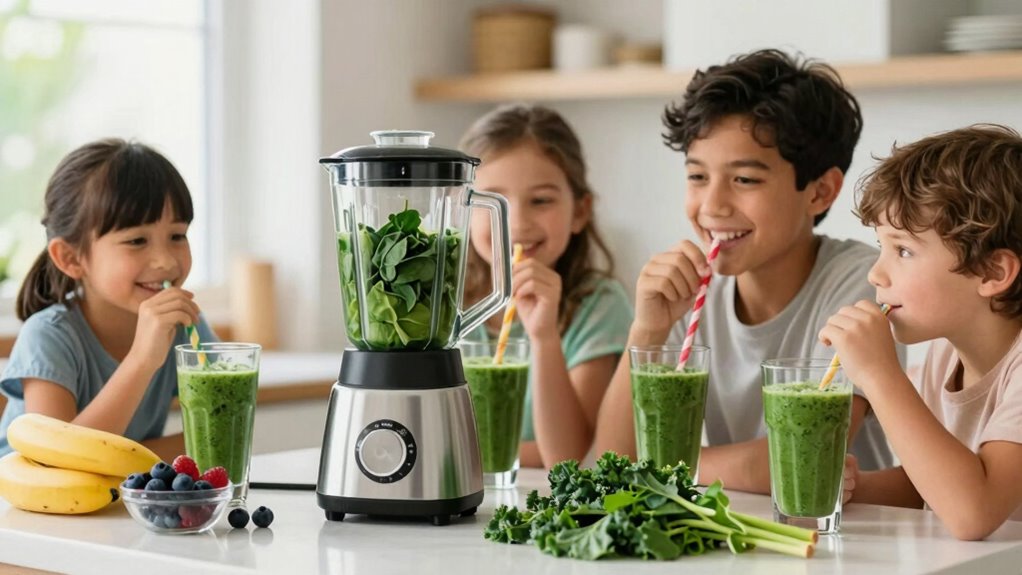
Getting greens into your kids’ drinks doesn’t have to be a battle. The key is smart fruit pairing; sweet fruits like bananas, berries, or mangoes mask the greens’ flavor and make the smoothie more appealing. To guarantee a smooth texture, balance the greens with enough liquid, such as milk or juice, so it blends effortlessly. Start with a handful of spinach or kale and add a ripe banana for creaminess. Frozen berries also provide natural sweetness and thicken the drink. Remember, blending the greens thoroughly helps eliminate any grittiness, making the smoothie smooth and inviting. Additionally, understanding the impact of AI on food technology can inspire innovative ways to create healthier, more appealing smoothies for kids. Incorporating essential oils for flavor enhancement in small, safe amounts can also add natural aroma and taste, making the drinks even more enticing. Exploring food preservation techniques can help maintain the freshness of ingredients, ensuring your smoothies stay nutritious and delicious longer. Using proper piercing care and hygiene practices ensures your ingredients stay safe and free from contamination, which is crucial when preparing healthy drinks. Moreover, experimenting with different fruit and vegetable combinations can help you discover new flavor profiles that appeal to picky eaters. With a little experimentation, you’ll discover easy recipes that hide the greens seamlessly while delighting your kids’ taste buds.
How to Make Smoothies Fun and Appealing for Kids
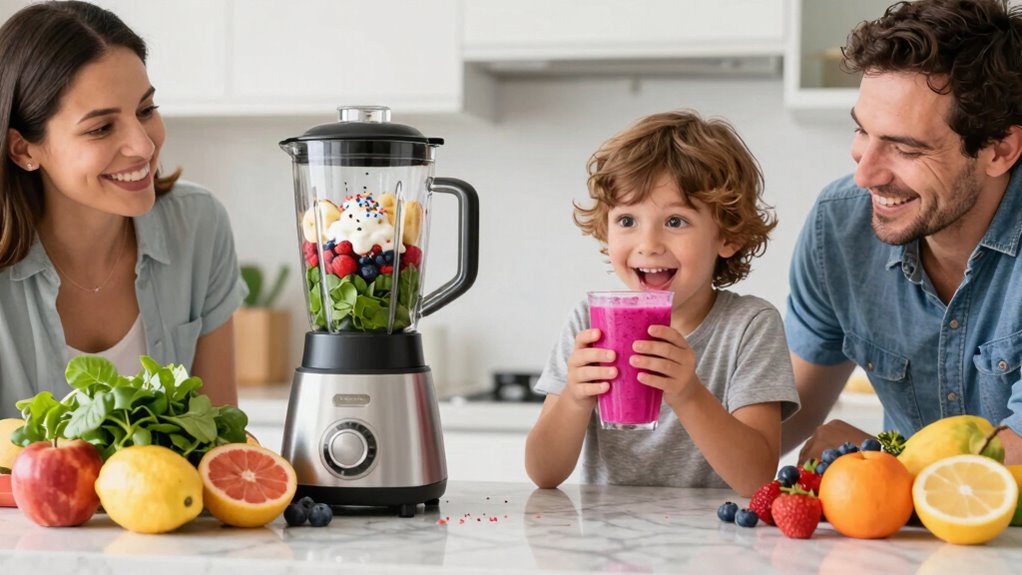
To make smoothies more exciting for kids, start by choosing bright, colorful fruits that catch their eye. You can also add fun toppings like sprinkles or fruit shapes to make each glass special. Let your kids join in the process by blending ingredients together, so they feel excited about their creations. Incorporating creative presentation techniques can transform a simple smoothie into a fun and appealing treat. Using brewing science principles, you can also experiment with different textures and flavor combinations to keep their interest high. Additionally, understanding flavor pairing can help you craft more enticing and harmonious smoothies that kids will love. Exploring texture modification methods can further enhance the sensory experience and make each smoothie uniquely appealing. Incorporating nutritional balance ensures that the smoothies are both delicious and healthy, encouraging kids to enjoy nutritious foods without the battle.
Use Bright Colors
Bright colors instantly catch kids’ attention and make smoothies more exciting. A colorful presentation sparks curiosity and encourages kids to try new flavors. Use a variety of vibrant fruits like strawberries, blueberries, mangoes, and kiwi to create eye-catching shades. Combining these bright ingredients results in creative flavor combinations that are both delicious and visually appealing. Layering smoothies in clear glasses or using fun, colorful cups enhances their visual appeal. You can also blend in a splash of natural food coloring or add small fruit pieces for extra pops of color. The more visually stimulating your smoothies are, the more enthusiastic kids will be to enjoy them. Bright, lively hues turn a simple drink into a fun, inviting treat that kids are excited to taste. Incorporating creative strategies can further elevate the appeal and make healthy eating even more enjoyable. Additionally, utilizing visual appeal techniques can boost kids’ interest and willingness to try new vegetables.
Add Fun Toppings
Adding fun toppings transforms smoothies from simple drinks into playful treats that kids will love. Creative toppings enhance the smoothie presentation, making it more appealing. You can add colorful sprinkles, mini marshmallows, or fruit slices to create eye-catching designs. Using a variety of toppings encourages kids to explore different textures and flavors. Here’s a simple idea to inspire you:
| Topping Type | Fun Example |
|---|---|
| Fruits | Kiwi stars, banana slices |
| Sprinkles | Rainbow sprinkles for color |
| Nuts & Seeds | Chia seeds, crushed almonds |
| Sweet Extras | Chocolate chips, coconut flakes |
These creative toppings turn a basic smoothie into a fun and inviting snack, enticing kids to enjoy their veggies without fuss.
Involve Kids in Blending
Getting kids involved in the blending process makes smoothie time more fun and engaging. Let them share equipment like measuring cups, spoons, or even the blender itself, so they feel part of the process. Setting clear goals, such as creating a colorful fruit blend or adding a secret veggie, gives them a sense of achievement. Encourage kids to choose their favorite ingredients or toppings, making the experience more personalized. You can also turn blending into a game or challenge, like seeing who can add the most bananas or strawberries without spilling. When kids participate actively, they’re more excited about trying the finished smoothie and more likely to develop healthy eating habits. The key is to make it interactive and collaborative from start to finish.
How to Customize Smoothies for Different Tastes and Needs
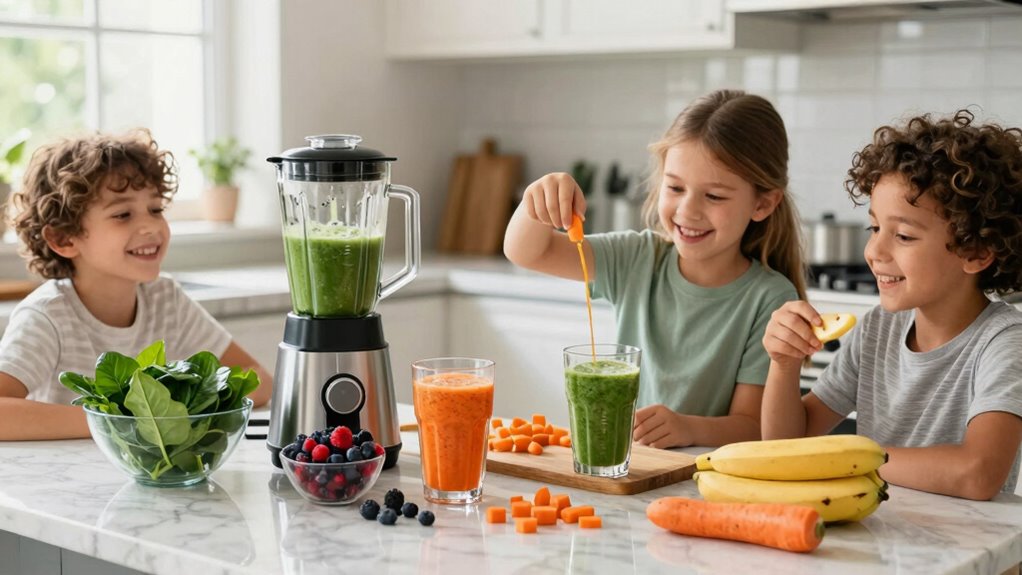
To create smoothies that suit different tastes and dietary needs, you can customize ingredients to match individual preferences. Using simple customization techniques, you can adjust flavors and textures easily. For example, if someone prefers a sweeter taste, add a touch of honey or ripe bananas. For a tangy flavor, include citrus or berries. To accommodate dietary restrictions, swap ingredients like dairy for plant-based options such as almond milk or coconut yogurt. Experiment with flavor combinations by mixing fruits, vegetables, and add-ins like nuts or seeds. This flexibility allows everyone to enjoy a personalized smoothie that meets their taste and nutritional needs. By tailoring ingredients, you make smoothies more appealing and versatile for your family’s diverse preferences.
Troubleshooting Smoothie Problems and Keeping Them Nutritious
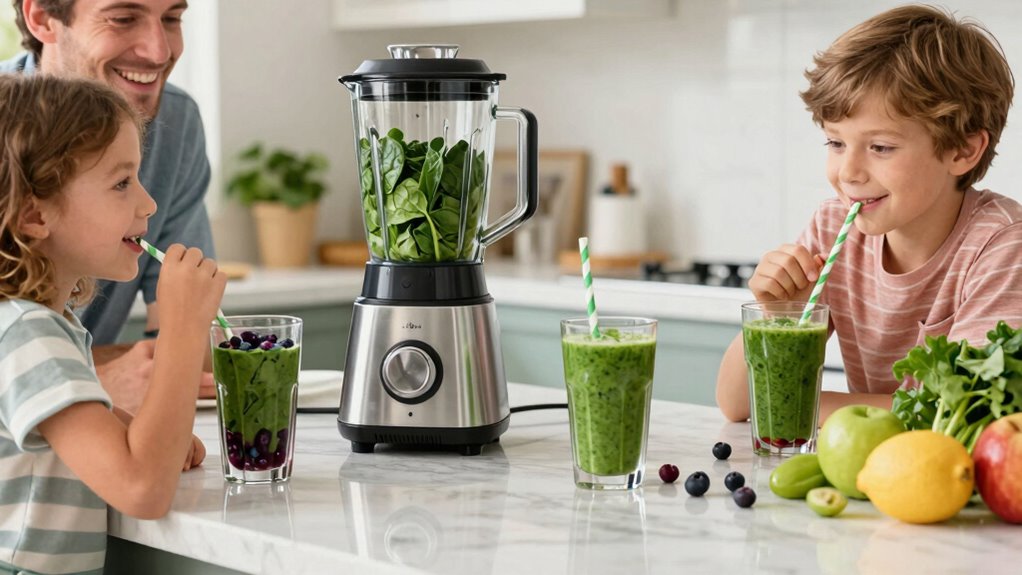
When your smoothie turns out too watery, gritty, or bland, it can be frustrating, but most issues are easy to fix with simple adjustments. To thicken a watery smoothie, add frozen fruit or a spoonful of yogurt. If it’s gritty, blending longer or adding a splash of milk can smooth things out. For bland flavors, incorporate common ingredient substitutions like a splash of juice, a dash of vanilla, or a handful of spinach for extra nutrition. To keep your smoothies nutritious and fresh, store them properly—use airtight containers and refrigerate promptly. Remember, blending in advance and freezing portions can make morning routines easier. With these troubleshooting tips, you’ll always have delicious, nutritious smoothies ready without the hassle.
Frequently Asked Questions
Can Smoothies Replace Daily Vegetable Intake Completely?
Smoothies shouldn’t completely replace your daily vegetable intake, as they often lack nutritional completeness needed for long-term health. While smoothies are a tasty way to boost vegetable consumption, they can miss out on fiber and other nutrients found in whole veggies. To stay healthy, incorporate a variety of vegetables into your meals alongside smoothies, ensuring you get all essential nutrients for sustained well-being.
Are There Any Vegetables to Avoid Mixing in Smoothies?
You should avoid mixing strong-flavored vegetables like broccoli or cabbage into smoothies, as their bitterness can overpower the taste. Did you know that pairing vegetables with sweet fruits can improve acceptance by 80%? Focus on texture balancing by combining milder vegetables like spinach or cucumbers with fruits for a smooth, tasty blend. This approach keeps your smoothies enjoyable while sneaking in those essential nutrients.
How Can I Store Leftover Smoothies Safely?
To store leftover smoothies safely, use airtight storage containers or resealable bottles. Freeze your smoothies using proper freezing techniques, leaving some space at the top for expansion. Label containers with the date to track freshness. When you’re ready to enjoy, thaw them in the fridge overnight or blend with ice. This preserves flavor and nutrients while preventing spoilage, making your smoothies quick to enjoy anytime.
What Are Healthy Sweeteners to Add to Smoothies?
You can use natural sweeteners or sugar alternatives like honey, maple syrup, agave nectar, or mashed bananas to add sweetness to your smoothies. These options are healthier than refined sugar and provide essential nutrients. Just start with small amounts, taste as you go, and adjust to your preferred sweetness level. Using natural sweeteners helps you create delicious, nutritious smoothies that both kids and adults will enjoy without the added guilt.
Are There Allergy Considerations for Common Smoothie Ingredients?
Imagine you’re mixing a smoothie, but suddenly your child’s nut allergy concerns come to mind. You know nuts can trigger severe reactions, so skip peanut butter. Similarly, dairy allergy considerations mean avoiding milk or yogurt if sensitive. Always check ingredient labels and opt for allergy-friendly alternatives like seed butters or plant-based milks. Staying vigilant guarantees your smoothies are safe and enjoyable for everyone, no matter their allergy concerns.
Conclusion
So, next time your kids turn up their noses at veggies, remember—adding them to smoothies is a sneaky win. It’s amusing how a simple blender can turn mealtime battles into easy wins, all while hiding those nutritious greens. Who knew that sneaking veggies could be so effortless? Now, you’ve got a secret weapon in your kitchen—one that makes everyone happy, and secretly, you might just enjoy the irony of saving the day with a tasty, veggie-packed drink.
Halloween Picks
halloween
As an affiliate, we earn on qualifying purchases.





![Every Parent Dreads That Call From School… 📞😱 [Litterbox Comics]](https://motherbabykids.com/wp-content/uploads/2026/10/every-parent-dreads-that-call-from-school-litterbox-comics-featured-260x140.jpg)