To guarantee your infant or toddler gets enough iron, include plant-based options like pureed lentils, chickpeas, and cooked greens such as spinach and kale. Fortified cereals are convenient sources, and pairing these foods with vitamin C-rich fruits like oranges or strawberries boosts absorption. Avoid giving tea or cow’s milk with meals, as they can hinder iron uptake. Keep exploring for more tips on making iron-rich meals that support healthy growth and development.
Key Takeaways
- Include iron-rich plant foods like lentils, chickpeas, spinach, and fortified cereals in your child’s diet.
- Pair these foods with vitamin C sources such as oranges or strawberries to enhance iron absorption.
- Serve pureed or mashed legumes and greens for easier consumption and digestion.
- Avoid giving tea or cow’s milk with iron-rich meals, as they can inhibit iron absorption.
- Regularly monitor your child’s iron levels and consult a pediatrician for appropriate nutrition guidance.
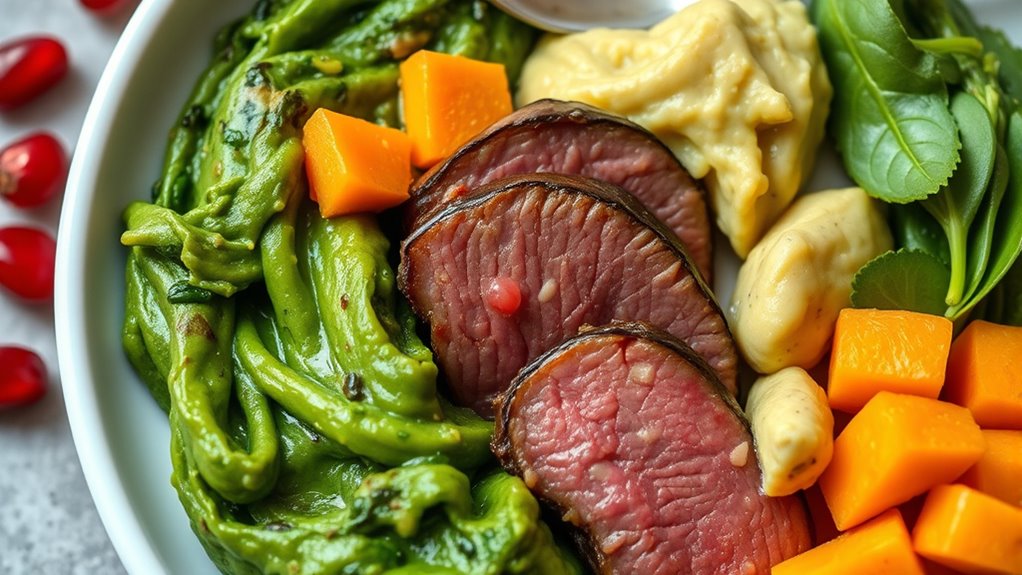
Ensuring your infant or toddler gets enough iron is essential for healthy growth and development. Iron plays a crucial role in creating hemoglobin, which helps carry oxygen throughout their body, supporting brain development and immune function. Without enough iron, your little one may become irritable, tired, or experience delays in growth. Iron deficiency is a common concern, especially as children transition from milk to solid foods. To prevent this, it’s important to include a variety of iron-rich foods in their diet, especially if you’re opting for vegetarian options. While iron from plant sources isn’t absorbed as efficiently as from animal products, with the right choices and pairing strategies, you can ensure your child’s needs are met.
Ensuring your child’s iron intake supports healthy growth and development, especially with vegetarian options, is vital.
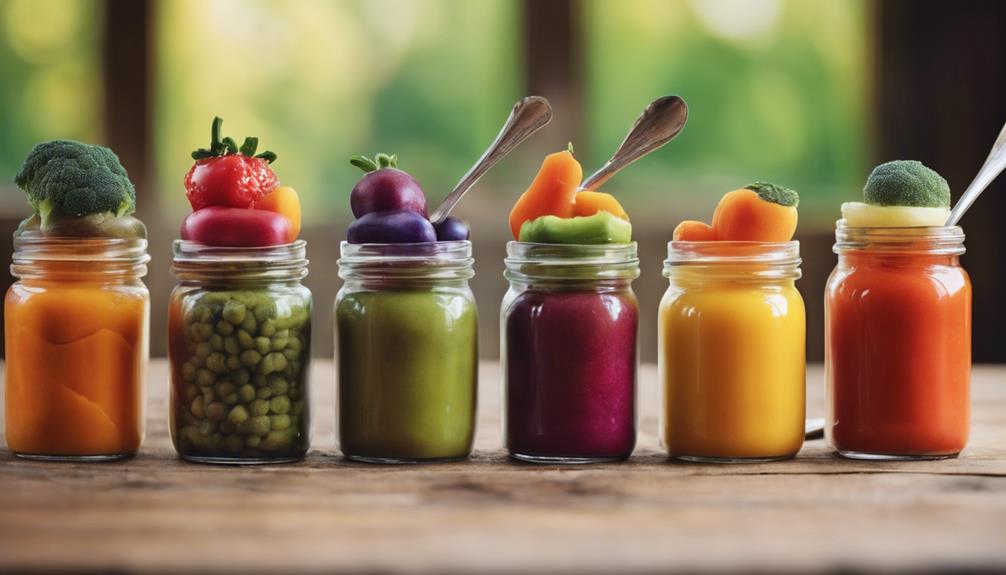
For vegetarian options, focus on foods rich in non-heme iron, the type found in plant-based sources. Legumes like lentils, chickpeas, and beans are excellent choices, providing substantial amounts of iron along with fiber and protein. Incorporate pureed or mashed versions into their meals to make them more appealing and easy to digest. Dark leafy greens such as spinach, kale, and collard greens are also high in iron. You can blend spinach into smoothies or add finely chopped greens to soups and stews, ensuring your child gets this essential mineral without feeling overwhelmed by textures. Fortified cereals are another practical choice; many infant cereals are enriched with iron, making them convenient and reliable sources.
Pair these iron-rich foods with vitamin C-rich options, like pureed citrus fruits, tomatoes, or bell peppers, to boost absorption. For example, serve lentil purees with a side of mashed strawberries or orange slices to enhance iron uptake. Avoid giving iron-rich foods with tea or cow’s milk during meals, as these can inhibit iron absorption. Instead, focus on serving meals that combine plant-based iron sources with vitamin C to maximize their benefits. Additionally, understanding the importance of nutrient absorption can help you make better dietary choices for your child.
Keep in mind that iron needs vary with age, so consult your pediatrician about suitable portion sizes and whether supplementing might be necessary, especially if your child shows signs of iron deficiency. Regular check-ups and blood tests can help monitor their iron levels and ensure they’re on track. Introducing a variety of iron-rich vegetarian options early on not only supports their growth but also instills healthy eating habits that last a lifetime. With careful planning, you can provide your little one with the nutrients they need to thrive without relying solely on animal products.
Frequently Asked Questions
When Should I Start Introducing Iron-Rich Foods to My Baby?
You should start introducing iron-rich foods around 6 months old, when your baby shows signs of readiness like sitting up and reaching for food. This timing of introduction helps make certain of proper growth and development. Keep an eye out for signs of deficiency, such as fatigue or pale skin, and consult your pediatrician if you notice these. Offering iron-rich options early supports healthy development and prevents deficiencies.
Are There Any Iron-Rich Foods That Should Be Avoided for Infants?
Did you know that about 8% of children under age 3 have food allergies? You should avoid giving infants certain iron-rich foods like whole nuts or unprocessed honey, which can pose choking hazards or trigger allergies. Always check labels and serve foods in safe, manageable sizes. Be cautious with shellfish or fish that could cause allergic reactions, and consult your doctor if you’re unsure about introducing new iron-rich options.
How Can I Tell if My Toddler Has an Iron Deficiency?
If your toddler has iron deficiency symptoms like pale skin, fatigue, or irritability, you should consider toddler iron testing. These signs can indicate low iron levels, so consult your pediatrician for proper evaluation. They may recommend blood tests to confirm deficiency. Early detection helps address the issue with dietary changes or supplements, ensuring your child’s health and development stay on track.
Can Iron Supplements Replace Iron-Rich Foods for Infants?
Like a steady lighthouse guiding ships, iron supplementation can help, but it shouldn’t substitute a balanced diet. You need to prioritize dietary balance, offering iron-rich foods alongside supplements to guarantee your toddler’s growth. Supplements alone can’t provide the variety of nutrients found in whole foods, which are essential for overall development. Consult your pediatrician to create a plan that combines both, keeping your child’s health on a safe, steady course.
What Are the Best Plant-Based Sources of Iron for Toddlers?
You should focus on plant-based iron sources like lentils, beans, tofu, spinach, and fortified cereals for your toddler. To enhance iron absorption, pair these foods with vitamin C-rich options such as oranges, strawberries, or bell peppers. This combination helps your child absorb more iron from plant-based sources, supporting their growth and development. Keep offering a variety of these foods to guarantee they get enough iron daily.
Conclusion
Including iron-rich foods in your toddler’s diet is essential for healthy growth and development. For example, imagine a parent noticing their child’s increased energy and improved focus after adding lentils and spinach to meals. By consistently offering iron sources, you help prevent deficiencies and support your little one’s brain and body. Remember, small daily choices make a big difference—so keep those iron-rich options coming and watch your child thrive!