
Introducing whole grains to your little one offers many benefits, such as essential nutrients like fiber, vitamins, and minerals that support growth and gut health. You can serve them in various textures and forms, like rice, oats, or barley, to keep mealtimes interesting and encourage chewing skills. Since some grains contain gluten, choose naturally gluten-free options like quinoa or millet if needed. Keep exploring different grains and textures to help your child enjoy healthy eating habits that last.
Key Takeaways
- Introduce a variety of whole grains gradually to ensure acceptance and balanced nutrition.
- Choose naturally gluten-free options like quinoa, millet, and brown rice for gluten-sensitive children.
- Incorporate different textures, such as soft oatmeal or chewy barley, to develop chewing skills and maintain interest.
- Mix whole grains with familiar foods to encourage consumption and create positive mealtime experiences.
- Monitor tolerance and preferences, adjusting grain choices to support healthy growth and development.
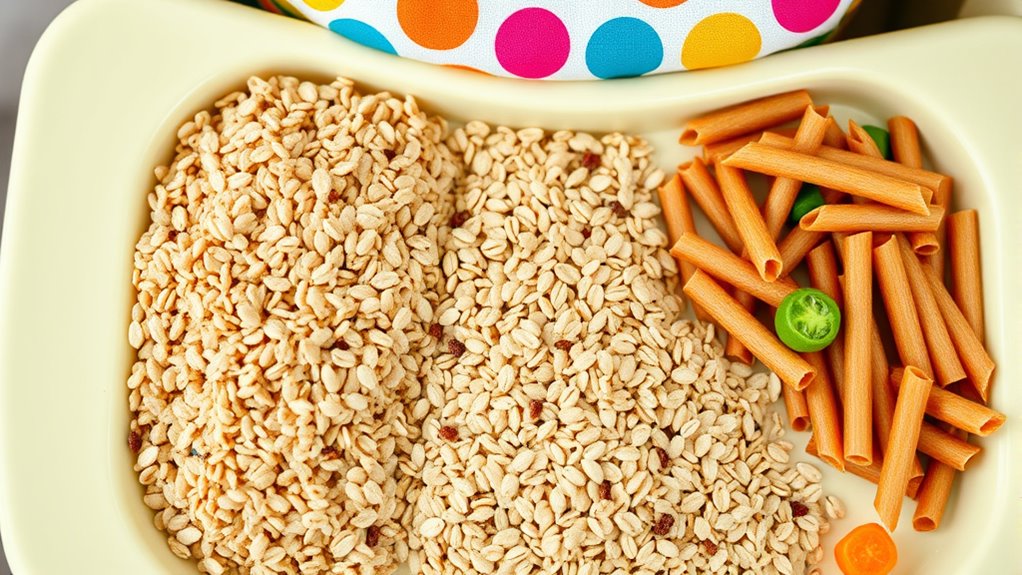
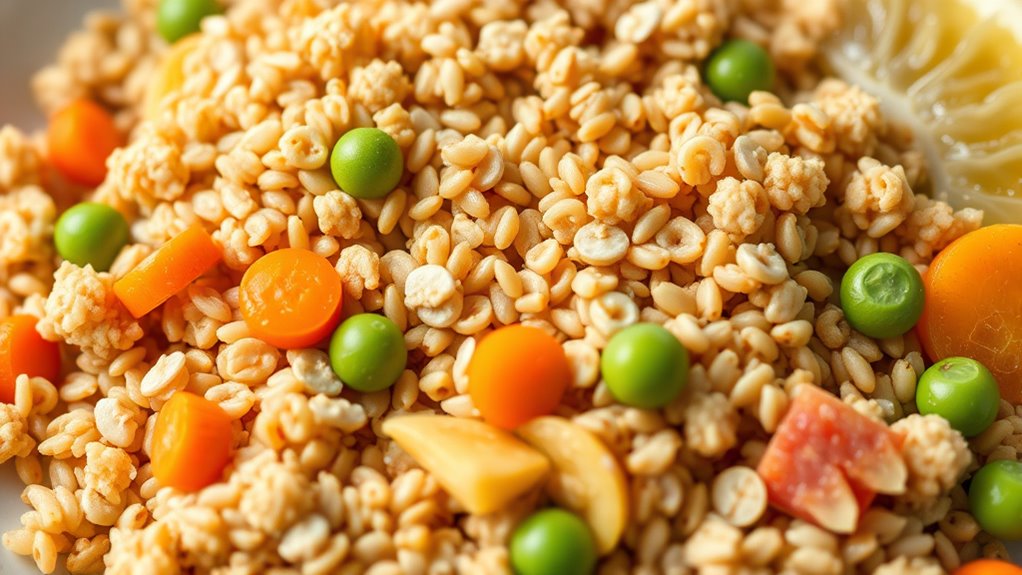
Introducing whole grains into your child’s diet is a simple way to boost their nutrition and support healthy growth. Whole grains are packed with essential nutrients like fiber, vitamins, and minerals that help develop strong bones, support digestion, and boost energy levels. When you start to incorporate these into their meals, you’ll notice how versatile and satisfying they can be. One important factor to weigh is the grain textures. Whole grains come in various forms—whole wheat bread, brown rice, oats, barley, and more—and each offers a different mouthfeel and chewiness. Some kids might prefer softer textures, like warm oatmeal or well-cooked rice, while others may enjoy chunkier options like whole grain cereals or barley salads. Offering a variety of textures not only keeps mealtime interesting but also helps your little one develop their chewing skills and adapt to different flavors and consistencies.
Another aspect to keep in mind when introducing whole grains is gluten considerations. While most grains like wheat, barley, and rye contain gluten, which can be problematic for children with gluten sensitivities or celiac disease, there are plenty of gluten-free options. Quinoa, millet, buckwheat, and brown rice are naturally gluten-free and can be incorporated into meals without worry. If your child has known gluten issues, always read labels carefully and choose certified gluten-free grains. For children without gluten sensitivities, whole wheat and other gluten-containing grains are generally safe and beneficial, but it’s wise to monitor how they tolerate these foods, especially when introducing new grains into their diet. Including a variety of grain options can help ensure balanced nutrition and prevent pickiness.
As you introduce whole grains, start gradually and pay attention to your child’s preferences and reactions. Mixing whole grains with familiar foods can make the transition easier—add oats to smoothies, serve brown rice instead of white, or incorporate whole grain pasta into their favorite dishes. Be patient and creative, offering different grain textures to see what appeals most. Remember, the goal is to create positive mealtime experiences that foster a lifelong appreciation for nutritious foods. By understanding the different grain textures and gluten considerations, you can tailor your approach to meet your child’s needs while ensuring they reap the health benefits of whole grains. Over time, these small changes can make a big difference in supporting their overall growth and development.
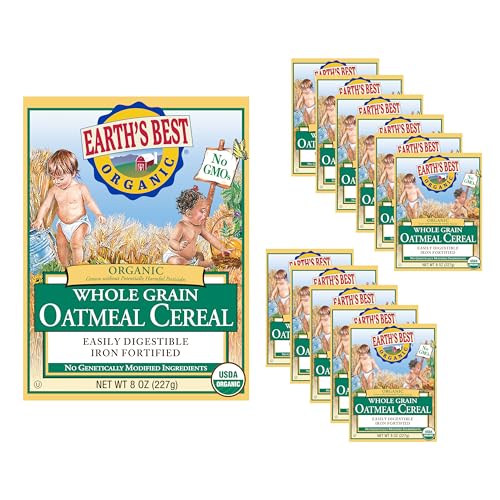
Earth's Best Organic Baby Food, Organic Whole Grain Oatmeal Baby Cereal, Non-GMO, Easily Digestible and Iron Fortified Baby Food, 8 oz Box (Pack of 12)
INFANT NUTRITION: This organic whole grain cereal is fortified with iron to offer nutritional support as your baby…
As an affiliate, we earn on qualifying purchases.
As an affiliate, we earn on qualifying purchases.
Frequently Asked Questions
When Should I Introduce Whole Grains to My Child’s Diet?
You can start introducing whole grains to your child’s diet around 6 months old, when they begin eating solid foods. Focus on offering grain textures that are soft but manageable, like oatmeal or soft-cooked rice. Make food presentation appealing by using colorful plates and fun shapes. Gradually, you’ll help your little one develop a taste for whole grains, supporting their growth and healthy eating habits.
Are There Any Allergies Linked to Whole Grains in Young Children?
You might wonder if whole grains pose allergy risks for your child. While rare, some kids with gluten sensitivity could react to certain grains due to grain cross reactivity, leading to symptoms like stomach pain or rashes. Always watch for signs of allergic reactions, especially if there’s a family history. Consult your pediatrician before introducing new grains, especially if allergies or sensitivities are a concern.
How Can I Make Whole Grains More Appealing to Kids?
You can make whole grains more appealing to kids by turning snack time into fun with colorful presentation. Use fun snack ideas like whole grain crackers with veggie faces or rainbow oatmeal bowls. Add vibrant fruits and veggies to whole grain wraps or sandwiches, and get kids involved in the prep. Bright colors and playful shapes make healthy options exciting, encouraging kids to enjoy whole grains without fuss.
What Are Safe Portion Sizes of Whole Grains for Toddlers?
Think of a toddler’s portion of whole grains as filling a small, colorful cup—about ¼ to ½ cup cooked grains per meal. You should focus on portion control by offering age-appropriate servings, guided by their hunger cues. Incorporate serving suggestions like mixing whole grains into favorite dishes or offering them as small side options, ensuring they get the nutrients without overdoing it. This approach makes healthy choices easy and enjoyable.
Are There Specific Whole Grains Better for Babies or Preschoolers?
You should prioritize grain varieties like oats, quinoa, and barley for your little ones, as they offer essential nutrients and are gentle on digestion. Choose cooking methods like boiling or steaming to keep grains soft and easy to chew. Avoid processed or flavored grains, and always check for added sugars or sodium. Incorporating a variety of these grains helps your child enjoy diverse nutrients and promotes healthy eating habits.

Beech-Nut Toddler Snacks Oaty Bars Granola Bars for Babies & Toddlers, Fruit & Whole Grain Strawberry Snack Bar, Gluten Free Toddler Snack, 6 Boxes (30 Individually Wrapped Bars)
TODDLER-APPROVED TASTE: These gluten-free snack bars are made with deliciously sweet strawberry and whole-grain oats
As an affiliate, we earn on qualifying purchases.
As an affiliate, we earn on qualifying purchases.
Conclusion
Including whole grains in your child’s diet is a simple way to boost their health and development. Did you know that children who regularly eat whole grains are 20% less likely to develop chronic diseases later in life? By making small changes now, you’re setting them up for a healthier future. So, start introducing whole grains today—your little one will thank you, and you’ll feel good knowing you’re giving them the best foundation for growth.

Slurrp Farm Jumbo Rolled Oats | High Fiber & Protein Whole Grain Oats | No Added Sugar, No Preservatives | Ideal for Breakfast Porridge, Overnight Oats & Baking | 17.64 Oz (500g)
Wholesome Jumbo Rolled Oats: Enjoy a warm, hearty breakfast made in minutes with our jumbo rolled oats for…
As an affiliate, we earn on qualifying purchases.
As an affiliate, we earn on qualifying purchases.
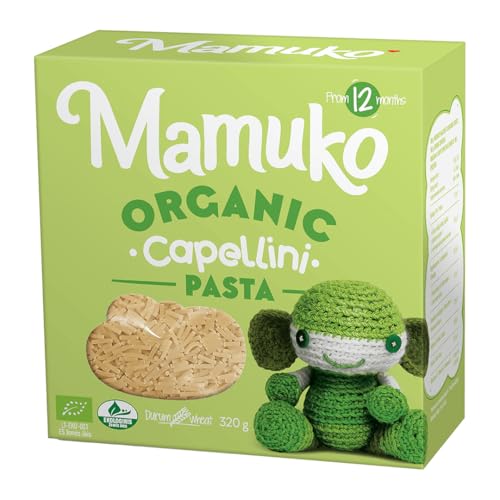
Mamuko Capellini Pasta for Kids – Whole Wheat, Non-GMO Pasta to Support Healthy Growth & Development – Vegan Pasta is Ideal for Toddlers 12+ Months – 12 Servings – 320g/11.3oz
HEALTHY GROWTH: Our capellini pasta is packed with essential nutrients and made with organic durum wheat semolina, providing…
As an affiliate, we earn on qualifying purchases.
As an affiliate, we earn on qualifying purchases.