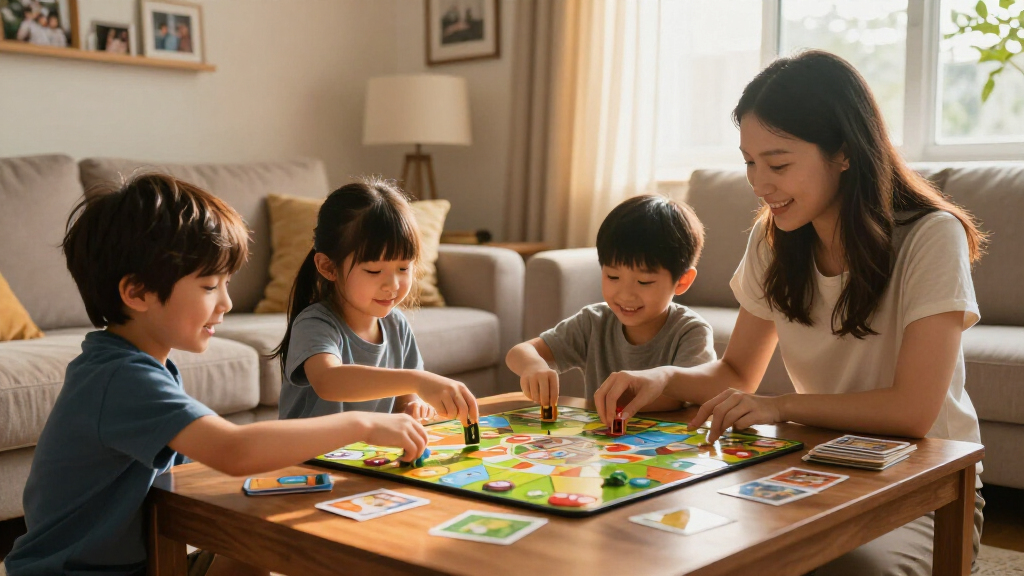

Choosing the best family board games for kids comes down to matching a game to your child’s age, attention span, and how much the adults at the table want to be entertained too. UNO stands out as my best overall pick because it scales from ages 7 through adulthood, plays in under 15 minutes, and costs less than a takeout lunch. For households with preschoolers, Candy Land and Chutes and Ladders remain the gold standards for no-reading-required play, while Scrabble earns its spot as the best pick for families who want real educational depth. The biggest tradeoff in this category is simplicity versus longevity: games a 4-year-old can play solo often get outgrown by age 7, while strategy titles like Connect 4 and Scrabble reward patience and reading skills. Read on for the full breakdown of all ten games, including who each one is for and who should skip it.

Get baby and family essentials delivered free — and shop member deals
- Fast, free delivery on millions of items
- Access to Prime Big Deal Days deals on October 6–7
- Prime Video, Amazon Music and more included
Complete the kit


Key Takeaways
- UNO earned the best overall spot because it was the only game in the lineup that works for ages 7 through adult, supports up to 10 players, and stays fun after hundreds of plays — most others excel for a narrower age band.
- Candy Land, Chutes and Ladders, and Don’t Break The Ice all survive as preschool picks precisely because they require zero reading, but adults will tire of them quickly — they’re 15-minute games, not family night centerpieces.
- The pure-luck games (Candy Land, Chutes and Ladders) and the decision-based games (Connect 4, Scrabble, Trouble) split the lineup almost evenly; the best fit depends on whether you want to teach winning gracefully or teach thinking ahead.
- Physical-activity picks like Twister and Don’t Break The Ice solved a problem the tabletop games couldn’t: they held the attention of high-energy kids who won’t sit still for a full board game.
- Charades for Kids was the standout for mixed-age gatherings and no-reading households, but its replay ceiling is lower than UNO’s or Connect 4’s once kids memorize the card set.
| Hasbro Gaming Chutes and Ladders Board Game |  | Best First Counting Game | Brand: Hasbro Gaming | Number of Players: 2-4 | Age Range: 3+ | VIEW LATEST PRICE | See Our Full Breakdown |
| Sorry! Board Game for Kids Ages 6 and Up |  | Best for Family Rivalry | Pawns per Player: 4 | Age Range: 6 and up | Gameplay: Race to home, send pawns back, slide and collide | VIEW LATEST PRICE | See Our Full Breakdown |
| Candy Land Kingdom of Sweet Adventures Board Game |  | Best for the Youngest Players | Age Range: 3 and up | Number of Players: Not specified | Game Type: Board game | VIEW LATEST PRICE | See Our Full Breakdown |
| Hasbro Gaming Scrabble Board Game |  | Best for Growing With Your Kids | Number of Players: 2-4 | Recommended Age: 8 and up | Game Type: Word game | VIEW LATEST PRICE | See Our Full Breakdown |
| Pressman Charades for Kids – No Reading Required Family Game |  | Best for Burning Energy | Age Range: 4 years and up | Players: 3 or more | Included Components: 150 charades cards (450 charades), instructions, game die, sand timer | VIEW LATEST PRICE | See Our Full Breakdown |
| Hasbro Gaming Trouble Board Game for Kids Ages 5 and Up |  | Best First Racing Game | Ages: 5 and up | Players: 2-4 | Signature Feature: Pop-o-Matic bubble | VIEW LATEST PRICE | See Our Full Breakdown |
| Connect 4 Strategy Board Game for Ages 6 and Up |  | Best Head-to-Head Strategy Pick | Ages: 6 years and up | Players: 2 | Estimated Playing Time: 30 minutes | VIEW LATEST PRICE | See Our Full Breakdown |
| Mattel Games UNO Card Game, Ages 7+, 2-10 Players |  | Best for Big Families | Ages: 7 and up | Players: 2-10 | Includes: 3 blank customizable Wild Cards | VIEW LATEST PRICE | See Our Full Breakdown |
| Don’t Break The Ice Game, Classic Version for Ages 3+ |  | Best for Preschoolers | Ages: 3 and up | Players: 2-4 | Game Type: Fine motor / dexterity game | VIEW LATEST PRICE | See Our Full Breakdown |
| Hasbro Twister Party Classic Board Game for 2 or More Players |  | Best for Burning Energy | Age Range: 6 and up | Players: 2-4 (more with team play) | Includes: Vinyl mat, spinner, instructions | VIEW LATEST PRICE | See Our Full Breakdown |
| family board games for kid | Players | Age Range | Game Type |
|---|---|---|---|
| Hasbro Gaming Chutes and Ladde | — | 3+ | — |
| Sorry! Board Game for Kids Age | — | 6 and up | — |
| Candy Land Kingdom of Sweet Ad | — | 3 and up | Board game |
| Hasbro Gaming Scrabble Board G | — | — | Word game |
| Pressman Charades for Kids | 3 or more | 4 years and up | — |
| Hasbro Gaming Trouble Board Ga | 2-4 | — | Roll-and-move racing |
| Connect 4 Strategy Board Game | 2 | — | — |
| Mattel Games UNO Card Game | 2-10 | — | Matching card game |
| Don’t Break The Ice Game | 2-4 | — | Fine motor / dexterity game |
| Hasbro Twister Party Classic B | 2-4 (more with team play) | 6 and up | — |
More Details on Our Top Picks
Hasbro Gaming Chutes and Ladders Board Game
Chutes and Ladders earns its place as the strongest pick for preschoolers because it quietly teaches counting while kids think they’re just racing to square 100. Compared with Candy Land, which relies purely on card draws and color matching, this game asks children to count spaces one by one, which builds real number sense. The spinner-and-board format works without any reading, so a three-year-old can play independently after one round of explanation. The tradeoff is staying power: like Candy Land, there are no decisions to make, so parents and older siblings will get bored long before the target age range runs out. Games can also swing wildly based on chute luck, which frustrates kids who hate losing ground. This option makes the most sense as a first board game that a child will outgrow, not a permanent family collection piece.
Pros:- Genuinely teaches counting and number recognition
- No reading required, so preschoolers can play solo
- Rules explained in under a minute
- Spinner is easier for small hands than cards
Cons:- Zero strategic decisions, repetitive for adults
- Lucky chute drops can drag games out and upset young losers
Best for: Parents of 3-5 year olds who want a no-reading game that sneaks in counting practice
Not ideal for: Families with kids over 7 — the zero-decision gameplay feels hollow compared with Sorry! or Trouble
- Brand:Hasbro Gaming
- Number of Players:2-4
- Age Range:3+
- Includes:Game board, cardboard playing pieces, spinner
- Edition:Standard
- Reading Required:No
Our verdict“Buy this as a child’s first board game and hand it down once counting clicks — it’s a teaching tool more than a family staple.”
Sorry! Board Game for Kids Ages 6 and Up
Sorry! is the pick when your family wants genuine interaction and revenge mechanics rather than a quiet race. Unlike Chutes and Ladders, where players never affect each other, here every card draw carries the possibility of sending an opponent’s pawn back to start — which is exactly the drama that keeps school-age kids engaged. Compared with Trouble, which covers similar territory with a pop-o-matic die, Sorry! adds card-based choices (like splitting a 7 between two pawns) that reward light strategy. The catch: luck still dominates, and a single bad stretch can stretch a game past young attention spans. Be prepared for tears or trash talk — the take-that mechanic that makes it fun with older kids can overwhelm sensitive five-year-olds. This pick makes the most sense for mixed-age game nights where a little competitive friction is the point.
Pros:- Player interaction creates real family-game-night energy
- Card system adds light strategy over pure dice luck
- Works equally well for kids and adults
- Classic rules most adults already know
Cons:- Luck of the draw can decide entire games
- Games can run long depending on card draws
- Take-that mechanics can upset younger players
Best for: Families with kids 6-10 who enjoy competitive, take-that gameplay and noisy group fun
Not ideal for: Households with very competitive or easily upset younger kids — the send-back mechanic causes meltdowns
- Pawns per Player:4
- Age Range:6 and up
- Gameplay:Race to home, send pawns back, slide and collide
- Player Interaction:High — direct take-that mechanics
- Skills:Light strategy, counting
- Setup Time:Minimal
Our verdict“Choose Sorry! when your family thrives on playful sabotage — skip it if competition sparks tears.”
Candy Land Kingdom of Sweet Adventures Board Game
Candy Land is the purest entry point in this lineup — no counting, no reading, no strategy, just draw a card and move to the matching color. That minimalism is the whole point: where Chutes and Ladders requires counting each space, Candy Land asks only color recognition, making it playable by confident 3-year-olds. The vibrant board illustrations do the heavy lifting keeping little ones engaged. But that same simplicity is its ceiling — unlike Connect 4 or Sorry!, there is literally no decision to make, so anyone over 6 will be going through the motions. The race structure also means one lucky ice cream card ends the game instantly, which can feel anticlimactic. This pick makes the most sense as a confidence builder — the game a child can win entirely on their own before graduating to anything with rules.
Pros:- Requires only color recognition, lowest barrier of any pick
- Bright, engaging artwork holds short attention spans
- Teaches turn-taking fundamentals
- Games finish quickly, matching preschool stamina
Cons:- No decisions at all — adults will be bored within two games
- A single lucky card can end the game abruptly
Best for: Families with 3-4 year olds who need a game requiring zero counting or reading skills
Not ideal for: Anyone with kids 6+ — even Chutes and Ladders offers more, and Connect 4 is far beyond it
- Age Range:3 and up
- Number of Players:Not specified
- Game Type:Board game
- Theme:Candy Land
- Reading Required:No
- Core Skill:Color recognition, turn-taking
Our verdict“This is a first-game purchase for toddlers that will be outgrown fast, so don’t expect longevity.”
Hasbro Gaming Scrabble Board Game
Scrabble is the longevity champion of this roundup — it’s the only pick here that stays genuinely challenging from age 8 through adulthood. Compared with the other four games in this batch, all of which are luck-driven and aimed at younger kids, Scrabble rewards vocabulary, planning, and spatial thinking, meaning parents don’t have to self-sabotage to keep games close. The wooden tiles and racks feel noticeably more premium than the cardboard punch-outs in Chutes and Ladders or Candy Land. The tradeoff is the steepest age floor in the lineup: kids under 8 simply can’t compete, and even at 8-9 they’ll need team play or adult partnership. Game length also varies widely — a slow game can outlast a child’s patience. This option stands out as the game your family keeps for a decade, not one you box up after a year.
Pros:- Grows with your family from age 8 to adult
- Builds vocabulary and spelling skills invisibly
- Quality wooden components built to last
- Multiple gameplay modes add variety
Cons:- Highest age floor in the lineup — unusable with young kids
- Game length varies wildly and can drag
- Requires a flat, stable playing surface
Best for: Families with kids 8+ who want an educational game that stays challenging for years
Not ideal for: Families whose oldest child is under 8 — it will sit unplayed until reading and spelling are solid
- Number of Players:2-4
- Recommended Age:8 and up
- Game Type:Word game
- Material:Wood
- Includes:100 wooden letter tiles, wooden tile racks
- Skills:Vocabulary, spelling, spatial strategy
Our verdict“Buy Scrabble as the long-term anchor of a family game shelf — once your kids can spell, nothing else here lasts as long.”
Pressman Charades for Kids – No Reading Required Family Game
Charades for Kids solves the problem every seated board game in this roundup creates: kids who need to move. While Chutes and Ladders and Candy Land keep everyone pinned to a table, this gets the whole group standing, acting, and laughing. The picture-based cards mean four-year-olds can play without reading, while the word cards keep older kids challenged — a two-level structure none of the other picks offer. Compared with Twister, the other physical option in this roundup, it demands less floor-bending flexibility and works better across a wider age spread. The honest tradeoff: it needs at least three players and open space, so it’s useless for a parent-and-one-child evening, and success depends on kids’ willingness to perform — shy children may clam up. With 450 charades on 150 cards, replay variety is excellent, though the timer and die feel like afterthoughts.
Pros:- Gets kids physically active instead of seated
- Picture cards let non-readers play alongside readers
- 450 charades across 150 cards gives strong replay value
- Scales across a wide age range
Cons:- Unplayable with fewer than three people
- Requires open space for acting and movement
- Shy or reserved kids may refuse to perform
Best for: Families with energetic kids 4+ and a group of three or more who want an active, screen-free party game
Not ideal for: Small apartments or two-person households — it needs space and a minimum of three players to function
- Age Range:4 years and up
- Players:3 or more
- Included Components:150 charades cards (450 charades), instructions, game die, sand timer
- Manufacturer:Pressman
- Model Number:3009-12
- Reading Required:No — picture clues included
- Category:Toys & Games — Board Games
Our verdict“Pick this when your group needs to move and giggle — skip it for quiet nights or small spaces.”
Hasbro Gaming Trouble Board Game for Kids Ages 5 and Up
Trouble earns its place as the cleanest introduction to racing-style board games for younger kids. The Pop-o-Matic bubble means no lost dice and no accidental throws across the table — a real advantage over Sorry!, which relies on cards that small hands can fumble or bend. Setup takes under two minutes, and the optional Power Up Spaces give it a longevity edge over Candy Land, whose luck-only gameplay older kids outgrow quickly. The tradeoff is the ceiling: like most roll-and-move games, decisions are minimal, so adults may find it repetitive after several rounds. Compared with UNO, which scales to ten players, the two-to-four player cap also limits bigger family gatherings. Still, for a first “real” board game with tactile appeal, this pick makes the most sense for the kindergarten crowd.
Pros:- Pop-o-Matic bubble eliminates lost dice and setup arguments
- Optional Power Up Spaces extend replay value as kids grow
- Rules are learnable in under five minutes by young kids
- Quick rounds suit short attention spans
Cons:- Almost entirely luck-based, so it grows repetitive for older players
- Two-to-four player limit excludes bigger families
Best for: Parents of 5-to-7-year-olds who want a zero-friction first board game that siblings can play together without adult help
Not ideal for: Families with tweens or teens — the luck-driven gameplay and four-player cap will bore older kids within a few rounds
- Ages:5 and up
- Players:2-4
- Signature Feature:Pop-o-Matic bubble
- Gameplay Modes:Classic and Power Up Spaces
- Setup Time:Minimal — no dice required
- Game Type:Roll-and-move racing
Our verdict“If you’re buying a first racing game for a kindergartner, Trouble’s popping dice and fast setup beat fussier alternatives hands down.”
Connect 4 Strategy Board Game for Ages 6 and Up
This edition of Connect 4 stands out because the blue blocker discs turn a familiar stacking game into something closer to chess-lite. Players can block an opponent’s column or lift a disc to flip the board state, which gives kids genuine tactical decisions — a sharp contrast to the pure luck of Trouble or Chutes and Ladders. Compared with Sorry!, the strategy here is visible and teachable: kids can see why a move failed. The costs are real, though. It’s strictly a two-player game, so it can’t anchor a family night the way UNO can, and the added rules may frustrate six-year-olds expecting the classic version. Small discs also demand supervision around younger siblings. This option is better suited to pairs — siblings, parent-and-child duos — than to group play.
Pros:- Blue blocker discs add genuine blocking and lifting tactics
- Multiple starting positions keep repeat matches fresh
- Teaches pattern recognition and forward planning
- Rounds finish fast enough for best-of-three play
Cons:- Two-player only, excluding larger groups
- Added rules may confuse kids at the younger end of the age range
- Small discs are a choking hazard for toddlers in the house
Best for: Families with two kids close in age who are ready to graduate from luck-based games to real tactical thinking
Not ideal for: Families of five or more — the strict two-player limit means someone is always sitting out
- Ages:6 years and up
- Players:2
- Estimated Playing Time:30 minutes
- Genre:Strategy
- Included Components:Grid, 2 feet, slider bar, 21 red discs, 21 yellow discs, 4 blue blocker discs, instructions
- Brand:Hasbro Gaming
- Model Number:C3891
Our verdict“For one-on-one matchups where you want kids actually thinking rather than rolling dice, this is the strongest strategy entry in the lineup.”
Mattel Games UNO Card Game, Ages 7+, 2-10 Players
While every other game on this list caps out at four players, UNO scales from 2 to 10 players — the single most important spec if your household has more than a couple of kids. The color-blind accessible symbols are a thoughtful inclusion that most classic games, from Connect 4 to Twister, simply don’t offer. And the customizable blank Wild Cards let families invent house rules, giving it the flexibility that Trouble’s fixed format lacks. The compromises are worth naming: it’s a card game, so cards wear out with heavy use, and the experience sags with only two players compared with the head-to-head tension of Connect 4. Compared with Don’t Break The Ice, it’s also less tactile for preschoolers. For sheer versatility across ages and group sizes, though, nothing else here comes close.
Pros:- Scales from 2 to 10 players, the widest range in this roundup
- Color-blind accessible symbols make play inclusive
- Blank Wild Cards support custom house rules
- Compact box travels easily to vacations and grandparents’ houses
Cons:- Cards fray and bend with frequent use
- Two-player games lose much of the chaos that makes UNO fun
- Not ideal for pre-readers
Best for: Large families or mixed-age gatherings from age 7 up who need one game that includes everyone
Not ideal for: Households with kids under 6 — reading numbers and tracking action cards is beyond most preschoolers
- Ages:7 and up
- Players:2-10
- Includes:3 blank customizable Wild Cards
- Accessibility:Color-blind friendly symbols
- Game Type:Matching card game
- Brand:Mattel Games
Our verdict“If you can only own one game that works for a crowd of mixed ages, UNO’s player range and portability make it the default choice.”
Don’t Break The Ice Game, Classic Version for Ages 3+
At an ages 3+ rating, Don’t Break The Ice is the youngest-appropriate game in this roundup, edging out even Chutes and Ladders by trading turn-taking literacy for pure fine motor play. Tapping out ice blocks to keep Phillip the Penguin afloat builds coordination in a way UNO’s card matching can’t, and there’s genuine suspense in every tap — no reading, no counting required. The tradeoffs are size and depth: the two-to-four player cap is tighter than UNO’s ten, and the gameplay loop is shallow enough that kids over six or seven will drift toward Connect 4’s strategy instead. Setup between rounds is also more involved than Trouble’s pop-and-go format, since the ice frame must be rebuilt each time. For the preschool crowd, though, that rebuilding is half the fun.
Pros:- No reading or counting required, making it truly accessible at age 3
- Develops fine motor skills and controlled tapping
- Genuine suspense on every turn keeps toddlers engaged
- Durable classic design that survives rough play
Cons:- Ice frame must be rebuilt after every round, slowing things down
- Gameplay depth is minimal for anyone over age 6
Best for: Parents of 3-to-5-year-olds who want a no-reading game that builds coordination and keeps little hands busy
Not ideal for: Families whose youngest is over 7 — the shallow gameplay won’t hold older kids’ attention for long
- Ages:3 and up
- Players:2-4
- Game Type:Fine motor / dexterity game
- Reading Required:No
- Theme:Phillip the Penguin
- Play Setting:Indoor tabletop
Our verdict“This is the best pick on the list for genuine preschoolers, offering hands-on suspense that card and board games for older kids can’t match.”
Hasbro Twister Party Classic Board Game for 2 or More Players
Every other game here is seated; Twister is the one that gets kids moving. The vinyl mat and spinner format makes it ideal for rainy-day energy release, indoors or out, and the included team and tournament rules mean more than four people can rotate through a session — something Don’t Break The Ice can’t manage. Compared with UNO, it trades quiet concentration for physical comedy, which makes it the better party pick and the worse wind-down-before-bed pick. Be realistic about the drawbacks: it’s genuinely physical, so very young kids or adults with mobility limits are left out, the mat needs real floor space that small apartments may not have, and the spinner occasionally lands on air, forcing improvised rules. As a change of pace alongside a calmer game like Trouble, it’s hard to beat.
Pros:- Full-body active play that doubles as exercise
- Works indoors and outdoors on any flat surface
- Team and tournament rules accommodate rotating groups
- Simple enough that kids can run the game themselves
Cons:- Physically excludes players with limited strength, balance, or flexibility
- Requires a large cleared floor area
- Spinner can land on air, forcing improvised rules
Best for: Active families with energetic kids aged 6+ who need a physical outlet during parties or bad-weather days
Not ideal for: Families with limited floor space or any player with mobility constraints — the game is unplayable without both
- Age Range:6 and up
- Players:2-4 (more with team play)
- Includes:Vinyl mat, spinner, instructions
- Play Environment:Indoor and outdoor
- Activity Level:High — physical balancing game
- Game Modes:Standard, team play, and tournament
Our verdict“When the goal is tiring kids out rather than calming them down, Twister is the only pick in this lineup that delivers.”

How We Picked
I judged each game against the criteria that actually determine whether a family board game gets played or gathers dust: age accessibility (whether pre-readers can participate independently), playtime length matched to typical kid attention spans, player-count flexibility, replay value for both kids and adults, and price-to-longevity ratio. A $12 game that gets played weekly for three years beats a fancier box that bores everyone by March. I also weighed how much adult involvement each game demands, because a game parents dread will quietly disappear from rotation.
The ranking order reflects breadth of appeal first, depth second. Games that work across a wide age range and keep adults engaged (UNO, Connect 4, Scrabble) ranked above excellent but narrow preschool titles (Candy Land, Chutes and Ladders), which in turn ranked above novelty-driven games with shorter replay windows (Don’t Break The Ice, Twister). Every game on this list earned its place — the ordering is about which ones fit the most families, not which ones are objectively superior.
| family board games for kid | Game Type |
|---|---|
| Hasbro Gaming Chutes and Ladde | — |
| Sorry! Board Game for Kids Age | — |
| Candy Land Kingdom of Sweet Ad | Board game |
| Hasbro Gaming Scrabble Board G | Word game |
| Pressman Charades for Kids | — |
| Hasbro Gaming Trouble Board Ga | Roll-and-move racing |
| Connect 4 Strategy Board Game | — |
| Mattel Games UNO Card Game | Matching card game |
| Don’t Break The Ice Game | Fine motor / dexterity game |
| Hasbro Twister Party Classic B | — |
Factors to Consider When Choosing Family Board Games For Kids
Before you add anything to your cart, a few bigger-picture factors will shape whether your purchase becomes a family tradition or a one-weekend novelty. These are the questions I’d ask myself first.
Match the Game to Your Youngest Player, Not Your Oldest
The single most common mistake parents make is buying a game targeted at the family’s average age, which leaves the youngest child frustrated and the game abandoned after two sessions. Manufacturer age ranges are a useful floor, not a suggestion — a game marked 6+ genuinely requires the counting, reading, or turn-taking patience of a typical 6-year-old. If your players span more than three or four years in age, lean toward games with team or partner rules, or luck-based mechanics that let a 4-year-old beat a 10-year-old fairly. UNO and Charades for Kids handle mixed ages far better than skill-heavy games like Scrabble, which will always favor the strongest reader at the table. A useful test: if the youngest player needs constant adult coaching to stay competitive, the game will create resentment rather than bonding.
Luck Versus Strategy — Know What You’re Teaching
Every kids’ board game sits somewhere on a spectrum between pure luck (spin-and-move games like Chutes and Ladders) and meaningful decision-making (Connect 4, Scrabble). Luck-based games protect young egos — anyone can win — but they can also feel hollow to kids over 8, who start noticing their choices don’t matter. Strategy games teach planning and critical thinking, but an adult playing at full strength will crush a child every time, so you’ll need to consciously handicap yourself. The sweet spot for most families is a mid-spectrum game like Trouble or UNO, where decisions matter but dice and card draws keep outcomes unpredictable. Think about which life skill you want game night to quietly reinforce: losing gracefully, or thinking ahead.
Playtime and Attention Span
Published playtimes are optimistic; real sessions run longer with kids negotiating rules, getting snacks, and losing focus. A game advertised at 20 minutes can stretch to 45 with a distractible 5-year-old, so budget accordingly when planning around bedtime. Preschoolers generally max out at 15–20 minutes of structured play, which is why the short-format games in this lineup suit them better than a full Scrabble match. For elementary-age kids, look for games that can end decisively — long, drawn-out endings are where meltdowns happen. Also consider whether a game can be paused and resumed, which matters more than most parents expect.
Player Count Reality Check
Check the minimum and maximum player counts against your actual household, not your ideal family night. A game that requires exactly 2 players is useless to a single child unless a parent is always available, and games capped at 4 players leave someone out in larger families. UNO’s 2-to-10-player range is a genuine advantage for households that host cousins or play with grandparents. Games with elimination mechanics (where knocked-out players sit and watch) tend to cause hurt feelings with younger kids, so prefer formats where everyone stays in until the end. If your family regularly has an odd number of players, favor games with team options.
Component Durability and Replacement Cost
Kids’ board games live hard lives: cardboard spinners bend, pawns get eaten by the vacuum, and card decks lose pieces under the couch. Before buying, glance at what a game’s failure points are — Trouble’s Pop-O-Matic dome protects its built-in dice, which is why that game survives decades of abuse, while loose-spinner games like Chutes and Ladders are more fragile than they look. Thin cardstock decks (UNO, Charades) will need sleeving or eventual replacement if you play often. None of these games are expensive, so the real question isn’t upfront cost but whether a single lost piece kills the whole game. Games with redundant or replaceable components offer better long-term value than their sticker prices suggest.
The Bored Adult Problem
The most overlooked buying factor: will the grown-ups dread game night? Preschool games like Candy Land are appropriately simple for a 4-year-old and mind-numbing for a parent on the twentieth playthrough, and kids absolutely notice when adults are phoning it in. If parents are the primary game partners, prioritize titles with enough decision depth to hold adult interest — Connect 4, Scrabble, and UNO all pass this test. Save the pure-luck preschool games for sibling play or short one-on-one sessions. The best family game is one everyone requests, not one only the youngest tolerates.
Frequently Asked Questions
What’s the best board game for a child who can’t read yet?
For pre-readers, you need games built entirely on color, pictures, counting, or physical action. Candy Land and Chutes and Ladders are the classic answers because movement depends on colors and counting spaces, never text. Don’t Break The Ice and Twister go further by removing even the board-path mechanic entirely, relying on tapping and body positions instead. Charades for Kids is explicitly designed with picture cards so non-readers can play independently. Avoid Sorry! and Scrabble until comfortable reading is established, since both depend heavily on text and rules cards.
Which of these games will grow with my child the longest?
UNO has the longest realistic lifespan in this lineup — kids typically play it from age 6 or 7 well into adulthood, and the strategy layer (holding Wild cards, tracking opponents’ colors) deepens as players mature. Connect 4 is a close second, since pattern recognition keeps improving for years. Scrabble technically grows the most, but its floor is high enough that most kids can’t start before age 8. By contrast, expect Candy Land and Chutes and Ladders to be outgrown around age 6 or 7. If longevity is your priority, paying slightly more upfront for a deeper game beats buying three simple games in sequence.
Are classic games like these still worth buying when apps exist?
Yes, and for reasons specific to what board games do that screens don’t. Physical games enforce turn-taking, patience, and face-to-face social cues — the exact skills digital versions let kids skip. The tactile elements matter too: Trouble’s Pop-O-Matic bubble and Don’t Break The Ice’s hammer taps are genuinely part of the fun that an app cannot replicate. Board games also end, naturally, unlike app sessions engineered to continue indefinitely. That said, classic games have real downsides versus apps — setup time, lost pieces, and the need for a second person. The sweet spot is treating these as social events rather than solo entertainment replacements.
How many games does a family actually need?
Most families get full value from three to four well-chosen games rather than a shelf of ten. A balanced small collection covers three bases: one fast luck-based game for young kids or quick sessions (Candy Land or Trouble), one decision-based game that scales up as kids grow (UNO or Connect 4), and one active or social game for energy-burning or group gatherings (Twister or Charades for Kids). Adding a fourth like Scrabble covers the educational angle once reading is solid. Buying beyond that usually means overlapping games that split attention without adding new play experiences.
My child melts down when losing. Which game is safest to start with?
Start with games where losing is blameless and quick. Chutes and Ladders is actually ideal here despite being simple — every outcome is pure chance, so a loss carries no personal sting and no one can be accused of unfair play. Avoid elimination-style formats and games where a child can see their defeat coming for many turns, which extends the dread. Trouble and UNO work well once resilience builds, because losses feel close and rematch-able in minutes. Whatever you choose, keep post-game commentary neutral and immediate — the habit of asking “want to play again?” does more for sportsmanship than any specific game mechanic.
Conclusion
There’s a clear pick for nearly every family situation in this lineup. For best overall, UNO is the safest bet — it fits the widest age range, handles big groups, costs little, and never stops being playable. For best value, Connect 4 delivers years of strategic play at a budget price and doubles as a two-player fallback whenever a sibling or parent is available. Scrabble is the closest thing to a premium pick here — it’s the biggest educational investment and the game with the most room to grow, provided everyone at the table reads confidently. For beginners and preschoolers, Candy Land remains the gentlest possible introduction to rules, turns, and winning and losing. And for specific needs: Trouble for durability-obsessed households, Charades for Kids for mixed-age gatherings and non-readers, and Twister or Don’t Break The Ice when the goal is burning energy rather than sitting still. Whatever you choose, buy for your youngest player’s abilities today and your oldest player’s patience — those two constraints will point you to the right box.
Halloween Picks
halloween
As an affiliate, we earn on qualifying purchases.