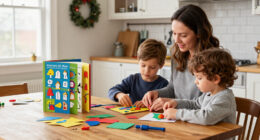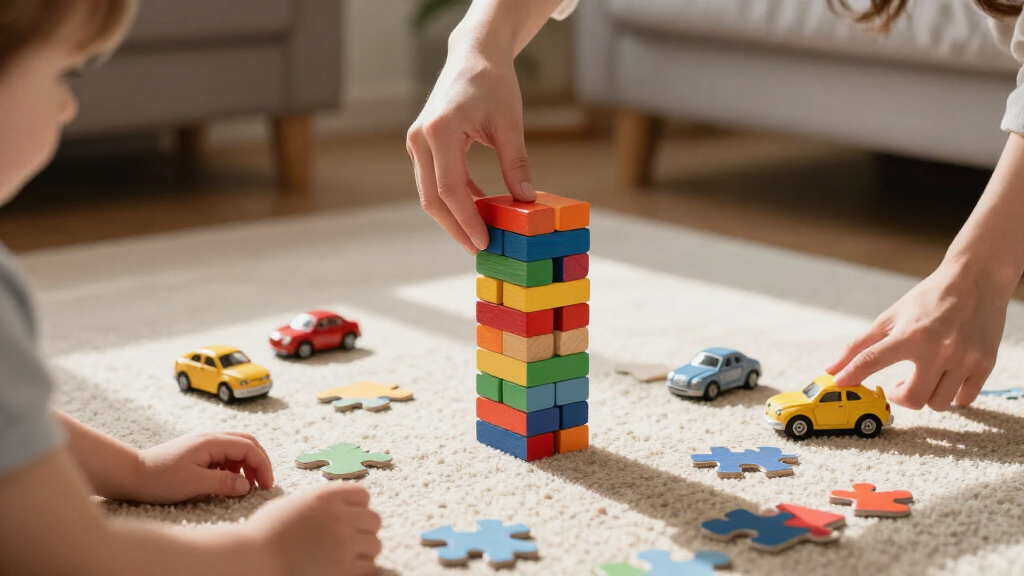
The best toys and games for kids balance fun with lasting play value, and after comparing 15 of the most popular options for 2026, a few clear winners emerged. The ThinkFun Gravity Maze stands out as the best overall pick because it grows with a child’s reasoning skills across 60 challenge levels, while the Move2Play Pass The Potato is the best pick for younger kids and family groups who want laughs over logic. The main tradeoff in this category is between screen-free engagement and solo convenience — STEM puzzles like Gravity Maze and Kanoodle develop thinking skills but are single-player, while group games like The Floor is Lava and Operation build social skills but need company and supervision. Age fit matters more here than in almost any other category: a brilliant logic game flops with a 4-year-old, and a toddler fishing puzzle bores a 9-year-old. Keep reading for the full breakdown of all 15 picks, including who each one is for and who should skip it.

Turn the school run and nap time into listening time
- Thousands of audiobooks, podcasts and originals
- Listen on your phone, tablet or Echo — also offline
- Cancel anytime
Complete the kit


Key Takeaways
- Solo logic games (Gravity Maze, Kanoodle) delivered the longest-lasting play value because their progressive difficulty levels keep kids challenged for years rather than weeks.
- Active group games like Pass The Potato and The Floor is Lava depend heavily on adult participation — they shine at family gatherings but underperform as independent play options.
- Toddler-focused picks (Magnetic Fishing Game, Chuckle & Roar Memory) carry hidden educational value that justifies their price only if the alphabet/counting component matches your child’s current developmental stage.
- The handheld retro console was the most polarizing pick: it offers the most content per dollar but trades away the screen-free, skill-building character that separates the top-ranked games.
- Outdoor picks like the Ayeboovi Toss and Catch and BooTaa dart board were the best value tier, but their simple designs mean younger kids outgrow them faster than the logic games.
| Move2Play Pass The Potato – Active Family Game for Kids Ages 3-8+ |  | Best for Active Group Play | Brand: Move2Play | Model number: FOOD102 | Listed age range: 6 months+ | VIEW LATEST PRICE | See Our Full Breakdown |
| ThinkFun Gravity Maze – Falling Marble Logic Game – STEM Toy for Kids 8-12 |  | Best for STEM Problem-Solving | Number of towers: 9 | Marbles: 3 | Challenge levels: 60 | VIEW LATEST PRICE | See Our Full Breakdown |
| Educational Insights Kanoodle | 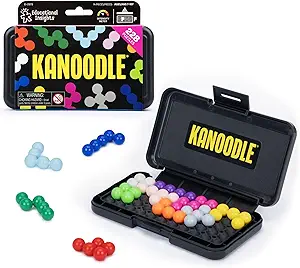 | Best Compact Brain Teaser | Puzzle pieces: 12 | Puzzle count: 228 | Puzzle formats: 2D and 3D | VIEW LATEST PRICE | See Our Full Breakdown |
| Ayeboovi Toss and Catch Ball Game Outdoor Toys for Kids, Yard and Beach Games, 3-10 Year Old Boys and Girls |  | Best for Outdoor Family Play | Brand: Ayeboovi | Model number: AB-680 | Age range: 3 years and up | VIEW LATEST PRICE | See Our Full Breakdown |
| Hasbro Gaming Operation Electronic Board Game |  | Best for Steady-Handed Group Fun | Recommended age: 6+ | Players: 1+ | Game type: Electronic board game | VIEW LATEST PRICE | See Our Full Breakdown |
| Handheld Game Console for Kids – 220 Retro Video Games, 3.0″ LCD Screen, Rechargeable Battery, Portable Arcade Toy | 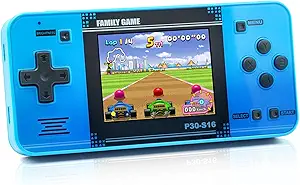 | Best for Portable Screen Play | Screen size: 3.0 inches | Battery: 860mAh lithium-ion | Number of games: 220 | VIEW LATEST PRICE | See Our Full Breakdown |
| BooTaa 29-Inch Large Dart Board for Kids with Sticky Balls – Indoor/Outdoor Fun Party Game, Birthday Gift for Ages 3-12 |  | Best for Active Group Play | Diameter: 29 inches | Materials: Nylex fabric and plastic | Included: 1 dart board, 12 sticky balls, 1 hook | VIEW LATEST PRICE | See Our Full Breakdown |
| Magnetic Wooden Fishing Game for Preschoolers – Alphabet and Number Catching Puzzle |  | Best for Preschool Learning | Brand: NASHRIO | Age range: 36 months–3 years | Material: Wood | VIEW LATEST PRICE | See Our Full Breakdown |
| Skillmatics Guess in 10 Game – National Geographic Animals |  | Best for Family Trivia | Age range: 6 years and up | Included components: 50 game cards, 6 clue cards, 1 card holder, instruction manual, travel box | Material: Paper | VIEW LATEST PRICE | See Our Full Breakdown |
| Chuckle & Roar Alphabet Matching Memory Game for Toddlers |  | Best for Screen-Free Letter Practice | Age range: 3+ | Material: Cardboard | Number of tiles: Not specified | VIEW LATEST PRICE | See Our Full Breakdown |
| Yeeeasy Tangle-Free Parachute Toys for Kids, Outdoor Flying Game, 4 Pieces |  | Best for Outdoor Group Play | Quantity: 4 pieces | Material: High-quality, non-toxic materials | Design: Tangle-free | VIEW LATEST PRICE | See Our Full Breakdown |
| Ziogogco 48-Piece Balance Stacking Blocks Game |  | Best for Travel and Family Game Nights | Number of pieces: 48 | Colors: Blue, red, green, yellow | Includes: 1 base, 22 draw cards | VIEW LATEST PRICE | See Our Full Breakdown |
| TOMY Pop Up Super Mario Family Action Game |  | Best for Young Mario Fans | Players: 2–4 | Age guidance: 4 and up | Play modes: Classic Play, Coin Collection, Team Play | VIEW LATEST PRICE | See Our Full Breakdown |
| Let’s Go Fishin’ Game by Pressman |  | Best for Preschool Hand-Eye Practice | Players: 1–4 | Age guidance: 4 and up | Includes: Deluxe plastic game base, 21 colorful fish | VIEW LATEST PRICE | See Our Full Breakdown |
| Goliath The Floor is Lava! Game by Endless Games |  | Best for Active Indoor-Outdoor Play | Players: 2–6 | Age guidance: 5 years and up | Includes: 25 foam safety stones, 27 challenge cards, game spinner, instructions | VIEW LATEST PRICE | See Our Full Breakdown |
More Details on Our Top Picks
Move2Play Pass The Potato – Active Family Game for Kids Ages 3-8+
Pass the Potato turns a simple pass-around game into a prompt to move, laugh, and keep the group engaged. Its sensor-triggered sayings and sound effects give young children an easy way into play, while the indoor-or-outdoor format suits parties and camping trips better than a sit-down puzzle such as ThinkFun Gravity Maze. The tradeoff is that the game leans on its audio gimmick: repeated effects may lose their appeal, and battery replacement adds upkeep. It also works best with several players ready to participate, so it is less compelling for a child seeking a solo challenge. I’d choose it for energetic family gatherings where quick rules matter more than steadily increasing difficulty.
Pros:- Sound effects and sayings make passing the potato lively for young players
- Can be played indoors or outdoors
- Simple format suits family gatherings and parties
- Machine washable, with batteries included
Cons:- Requires batteries that may need replacement
- Sound effects can become repetitive
- Group play is a better fit than solo play
Best for: Families with preschool and early elementary children who want an easy, active group game for parties or camping
Not ideal for: Solo players or children who prefer puzzles with progressive challenges and quieter play
- Brand:Move2Play
- Model number:FOOD102
- Listed age range:6 months+
- Product title age range:3–8+
- Included component:1 potato
- Packs:1
- UPC:652118607819
Our verdict“Choose Pass the Potato for lively group play with younger kids; pick Gravity Maze for a more focused solo challenge.”
ThinkFun Gravity Maze – Falling Marble Logic Game – STEM Toy for Kids 8-12
Gravity Maze is the pick for kids who like to work out how pieces fit together: players arrange towers on a grid to guide a marble to its target, using challenge cards to set the problem. Its 60 challenges give it a more structured progression than Educational Insights Kanoodle, while its towers make spatial reasoning tangible. That structure also creates a limit: it is a setup-based tabletop activity, so it takes more effort to start than Kanoodle’s compact, self-contained puzzles. The challenge level may frustrate children below the recommended age, and the included cards define much of the play. I’d favor it for a child who enjoys engineering-style puzzles and can stick with a challenge after an early miss.
Pros:- Challenge cards provide a clear path through 60 puzzles
- Tower placement makes spatial reasoning hands-on
- Marble runs show whether a solution works immediately
- Can prompt collaborative problem-solving
Cons:- Setup takes more effort than compact puzzles such as Kanoodle
- May be too challenging for children under 8
- Play is shaped by the included challenge cards
Best for: School-age kids who enjoy building, spatial puzzles, and working through increasingly challenging logic problems
Not ideal for: Younger children or families looking for a quick game with little setup and open-ended replay
- Number of towers:9
- Marbles:3
- Challenge levels:60
- Recommended age:8–14
- Included components:Game grid, towers, marbles, target piece
- Game type:Falling marble logic game
- ASIN:B00IUAAK2A
Our verdict“Choose Gravity Maze for a school-age puzzle fan who wants hands-on logic challenges and does not mind setup.”
Educational Insights Kanoodle
Kanoodle makes the most sense when portability is the deciding factor: its carrying case holds the pieces and puzzle guide, so a brain teaser can travel without a game board or a large play area. The 2D and 3D puzzles offer a different kind of challenge from Gravity Maze, which asks players to build a marble path on a grid; Kanoodle focuses on fitting pieces into a solution. Its 228 puzzles suggest plenty of variety, though the supplied specs list a 48-page guide, and no recommended age is provided. That makes it harder to judge whether a particular child can start independently. Compared with the more explicitly age-directed Gravity Maze, I’d pick Kanoodle for travel and mixed-age households comfortable helping a child get started.
Pros:- Compact carrying case keeps the puzzle pieces together
- Includes 2D and 3D puzzle formats
- Puzzle guide offers many challenges
- Works for screen-free play on trips
Cons:- No recommended age is listed in the supplied product data
- Some puzzles may be too difficult for very young children
- Requires hands-on piece placement rather than electronic features
Best for: Families seeking a portable, screen-free puzzle for travel and children who enjoy spatial challenges
Not ideal for: Caregivers who need clear age guidance or very young children who need a simpler starting point
- Puzzle pieces:12
- Puzzle count:228
- Puzzle formats:2D and 3D
- Puzzle guide:48 pages
- Included:Carrying case, puzzle guide
- Recommended age:Not specified
- ASIN:B000FGECAI
Our verdict“Choose Kanoodle for portable spatial puzzles, especially if you can help a younger player find a suitable starting challenge.”
Ayeboovi Toss and Catch Ball Game Outdoor Toys for Kids, Yard and Beach Games, 3-10 Year Old Boys and Girls
Ayeboovi Toss and Catch is the lineup’s straightforward outdoor choice: four paddles and four sticky balls let several people start tossing with little explanation. That makes it easier to pick up at a beach or in the yard than Gravity Maze, which asks players to sit and solve a structured puzzle. The broad listed age range also makes it easier for siblings and adults to join the same activity. The tradeoff is setting: the supplied product information describes it for outdoor use, and sticky-ball performance may suffer on very rough surfaces. Wear to the balls is another concern over time. I’d choose it for families who want movement and coordination practice outside, rather than a game that works well in a small indoor space or offers puzzle progression.
Pros:- Four paddles let a group play together
- Waterproof materials suit beach and poolside settings
- Storage bag helps keep the set together
- Tossing and catching gives children coordination practice
Cons:- Sticky balls may work less well on very rough surfaces
- Balls may wear with repeated use
- Outdoor-focused design limits indoor play
Best for: Families with children ages 3 and up who want a simple paddle game for the yard, beach, pool, or playground
Not ideal for: Apartment households or shoppers seeking an indoor game, since the product is described for outdoor play
- Brand:Ayeboovi
- Model number:AB-680
- Age range:3 years and up
- Paddles:4
- Balls:4
- Storage:1 storage bag
- Manufacturer:Ayeboovi Toys
- Materials:Waterproof materials with durable stitching
Our verdict“Choose Ayeboovi for an easy outdoor activity with several players; choose Pass the Potato for an indoor-friendly group game.”
Hasbro Gaming Operation Electronic Board Game
Operation gives children a clear, physical challenge: use tweezers to remove ailments without touching the edges and setting off the buzzer. Its electronic feedback makes each attempt immediately legible, unlike Ayeboovi Toss and Catch, where a missed catch simply sends the ball back into play. The listed support for one or more players also gives it more flexibility for solo practice or a group turn-taking game. The buzzer may startle sound-sensitive children, and batteries are not included, so play depends on having power ready. Small parts also make it a poor match for very young children. I’d choose Operation for kids old enough to handle the pieces who enjoy careful hand control and a little suspense at the table.
Pros:- Tweezers-based play gives a clear hand-control challenge
- Buzzer signals mistakes immediately
- Listed for one or more players
- Familiar medical theme supports easy-to-understand play
Cons:- Buzzer may be loud or startling
- Batteries are not included
- Small parts pose a choking hazard for very young children
Best for: Children ages 6 and up who enjoy careful, skill-based play and families wanting a tabletop game for solo or group turns
Not ideal for: Sound-sensitive children, very young kids who may put small pieces in their mouths, or households without batteries on hand
- Recommended age:6+
- Players:1+
- Game type:Electronic board game
- Theme:Medical / surgery
- Play feature:Tweezers and buzzer
- Batteries:Required; not included
- ASIN:B00000DMFM
Our verdict“Choose Operation for children six and older who enjoy careful tabletop challenges and can handle its buzzer and small pieces.”
Handheld Game Console for Kids – 220 Retro Video Games, 3.0″ LCD Screen, Rechargeable Battery, Portable Arcade Toy
For kids who want a screen-based game they can carry, this handheld bundles 220 preloaded games into a lightweight blue console with a 3.0-inch screen. Its rechargeable 860mAh battery avoids the need to keep replacing disposable batteries, and the compact shape suits car rides or quiet breaks. Compared with Skillmatics Guess in 10, it works for solo play and needs no reading partner, but Guess in 10 encourages conversation and wildlife knowledge. The tradeoff here is a fixed game library: children cannot add downloads, and the small screen and basic sound may feel limited next to larger devices. I’d choose it for variety in a self-contained toy, while families seeking hands-on or social play may prefer the magnetic fishing game or a group game.
Pros:- 220 preloaded games offer varied play without needing downloads
- Rechargeable 860mAh battery avoids disposable batteries
- Compact, lightweight design is easy for children to carry
- Solo play suits car rides and quiet breaks
Cons:- The 3.0-inch screen may feel small for extended play
- The game selection is fixed, with no option to add downloads
- Sound quality may be basic
Best for: Families seeking a compact, rechargeable solo game for children on trips or during quiet downtime.
Not ideal for: Buyers who want downloadable games, a large display, strong sound, or screen-free play.
- Screen size:3.0 inches
- Battery:860mAh lithium-ion
- Number of games:220
- Color:Blue
- Display type:LCD
- Power:Rechargeable battery
Our verdict“Choose this for portable solo gaming and a broad preloaded selection; skip it if you want a large screen or expandable library.”
BooTaa 29-Inch Large Dart Board for Kids with Sticky Balls – Indoor/Outdoor Fun Party Game, Birthday Gift for Ages 3-12
This oversized sticky-ball target turns play into a shared activity: at 29 inches across, it gives younger players a generous target for practicing aim, counting, or taking turns. The soft balls and foldable board make it easier to bring to a gathering than a rigid indoor game, and it can be used inside or outside wherever there is a place to hang it. Compared with Move2Play Pass The Potato, this game favors throwing skill and scorekeeping over movement and quick reactions. That makes it a better fit for a yard party or playroom challenge, but it needs hanging space and setup; the potato game is simpler to start without a wall or hook. Sticky balls may also lose their grip with use, so the fun depends on keeping them in good condition.
Pros:- Large 29-inch target is approachable for younger players
- Soft sticky balls suit indoor and outdoor family play
- Foldable board is easier to store and carry
- Scoring can add simple counting practice to turn-taking
Cons:- Requires a hook and hanging space to set up
- Sticky balls may lose adhesion over time
- Play depends on a target area and is less active than movement games
Best for: Families with children ages 3–12 who want a target game for parties, playrooms, or outdoor gatherings.
Not ideal for: Households without a suitable hanging spot or buyers seeking a game that packs away without setup.
- Diameter:29 inches
- Materials:Nylex fabric and plastic
- Included:1 dart board, 12 sticky balls, 1 hook
- Suitable age:3–12 years
- Foldable:Yes
- Play setting:Indoor or outdoor
Our verdict“Pick this for a simple aim-and-score activity with room to throw; choose a movement game if you want kids to stay in motion.”
Magnetic Wooden Fishing Game for Preschoolers – Alphabet and Number Catching Puzzle
Letter and number practice is built into the play: children use a magnetic pole to catch colorful wooden fish, turning early literacy and counting into a hand-eye coordination challenge. The wood construction and smooth edges give it a tactile feel that the cardboard tiles in Chuckle & Roar Alphabet Matching Memory Game do not offer. In return, the fishing set focuses on one kind of play: matching and catching, rather than memory-game turns that can work across different group sizes. Its preschool focus makes it a less engaging pick for older children, and the listing cautions that small parts require adult supervision for very young children. I’d choose it when a caregiver wants an active, guided way to introduce letters and numbers, not as a game meant to grow with a child for years.
Pros:- Magnetic pole and fish make letter and number practice hands-on
- Wooden pieces provide tactile play
- Catching encourages coordination and fine-motor control
- Combines early literacy and numeracy in one activity
Cons:- Preschool focus may not hold older children’s interest
- Adult supervision is advised because pieces may be small
- The play centers on a single fishing activity
Best for: Caregivers of preschoolers who want hands-on letter and number practice alongside fine-motor play.
Not ideal for: Families shopping for older children, unsupervised play, or a game with broader replay options.
- Brand:NASHRIO
- Age range:36 months–3 years
- Material:Wood
- Model number:SC-T004A1
- Set name:Alphabet & Number Fishing Game Set
- Unit count:1
- Manufacturer:NASHRIO
Our verdict“Choose this for supervised, tactile early learning with a preschooler; pick a matching memory game for more flexible group play.”
Skillmatics Guess in 10 Game – National Geographic Animals
Questioning and deduction are the draw: players use yes-or-no questions and clues to identify animals, giving kids practice narrowing possibilities while learning wildlife facts. The travel box and paper cards make it easier to bring along than a larger tabletop game, and the 50 game cards provide a defined deck for repeat rounds. Compared with the Handheld Game Console for Kids, Guess in 10 offers face-to-face play and conversation but needs at least two players and enough reading comprehension to follow the clues. It is best suited to families or small groups with children around six and older. The shorter rounds may suit travel gaps, though players seeking a long, elaborate game night may find the format brief.
Pros:- Yes-or-no questions encourage logical deduction and conversation
- Animal theme can prompt curiosity about wildlife
- Travel box supports portable play
- Works for family game nights and small groups
Cons:- Requires at least two players
- Younger children may need help reading and understanding clues
- Rounds may feel brief to players wanting longer sessions
Best for: Families with children six and older who enjoy animal facts, question-based guessing, and portable group games.
Not ideal for: Solo players, very early readers, or groups looking for a long strategy game.
- Age range:6 years and up
- Included components:50 game cards, 6 clue cards, 1 card holder, instruction manual, travel box
- Material:Paper
- Manufacturer:Grasper Global Inc.
- Model number:SKILL1728GNGA
- Players:2 or more
- Theme:National Geographic animals
Our verdict“Choose this for portable, social animal trivia with a reader; choose the handheld console when solo play matters more.”
Chuckle & Roar Alphabet Matching Memory Game for Toddlers
This matching game puts alphabet recognition into a familiar memory format, giving children ages three and up a screen-free way to pair uppercase and lowercase letters. The cardboard tiles are described as durable and travel-friendly, so the game can suit a short play session at home or on the go. Compared with NASHRIO’s Magnetic Wooden Fishing Game, it trades the tactile challenge of catching pieces for a simpler matching activity that can be played alone or with others. That flexibility may suit families who want to practice letters at a child’s pace, but the product data does not specify the tile count or mention extra game modes. I’d favor it for straightforward alphabet practice rather than a toy with varied physical play or a detailed progression of challenges.
Pros:- Pairs uppercase and lowercase letters for focused recognition practice
- Memory matching supports attention and recall
- Can be used for solo or group play
- Travel-friendly format suits short sessions away from home
Cons:- Number of tiles is not specified
- No additional game features are described
- Cardboard tiles offer less tactile play than wooden fishing pieces
Best for: Caregivers of children ages 3–5 looking for portable, screen-free uppercase and lowercase letter matching.
Not ideal for: Buyers who need a specified tile count, detailed included instructions, or varied play modes.
- Age range:3+
- Material:Cardboard
- Number of tiles:Not specified
- Game type:Matching memory game
- Theme:Alphabet
- Play modes:Solo or group play
Our verdict“Pick this for simple, portable alphabet matching with a preschooler; choose the fishing game for more hands-on play.”
Yeeeasy Tangle-Free Parachute Toys for Kids, Outdoor Flying Game, 4 Pieces
For families who want kids moving outside together, this four-piece parachute set offers a simple activity that needs little explanation. Its tangle-free design aims to make repeated launches less fiddly, while flying the toys gives children a playful way to notice how air affects movement. Compared with Let’s Go Fishin’, which keeps play at a table, these parachutes call for open space and active chasing. That makes them a better fit for a yard or park, but a poor choice for rainy days or crowded indoor rooms. The set has no listed scoring system or varied modes, so children looking for structured rounds may get more from The Floor is Lava!. I’d choose this set for casual outdoor play, with the understanding that wind and available space shape how well it works.
Pros:- Four parachute toys support group play
- Tangle-free design is intended to reduce snags between launches
- Outdoor flying play encourages movement
- Can prompt children to notice basic effects of air and motion
Cons:- Limited to outdoor use in suitable conditions
- Needs open space for flying and retrieval
- No listed rules or game modes for children who prefer structured play
Best for: Families with a yard or regular park access who want a simple outdoor activity for several children.
Not ideal for: Families seeking an indoor game with clear rules, or households without open space for launching and chasing.
- Quantity:4 pieces
- Material:High-quality, non-toxic materials
- Design:Tangle-free
- Intended use:Outdoor flying game
- Play setting:Outdoor
- Activity:Flying and retrieval
Our verdict“Choose this set for uncomplicated outdoor activity when you have room to launch and chase the parachutes.”
Ziogogco 48-Piece Balance Stacking Blocks Game
The 48-piece set, base, and draw cards give this stacking game more structure than a plain pile of blocks: players can use prompts while building and balancing. Its compact, turn-based format suits a table or travel break, unlike The Floor is Lava!, which needs room for people to move around. The colored ABS pieces also make it accessible for mixed-age family play, though younger children may need help following the balance challenges. Compared with TOMY Pop Up Super Mario, the appeal here comes from steady hands and choices rather than a character-led board game. The tradeoff is a narrow central activity: it focuses on stacking and balance, with no listed alternate modes. I’d pick it for families who enjoy a calm, hands-on challenge and skip it if they want a fast, varied game.
Pros:- 48 pieces provide room for repeated stacking rounds
- Draw cards add prompts to the balancing activity
- ABS plastic pieces are suited to repeated handling
- Works for family gatherings and travel
Cons:- Gameplay centers on stacking and balancing
- Very young children may need supervision
- The listing does not specify the draw cards’ rules or challenge variety
Best for: Families looking for a table-based stacking challenge that can travel and suits mixed-age play with adult guidance.
Not ideal for: Children who prefer fast movement or varied game modes, and very young players who need close help with balancing pieces.
- Number of pieces:48
- Colors:Blue, red, green, yellow
- Includes:1 base, 22 draw cards
- Material:ABS plastic
- Main activity:Stacking and balancing
- Suggested setting:Family game nights, parties, and travel
Our verdict“Choose this for portable, hands-on balance play if your family enjoys taking turns and building carefully.”
TOMY Pop Up Super Mario Family Action Game
With play modes for classic rounds, coin collection, and teams, this Mario game offers young players a little more variety than a single-rule family game. Its ages 4 and up guidance and accessible color-recognition and decision-making elements make it a plausible first board game for children who already know the characters. Against Let’s Go Fishin’, the three modes give families more ways to vary a session; against Ziogogco’s balance stacking game, the Mario theme makes the play feel more guided and familiar. The limit is its audience: experienced older gamers may find the choices and action too simple, and a four-player cap excludes larger groups from playing together. I’d choose it for a young Mario fan starting family game nights, not as a lasting challenge for older children.
Pros:- Three listed play modes offer more variation than a single-mode game
- Designed for children aged 4 and up
- Supports 2–4 players
- Includes color recognition and decision-making in play
Cons:- May feel too simple for older or experienced gamers
- Maximum of four players limits larger family play
- The supplied details do not describe the rules or contents of each mode
Best for: Families introducing a Mario-loving child aged 4 or older to simple board games for two to four players.
Not ideal for: Older children seeking strategic depth or larger households wanting everyone to play in the same round.
- Players:2–4
- Age guidance:4 and up
- Play modes:Classic Play, Coin Collection, Team Play
- Game type:Family action board game
- Character theme:Super Mario
- Skills named:Decision-making, color recognition, speech development
Our verdict“Choose this for a young Mario fan who is ready for an easy-to-learn family board game with a few ways to play.”
Let’s Go Fishin’ Game by Pressman
This single-player or group fishing game keeps the rules direct: use a mini fishing pole to catch fish as the pond rotates and their mouths open and close. That moving target gives young children a concrete way to practise timing and hand-eye coordination, while the one-to-four-player range lets a child play alone or take turns. Compared with TOMY Pop Up Super Mario, it offers less mode variety, but its physical fishing action is easy to grasp for preschoolers who are still learning board-game routines. The tradeoffs are a repetitive core activity and setup between games; older children may outgrow the challenge. I’d choose it for short, simple rounds with a young child, while families wanting more imaginative movement can look at The Floor is Lava!.
Pros:- Can be played by 1–4 players
- Rotating pond and moving fish create a clear coordination challenge
- Includes 21 colorful fish
- Simple fishing objective is approachable for young children
Cons:- The fishing activity may become repetitive
- Requires manual setup between games
- Its simple play may hold limited appeal for older children
Best for: Caregivers of children aged 4 and up who want a straightforward tabletop activity that can be played solo or with a few players.
Not ideal for: Older children looking for changing rules or families wanting an active game that gets players moving around.
- Players:1–4
- Age guidance:4 and up
- Includes:Deluxe plastic game base, 21 colorful fish
- Playing pieces:Mini fishing poles
- Game action:Catch fish from a rotating pond
- Skill named:Hand-eye coordination
Our verdict“Choose it for young children who enjoy a simple, repeatable fishing challenge and short turns.”
Goliath The Floor is Lava! Game by Endless Games
For children who would rather move than sit at a table, this game turns 25 foam safety stones and challenge cards into a jumping activity for two to six players. The spinner and prompts add direction to the imaginative premise, so there is more structure than in the Yeeeasy parachutes, which depend on open-ended launching and chasing. Compared with Let’s Go Fishin’, this is a better fit for burning energy and involving older children, but it needs clear floor space and active supervision around furniture or slippery surfaces. Foam stones make the play surface portable, though the listing notes they may wear over time. I’d choose it for families with room to move indoors or outdoors; cramped rooms and children who prefer seated games are a poor match.
Pros:- Prompts active movement and imaginative play
- Can be played indoors or outdoors
- Supports 2–6 players
- Challenge cards and spinner give direction to the play
Cons:- Requires open space for jumping and movement
- Foam stones may wear out over time
- Maximum of six players limits larger groups
Best for: Families with children aged 5 and up who have clear floor space and want a group game built around movement.
Not ideal for: Households with cramped or cluttered play areas, or children who prefer seated, quieter games.
- Players:2–6
- Age guidance:5 years and up
- Includes:25 foam safety stones, 27 challenge cards, game spinner, instructions
- Play setting:Indoor or outdoor
- Main activity:Jumping across foam stones
- Play elements:Challenge cards and spinner
Our verdict“Choose this when your family wants a movement-heavy group game and has a safe, open area to play.”

How We Picked
I evaluated each toy and game against four core criteria: age-appropriate engagement (does the difficulty actually match the labeled age range), longevity (will it still be played in six months), social versus solo flexibility (who needs to be in the room for it to work), and build quality relative to how kids actually treat toys. Screen-free options that build reasoning, coordination, or social skills ranked higher than passive entertainment, and games with escalating difficulty — like Gravity Maze’s 60 challenges — scored best on longevity because they delay the moment a child masters them.
The ranking order also reflects versatility across situations: the top picks work for both independent play and family time, while lower-ranked options are excellent but narrower — great for a birthday party, a road trip, or a specific age window, but not everyday rotation. Where two picks overlapped heavily, I favored the one with sturdier construction or simpler setup, since frustration during cleanup kills a game’s shelf life faster than boredom does.
Factors to Consider When Choosing Best Toys And Games For Kids
Before picking a specific game, it helps to understand the patterns that separate a toy that gets played with for years from one that collects dust by February. These are the factors that shaped my ranking and should shape your decision.Match the Game to the Child, Not the Age Label
Manufacturer age ranges are a starting point, not a guarantee. A logic game rated for 8-year-olds may frustrate a child who hasn’t developed spatial reasoning yet, while a memory game rated for toddlers will bore a sharp 5-year-old within minutes. The better approach is matching the game type to how your child already plays: builders gravitate toward stacking and marble games, talkers toward guessing games, and movers toward anything with running or throwing. Buy slightly above current ability for puzzle-style games, since challenge extends their life, but buy exactly at ability for motor-skill games, where frustration kills interest immediately. Also watch for the upper age limit — it’s usually more accurate than the lower one, and exceeding it is where most disappointing purchases come from.
Decide Who Will Actually Play It
The single biggest mistake parents make is buying a game that requires three or more players for a household that can’t supply them. Games like Pass The Potato and The Floor is Lava are fantastic, but they’re essentially unplayable without a group, which relegates them to birthday parties and holidays. If you need a game that occupies a child while you cook dinner, solo options like Gravity Maze, Kanoodle, or the handheld console are the honest answer. If your goal is family night, buy games with short rounds and simple rules — long setup and complex scoring are why many family games never leave the closet. Be realistic about your household’s rhythm rather than the version of family life you’d like to have.
Screen-Free Versus Screen Convenience
Electronic games occupy a legitimately useful niche, but they change the value equation. The Operation board game and the handheld retro console both involve screens or batteries, which means charging, potential breakage, and competing with the addictive pull of tablets. In my ranking, screen-free options scored higher on developmental value because they force kids to generate their own engagement. That said, a handheld console is a legitimate choice for travel, waiting rooms, and car rides — situations where a marble logic game with dozens of small pieces is a disaster waiting to happen. The right answer for most families is one electronic option as a travel tool plus two or three screen-free games for home.
Indoor Versus Outdoor Durability
Outdoor toys live a harder life, and construction quality matters far more for yard games than living-room games. Toss-and-catch sets, dart boards, and parachute toys face sun, moisture, grass stains, and being left outside overnight. Look for UV-resistant plastics, reinforced stitching on fabric elements, and self-stick surfaces that can be rinsed clean — fuzzy hook-and-loop surfaces that clog with debris stop working within a season. Indoor logic games and board games can get away with lighter materials since they live on a shelf. Also consider where small pieces will end up: marble games and fishing puzzles with tiny components are best for households without toddlers or pets who swallow things.
Hidden Costs and Consumables
Some games cost more than their sticker price suggests. Battery-operated games like Operation and Let’s Go Fishin’ require ongoing battery replacement unless you use rechargeables, and electronic games with proprietary batteries can become paperweights when they fail. Games with stickers, balloons, or adhesive components — like sticky-ball dart boards — may need replacement parts that are hard to find after a few months of heavy use. Check whether the manufacturer sells spare parts before buying, especially for games where losing one piece breaks the whole experience. Games with standard components, like wooden blocks or cards, age better because replacements and even homemade substitutes are easy.
Educational Value Without the Gimmick
Many toys advertise learning benefits that don’t survive contact with an actual child. The genuinely educational picks in this roundup — the magnetic fishing puzzle, alphabet memory game, and Guess in 10 Animals — teach because the learning is woven into the core mechanic, not bolted on as a marketing claim. A good test: can your child learn the game without knowing they’re learning anything? If the educational content requires an adult to enforce it, the game will sit unplayed. Also be skeptical of apps and QR codes bundled with physical toys; they usually duplicate what the physical game already does while adding screen time you didn’t bargain for. Buy games where the fun comes first and the learning rides along, not the reverse.
Frequently Asked Questions
Which game in this roundup works best for siblings of very different ages?
For households with, say, a 4-year-old and a 9-year-old, The Floor is Lava and the BooTaa dart board are the strongest crossover picks because both rely on physical skill that different ages can enjoy simultaneously, and neither requires reading or complex strategy. The dart board in particular lets younger kids throw from closer while older kids challenge themselves from a distance — an easy handicap system parents can invent on the spot. Guess in 10 also works reasonably well if an adult reads the cards for pre-readers and lets them answer verbally. Avoid pairing a toddler-puzzle like the magnetic fishing game with an older sibling; the older child will finish it in under two minutes and lose interest, which tends to create friction rather than cooperation.
Is a solo logic game like Gravity Maze worth it if my child already plays a lot of games alone?
It depends on what you want the solo time to do. If your child’s independent play is mostly passive — videos, tablets, or watching toys — a solo logic game actively builds spatial reasoning and persistence instead, which is a meaningful upgrade. Gravity Maze and Kanoodle are structured puzzles with clear progression, so a child feels measurable improvement rather than aimless fiddling. However, if your child is already overscheduled with structured activities and screen-free solo time is scarce, a cooperative group game may serve your household better. The honest answer: a solo logic game is worth it for roughly ages 7 through 12, and Kanoodle covers the younger end of that range while Gravity Maze handles the older end.
Are the electronic games in this roundup bad for limiting screen time?
Not necessarily, and this distinction trips up a lot of parents. The handheld retro console is true screen time in every sense, so treat it like a tablet and budget it accordingly. Operation, by contrast, is a physical board game with a buzzer — it requires hand-eye coordination, turn-taking, and social play, so most screen-time frameworks wouldn’t count it. Let’s Go Fishin’ falls in a similar category: the motor is electronic but the experience is fundamentally a tabletop social game. If your household has strict screen limits, the practical rule is to distinguish between games with electronic components and games played on a screen — the first group delivers most of the benefits of analog play with a few added thrills.
What should I buy for a birthday party gift when I don’t know the child well?
For gift-giving with limited information, the safest picks in this roundup are the Ayebovoli toss-and-catch set, the parachute toys, or the BooTaa dart board, because physical outdoor games have the widest appeal across personalities and don’t depend on the child’s reading level or attention span. Guess in 10 is a strong choice if you know the child likes animals, and Operation is a reliable pick for the 6-to-10 range since it’s a familiar classic most parents remember fondly. Logic puzzles like Gravity Maze are riskier gifts — brilliant for the right kid, unopened for the wrong one. When in doubt, choose active or social games over quiet strategy games, since they’re likelier to get pulled out the day the box is opened.
How many of these games do I actually need, and which combination works best?
Most households get full coverage from three games rather than fifteen: one solo brain game (Gravity Maze or Kanoodle, depending on age), one active indoor/outdoor game (The Floor is Lava or the toss-and-catch set), and one family table game (Guess in 10 or Operation). That combination covers quiet time, energy-burning time, and family time without redundancy. Adding a fourth for travel — either the handheld console or Kanoodle’s compact case — fills the remaining gap for car rides and restaurants. Beyond four, you’re mostly adding variety rather than new capabilities, and the marginal games tend to sit unplayed. Buy fewer, higher-fit games and rotate them, since novelty matters more than quantity for keeping kids engaged.
Conclusion
After comparing all 15 options, the right pick comes down to who’s playing and when. For the best overall choice, the ThinkFun Gravity Maze earns the top spot — its 60 escalating challenges give it the longest useful life of anything in this roundup, and it works for solo play or collaborative puzzle-solving with a parent. For best value, the Ayeboovi Toss and Catch set and Yeeeasy parachute toys deliver outdoor fun at a price that’s easy to justify for a single season, while the BooTaa dart board is the better value if you want something with more replay structure.
For younger kids and beginners, the Magnetic Wooden Fishing Game and Chuckle & Roar Alphabet Memory Game are the clear picks — they teach letters and numbers through play that a preschooler can navigate without help. For family gatherings and parties, Move2Play Pass The Potato and The Floor is Lava generate the most laughter per minute, provided an adult is willing to join in. For travel and waiting rooms, the handheld retro console or the pocket-sized Kanoodle are the practical answers. And if you’re buying a single gift for a child you don’t know well, stick with the physical, social games — they’re the hardest to get wrong.
Fall Picks
fall essentials
As an affiliate, we earn on qualifying purchases.