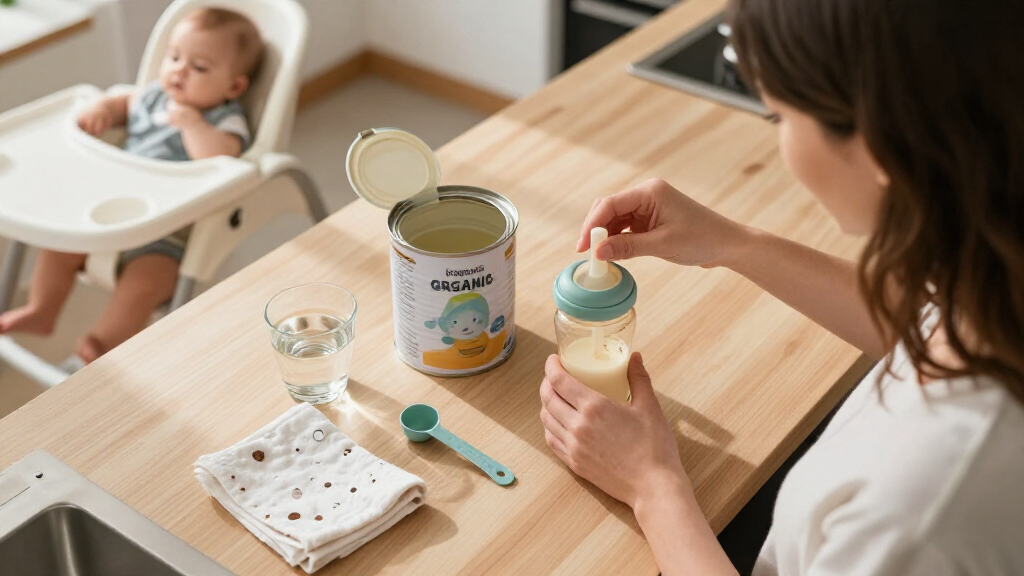
Among the best organic baby formulas in this roundup, I rank Happy Baby Organic Stage 1 A2 as the best overall for families seeking an organic, single-stage option with A2 milk. Bobbie Organic Infant Formula stands out as a premium milk-based choice, while Earth’s Best Organic Sensitivity is aimed at families discussing reduced-lactose formula with a clinician. The main tradeoffs are whether your baby needs a particular milk or lactose profile, whether a stage-specific formula fits their age, and how much product you want to buy at once. Organic certification alone does not determine whether a formula suits an individual baby. Read on for how the eight options differ and what to check before choosing.

Turn the school run and nap time into listening time
- Thousands of audiobooks, podcasts and originals
- Listen on your phone, tablet or Echo — also offline
- Cancel anytime
Complete the kit


Key Takeaways
- Stage 1 options lead this comparison: Happy Baby Stage 1 A2 and Stage 1 Infant Formula are both labeled for ages 0–12 months, while the Stage 2 version is labeled for 6–12 months.
- A2 milk is a specific distinction, not a general promise of better tolerance: Happy Baby Stage 1 A2 differs from the standard Stage 1 formula by its milk-protein type; families should ask their clinician whether that difference matters for their baby.
- Earth’s Best offers the widest range of targeted choices here: its standard dairy, gentle, and reduced-lactose formulas serve different shopping needs, but their labels are not interchangeable.
- Bobbie’s six-pack format changes the buying decision: it may suit households that already know the formula works for them, while a smaller initial commitment can make more sense before a baby has accepted it.
- Organic does not settle every feeding question: age labeling, preparation directions, and a baby’s medical or feeding needs deserve more attention than the organic claim alone.
| Similac Organic Baby Formula Powder |  | Best for a Straightforward Organic Formula | Form: Powder | Certification: USDA-Certified Organic | Age range: 0–12 months | VIEW LATEST PRICE | See Our Full Breakdown |
| Earth’s Best Organic Dairy Infant Formula with Iron, DHA and ARA, 32 oz |  | Best for a Larger Prepared Yield | Form: Powder | Milk base: Organic dairy milk | Age range: 0–12 months | VIEW LATEST PRICE | See Our Full Breakdown |
| Happy Baby Organic Stage 1 A2 Infant Formula (0-12 Months), 22.9 oz |  | Best for A2 Milk and Added Gut-Support Ingredients | Form: Powder | Stage and age range: Stage 1; 0–12 months | Weight: 22.9 oz | VIEW LATEST PRICE | See Our Full Breakdown |
| Earth’s Best Organic Sensitivity Infant Formula, Reduced Lactose Powder with Iron, DHA, and ARA, 32 oz |  | Best for Families Seeking Reduced Lactose | Form: Powder | Formula type: Reduced lactose | Age range: 0–12 months | VIEW LATEST PRICE | See Our Full Breakdown |
| Earth’s Best Organic Gentle Infant Formula with Iron, Milk-Based Powder, 21 oz |  | Best for Partially Hydrolyzed Protein | Form: Powder | Formula type: Gentle infant formula | Intended age: First year | VIEW LATEST PRICE | See Our Full Breakdown |
| Bobbie Organic Infant Formula, Milk-Based Powder, 24 oz, 6-Pack |  | Best Multi-Pack for Full-Term Infants | Product type: Milk-based infant formula powder | Package size: 24 oz, 6-pack | Age range: 0–12 months; full-term infants | VIEW LATEST PRICE | See Our Full Breakdown |
| Happy Baby Organic Stage 2 Infant Formula, 6–12 Months, 22.9 oz |  | Best for Organic Stage 2 Feeding | Stage: 2 | Age range: 6–12 months | Net weight: 22.9 oz | VIEW LATEST PRICE | See Our Full Breakdown |
| Happy Baby Organic Stage 1 Infant Formula, 0–12 Months, 22.9 oz |  | Best Organic Stage 1 with Prebiotics and Probiotics | Stage: 1 | Age range: 0–12 months | Net weight: 22.9 oz | VIEW LATEST PRICE | See Our Full Breakdown |
| organic baby formula | Age range | Form | Key nutrients |
|---|---|---|---|
| Similac Organic Baby Formula P | 0–12 months | Powder | DHA, lutein, vitamin E |
| Earth’s Best Organic Dairy Inf | 0–12 months | Powder | Iron, DHA, ARA, lutein, prebiotics |
| Happy Baby Organic Stage 1 A2 | — | Powder | — |
| Earth’s Best Organic Sensitivi | 0–12 months | Powder | Iron, DHA, ARA, lutein, prebiotics |
| Earth’s Best Organic Gentle In | — | Powder | Iron, DHA, ARA, lutein, prebiotics |
| Bobbie Organic Infant Formula | 0–12 months; full-term infants | — | — |
| Happy Baby Organic Stage 2 Inf | 6–12 months | — | — |
| Happy Baby Organic Stage 1 Inf | 0–12 months | — | — |
More Details on Our Top Picks
Similac Organic Baby Formula Powder
For families who want a conventional dairy-based powder with a clear organic credential, Similac Organic Baby Formula keeps the feature set focused: USDA organic certification, non-GMO ingredients, and DHA, lutein, and vitamin E. Its stated exclusions of corn syrup and palm olein oil may also matter to caregivers comparing ingredient lists. Unlike Happy Baby Organic Stage 1 A2 Infant Formula, it does not emphasize A2 milk or a probiotic-prebiotic blend, so it is the more straightforward choice rather than the more specialized one. The tradeoff is practical: powder must be measured and mixed, and the formula is not suitable for infants with galactosemia. Families seeking ready-to-feed convenience or a non-dairy option should look elsewhere.
Pros:- USDA-certified organic and non-GMO
- Includes DHA, lutein, and vitamin E
- Formulated without corn syrup or palm olein oil
- Designed for easy digestion
Cons:- Powder requires measuring and mixing
- Not suitable for infants with galactosemia
- Does not offer the A2 milk and probiotic-prebiotic emphasis found in Happy Baby Stage 1
Best for: Caregivers seeking USDA-certified organic powdered formula with DHA and a simple list of stated exclusions for babies from birth through 12 months.
Not ideal for: Families who need ready-to-feed formula, a non-dairy formula, or an option suitable for infants with galactosemia.
- Form:Powder
- Certification:USDA-Certified Organic
- Age range:0–12 months
- Key nutrients:DHA, lutein, vitamin E
- GMO status:Non-GMO
- Stated exclusions:No palm olein oil, corn syrup, or artificial growth hormones
Our verdict“Choose Similac if you want an organic powdered formula with DHA and clear ingredient exclusions, and do not need ready-to-feed convenience.”
Earth’s Best Organic Dairy Infant Formula with Iron, DHA and ARA, 32 oz
Earth’s Best Organic Dairy Infant Formula suits households that want a standard organic dairy powder and a clearly stated prepared yield: about 155 fluid ounces from its 32-ounce container. Its organic milk comes from grass- and grain-fed cows, and the nutrient list spans iron, DHA, ARA, lutein, and prebiotics. Compared with the smaller 21-ounce Earth’s Best Organic Gentle Infant Formula, this container provides a larger approximate prepared volume and does not feature partially hydrolyzed whey. That makes it a better fit for caregivers who want a conventional dairy formula rather than a gentle-formula protein approach. The main limitation is its milk base, which rules it out for babies who need a non-dairy formula; like the other powders here, it also requires careful mixing according to package directions.
Pros:- Made with organic milk from grass- and grain-fed cows
- Includes iron, DHA, ARA, lutein, and prebiotics
- Suitable as a primary nutrition source or breastfeeding supplement when prepared as directed
- 32-ounce container has an approximate prepared yield of 155 fluid ounces
Cons:- Dairy-based and unsuitable for babies who need non-dairy formula
- Requires measuring and mixing with water
- Does not have the partially hydrolyzed whey found in Earth’s Best Organic Gentle
Best for: Families who want a standard organic dairy formula for birth through 12 months and value a larger container with a stated prepared yield.
Not ideal for: Caregivers of babies who need a non-dairy formula or who specifically want partially hydrolyzed protein.
- Form:Powder
- Milk base:Organic dairy milk
- Age range:0–12 months
- Key nutrients:Iron, DHA, ARA, lutein, prebiotics
- Added corn syrup:None
- Container size:32 oz
- Approximate prepared yield:155 fl oz
Our verdict“Pick this standard dairy powder if you want a larger organic container with a broad nutrient blend and do not need a gentle or non-dairy formula.”
Happy Baby Organic Stage 1 A2 Infant Formula (0-12 Months), 22.9 oz
Happy Baby Organic Stage 1 A2 is the most specialized pick here for caregivers seeking A2 milk plus a probiotic-prebiotic blend. Its USDA and EU organic certifications, Clean Label Project certification, and 60:40 whey-to-casein protein ratio give it a different profile from the standard dairy powders, such as Earth’s Best Organic Dairy Infant Formula. That distinction may help narrow a choice for families who specifically want these features, but it does not make the formula suitable for every baby or guarantee a digestive result. The 22.9-ounce container is smaller than the 32-ounce Earth’s Best options, and the product data notes a formula update, so a package may differ during the changeover. It is limited to Stage 1 for ages 0–12 months, meaning caregivers will need another formula if they want a later-stage product.
Pros:- USDA and EU organic certifications plus Clean Label Project certification
- Uses A2 milk with a 60:40 whey-to-casein ratio
- Includes probiotics, prebiotics, and DHA
- Made without palm oil, corn syrup, antibiotics, or artificial growth hormones
Cons:- 22.9-ounce container is smaller than the 32-ounce Earth’s Best formulas
- Formula update may mean packages differ during the changeover
- Stage 1 is intended for ages 0–12 months only
Best for: Caregivers seeking an organic Stage 1 formula with A2 milk, a stated whey-to-casein ratio, and both probiotics and prebiotics.
Not ideal for: Families who prefer a standard dairy formula without a specialized A2 blend, need a larger container, or want one product that continues beyond 12 months.
- Form:Powder
- Stage and age range:Stage 1; 0–12 months
- Weight:22.9 oz
- Certifications:USDA Organic, EU Organic, Clean Label Project Certified
- Milk and protein:A2 milk; 60:40 whey-to-A2 beta casein ratio
- Key ingredients:Probiotics, prebiotics, DHA
- Origin:Made in Europe
- Stated exclusions:No palm oil, corn syrup, artificial growth hormones, or antibiotics
Our verdict“Choose Happy Baby Stage 1 A2 if A2 milk and added probiotics and prebiotics are priorities, and the smaller container and update period are acceptable.”
Earth’s Best Organic Sensitivity Infant Formula, Reduced Lactose Powder with Iron, DHA, and ARA, 32 oz
Earth’s Best Organic Sensitivity is the clearest fit in this group for caregivers looking specifically for a reduced-lactose formula. It retains a broad nutrient mix—iron, DHA, ARA, lutein, and prebiotics—while using organic milk from grass- and grain-fed cows. Compared with the standard Earth’s Best Organic Dairy Infant Formula, its reduced-lactose formulation is the defining difference, not a general upgrade for every baby. The 32-ounce container has an approximate prepared yield of 236 fluid ounces, although preparation still calls for accurate measuring and mixing. It remains milk-protein-based, so reduced lactose does not make it suitable for babies with a cow’s-milk protein allergy. Families without a reason to seek reduced lactose may prefer the standard dairy option instead.
Pros:- Reduced-lactose formulation for families seeking this specific formula type
- Certified organic and made with milk from grass- and grain-fed cows
- Includes iron, DHA, ARA, lutein, and prebiotics
- 32-ounce container has an approximate prepared yield of 236 fluid ounces
Cons:- Still contains milk proteins and is unsuitable for cow’s-milk protein allergy
- Powder requires precise measuring and mixing
- Reduced lactose may be unnecessary for babies who do well on standard Earth’s Best Organic Dairy Infant Formula
Best for: Caregivers looking for an organic reduced-lactose powder for a baby whose feeding plan calls for that formula type.
Not ideal for: Families seeking a standard formula without reduced lactose, or babies who need to avoid cow’s-milk proteins.
- Form:Powder
- Formula type:Reduced lactose
- Age range:0–12 months
- Milk source:Organic milk from grass- and grain-fed cows
- Key nutrients:Iron, DHA, ARA, lutein, prebiotics
- Container size:32 oz
- Approximate prepared yield:236 fl oz
- Certifications:Certified Organic; Clean Label Project Purity Award
Our verdict“Choose this formula when reduced lactose is the feature you need, but skip it for a milk-protein allergy or when a standard dairy formula is preferred.”
Earth’s Best Organic Gentle Infant Formula with Iron, Milk-Based Powder, 21 oz
Earth’s Best Organic Gentle differentiates itself through partially hydrolyzed whey, making it the option in this group for caregivers seeking that protein format in an organic milk-based powder. It also supplies iron, DHA, ARA, lutein, and prebiotics, and its 21-ounce container yields about 154 fluid ounces when prepared. Compared with Earth’s Best Organic Sensitivity, Gentle is defined by partially hydrolyzed protein rather than reduced lactose; these are distinct formula features, so the better fit depends on what a baby’s feeding plan calls for. The smaller container holds less than the 32-ounce Earth’s Best options, and it still requires mixing. Because it is milk-based, it is not a choice for babies who need to avoid milk proteins.
Pros:- Made with organic milk from grass- and grain-fed cows
- Partially hydrolyzed whey distinguishes it from standard Earth’s Best dairy formula
- Includes iron, DHA, ARA, lutein, and prebiotics
- Approximate prepared volume is 154 fluid ounces
Cons:- Milk-based and unsuitable for babies who need to avoid milk proteins
- 21-ounce container is smaller than the 32-ounce Earth’s Best options
- Requires mixing with water according to preparation instructions
Best for: Caregivers seeking an organic milk-based powder with partially hydrolyzed whey for a baby’s first year.
Not ideal for: Families who need a non-dairy formula, prefer a larger container, or are specifically seeking a reduced-lactose formula like Earth’s Best Sensitivity.
- Form:Powder
- Formula type:Gentle infant formula
- Intended age:First year
- Milk base:Organic milk
- Protein:Partially hydrolyzed whey
- Key nutrients:Iron, DHA, ARA, lutein, prebiotics
- Net weight:21 oz
- Approximate prepared volume:154 fl oz
Our verdict“Pick Earth’s Best Organic Gentle if partially hydrolyzed whey is the feature you want, rather than reduced lactose or a standard dairy formula.”
Bobbie Organic Infant Formula, Milk-Based Powder, 24 oz, 6-Pack
For families seeking a steady supply of organic formula with a clearly defined carbohydrate and fat profile, Bobbie’s six-pack stands apart from the single-can Happy Baby options here. Its sole carbohydrate is lactose, and the 60:40 whey-to-casein ratio is designed to resemble the balance found in breast milk. Those details may help parents compare ingredient profiles, but they are not a promise of easier digestion for every baby. Bobbie also includes DHA and choline and is independently tested for contaminants, adding useful quality information beyond its USDA and EU organic equivalency certifications. The tradeoff is a narrower fit: it is for full-term babies from birth to 12 months, contains milk, and comes in a six-pack that may be more supply than a family wants to store or commit to. Compared with Happy Baby Stage 1, Bobbie offers a larger pack and specified whey-to-casein ratio, while Happy Baby lists probiotics and prebiotics.
Pros:- Lactose is the sole carbohydrate source.
- 60:40 whey-to-casein ratio is specified.
- Includes DHA and choline.
- USDA Organic, EU Organic equivalency, and independent contaminant testing are listed.
Cons:- Six 24-ounce cans require substantial storage and make the pack a larger commitment.
- Contains milk and is not suitable for families seeking a milk-free formula.
- The stated age range is limited to full-term infants from birth to 12 months.
Best for: Families feeding a full-term infant who want a multi-pack of organic, lactose-based formula and value independent contaminant testing.
Not ideal for: Families who want a single can to try, need formula for a baby outside the stated full-term age range, or need a milk-free option.
- Product type:Milk-based infant formula powder
- Package size:24 oz, 6-pack
- Age range:0–12 months; full-term infants
- Carbohydrate source:100% lactose
- Whey-to-casein ratio:60:40
- DHA:20 mg per 100 kcal
- Certifications and testing:USDA Organic; EU Organic equivalency; independently tested for heavy metals and contaminants
- Fat blend:Plant-based; formulated without soy
- Free from:Corn syrup, palm oil, and maltodextrin
Our verdict“Choose Bobbie if you want a tested, lactose-based organic formula in a multi-pack for a full-term infant and have room to store it.”
Happy Baby Organic Stage 2 Infant Formula, 6–12 Months, 22.9 oz
Happy Baby Stage 2 is the age-specific pick in this group for families whose baby is already six months old and whose clinician supports using a Stage 2 formula. Its nutrient levels are tailored for ages 6–12 months, while its probiotic and prebiotic blend distinguishes it from Bobbie, which instead specifies a 60:40 whey-to-casein ratio and a lactose-only carbohydrate source. The formula is USDA and EU certified organic, made in Europe, and includes DHA. That makes its profile easy to compare with Happy Baby Stage 1, but the two are not interchangeable by age range: Stage 1 is labeled from birth through 12 months, while this can is for older infants. A notable drawback is the packaging change; during the update, a can may contain the previous or newer version. Check the label if avoiding palm oil matters, since the updated formula omits it.
Pros:- Stage 2 nutrient levels are tailored for babies 6–12 months.
- Includes a probiotic and prebiotic blend.
- USDA and EU organic certifications are listed.
- Made in Europe with non-GMO ingredients and includes DHA.
Cons:- Not labeled for babies under six months.
- Packaging may contain the previous or updated formula during the changeover.
- The 22.9-ounce can is a single-pack option rather than a multi-can supply.
Best for: Families with a baby aged 6–12 months who want an organic Stage 2 formula with probiotics, prebiotics, and DHA.
Not ideal for: Parents choosing a formula for a newborn or those who want a consistent, clearly identified palm-oil-free formulation during the packaging update.
- Stage:2
- Age range:6–12 months
- Net weight:22.9 oz
- Pack quantity:1
- Certifications:USDA Organic; EU Organic; Clean Label Project Certified
- Made in:Europe
- Key ingredients and features:Probiotics, prebiotics, and DHA
- Other formula features:Non-GMO; no added corn syrup; updated formula has no palm oil
Our verdict“Choose this Stage 2 option for an older infant if you want organic certification and a probiotic-prebiotic blend, and are prepared to check which package version you receive.”
Happy Baby Organic Stage 1 Infant Formula, 0–12 Months, 22.9 oz
For families who want one organic formula labeled from birth through 12 months, Happy Baby Stage 1 covers a broader age range than the brand’s Stage 2 formula, which is labeled for babies starting at six months. Its probiotic and prebiotic blend and DHA give it a different emphasis from Bobbie: Happy Baby highlights these ingredients, while Bobbie provides a specified lactose-only carbohydrate source and whey-to-casein ratio. This Stage 1 formula is made in Europe with non-GMO ingredients and carries USDA and EU organic certifications. One limitation is that the listed DHA level is expressed as at least 0.3% of fatty acids, which is not directly comparable to Bobbie’s amount per 100 kcal. There is also a formula update in progress: packaging may contain the earlier version with palm oil or the updated version without it, so label-checking matters for families avoiding palm oil.
Pros:- Labeled for babies from birth through 12 months.
- Includes a patented probiotic and prebiotic blend.
- USDA and EU certified organic and made with non-GMO ingredients.
- Includes DHA, listed at at least 0.3% of fatty acids.
Cons:- Packaging may contain either the previous or updated formula during the palm oil change.
- A single 22.9-ounce can may require more frequent reordering than Bobbie’s six-pack.
- The DHA measurement is not directly comparable with products that state DHA per 100 kcal.
Best for: Families seeking a single Stage 1 organic formula labeled for babies from birth to 12 months, with probiotics, prebiotics, and DHA.
Not ideal for: Families who need a guaranteed palm-oil-free can during the formula update or who prefer a multi-pack rather than one 22.9-ounce container.
- Stage:1
- Age range:0–12 months
- Net weight:22.9 oz
- Organic certifications:USDA Organic and EU Organic
- Probiotics and prebiotics:Patented blend
- DHA:At least 0.3% of fatty acids
- Made in:Europe
- Ingredients:Non-GMO; no added corn syrup
- Formula update:Packaging may contain previous or updated formula; updated formula removes palm oil
Our verdict“Choose Happy Baby Stage 1 if you want broad birth-to-12-month age coverage and a probiotic-prebiotic blend, but check the can if palm oil is a deciding factor.”
How We Picked
I compared these eight products on the details that shape a real formula choice: the age range on the label, the milk or lactose distinction, the intended feeding use, and the practical implications of package format. I gave more weight to clear, useful differences than to broad claims shared across many organic formulas. Because this roundup does not establish that any formula is suitable for a particular medical condition, I treated specialized labels as reasons to discuss a product with a pediatric clinician, not as proof of a benefit.
The ranking favors options with a clear role and broad relevance for families choosing an organic infant formula. Happy Baby Stage 1 A2 takes the lead for its distinct A2 positioning and 0–12-month label; standard-stage alternatives remain close behind for families who do not specifically want A2. Bobbie ranks as a premium-format pick rather than a universal winner, and Earth’s Best’s gentle and reduced-lactose formulas rank for narrower needs. I kept Stage 2 lower for newborn shoppers because its label starts at six months, and I treated the six-pack as a less flexible first purchase.
| organic baby formula | Key nutrients |
|---|---|
| Similac Organic Baby Formula P | DHA, lutein, vitamin E |
| Earth’s Best Organic Dairy Inf | Iron, DHA, ARA, lutein, prebiotics |
| Happy Baby Organic Stage 1 A2 | — |
| Earth’s Best Organic Sensitivi | Iron, DHA, ARA, lutein, prebiotics |
| Earth’s Best Organic Gentle In | Iron, DHA, ARA, lutein, prebiotics |
| Bobbie Organic Infant Formula | — |
| Happy Baby Organic Stage 2 Inf | — |
| Happy Baby Organic Stage 1 Inf | — |
Factors to Consider When Choosing Best Organic Baby Formulas
Before choosing among these formulas, I would separate what the label confirms from what you hope the formula will do. These broader checks can help you avoid paying for a feature your baby does not need or selecting a product whose age range or format does not fit your plans.
Match the age label to your baby’s feeding stage
Start with the age range printed on the product, not just the word “infant.” In this roundup, several Stage 1 formulas are labeled for 0–12 months, while Happy Baby Stage 2 is labeled for 6–12 months. A later-stage label does not automatically mean a formula is a better fit once a baby reaches that age. Ask your clinician before changing stages, especially if your baby has medical or feeding concerns. Also check the current package directions because labels and formulations can change. Choosing by age first narrows the field before you compare organic claims or package sizes.
Treat milk-protein and lactose claims as different questions
A2 describes a type of milk protein; reduced lactose describes a change to the lactose profile. They are not interchangeable features, and neither label alone establishes that a formula will resolve fussiness, gas, or other symptoms. Families can mistake a targeted product name for a diagnosis or a guaranteed result. If symptoms are persistent, severe, or accompanied by poor feeding, speak with a pediatric clinician before experimenting with formula. Ask what specific ingredient or formulation change is relevant to your baby. That conversation can prevent repeated switches that make it harder to identify what is affecting feeding.
Read the full ingredient and nutrition panel, not just the organic claim
Organic certification addresses how certain agricultural ingredients are produced; it does not by itself tell you whether a formula fits your baby’s needs. Compare the complete ingredient and nutrition information, including the nutrients listed on the label and any ingredients your clinician has asked you to monitor. DHA and ARA appear in several Earth’s Best product names here, but their presence is only one part of the formula comparison. Avoid assuming that a familiar claim means two products have identical formulations. Check the current package because product details may change over time. For a baby with an allergy or a medical feeding plan, have a clinician review the specific product rather than relying on a marketing term.
Choose package size around certainty, not just convenience
A multi-container pack can reduce repeat shopping, but it also commits your household to more of one formula at once. That can be inconvenient if your baby has not tried it, does not accept it, or a clinician recommends a change. A single container may offer more flexibility at the start, while a larger commitment can suit families who already use that exact product. Check the total quantity, storage instructions, and the time allowed for use after opening on the label. Do not stock up based only on an expected routine. Formula needs and availability can change, so a manageable reserve is often more useful than an oversized supply.
Plan for preparation and safe handling at home
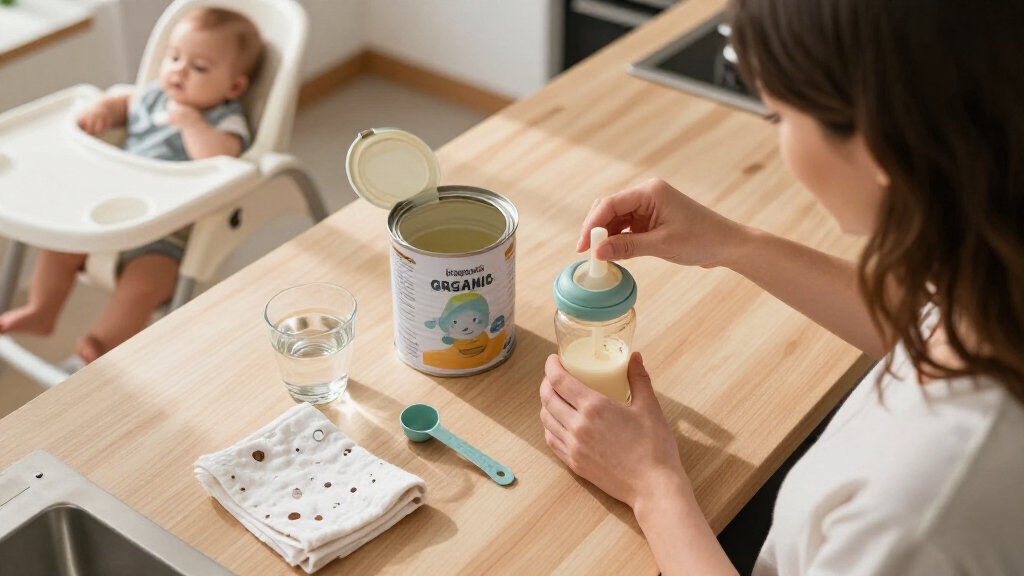
Powdered formula requires careful preparation, so read the label each time you buy a new package rather than relying on memory. Use the stated water-to-powder ratio and the preparation and storage directions; changing concentration can be unsafe. Keep the scoop with its own container, and use clean equipment and hands. If a canister has been open for a while, follow its stated discard window rather than judging by appearance or smell. Families with a premature or medically vulnerable infant should ask their clinician which preparation approach is appropriate. Convenience matters, but it should never replace the product’s handling instructions.
Frequently Asked Questions
Can I switch my baby from one organic formula to another without asking a clinician?
For a healthy baby, families often compare formulas by their labels, but a switch is not automatically the right response to fussiness or a change in stools. Check that the new product is labeled for your baby’s age and that it fits any guidance you have received. If your baby has an allergy, poor growth, persistent symptoms, or a prescribed feeding plan, speak with a pediatric clinician before changing formulas. Avoid switching repeatedly in a short period, since it can make it harder to identify a pattern. Follow the new product’s preparation directions exactly.
Does an A2 formula mean my baby will tolerate it better?
No label can promise that a particular baby will tolerate a formula better. A2 refers to a milk-protein distinction, while sensitivity can have different causes and may require clinical evaluation. Happy Baby Stage 1 A2 is the option in this roundup with that specific positioning, but it should not be treated as an allergy formula or a remedy for symptoms without professional guidance. If your baby has blood in the stool, repeated vomiting, poor feeding, or other concerning symptoms, contact a clinician promptly. Ask what a trial would involve and when to stop or reassess.
Is Earth’s Best Reduced Lactose formula the right choice for a gassy baby?
Gas alone does not show that lactose is the cause, and a reduced-lactose label does not diagnose or treat every source of discomfort. Babies can be gassy for many reasons, including normal development and feeding patterns. Before changing formula, review symptoms and feeding technique with your pediatric clinician, particularly if discomfort is persistent or affects feeding and growth. Earth’s Best Reduced Lactose is a more targeted choice than the standard dairy formula in this lineup, so it makes most sense when that formulation fits professional advice. Follow the exact label rather than modifying the formula yourself.
Should I buy a multi-pack before my baby has tried the formula?
A multi-pack can be convenient once you know your baby is using that exact formula and your clinician has no concerns about it. Before that point, buying a smaller quantity can preserve flexibility if your baby refuses it or a feeding plan changes. Bobbie’s six-pack is the clearest bulk-format option in this roundup, so it is less suited to a first trial than a single-container purchase. Check package dates and storage instructions, and do not assume unopened containers remain suitable indefinitely. The best choice balances household convenience with the chance that your needs may change.
When should I choose Stage 2 instead of a Stage 1 formula?
Use the age range and instructions on the specific package, and ask your baby’s clinician if you are unsure whether a stage change is appropriate. In this lineup, Happy Baby Stage 2 is labeled for 6–12 months, while the listed Stage 1 options are labeled for 0–12 months. That difference means Stage 2 is not the pick for a newborn, but it does not mean every six-month-old needs to switch. Consider your baby’s feeding plan and any clinician guidance before changing products. Do not mix stages or alter preparation to imitate another formula.
Conclusion
My best overall pick is Happy Baby Organic Stage 1 A2 for families who want an organic formula labeled for 0–12 months and are specifically interested in its A2 milk distinction. For best value and everyday flexibility, I would compare the standard Happy Baby Stage 1 and Earth’s Best Organic Dairy options by their current labels and package formats; neither requires choosing a specialized claim. Bobbie Organic Infant Formula is my premium-format choice for families who already know they want it and can use a six-pack. For beginners, I favor starting with a clearly age-labeled Stage 1 product in a manageable quantity rather than buying in bulk. For specific needs, consider Earth’s Best Reduced Lactose or Gentle only after checking with a pediatric clinician; choose Stage 2 only when its age label and your baby’s feeding plan fit. The right choice is the one that matches your baby’s age, your clinician’s guidance, and the practical amount you can use safely.