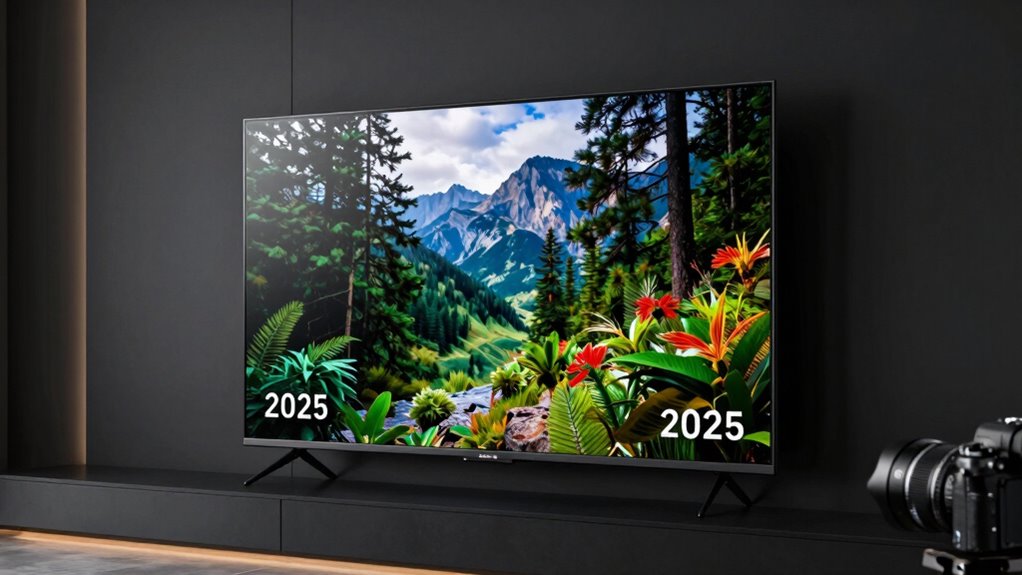

For most buyers, I’d start with the LG 65-Inch OLED evo C6 as the best overall balance of size, picture quality, and everyday flexibility. The Samsung 77-Inch S90H is a standout for a larger, more immersive screen, while the Roku Pro Series OLED may suit viewers who want Roku’s familiar interface built into an OLED set. The main tradeoffs are screen size, smart-TV preferences, and how much you value newer features over a previous-year model. OLED TVs can deliver rich contrast, but they vary in processing, gaming support, and fit for bright rooms. Read on for the full breakdown and help matching a set to your space and priorities.

Turn the school run and nap time into listening time
- Thousands of audiobooks, podcasts and originals
- Listen on your phone, tablet or Echo — also offline
- Cancel anytime
Complete the kit


Key Takeaways
- The 65-inch LG C6 is the clearest all-rounder: it sits between the smaller Sony A90K and the larger Samsung S90H options, making it a flexible starting point for many living rooms.
- Screen size changes the choice more than the brand name: this lineup spans 48 to 77 inches, so room layout and viewing distance can rule out a model before feature comparisons begin.
- Samsung’s S90H range gives buyers a size choice within one model family: the 55-, 65-, and 77-inch versions let shoppers prioritize room fit without switching series.
- Roku’s OLED and QLED sets serve different needs: the Pro Series OLED belongs in an OLED comparison, while the Select Series QLED is a non-OLED alternative for shoppers willing to trade OLED’s pixel-level light control for another display type.
- Previous-year Samsung models add a value-versus-generation decision: the S84F and S85F may appeal to buyers considering 2025 sets, while the 2026 C6 and S90H models represent newer options in this list.
| LG 65-Inch OLED evo C6 Series 4K Smart TV (2026) |  | Best Overall for Gaming and Versatility | Screen size: 65 inches | Display technology: OLED evo | Resolution: 4K | VIEW ON AMAZON | See Our Full Breakdown |
| Sony 65 Inch BRAVIA XR-65XR80M2 4K HDR Smart Google TV |  | Best for Cinematic Streaming | Screen size: 65 inches | Display technology: OLED | Resolution: 4K HDR | VIEW ON AMAZON | See Our Full Breakdown |
| Samsung 77-Inch S90H OLED 4K Smart TV (2026) |  | Best Large-Screen OLED for Bright Rooms | Screen size: 77 inches | Display type: OLED | Resolution: 4K | VIEW ON AMAZON | See Our Full Breakdown |
| Samsung 55-Inch S90H Series 4K OLED Smart TV (2026) | | Best Compact OLED for Gaming | Screen size: 55 inches | Display technology: OLED | Resolution: 4K | VIEW ON AMAZON | See Our Full Breakdown |
| Roku 65-Inch Select Series 4K QLED Smart TV |  | Best Simple Streaming Alternative | Screen size: 65 inches | Display technology: QLED | Resolution: 4K (2160p) | VIEW ON AMAZON | See Our Full Breakdown |
| Roku Pro Series 65-Inch 4K OLED Smart TV |  | Best for Simple Streaming and Gaming | Display: 65-inch OLED | Resolution: 4K | Refresh rate: 120 Hz | VIEW ON AMAZON | See Our Full Breakdown |
| Sony 48 Inch A90K BRAVIA XR 4K HDR OLED Smart Google TV |  | Best Compact Premium OLED | Display size: 48 inches | Resolution: 4K UHD | Processor: Cognitive Processor XR | VIEW ON AMAZON | See Our Full Breakdown |
| Samsung 77-Inch Class OLED S84F Series Samsung Vision AI Smart TV (2025 Model, 77S84F) |  | Best for Large-Screen AI Upscaling | Display: 77-inch OLED | Resolution: 4K | Refresh rate: 120 Hz | VIEW ON AMAZON | See Our Full Breakdown |
| Samsung 65-Inch S90H OLED 4K Smart TV (2026) | | Best for Bright Rooms and PC Gaming | Display: 65-inch OLED | Resolution: 4K | Refresh rate: Up to 165 Hz | VIEW ON AMAZON | See Our Full Breakdown |
| Samsung 77-Inch S85F OLED 4K Smart TV (2025) |  | Best for Big-Screen Everyday Viewing | Display: 77-inch OLED | Resolution: 4K | Refresh rate: 120 Hz | VIEW ON AMAZON | See Our Full Breakdown |
| Roku Pro Series 55-Inch 4K OLED Smart TV |  | Best Compact OLED for Simple Streaming | Display technology: OLED | Resolution: 4K | Screen size: 55 inches | VIEW ON AMAZON | See Our Full Breakdown |
| oled tv | Resolution | Processor | Screen size | Refresh rate |
|---|---|---|---|---|
| LG 65-Inch OLED evo C6 Series | 4K | Alpha 11 AI Processor Gen3 | 65 inches | — |
| Sony 65 Inch BRAVIA XR-65XR80M | 4K HDR | — | 65 inches | — |
| Samsung 77-Inch S90H OLED 4K S | 4K | NQ4 AI Gen3 with 128 neural networks | 77 inches | 165 Hz Motion Xcelerator |
| Samsung 55-Inch S90H Series 4K | 4K | NQ4 AI Gen3 | 55 inches | — |
| Roku 65-Inch Select Series 4K | 4K (2160p) | — | 65 inches | — |
| Roku Pro Series 65-Inch 4K OLE | 4K | — | — | 120 Hz |
| Sony 48 Inch A90K BRAVIA XR 4K | 4K UHD | Cognitive Processor XR | — | — |
| Samsung 77-Inch Class OLED S84 | 4K | NQ4 AI Gen2 | — | 120 Hz |
| Samsung 65-Inch S90H OLED 4K S | 4K | NQ4 AI Gen3 | — | Up to 165 Hz |
| Samsung 77-Inch S85F OLED 4K S | 4K | NQ4 AI Gen2 | — | 120 Hz |
| Roku Pro Series 55-Inch 4K OLE | 4K | — | 55 inches | 120 Hz |
More Details on Our Top Picks
LG 65-Inch OLED evo C6 Series 4K Smart TV (2026)
The LG OLED evo C6 is my most balanced pick for buyers who want a premium OLED for movies, streaming, and gaming. Its self-lit pixels deliver deep blacks, while Dolby Vision and FILMMAKER MODE give compatible films a more faithful presentation. Four HDMI 2.1 inputs make it easier to connect several current consoles or a PC without juggling cables. Compared with the Samsung 55-Inch S90H, the C6 pairs its gaming focus with Dolby Vision support; its VRR reaches 165 Hz, though that ceiling calls for a compatible PC graphics card. The 65-inch screen also gives it a larger canvas than compact OLED options, but it needs more room and a suitable viewing distance. Internet-based webOS services require a connection, and some features may need an account or subscription.
Pros:- Self-lit OLED pixels produce deep blacks and strong contrast.
- Dolby Vision, Dolby Atmos, and FILMMAKER MODE support movie-focused viewing.
- Four HDMI 2.1 inputs accommodate multiple gaming devices.
- 0.1 ms response time and VRR up to 165 Hz suit fast gaming.
Cons:- The 165 Hz VRR capability requires a compatible PC graphics card.
- Streaming and network-based smart features require internet access; some also need an LG account or subscription.
- A 65-inch screen may be too large for compact rooms.
Best for: Buyers seeking one 65-inch OLED for cinematic viewing, streaming, and console or PC gaming across multiple HDMI devices.
Not ideal for: Viewers who need a smaller screen, prefer a set that works without network services, or cannot use the PC hardware needed for the 165 Hz VRR ceiling.
- Screen size:65 inches
- Display technology:OLED evo
- Resolution:4K
- Model year:2026
- Processor:Alpha 11 AI Processor Gen3
- Response time:0.1 ms
- Variable refresh rate:Up to 165 Hz
- HDMI inputs:4 HDMI 2.1
Our verdict“Choose the LG C6 if you want a versatile 65-inch OLED with strong film support and unusually extensive gaming connectivity.”
Sony 65 Inch BRAVIA XR-65XR80M2 4K HDR Smart Google TV
The Sony BRAVIA XR-65XR80M2 makes the most sense for viewers who prioritize films and streaming over a detailed gaming specification sheet. It combines OLED contrast with Dolby Vision, Dolby Atmos, and DTS:X, while Google TV brings streaming apps, voice control, AirPlay 2, and Google Cast together. Studio-calibrated picture modes and AI upscaling are useful when a collection mixes newer 4K releases with lower-resolution video. Compared with the LG OLED evo C6, Sony’s listed strengths lean more toward cinematic processing and streaming features; LG provides clearer details for high-refresh-rate gaming and four HDMI 2.1 inputs. Sony’s supplied specifications do not state its refresh rate or HDMI configuration, so buyers focused on gaming should verify those before choosing it. OLED also carries a potential long-term burn-in concern.
Pros:- OLED panel provides deep blacks for cinematic viewing.
- Supports Dolby Vision, Dolby Atmos, and DTS:X.
- Google TV includes streaming apps, voice control, AirPlay 2, and Google Cast.
- AI upscaling and studio-calibrated picture modes suit mixed-quality video libraries.
Cons:- Refresh rate and HDMI input details are not specified in the supplied product data.
- OLED panels can be susceptible to burn-in over time.
- Its cinema-oriented feature set may be less compelling for buyers prioritizing gaming specifications over picture processing.
Best for: Film and streaming viewers who want a 65-inch OLED with Google TV, broad casting options, and Dolby-format support.
Not ideal for: Competitive gamers or buyers who need confirmed high-refresh-rate support and detailed HDMI connectivity specifications.
- Screen size:65 inches
- Display technology:OLED
- Resolution:4K HDR
- Smart TV platform:Google TV
- HDR support:Dolby Vision
- Audio formats:Dolby Atmos, DTS:X
- Additional features:IMAX Enhanced, AI processing, AirPlay 2, Google Cast
Our verdict“Pick the Sony if streaming and movie presentation matter more to you than clearly documented high-refresh-rate gaming features.”
Samsung 77-Inch S90H OLED 4K Smart TV (2026)
For buyers set on a generous screen, the 77-inch Samsung S90H combines OLED contrast with Glare Free technology to reduce distracting reflections. Its NQ4 AI Gen3 processor is designed to upscale lower-resolution material and refine motion, while HDR remastering can give non-HDR sources a more vivid treatment. Gaming is another clear strength: Motion Xcelerator reaches 165 Hz, with NVIDIA G-SYNC and AMD FreeSync Premium Pro support. Compared with the Samsung 55-Inch S90H, this version is better suited to a larger room and shared viewing, not compact spaces. The supplied details are thinner on connectivity, audio, and smart-platform features than the LG C6’s, so buyers planning a multi-device setup should confirm those details. The broad screen also calls for appropriate seating distance.
Pros:- 77-inch OLED screen creates an expansive viewing area with deep contrast.
- Glare Free technology helps reduce reflections.
- Motion Xcelerator supports up to 165 Hz gaming.
- Supports NVIDIA G-SYNC or AMD FreeSync Premium Pro.
Cons:- The large screen needs ample wall or stand space and suitable viewing distance.
- The supplied product details do not specify connectivity, audio, or smart-platform information.
- The 165 Hz gaming features are most relevant to compatible gaming hardware.
Best for: Households with a large viewing area that want a 77-inch OLED for bright-room viewing, sports, and high-refresh-rate gaming.
Not ideal for: People furnishing a small room or buyers who need confirmed HDMI, audio, and smart-platform details before purchase.
- Screen size:77 inches
- Display type:OLED
- Resolution:4K
- Model year:2026
- Processor:NQ4 AI Gen3 with 128 neural networks
- Refresh rate:165 Hz Motion Xcelerator
- Gaming compatibility:NVIDIA G-SYNC or AMD FreeSync Premium Pro
- Glare reduction:Glare Free technology
Our verdict“Choose this S90H when you want a large OLED for a spacious room and value glare reduction and high-refresh-rate gaming.”
Samsung 55-Inch S90H Series 4K OLED Smart TV (2026)
The 55-inch Samsung S90H brings the series’ OLED contrast and glare-reducing finish to rooms where a 77-inch screen would dominate. Its NQ4 AI Gen3 processor handles upscaling and motion enhancement, while Tizen and Dolby Atmos add everyday streaming and audio features. Gaming support is strong on paper, including Motion Xcelerator up to 165 Hz and compatibility with G-SYNC or FreeSync Premium Pro. One specification needs a careful read: the listed native refresh rate is 120 Hz, while the higher figure describes Motion Xcelerator. Compared with the 77-inch S90H, this model is easier to fit at closer seating distances, but gives up screen scale. The LG C6 is a stronger alternative for buyers who want Dolby Vision and four specified HDMI 2.1 inputs.
Pros:- 55-inch OLED display delivers 4K contrast in a more room-friendly size.
- Glare Free finish helps limit reflections.
- Tizen platform and Dolby Atmos audio are specified.
- Motion enhancement supports gaming features up to 165 Hz with variable refresh technologies.
Cons:- The listed native refresh rate is 120 Hz; the 165 Hz figure refers to Motion Xcelerator.
- HDR format is HDR10+, rather than Dolby Vision.
- A 55-inch screen may feel small for spacious rooms or distant seating.
Best for: Gamers and movie viewers furnishing a modest-sized room who want a 55-inch OLED with glare reduction and Tizen streaming.
Not ideal for: Buyers seeking a large shared-viewing screen, Dolby Vision support, or a native 165 Hz panel based on the listed specifications.
- Screen size:55 inches
- Display technology:OLED
- Resolution:4K
- Native refresh rate:120 Hz
- Motion enhancement:Motion Xcelerator up to 165 Hz
- HDR format:HDR10+
- Processor:NQ4 AI Gen3
- Operating system:Tizen
- Audio:2.1-channel speakers, 40 watts, Dolby Atmos
Our verdict“This Samsung fits buyers who want a smaller, glare-reducing OLED for gaming, provided they understand its 120 Hz native refresh specification.”
Roku 65-Inch Select Series 4K QLED Smart TV
The Roku Select Series is included as a useful point of comparison, but it is QLED, not OLED. That difference matters: QLED uses a different display technology, so buyers specifically seeking OLED’s self-lit pixels and pixel-level black control should choose an OLED model such as the LG OLED evo C6 instead. Roku’s case is simplicity: its platform is built around easy setup and streaming access, with voice-control compatibility and Bluetooth Headphone Mode for private listening. The 65-inch 4K screen and HDR10 suit general TV viewing, but the supplied specs do not list a high-refresh gaming rate or OLED-style contrast features. This is a reasonable alternative for shoppers whose priority is straightforward Roku streaming rather than OLED picture characteristics; app availability can vary by region.
Pros:- Roku platform offers a straightforward streaming-focused interface.
- 65-inch 4K display with QLED and HDR10 support.
- Bluetooth Headphone Mode supports private listening.
- Voice control works with multiple assistants.
Cons:- It is QLED rather than OLED, so it does not meet an OLED-specific buying brief.
- The supplied specifications do not list a high-refresh-rate gaming feature.
- App availability may vary by region.
Best for: Buyers who want a 65-inch 4K television centered on Roku streaming, easy setup, voice control, and private headphone listening.
Not ideal for: Anyone specifically shopping for OLED black levels, OLED contrast, or clearly stated high-refresh-rate gaming support.
- Screen size:65 inches
- Display technology:QLED
- Resolution:4K (2160p)
- HDR:HDR10
- Smart TV platform:Roku
- Picture feature:Roku Smart Picture technology
- Audio feature:Bluetooth Headphone Mode
Our verdict“Choose the Roku Select only if simple Roku streaming matters more than OLED display technology and its picture characteristics.”
Roku Pro Series 65-Inch 4K OLED Smart TV
I’d shortlist the Roku Pro Series 65-inch OLED for buyers who want OLED contrast without making the TV’s smart platform another project. Roku streaming, a backlit voice remote with a finder, and Bluetooth headphone mode make everyday viewing straightforward; private listening is especially useful when others are asleep. Its 120Hz panel, VRR, ALLM, and FreeSync Premium also give it a stronger gaming case than a basic living-room screen. Compared with the Samsung 65-Inch S90H, it offers a familiar Roku interface and listed Dolby Vision support, while Samsung advertises higher refresh rates and a matte screen. The Roku’s tradeoff is that some gaming benefits depend on compatible hardware and content, and the supplied details don’t establish comparable brightness performance. Choose it for convenience and balanced use, not peak-spec chasing.
Pros:- 4K OLED display supports Dolby Vision, HDR10+, and HLG
- 120Hz refresh rate with VRR, ALLM, and FreeSync Premium
- Roku voice remote includes backlit buttons and a remote finder
- Bluetooth headphone mode enables private listening
Cons:- Some gaming features require compatible devices and content
- Provided specifications do not state peak brightness or processor details
Best for: Households that want OLED movies, console gaming, and an easy-to-use Roku streaming interface in one 65-inch TV
Not ideal for: PC gamers chasing the highest refresh rate or viewers who need documented high-brightness performance and detailed picture specifications
- Display:65-inch OLED
- Resolution:4K
- Refresh rate:120 Hz
- HDR formats:Dolby Vision, HDR10+, HLG
- HDMI ports:4
- Connectivity:Bluetooth 5.2, Ethernet, Wi-Fi
- Screen mirroring:AirPlay 2, Miracast
- VESA mount:400 × 200 mm
Our verdict“Choose this Roku if easy streaming and capable 120Hz gaming matter more than the S90H’s higher advertised refresh ceiling.”
Sony 48 Inch A90K BRAVIA XR 4K HDR OLED Smart Google TV
The Sony A90K 48-inch is the compact premium choice here: its smaller screen suits a bedroom, den, or desk setup where a 65- or 77-inch panel would overwhelm the space. Sony pairs OLED contrast with its Cognitive Processor XR and XR Triluminos Pro color technology, while Acoustic Surface Audio+ uses the screen itself to produce sound. That integrated approach is a distinctive alternative to the Roku Pro Series 65-inch, which is larger and emphasizes Roku convenience and a backlit remote rather than Sony’s screen-based audio. The A90K also includes HDMI 2.1 gaming features such as 4K/120, VRR, and ALLM. Its main compromise is scale: viewers seeking a room-filling cinematic image should favor the Samsung 77-inch S85F. The provided data also doesn’t specify particular HDR formats beyond HDR generally.
Pros:- Compact 48-inch OLED size with 4K resolution
- Cognitive Processor XR and XR Triluminos Pro color technology
- HDMI 2.1 gaming support includes 4K/120, VRR, and ALLM
- Acoustic Surface Audio+ and Dolby Atmos support
Cons:- Smaller screen is less suited to large rooms and group viewing
- Supplied HDR specification does not identify supported HDR formats
Best for: Buyers furnishing a bedroom, smaller living room, or gaming desk who want premium OLED processing and 4K/120 gaming in a compact screen
Not ideal for: Home-theater viewers who want a large shared-screen experience or shoppers who need a clearly specified list of HDR formats
- Display size:48 inches
- Resolution:4K UHD
- Processor:Cognitive Processor XR
- Contrast technology:XR OLED Contrast Pro
- Color technology:XR Triluminos Pro
- Gaming:HDMI 2.1, 4K/120, VRR, ALLM, low input lag
- Smart platform:Google TV
- Audio:Acoustic Surface Audio+ with Dolby Atmos
Our verdict“Pick the A90K for premium OLED picture and gaming features in a room where a 65-inch TV would be too large.”
Samsung 77-Inch Class OLED S84F Series Samsung Vision AI Smart TV (2025 Model, 77S84F)
The Samsung S84F 77-inch earns its place for buyers who want OLED contrast across a generous screen and watch a mix of native 4K and lower-resolution material. Its NQ4 AI Gen2 processor is designed to upscale content, while Pantone-validated color targets more accurate-looking hues and skin tones. The 120Hz panel also suits sports and gaming, though the supplied details don’t list specific variable-refresh features. Compared with the Samsung 77-inch S85F, this model has a similar screen size and processing generation but calls out Vision AI and Pantone validation; the Roku Pro 65-inch, by contrast, offers listed Dolby Vision and FreeSync Premium in a smaller format. The S84F’s tradeoffs are Samsung’s HDR10/HDR10+ support without Dolby Vision and the uncertainty inherent in AI enhancement: results depend on the source. Its substantial footprint also calls for a large viewing space.
Pros:- Large 77-inch 4K OLED screen with self-illuminating pixels
- NQ4 AI Gen2 processing supports 4K upscaling
- 120Hz refresh rate for smoother sports and supported gaming
- Pantone-validated color and HDR10/HDR10+ support
Cons:- Dolby Vision is not listed among the supported HDR formats
- AI upscaling depends on the quality and type of source content
- Large screen and dimensions need substantial room and installation space
Best for: Viewers with a spacious living room who want a 77-inch OLED for mixed-quality streaming, sports, and 120Hz gaming
Not ideal for: Dolby Vision-focused movie fans, small-room shoppers, or gamers who need explicitly documented VRR and ALLM support
- Display:77-inch OLED
- Resolution:4K
- Refresh rate:120 Hz
- Processor:NQ4 AI Gen2
- HDR formats:HDR10, HDR10+
- HDMI ports:4
- Audio:20 W, 5.1-channel integrated surround format
- VESA mount:400 × 300 mm
Our verdict“Choose the S84F if a 77-inch OLED and AI-assisted upscaling matter more than Dolby Vision or clearly specified gaming features.”
Samsung 65-Inch S90H OLED 4K Smart TV (2026)
Among these choices, the Samsung 65-inch S90H is the clearest fit for a bright room or a PC gaming setup. Its listed Glare Free matte screen is intended to reduce distracting reflections, and support for up to 165Hz can deliver smoother motion with compatible PC games and hardware. Samsung also specifies up to 2,000 nits of maximum brightness, though actual viewing results depend on content and conditions. Compared with the Roku Pro Series 65-inch, the S90H targets a higher PC refresh rate and glare control, while Roku lists Dolby Vision and gaming features such as FreeSync Premium. This Samsung supports HDR10+ rather than Dolby Vision, so buyers should check their preferred sources. Its AI upscaling is another variable, not a guarantee of better-looking material, and the top refresh rate requires a compatible computer setup.
Pros:- Glare Free matte screen is designed to limit reflections
- Up to 165Hz support for compatible PC games and graphics hardware
- Listed maximum display brightness reaches 2,000 nits
- NQ4 AI Gen3 processor and 2.1-channel Dolby Atmos audio
Cons:- 165Hz requires compatible PC games and graphics hardware
- HDR format list includes HDR10+ but not Dolby Vision
- AI-upscaling results vary with the source material
Best for: PC gamers and sports viewers who need a 65-inch OLED with a matte finish, high stated brightness, and support for high-refresh-rate gaming
Not ideal for: Movie viewers whose setup depends on Dolby Vision or PC users without hardware and games capable of using refresh rates above 120Hz
- Display:65-inch OLED
- Resolution:4K
- Refresh rate:Up to 165 Hz
- HDR format:HDR10+
- Processor:NQ4 AI Gen3
- Screen finish:Matte
- Maximum display brightness:2,000 nits
- Audio:2.1-channel speakers, Dolby Atmos, 40 W
Our verdict“Pick the S90H for a reflection-conscious room and high-refresh PC gaming, but choose another model if Dolby Vision is a priority.”
Samsung 77-Inch S85F OLED 4K Smart TV (2025)
I’d put the Samsung 77-inch S85F on the list for buyers who want a large OLED for films, streaming, and general family viewing without making advanced gaming the main priority. Its 120Hz 4K panel supports fluid motion, while NQ4 AI Gen2 processing aims to improve lower-resolution material. Dolby Atmos and Object Tracking Sound Lite add a more spatial audio presentation than a basic TV speaker setup, and built-in Alexa gives voice control an easy route. Compared with the Samsung 77-inch S84F, the S85F also lists Dolby Atmos and Object Tracking Sound Lite, while the S84F specifically highlights Pantone validation and Vision AI. Neither provided spec set lists Dolby Vision. The S85F’s upscaling can vary with the source, and its 77-inch size requires a suitably large room; buyers prioritizing glare control or 165Hz PC gaming should look to the 65-inch S90H instead.
Pros:- Large 77-inch 4K OLED screen
- 120Hz refresh rate for smoother motion
- NQ4 AI Gen2 processor supports picture enhancement
- Object Tracking Sound Lite with Dolby Atmos and built-in Alexa
Cons:- AI upscaling quality varies by source content
- HDR10+ is listed, but Dolby Vision is not
- Large dimensions require ample space for placement or mounting
Best for: Families setting up a large living room who want a 77-inch OLED for streaming, movies, and everyday sports
Not ideal for: Small-room buyers, Dolby Vision-focused viewers, or PC gamers seeking the S90H’s stated 165Hz support and matte screen
- Display:77-inch OLED
- Resolution:4K
- Refresh rate:120 Hz
- Processor:NQ4 AI Gen2
- HDR format:HDR10+
- Audio:Object Tracking Sound Lite with Dolby Atmos
- HDMI and USB:4 HDMI ports, 2 USB ports
- VESA mount:400 × 300 mm
Our verdict“Choose the S85F for a large, versatile OLED living-room screen, but favor the S90H if glare control or high-refresh PC gaming comes first.”
Roku Pro Series 55-Inch 4K OLED Smart TV
The 55-inch Roku Pro Series pairs OLED contrast with a straightforward Roku TV interface, making it a strong fit for buyers who want a premium picture without a larger screen or a more involved smart-TV setup. Its 120Hz refresh rate, VRR, ALLM, and FreeSync Premium support are useful for responsive gaming, while Dolby Vision and Dolby Atmos cover popular formats for films and shows. Compared with the 65-inch Roku Pro Series 4K OLED, this model suits smaller rooms and tighter viewing distances, though the larger sibling makes a more compelling choice for a spacious living room. Four HDMI ports provide room for multiple devices, and the remote finder and Bluetooth headphone mode add everyday convenience. The tradeoffs are its more limited screen size for group viewing and missing details about warranty coverage; buyers should confirm support terms before purchase.
Pros:- 4K OLED panel delivers strong contrast and deep blacks for dark-room viewing.
- 120Hz refresh rate with VRR, ALLM, and FreeSync Premium supports smoother, more responsive gaming.
- Dolby Vision and Dolby Atmos support popular movie and streaming formats.
- Roku voice remote includes backlit buttons and a remote finder.
Cons:- The 55-inch screen may feel undersized in a large room or for viewers seeking a theater-style image.
- Warranty details require contacting customer service, so coverage is not clear from the supplied information.
- The supplied product details do not specify brightness performance, making bright-room suitability harder to judge.
Best for: Viewers with a smaller living room or gaming setup who want OLED contrast, 120Hz gaming features, and Roku streaming in one 55-inch TV.
Not ideal for: Buyers furnishing a large room or prioritizing a cinema-sized picture; the 65-inch Roku Pro Series OLED is better suited to that use.
- Display technology:OLED
- Resolution:4K
- Screen size:55 inches
- Refresh rate:120 Hz
- HDR formats:Dolby Vision, HDR10+, HLG
- Operating system:Roku TV
- HDMI ports:4
- Connectivity:Bluetooth 5.2, Ethernet, Wi-Fi
Our verdict“Choose this Roku Pro if you want a compact OLED with capable gaming features and simple streaming, but opt for its 65-inch sibling for a larger viewing space.”

How We Picked
I compared the listed TVs on factors that change the ownership decision: OLED picture characteristics, available screen sizes, smart-TV platform, stated gaming and processing features, model year, and how clearly each set fits a particular buyer. I treated screen fit and everyday usability as meaningful alongside picture specifications; a large-screen set is not a better choice if it overwhelms the room, and a familiar interface can matter more to some households than a feature they rarely use.
The ranking favors models that appear to offer the broadest fit for typical buyers, then gives more specialized roles to large-screen, compact, platform-led, and previous-year options. The Roku Select QLED is included as a useful non-OLED comparison, not as an OLED recommendation. Product names and supplied specifications do not establish independent performance results, so I avoid claims about measured brightness, image accuracy, or side-by-side testing that the available information cannot support.
| oled tv | Processor |
|---|---|
| LG 65-Inch OLED evo C6 Series | Alpha 11 AI Processor Gen3 |
| Sony 65 Inch BRAVIA XR-65XR80M | — |
| Samsung 77-Inch S90H OLED 4K S | NQ4 AI Gen3 with 128 neural networks |
| Samsung 55-Inch S90H Series 4K | NQ4 AI Gen3 |
| Roku 65-Inch Select Series 4K | — |
| Roku Pro Series 65-Inch 4K OLE | — |
| Sony 48 Inch A90K BRAVIA XR 4K | Cognitive Processor XR |
| Samsung 77-Inch Class OLED S84 | NQ4 AI Gen2 |
| Samsung 65-Inch S90H OLED 4K S | NQ4 AI Gen3 |
| Samsung 77-Inch S85F OLED 4K S | NQ4 AI Gen2 |
| Roku Pro Series 55-Inch 4K OLE | — |
Factors to Consider When Choosing Oled Tvs
Before choosing an OLED TV, I’d settle the room and use case first, then compare platforms and features. These broader checks can prevent a common mistake: paying for a screen or capability that does not improve how you watch.
Match Screen Size to Your Room
Measure the available wall or stand width and check how far the main seats sit from the screen before choosing a size. A 77-inch TV can make films and sports feel more enveloping, but it may dominate a modest room or leave little flexibility for furniture placement. A 48- or 55-inch option can be a better fit for a bedroom, office, or compact living space. Do not choose a size based only on what fits the wall; account for viewing distance and the height of the screen as well. If several sizes in one series are available, pick the room-appropriate size first and then compare features within that family.
Think About Room Lighting and Viewing Habits
OLED’s ability to control light at the pixel level is especially appealing for dark scenes and evening viewing, but the room still shapes the experience. Strong daylight, direct reflections, and windows opposite the screen can make glare more distracting, so think about curtains and seating angles before committing. If daytime viewing is common, look for credible information about brightness and reflection handling for the exact model rather than assuming every OLED performs the same way. For a mixed-use room, a showroom impression alone may not reflect your home lighting. Avoid placing any TV where a window or lamp is likely to reflect directly toward your main seat.
Choose a Smart Platform Your Household Will Use
A TV’s interface affects everyday ownership: how quickly you reach streaming apps, whether household members can use it comfortably, and how well it fits existing devices. Roku’s built-in platform may be appealing to viewers already accustomed to Roku, while Google TV or Samsung’s smart-TV environment may better match other devices and routines. Check that the services you use are available on the exact model and that your preferred voice assistant or casting method works as expected. Do not pay extra for a platform feature if you plan to connect an external streaming player from day one. Ease of use can matter more over years of daily viewing than a specification that only affects occasional use.
Separate Gaming Needs From General TV Features
Console players should confirm the exact set’s supported refresh rate, HDMI inputs, variable refresh rate support, and game-mode features before buying. A model name or broad gaming label does not tell the whole story, and the number of suitable ports matters if several consoles and a sound system share the TV. Casual players may care more about a responsive interface and simple input switching than every advanced gaming feature. Competitive players should verify specifications against their console and the games they play rather than relying on a series name. Also check whether using a soundbar will occupy an input you planned to use for another device.
Decide When a Newer Model Year Matters
A newer model year can bring revised processing or features, but the year alone does not prove that a TV is a better match for your needs. Compare the exact specifications and available screen sizes of newer and previous-year sets, then identify which differences affect your viewing. An older series can make sense when its feature set covers your needs and its size is right for the room. The mistake is treating a year label as a substitute for checking inputs, gaming support, platform, and picture features. For a long ownership period, prioritize a feature you will use regularly over a minor generation change that has no clear benefit for your setup.
Consider OLED Care and Long-Term Use
OLED owners should think about viewing patterns, especially if the screen will show the same static logos, tickers, or menus for long stretches. Modern TVs may include screen-care tools, but buyers should read the manufacturer’s guidance for the exact model and use those tools as directed. Varied content and normal standby routines are sensible habits, while constant static displays deserve extra thought. If the TV will serve as a monitor or show a fixed channel throughout the day, compare its care features and warranty terms before choosing. This does not rule out OLED; it helps match the technology to how the household actually uses a screen.
Frequently Asked Questions
Should I choose the 65-inch LG C6 or a 65-inch Samsung S90H?
I’d compare the exact feature lists and smart platforms first, since both are 65-inch 2026 OLED options in this roundup. The LG C6 is the broader all-round pick here, while the S90H sits within Samsung’s range that also offers 55- and 77-inch sizes. If you already use Samsung devices or prefer its interface, that may tip the choice toward the S90H. If not, check the inputs, gaming features, and app support that matter to your setup rather than assuming one brand is automatically better. Confirm the specifications for the precise regional model before buying.
Is a 77-inch OLED too large for my living room?
It depends on viewing distance, furniture layout, and whether the screen will block shelves or speakers, not just the room’s total size. Measure the set’s actual width and compare it with the space, then sit at your usual viewing position to judge how much of your field of view it occupies. The Samsung 77-inch S90H and 77-inch S84F or S85F options serve buyers who want a large display, but a 65-inch set may be more comfortable in a smaller room. If you are uncertain, mock up the screen dimensions with painter’s tape before ordering. Check the stand footprint as well as the panel width if using furniture rather than wall mounting.
Should I buy a 2025 Samsung OLED or a 2026 model?
Choose based on the differences that matter in your setup, not the year printed in the product name. The 2025 Samsung S84F and S85F are alternatives in this lineup to the 2026 S90H models, but the supplied product details do not establish a direct performance comparison. Check each model’s exact panel features, connections, gaming support, smart-TV functions, and available size. A previous-year option can be a sensible fit if it includes the features you need and its dimensions suit your room. If a particular newer feature is important to you, verify that it is present on the exact model before deciding.
Is the Roku Select Series QLED worth considering if I want an OLED TV?
The Roku Select Series is a QLED, not an OLED, so it does not meet a strict OLED requirement. It is useful as a comparison if you are open to a different display type and value Roku’s interface or want to weigh screen technology against your wider needs. The Roku Pro Series models in this roundup are the Roku OLED options. Compare the exact picture specifications, room lighting, and platform experience instead of assuming the shared Roku name means the sets perform alike. If OLED’s pixel-level light control is the reason for your search, focus on the OLED models first.
Which OLED size makes the most sense for a bedroom or smaller room?
The 48-inch Sony A90K is the smallest OLED in this group and is a natural starting point for a bedroom or compact viewing area. The 55-inch Samsung S90H or Roku Pro Series OLED may suit a room with more space or a longer viewing distance. Measure the stand or wall area, check where the screen will sit relative to eye level, and account for nearby lamps or windows. A smaller display can be easier to place and may feel more comfortable at close range, while a larger one gives more impact from farther away. Choose based on your seat and room, not on a desire to buy the largest screen available.
Conclusion
For the broadest mix of room fit and everyday flexibility, I’d pick the LG 65-Inch OLED evo C6 as best overall. Buyers seeking a big-screen experience should compare the Samsung 77-Inch S90H with the 77-inch previous-year Samsung models, while value-minded shoppers can investigate the S84F or S85F if their features match their needs. For beginners, I’d favor the Roku Pro Series OLED if Roku is already the easiest platform in the household; for a compact room, the Sony 48-Inch A90K is the specific-size pick. If you are open to a non-OLED alternative, the Roku Select QLED belongs on a separate comparison list. The best choice is the set whose size, interface, and features suit your room and routine—not simply the one with the largest screen or newest model year.
Fall Picks
fall essentials
As an affiliate, we earn on qualifying purchases.