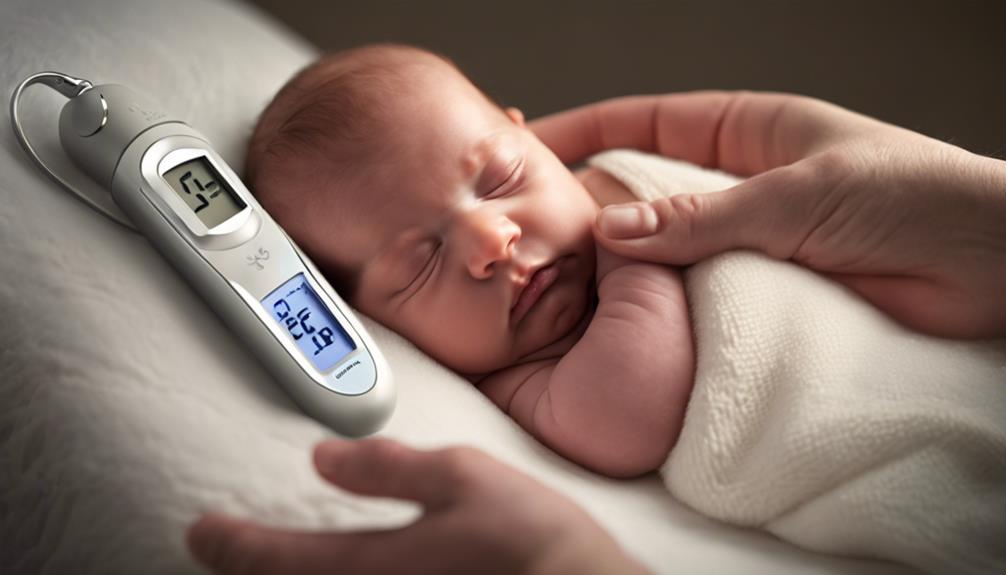
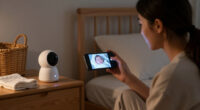
For a dependable way to check a newborn temperature, I would start with the Frida Baby Digital Rectal Thermometer for a direct reading, while the iHealth PT3 is a convenient no-touch option for quick screening. The Frida Baby 3-in-1 Infrared Thermometer adds ear and forehead modes for families who want more flexibility. The main tradeoff is between the direct contact method and the speed and convenience of infrared devices, whose readings can depend on correct positioning and use. I compare all 15 options by method, usability, and fit for different household needs below. Read on for the full breakdown and practical guidance on choosing a thermometer for a newborn.

Get baby and family essentials delivered free — and shop member deals
- Fast, free delivery on millions of items
- Access to Prime Big Deal Days deals on October 6–7
- Prime Video, Amazon Music and more included
Complete the kit


Key Takeaways
- The Frida Baby Digital Rectal Thermometer has the clearest newborn-specific role: it is dedicated to rectal use, while many other picks are multipurpose devices.
- The iHealth PT3 prioritizes quick, touch-free checks: it is a practical screening choice, though it does not offer the measurement-method flexibility of ear-and-forehead models.
- Multi-mode does not mean every method suits every age: the Elera and Frida Baby infrared models offer multiple modes, so parents should follow the age and use guidance for each mode.
- Simple contact thermometers remain useful alternatives: the Vicks SpeedRead and 8 Seconds models support contact measurement, while the Safety 1st analog nursery model avoids batteries and digital features.
- Several no-touch picks serve similar needs: ANMEATE, Goodbaby, Viproud, Berrcom, and the generic no-touch models mainly differ in controls and included functions, so buyers should check the exact instructions and features before choosing.
| Safety 1st Rapid Read 3-in-1 Thermometer | 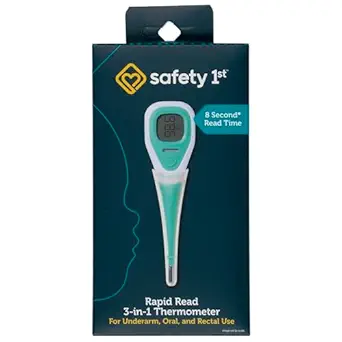 | Best Budget Baseline | Use modes: Oral, underarm, and rectal | Reading time: 8 seconds | Completion alert: Beeps when reading is complete | VIEW ON AMAZON | See Our Full Breakdown |
| Elera Ear and Forehead Thermometer for Kids and Adults |  | Best Two-in-One Flexibility | Modes: Forehead, ear, room, object, liquid | Reading time: 1 second | Accuracy: Within ±0.4°F | VIEW ON AMAZON | See Our Full Breakdown |
| No-Touch Digital Forehead Thermometer for Adults and Kids | 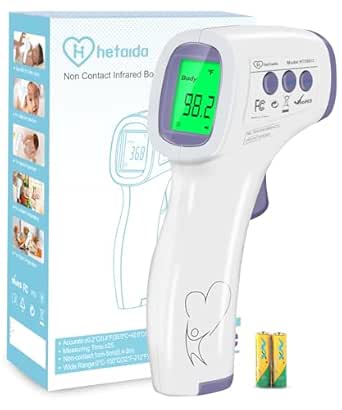 | Best for Fever Tracking | Measurement technology: Infrared, non-contact | Measurement distance: 2-3.15 inches | Response time: 1 second | VIEW ON AMAZON | See Our Full Breakdown |
| iHealth PT3 No-Touch Forehead Thermometer |  | Best Overall for Newborns | Model: PT3 | Measurement distance: Within 1.18 inches of forehead center | Reading time: 1 second | VIEW ON AMAZON | See Our Full Breakdown |
| Tempx 8 Seconds Thermometer for Adults and Kids |  | Best for Confirmation Readings | Use modes: Oral, rectal, underarm | Reading time: 8 seconds | Display precision: 0.01° | VIEW ON AMAZON | See Our Full Breakdown |
| ANMEATE Non-Contact Forehead Thermometer for Adults and Kids |  | Best Memory for Tracking Fevers | Type: Digital infrared thermometer | Measurement method: Non-contact forehead | Response time: 1 second | VIEW ON AMAZON | See Our Full Breakdown |
| Vicks SpeedRead Digital Thermometer for Babies, Kids, and Adults |  | Best Accuracy on a Budget | Measurement time: 8 seconds | Accuracy: ±0.2°F | Methods: Oral, rectal, or underarm | VIEW ON AMAZON | See Our Full Breakdown |
| Safety 1st 3-in-1 Nursery Thermometer, Analog |  | Best Backup Thermometer | Type: Analog thermometer | Reading time: About 30 seconds | Units: °F and °C | VIEW ON AMAZON | See Our Full Breakdown |
| Goodbaby No-Touch Forehead Thermometer for Adults, Children, and Infants |  | Best All-in-One Nursery Tool | Measurement method: Infrared, no-touch | Modes: Forehead, room, and object temperature | Units: Celsius and Fahrenheit | VIEW ON AMAZON | See Our Full Breakdown |
| Berrcom 3-in-1 Contactless Infrared Thermometer (JXB-178, White) |  | Best for Nighttime Checks | Type: 3-in-1 non-contact infrared thermometer | Measurement modes: Body, milk, food, and room temperature | Response time: 1 second | VIEW ON AMAZON | See Our Full Breakdown |
| Frida Baby 3-in-1 Infrared Thermometer for Ear, Forehead, and Touchless Use |  | Best All-in-One Family Thermometer | Measurement modes: Ear, forehead, and touchless | Reading time: 1 second | Temperature memory: Up to 40 readings | VIEW ON AMAZON | See Our Full Breakdown |
| Berrcom Non-Contact Infrared Forehead Thermometer, 3-in-1 Digital Fever Check Temperature Gun (Purple) |  | Best Nighttime Fever Alerts | Measurement modes: Forehead, milk/object, and room temperature | Reading time: 1 second | Alerts: Color-coded backlight and audible fever alarm at 38°C/100.4°F | VIEW ON AMAZON | See Our Full Breakdown |
| Viproud Non-Contact Infrared Forehead Thermometer for Adults and Kids |  | Best Value No-Touch Pick | Measurement modes: Forehead and object | Response time: 1 second | Display: Digital LED | VIEW ON AMAZON | See Our Full Breakdown |
| Frida Baby 3-in-1 Thermometer for Infants and Kids |  | Best for Newborn Accuracy | Measurement methods: Rectal, oral, and underarm | Reading time: 10 seconds | Features: Automatic second check, memory recall, LED lights, parent-proof stopper | VIEW ON AMAZON | See Our Full Breakdown |
| Frida Baby Digital Rectal Thermometer for Babies |  | Best Dedicated Rectal Thermometer | Display type: Digital | Response time: About 10 seconds | Memory: Stores up to 10 readings | VIEW ON AMAZON | See Our Full Breakdown |
| way to check newborn temperature | Memory | Reading time |
|---|---|---|
| Safety 1st Rapid Read 3-in-1 T | — | 8 seconds |
| Elera Ear and Forehead Thermom | Up to 40 readings | 1 second |
| No-Touch Digital Forehead Ther | 50 readings | — |
| iHealth PT3 No-Touch Forehead | — | 1 second |
| Tempx 8 Seconds Thermometer fo | Last reading recall | 8 seconds |
| ANMEATE Non-Contact Forehead T | 35 readings | — |
| Vicks SpeedRead Digital Thermo | Recalls the last temperature | — |
| Safety 1st 3-in-1 Nursery Ther | — | About 30 seconds |
| Goodbaby No-Touch Forehead The | — | — |
| Berrcom 3-in-1 Contactless Inf | Last 32 readings | — |
| Frida Baby 3-in-1 Infrared The | — | 1 second |
| Berrcom Non-Contact Infrared F | Last 32 readings | 1 second |
| Viproud Non-Contact Infrared F | 35 readings | — |
| Frida Baby 3-in-1 Thermometer | — | 10 seconds |
| Frida Baby Digital Rectal Ther | Stores up to 10 readings | — |
More Details on Our Top Picks
Safety 1st Rapid Read 3-in-1 Thermometer
Pediatricians consistently point to rectal readings as the most accurate method for newborns, and this is where the Safety 1st Rapid Read earns its place. Unlike the infrared options in this roundup, it delivers a direct-contact measurement that isn’t thrown off by ambient temperature or measurement distance — the two biggest accuracy traps for forehead scanners like the iHealth PT3. The 8-second read time is quick for a contact thermometer, though it feels slow compared to the 1-second infrared picks. Its real strength is simplicity: one flexible tip, three use modes, a beep when it’s done. Compared with the similarly timed Tempx 8-Second model, this one adds the flexible tip and the trusted Safety 1st nursery pedigree. The tradeoff is honest — you’re giving up the convenience of touchless checks for the reliability of direct measurement, and cleanup between modes is on you.
Pros:- Rectal mode offers the most accurate readings for newborns
- Three use modes (oral, underarm, rectal) cover the whole family
- Flexible tip makes contact use more comfortable
- Beep confirmation means you don’t have to watch the display
Cons:- Requires contact and thorough cleaning between uses and users
- 8 seconds is slow next to 1-second infrared alternatives
- No fever alarm, backlight, or memory features
Best for: New parents who want a clinically reliable rectal option for a newborn’s first months without spending much
Not ideal for: Parents of squirming toddlers or anyone who wants middle-of-the-night checks without physical contact
- Use modes:Oral, underarm, and rectal
- Reading time:8 seconds
- Completion alert:Beeps when reading is complete
- Tip:Flexible for comfort
- Measurement type:Direct contact
- Best newborn method:Rectal use
Our verdict“A dependable, low-cost contact thermometer that makes the most sense as a newborn’s dedicated rectal device during the first months.”
Elera Ear and Forehead Thermometer for Kids and Adults
Most thermometers in this roundup force a choice between forehead and ear, but the Elera does both in one device — a genuine advantage as your newborn grows into an ear-check-friendly toddler. Its dual-mode design plus room, object, and liquid measuring makes it more versatile than the iHealth PT3, which sticks to forehead-only readings. The 4-color fever display (blue, green, yellow, red) gives an instant visual cue that’s faster to parse than a number on the Goodbaby-style single backlit screens, and the mute mode is a real gift during night checks. The 40-reading memory helps you track a fever’s trajectory for the pediatrician. Tradeoffs: ear mode isn’t recommended under about six months of age, so newborn parents will lean on forehead mode early on, and ±0.4°F accuracy is looser than the ±0.2°C claim of the No-Touch Digital model. Probe positioning also affects ear readings more than marketing suggests.
Pros:- Dual forehead and ear modes cover newborns through adults
- 4-color LCD fever levels are readable at a glance
- Mute mode protects sleep during overnight checks
- Also measures room, object, and liquid temperatures
- 40-reading memory recall for tracking fevers
Cons:- Ear mode unreliable for infants under six months
- ±0.4°F accuracy is looser than competing forehead-only models
- Ear readings depend heavily on correct probe angle in the canal
Best for: Parents who want one thermometer that adapts from newborn forehead checks to toddler and adult ear readings
Not ideal for: Parents of babies under six months, since ear mode is unreliable on tiny ear canals
- Modes:Forehead, ear, room, object, liquid
- Reading time:1 second
- Accuracy:Within ±0.4°F
- Display:LCD with 4-color fever indicator
- Memory:Up to 40 readings
- Alerts:Fever alarm with mute function
- Units:Switchable °C and °F
- Power:2 AAA batteries (included)
Our verdict“The most sensible pick for a growing family that wants one device to carry from the nursery into the school years.”
No-Touch Digital Forehead Thermometer for Adults and Kids
When you’re logging a fever overnight, details matter, and this model’s 50-reading memory is the deepest in this batch — more than the Elera’s 40 and far beyond the iHealth PT3, which offers no recall at all. The ±0.2°C accuracy claim is also the tightest spec here, which matters for newborns where a fraction of a degree changes the call to the pediatrician. Its 3-color backlit alarm mirrors the Goodbaby and Berrcom approach, but the extra body/room/object/liquid modes make it a genuine nursery multitasker — checking bath water or crib temperature without contact. The catch: it demands a precise 2 to 3.15 inch distance, and drifting outside that window degrades readings quickly. It’s also disposable-battery powered with no rechargeable option. Compared with the iHealth’s simpler single-button flow, this one takes a little more practice to use consistently right.
Pros:- 50-reading memory is the largest in this roundup
- Tight ±0.2°C accuracy rating
- Body, room, object, and liquid modes in one device
- 3-color backlit fever alarm readable in the dark
- FDA certification and 12-month warranty
Cons:- Readings depend on holding a precise 2-3.15 inch distance
- AAA batteries only, no rechargeable option
- Steeper learning curve than single-button rivals
Best for: Parents managing an ongoing fever who want to track readings over time and share the log with a doctor
Not ideal for: Anyone wanting grab-and-go simplicity — the fixed measurement distance requires consistent technique
- Measurement technology:Infrared, non-contact
- Measurement distance:2-3.15 inches
- Response time:1 second
- Accuracy:Within ±0.2°C
- Display:3-color backlit LCD
- Memory:50 readings
- Power:2 AAA batteries (included)
- Certification:FDA
- Warranty:12 months
Our verdict“A strong choice for detail-oriented parents who want accuracy specs and memory depth for fever monitoring, provided they master the measurement distance.”
iHealth PT3 No-Touch Forehead Thermometer
For a sleeping newborn, the winning combination is speed, silence, and simplicity, and the iHealth PT3 nails all three. Its single-button operation means you can take a reading one-handed in a dark nursery — no mode menus to fumble through like the Elera or the No-Touch Digital model. The gentle vibration notification instead of a beep is the quietest alert design in this lineup, and the extra-large LED display is legible from across the crib. Tri-point sensing with over 100 data points per second is a more sophisticated accuracy approach than most budget infrared rivals. Tradeoffs are real, though: it’s forehead-only, so you lose the ear flexibility of the Elera and the room/liquid modes of the No-Touch Digital. The ~1.18 inch working distance is close enough that you’ll be leaning over the crib, and ambient conditions can still skew results — it complements rather than replaces a rectal thermometer like the Safety 1st for confirmations.
Pros:- Single-button operation ideal for one-handed nighttime use
- Vibration alert instead of beeps won’t wake a sleeping baby
- Extra-large LED display readable in total darkness
- Tri-point sensor array with 100+ data points per second
- Works for all ages, batteries included
Cons:- Forehead-only — no ear or object modes
- Requires holding the unit within about 1.18 inches
- Ambient temperature changes can affect infrared accuracy
Best for: New parents who need fast, silent, one-handed checks on a sleeping newborn
Not ideal for: Anyone wanting one device for everything — no ear mode, no object or room measurements
- Model:PT3
- Measurement distance:Within 1.18 inches of forehead center
- Reading time:1 second
- Sensors:Infrared, distance, and environmental
- Display:Extra-large LED
- Notification:Gentle vibration (no beeps)
- Power:2 AAA batteries (included)
- Age range:All ages
- Warranty:12 months
Our verdict“The best default pick for newborn households that prizes silent, effortless checks, ideally paired with a contact thermometer for confirmation.”
Tempx 8 Seconds Thermometer for Adults and Kids
Every infrared thermometer in this roundup can drift — that’s the nature of non-contact measurement — and the Tempx is the affordable contact device that backs them up. Like the Safety 1st Rapid Read, it delivers results in 8 seconds across oral, rectal, and underarm use, but it goes further with a 10-beep fever alert above 98.6°F and last-reading memory, features the Safety 1st lacks. The 0.01° display precision is finer than most contact thermometers bother with. Where it’s weaker: the fever threshold is fixed at 98.6°F, which triggers alerts on readings that aren’t actually fevers (especially oral readings after feeding), and it lacks the flexible comfort tip of the Safety 1st. Compared with touchless picks like the Goodbaby or iHealth PT3, it’s slower and requires cleaning between uses, but its readings won’t swing with room temperature or distance errors.
Pros:- Contact measurement immune to distance and ambient drift
- Fever alert with 10 audible beeps for immediate notice
- Memory recall of the last reading for comparison
- 0.01° display precision and °F/°C switching
Cons:- Fever threshold fixed at 98.6°F causes false alarms on normal elevated readings
- No flexible tip, so comfort lags the Safety 1st Rapid Read
- Requires cleaning between uses and users
Best for: Parents who want a low-cost contact thermometer to double-check forehead readings before calling the pediatrician
Not ideal for: Anyone doing frequent middle-of-the-night checks on a light sleeper — contact and beeping don’t mix
- Use modes:Oral, rectal, underarm
- Reading time:8 seconds
- Display precision:0.01°
- Fever alert:10 beeps above 98.6°F
- Memory:Last reading recall
- Units:Switchable °F and °C
Our verdict“A sensible backup thermometer for verifying infrared readings, best bought alongside a touchless model rather than instead of one.”
ANMEATE Non-Contact Forehead Thermometer for Adults and Kids
Most budget infrared thermometers in this roundup stop at 10 or 20 stored readings, but the ANMEATE keeps a full 35-reading history, which is exactly what you want when a pediatrician asks how a fever has trended overnight. The color-coded green, yellow, and red backlight does the interpreting for you at 3 a.m., and the mute mode means you can check a sleeping newborn without the beep waking them. Compared with the Goodbaby below, ANMEATE offers more memory but skips the room and surface temperature modes, so it is more focused and less versatile. The one-second read speed matches the Berrcom’s pace. The tradeoff: infrared accuracy depends on consistent technique and a calm room, so treat it as a screening tool rather than a diagnostic certainty.
Pros:- 35-reading memory builds a fever history you can actually share with a doctor
- Green/yellow/red backlight makes results readable at a glance in the dark
- Mute mode protects a sleeping newborn from a beeping wake-up
- One-second non-contact reading works for the whole family
Cons:- Infrared readings can drift if technique or room conditions vary
- Runs on AAA batteries that need replacing, with no rechargeable option
Best for: Parents tracking a multi-day fever who want a readable temperature log to share with their pediatrician
Not ideal for: Anyone who wants one device for milk, bath, and room temperatures — this model measures foreheads only
- Type:Digital infrared thermometer
- Measurement method:Non-contact forehead
- Response time:1 second
- Memory:35 readings
- Display:Backlit with green, yellow, and red indicators
- Units:Fahrenheit and Celsius
- Power source:2 AAA batteries (included)
Our verdict“Choose this if fever tracking over several days matters more than multi-surface measuring versatility.”
Vicks SpeedRead Digital Thermometer for Babies, Kids, and Adults
For newborns specifically, pediatric guidance favors rectal readings as the most accurate method, and the Vicks SpeedRead handles that job with a stated accuracy of ±0.2°F — a spec most infrared models in this roundup don’t publish. It delivers a reading in 8 seconds, which is slow next to the ANMEATE’s one-second scan but far faster than the Safety 1st analog’s 30-second wait. The Fever InSight color-coded display and last-reading recall round out a genuinely practical package. The tradeoff is the one every contact thermometer carries: it must be cleaned between uses and between family members, and underarm readings run lower and less reliable than rectal ones. If you want a trustworthy number rather than a quick estimate, this is the stronger pick.
Pros:- ±0.2°F accuracy beats the unpublished tolerances of most infrared rivals
- Works orally, rectally, or underarm so it grows with the child
- Water-resistant body simplifies sanitizing between uses
- Color-coded display plus last-reading recall in a proven brand
Cons:- Requires contact and thorough cleaning between every use
- 8-second read time demands a cooperative, still baby
Best for: Caregivers who prioritize clinical accuracy for a newborn and will take proper rectal readings
Not ideal for: Parents of squirming older babies who won’t hold still for a contact-based 8-second reading
- Measurement time:8 seconds
- Accuracy:±0.2°F
- Methods:Oral, rectal, or underarm
- Display:Fever InSight color-coded display
- Memory:Recalls the last temperature
- Cleaning:Water resistant
- Warranty:1-year limited
Safety 1st 3-in-1 Nursery Thermometer, Analog
Every nursery drawer needs a fallback that never runs out of batteries, and that is precisely this analog thermometer’s role. With a flexible tip and three usable routes — oral, rectal, or underarm — it covers the basics without electronics that can fail or drift. The honest tradeoff is the 30-second reading time, roughly four times slower than the Vicks SpeedRead and glacial next to the ANMEATE’s one-second scan, which makes it tough with a fussy newborn. There’s also no fever alarm or memory — you read the dial yourself and remember the number yourself. Compared with the digital options here, it trades convenience for dependability, and that’s a reasonable swap for a backup you stash in a diaper bag or hope you never need at 2 a.m. when the primary thermometer’s batteries die.
Pros:- No batteries means it always works when you grab it
- Flexible tip adds comfort for contact readings
- Three measurement methods match the Vicks’s versatility
- Simple mechanical design with nothing to calibrate or charge
Cons:- 30-second reading time is the slowest in this lineup
- No memory, no fever alarm, and no backlight — just a dial and a beep
Best for: Parents who want a battery-free backup thermometer for the diaper bag or emergency kit
Not ideal for: Anyone checking a feverish, wiggly newborn — 30 seconds of stillness is a big ask
- Type:Analog thermometer
- Reading time:About 30 seconds
- Units:°F and °C
- Modes of use:Oral, rectal, or underarm
- Tip:Flexible
- Completion alert:Beeps when reading is complete
Goodbaby No-Touch Forehead Thermometer for Adults, Children, and Infants
The Goodbaby earns its spot by measuring more than foreheads — it also reads room and object temperatures, which quietly makes it a nursery multitasker: check the crib room’s chill, the bathwater warmth, and the baby, all with one device. Unlike the ANMEATE, which is forehead-only, this covers the full nursery checklist. The catch is that accuracy depends on discipline: you need to hold it about 1.5 inches from the center of the forehead, wait 10 seconds between measurements, and keep room temperature between 50°F and 104°F for reliable results. That’s more technique than the Vicks SpeedRead demands for its contact readings. For nightly peace-of-mind checks on a sleeping infant, though, the no-touch approach is hard to beat, and the 12-month replacement coverage adds a little reassurance.
Pros:- Forehead, room, and object modes replace multiple nursery gadgets
- Truly contactless checks won’t disturb a sleeping infant
- Works for the entire household, infants through adults
- 12-month replacement coverage backs the purchase
Cons:- Requires holding a specific 1.5-inch distance for accurate readings
- Performance drops outside a stable 50–104°F room environment
Best for: New parents who want one device for forehead, room, and surface checks around the nursery
Not ideal for: Caregivers who want a single definitive number — infrared screening still lags rectal accuracy
- Measurement method:Infrared, no-touch
- Modes:Forehead, room, and object temperature
- Units:Celsius and Fahrenheit
- Recommended distance:1.5 inches from forehead center
- Interval between measurements:10 seconds
- Operating room temperature:50°F–104°F
- Included:Thermometer, manual, quick guide, 2 AAA batteries
Our verdict“The most versatile nursery tool here if you follow the measuring instructions carefully.”
Berrcom 3-in-1 Contactless Infrared Thermometer (JXB-178, White)
What separates the Berrcom JXB-178 from the infrared crowd is its alarm logic tied directly to the display: green for normal, orange for slight fever, and a red screen plus audible alert above 38°C — so at midnight you glance, not squint. The backlit LCD stays readable in a dark nursery, and one-second readings plus 32-reading memory put it in the same performance class as the ANMEATE, though with slightly less stored history. Its 3-in-1 body, milk, food, and room modes make it more flexible than the ANMEATE and roughly on par with the Goodbaby. Two real annoyances: batteries are not included, so it arrives unusable until you shop, and it demands the same 3–5 cm hold distance and stable room conditions as every infrared rival — miss that technique and the number means little.
Pros:- Three-color fever alarm with audible high-fever alert removes guesswork
- Backlit display is genuinely readable in a dark room
- Measures body, milk, food, and room temperatures
- 32-reading memory plus 30-second auto shut-off stretches battery life
Cons:- Batteries not included, so it can’t be used straight out of the box
- Accuracy depends on correct 3–5 cm distance and stable room conditions
Best for: Parents doing frequent overnight checks who need instant, glanceable color-coded results
Not ideal for: Anyone expecting a ready-to-go device out of the box — the missing batteries mean a store trip first
- Type:3-in-1 non-contact infrared thermometer
- Measurement modes:Body, milk, food, and room temperature
- Response time:1 second
- Memory:Last 32 readings
- Fever alarm:Green/orange/red display with audible alert above 38°C
- Units:°C and °F
- Auto shut-off:30 seconds
- Power source:Batteries not included
Our verdict“The best pick for groggy 2 a.m. checks, provided you stock AAA batteries before the first fever arrives.”
Frida Baby 3-in-1 Infrared Thermometer for Ear, Forehead, and Touchless Use
Among the touchless options in this roundup, this Frida Baby 3-in-1 stands out for flexibility: it reads the ear, forehead, and objects without contact, so it covers a sick newborn, a sleeping toddler, and a suspiciously warm bottle with one device. Compared with the Viproud, which is forehead-only, the added ear mode gives parents a fallback when a forehead reading seems off. The 40-reading memory is the largest in this batch, which matters when you are tracking a fever overnight and reporting numbers to a pediatrician. The tradeoff: ear readings require more technique than a simple forehead sweep, and being battery-dependent means a dead cell at 2 a.m. is a real possibility.
Pros:- Three measurement modes cover people, bottles, and rooms
- One-second readings minimize disturbance
- Stores up to 40 readings for fever tracking
- Compact size with an included storage pouch
Cons:- Requires batteries that can die unexpectedly
- Ear mode takes practice to position correctly on a small infant
Best for: Parents who want a single device for baby temperatures, bottle checks, and nursery climate monitoring
Not ideal for: Anyone wanting a clinically gold-standard method for newborns — rectal options like the Frida Baby Digital Rectal are more accurate for infants under three months
- Measurement modes:Ear, forehead, and touchless
- Reading time:1 second
- Temperature memory:Up to 40 readings
- Alerts:Color-coded screen and optional sound alerts
- Power source:Batteries
- Included accessory:Storage pouch
Our verdict“The most versatile pick here for families who want one thermometer to handle every temperature question the household throws at them.”
Berrcom Non-Contact Infrared Forehead Thermometer, 3-in-1 Digital Fever Check Temperature Gun (Purple)
This Berrcom earns its spot for middle-of-the-night duty. The green/orange/red color-coded display plus an audible alarm above 100.4°F means a groggy parent gets an instant answer without squinting at digits — something the Goodbaby and iHealth PT3 also offer visually, but Berrcom pairs the backlight with the alarm for a clearer alert. Readings land in one second from a 3–5 cm distance, so you can check a sleeping newborn without waking them. The 32-reading memory trails the Frida Baby 3-in-1’s 40, and it skips an ear mode entirely. Its real weakness is drift: forehead readings can run low if you hold it at the wrong distance, so technique matters.
Pros:- Color-coded display readable in the dark
- Audible alarm triggers above fever threshold
- One-second no-touch readings from 3–5 cm
- Stores 32 readings and switches between °C and °F
Cons:- Accuracy depends on holding the correct distance from the forehead
- No ear mode, so you cannot cross-check readings a second way
Best for: Parents doing frequent overnight checks who want an unmissable visual and audio fever warning
Not ideal for: Caregivers who want clinical precision for a newborn under three months — a rectal model like the Frida Baby Digital Rectal remains the standard
- Measurement modes:Forehead, milk/object, and room temperature
- Reading time:1 second
- Alerts:Color-coded backlight and audible fever alarm at 38°C/100.4°F
- Memory:Last 32 readings
- Measurement distance:3–5 cm
- Display:Backlit LCD
- Units:Celsius and Fahrenheit switchable
Our verdict“A strong pick if your priority is fast, loud, unambiguous fever alerts during night shifts with a sick baby.”
Viproud Non-Contact Infrared Forehead Thermometer for Adults and Kids
If you want a straightforward forehead thermometer without extra modes driving up complexity, the Viproud makes the most sense. Its large LED display is easier to read at a glance than the Berrcom’s smaller screen, and the mute mode lets you take a reading over a sleeping newborn in total silence. It handles forehead, room, and food temperatures, though unlike the Frida Baby 3-in-1 it cannot switch to ear mode when you want a second opinion. The 0.1° resolution helps you spot small upward trends. Two things hold it back: the listed range stops at 89.6–109.2°F, and you are locked into AAA batteries, so keep spares in the nursery drawer.
Pros:- Non-contact design works on sleeping babies
- Large, bright display with 0.1° resolution
- Mute mode plus color-coded fever guidance
- Batteries included and 30-second auto shut-off
Cons:- Limited temperature range of 89.6–109.2°F
- No ear mode for cross-checking a forehead reading
- Runs on AAA batteries that need occasional replacing
Best for: Budget-conscious parents who want simple, silent, no-touch forehead readings for the whole family
Not ideal for: Households that want multi-method flexibility — the Frida Baby 3-in-1’s ear mode and larger memory offer more for a bit more money
- Measurement modes:Forehead and object
- Response time:1 second
- Display:Digital LED
- Memory:35 readings
- Temperature range:89.6–109.2 °F
- Resolution:0.1 °C / 0.1 °F
- Power source:2 AAA batteries (included)
- Auto shut-off:30 seconds
Our verdict“A no-frills forehead scanner that covers the basics dependably for families who do not need every measurement mode.”
Frida Baby 3-in-1 Thermometer for Infants and Kids
For babies under three months, pediatricians overwhelmingly recommend rectal readings, and this Frida Baby model is the most reassuring way to do it. The parent-proof stopper prevents inserting the flexible tip too far — a safety feature the Vicks SpeedRead and the 8 Seconds Thermometer lack — and the automatic second check confirms the reading before you act on it. A 10-second wait is slower than the one-second infrared models, but contact methods trade speed for reliability. It also grows with your child via oral and underarm modes for later years. The honest tradeoff: cleanup is more involved than wiping a no-touch gun, and many parents find rectal use uncomfortable the first few times despite the flexible tip.
Pros:- Rectal, oral, and underarm use spans infancy through childhood
- Parent-proof stopper makes rectal use safe
- Automatic second check reinforces reading confidence
- Flexible, waterproof tip with a carrying case
Cons:- 10-second readings are slower than one-second infrared options
- Contact methods require more cleaning between uses
- Rectal technique takes getting used to for new parents
Best for: Parents of newborns under three months who need doctor-trusted accuracy for fever decisions
Not ideal for: Anyone wanting quick, low-hassle checks on a wriggling toddler — a no-touch model like the Berrcom is far easier at that age
- Measurement methods:Rectal, oral, and underarm
- Reading time:10 seconds
- Features:Automatic second check, memory recall, LED lights, parent-proof stopper
- Design:Flexible tip, waterproof
- Age range:Infants, toddlers, and children
- Included accessories:Carrying case
Our verdict“The right choice when accuracy genuinely matters most — namely, fever decisions in a newborn’s first three months.”
Frida Baby Digital Rectal Thermometer for Babies
Compared with the Frida Baby 3-in-1, this model is the focused specialist: it does one job — rectal temperature — and its 1.5-inch immersion depth with stopper makes that job safer and simpler than a general-purpose stick thermometer like the Vicks SpeedRead, which was not built around newborn rectal use. Readings arrive in about 10 seconds, and the 10-reading memory is enough for tracking a single illness, though far short of the 35–40 readings stored by the infrared picks in this roundup. Since it stays in the nursery as a dedicated newborn tool, cross-contamination concerns fade. The limitation is obvious: once your child outgrows rectal readings, this device has no second act, and hand-wash-only care adds a step after every use.
Pros:- Stopper controls insertion depth for safe rectal use
- Flexible tip designed for infant comfort
- Readings in about 10 seconds with 0.1° resolution
- Protective case for storage and travel
Cons:- Rectal use only — no alternate measurement methods
- Hand-wash-only care adds cleaning effort
- Smaller 10-reading memory limits long-term fever tracking
Best for: New parents building a newborn kit who want a safe, purpose-built rectal thermometer
Not ideal for: Families wanting one long-term device — the Frida Baby 3-in-1 with oral and underarm modes will outlast the newborn stage
- Display type:Digital
- Response time:About 10 seconds
- Memory:Stores up to 10 readings
- Resolution:0.1°F / 0.1°C
- Immersion depth:1.5 inches
- Power source:1 battery (included)
- Care instructions:Hand wash only
- Included:Protective storage case
Our verdict“A single-purpose newborn tool that does its one job with better safety engineering than general stick thermometers.”

How We Picked
I ranked these thermometers by how clearly their measurement method fits newborn care, how straightforward they appear to use, and how much flexibility they offer across a household. A dedicated rectal thermometer has a distinct role because it is designed around one direct measurement method; no-touch forehead models are easier for quick checks, while ear-and-forehead devices cover more situations but require readers to select and use the right mode. I also considered readability, memory or alarm features where specified, and practical details such as whether batteries are included.
The ordering reflects those differences rather than treating every fast-reading device as interchangeable. I put the newborn-focused rectal option first for direct measurement, then favor convenient no-touch or multi-mode choices according to their stated use and versatility. Contact digital and analog models follow for households that prefer simpler tools. Product names and descriptions alone cannot establish clinical accuracy, so I recommend following each manual and asking a pediatric clinician which method to use for a newborn.
Factors to Consider When Choosing Way To Check Newborn Temperature
Choosing a thermometer starts with deciding how you plan to measure, then matching that method to your baby’s age, your comfort with the technique, and your household routine. The points below cover decisions that product feature lists cannot settle on their own.
Choose the measurement method with your clinician
Before buying, ask your baby’s clinician which temperature method they want you to use and how to report the result. Methods can produce readings that are not directly interchangeable, so a number from one location should not be casually compared with a number from another. A dedicated rectal thermometer offers a direct contact method, while a forehead device is easier to use for a quick check. That convenience can make it useful for screening, but it does not replace instructions from your clinician. Avoid switching methods mid-check when you are tracking a change. Keep the chosen method consistent and note it when sharing readings.
Match the device to newborn handling
A newborn may be asleep, moving, or unsettled, and that affects which thermometer feels practical at home. A no-touch model can take a quick forehead reading without placing a probe, which may suit a sleeping baby. Contact methods ask for closer handling and a steady position, so consider whether you can follow the instructions calmly and safely. Do not choose a mode just because its label suggests it is simple; read the manual for age limits and placement steps. If another caregiver will take readings, make sure both of you can use the same method correctly. Ease of use matters most when it helps you get a consistent reading without rushing.
Treat infrared readings as technique-dependent
Forehead thermometers measure infrared energy, and their results can vary with distance, angle, and the condition of the skin. Follow the manufacturer’s directions for where to aim and how far away to hold the device. Hair, a hat, sweat, or a recently covered forehead may affect a reading, so check the manual for guidance before measuring. Room conditions can also matter for some devices; allow the thermometer and baby to adjust as instructed. If a result seems unexpected, repeat it according to the manual and contact your clinician for advice rather than relying on repeated guesses. A fast display only helps when the measurement was taken correctly.
Decide whether extra modes are useful
Multi-mode devices can serve different family members, but extra modes add choices that can be confusing during a stressful moment. An ear-and-forehead thermometer may be useful as a child grows, while a simpler single-purpose model can make the routine easier to remember. Check the manufacturer’s age guidance for each mode, since the same device may not recommend every method for a newborn. Memory recall can help track readings, but only if you record the method and time alongside them. Fever alarms can draw attention to a reading, yet they do not interpret a baby’s symptoms or replace medical advice. Pay for flexibility only when you expect to use it.
Plan for cleaning, storage, and power
Thermometers need a clear home routine: know how to clean the probe or sensor, where to store the device, and whether it needs replacement covers or batteries. A contact model may need cleaning between uses, while an infrared sensor still needs care according to its manual. Check whether batteries are included; the Berrcom JXB-178 listing specifically says they are not. Keep instructions with the device so another caregiver can confirm the method and settings. Store it where you can find it quickly but away from the baby’s reach. These small practical details can matter more than an extra display feature when you need a reliable routine.
Frequently Asked Questions
Should I choose a rectal thermometer or a no-touch forehead thermometer for my newborn?
Ask your newborn’s clinician which method they want you to use, since the preferred method can depend on the baby’s age and the reason for checking. A rectal thermometer is designed for direct contact measurement, while a no-touch forehead model offers a quicker, less intrusive check. These methods can produce readings that should not be treated as interchangeable. If the reading is concerning or your baby seems unwell, follow your clinician’s instructions rather than relying on a device’s alarm. Use one method consistently when tracking changes.
Can I use an ear thermometer on a newborn?
Check the specific thermometer’s instructions and ask your clinician before using its ear mode on a newborn. Some devices include ear measurement for older babies or children, and the presence of that mode does not mean it is recommended for every age. Ear readings also depend on positioning and the device’s technique. A forehead or contact method may be more appropriate under the guidance you receive. Keep the manual accessible so caregivers use only age-approved modes.
What should I do if a no-touch thermometer gives a surprising reading?
First, confirm that you used the correct mode, distance, and forehead location described in the manual. Check whether the forehead was sweaty or covered, and repeat the measurement only as the instructions allow. Do not switch to another measurement site and assume the numbers can be compared directly. If the result remains concerning, or your baby’s condition worries you, contact your clinician for advice. For a newborn, clinical guidance should take priority over repeated device readings.
Is a multi-mode thermometer worth choosing if I only need it for my newborn now?
It may be useful if you expect to use other modes as your child grows or want one device for several family members. The tradeoff is added complexity: caregivers have to select the correct mode and follow different placement instructions. Check the age guidance for each mode before buying, because not every function may be suitable for newborn use. If you want the simplest routine, a dedicated device or straightforward single-method model may be easier to use consistently. Choose versatility only when it matches a real household need.
Do I need a separate thermometer for my baby?
A separate thermometer can make it easier to keep a consistent method and know how the device is cleaned and stored. Some listed models are designed for use by both adults and children, so one device may serve the household if the manual supports that use. With a shared thermometer, follow cleaning instructions between users and keep track of which mode was used. A dedicated newborn option can reduce mode confusion, particularly when several caregivers are involved. Ask your clinician whether they recommend a particular type for your baby.
Conclusion
For the clearest newborn-specific pick, I recommend the Frida Baby Digital Rectal Thermometer as best overall for families whose clinician advises rectal measurement. The Safety 1st 3-in-1 Nursery Thermometer, Analog is my value-minded choice for buyers who prefer a basic, battery-free instrument, while the Frida Baby 3-in-1 Infrared Thermometer is the premium-style choice for households wanting multiple infrared modes. Beginners who want a quick, touch-free check can start with the iHealth PT3 and follow its instructions closely. For families who want a dedicated rectal model, choose the Frida digital; for a contact digital alternative, compare the Vicks SpeedRead and 8 Seconds thermometers. Match your choice to your clinician’s preferred method and the steps you can follow reliably.
Fall Picks
fall essentials
As an affiliate, we earn on qualifying purchases.