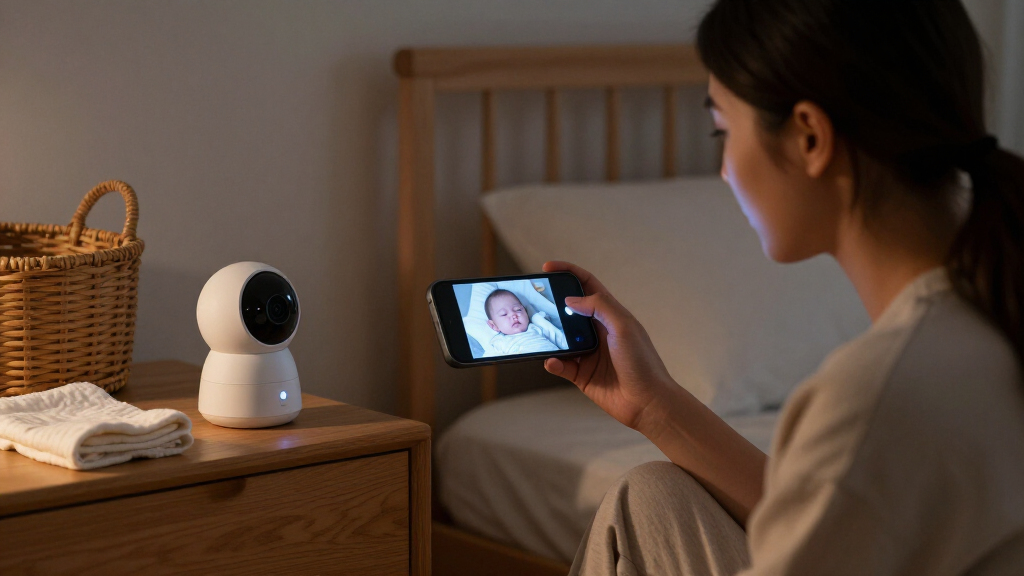

Smart baby monitors have split into two camps: Wi-Fi models with app integration, cry detection, and remote viewing, and no-Wi-Fi units that pair a dedicated camera with a parent screen for a private, hack-proof connection. After comparing 15 current models, the Nanit Smart Baby Monitor with Floor Stand & 8″ Display stands out as the best overall pick because it combines app-based sleep analytics with a dedicated display, so you’re not dependent on your phone at 3 a.m. The Owlet Dream Sock takes a different approach entirely, tracking heart rate and oxygen rather than video alone, while the Jartoo Hybrid is the rare model that lets you switch between Wi-Fi and no-Wi-Fi modes as your needs change. The main tradeoffs to weigh are privacy versus remote access, subscription costs versus one-time purchases, and screen-based convenience versus phone-only viewing. Keep reading for the full breakdown of all 15 monitors and which one fits your family.

Turn the school run and nap time into listening time
- Thousands of audiobooks, podcasts and originals
- Listen on your phone, tablet or Echo — also offline
- Cancel anytime
Key Takeaways
- Hybrid connectivity emerged as the strongest differentiator this year — the Jartoo and VTech Smart HD Plus let you use a dedicated screen at home and Wi-Fi viewing remotely, while phone-only models like the Owlet Dream Sight leave you stranded if your Wi-Fi drops.
- The Owlet Dream Sock is the only option here that tracks vital signs rather than just video, making it a category of one — but it’s a supplement to, not a replacement for, a camera monitor.
- No-Wi-Fi models (GoodBaby, HelloBaby HB6550 and HB6560) consistently delivered longer battery life, simpler setup, and zero privacy risk, at the cost of any ability to check in away from home.
- Screen size and quality varied more than camera quality across the lineup — several 2K cameras were paired with mediocre parent displays, which matters more than resolution specs if you glance at the screen all night.
- Nanit‘s two entries differ mainly in bundled hardware: the 8″ display bundle suits parents who want phone-free monitoring, while the camera-and-stand-only version suits app-first households.


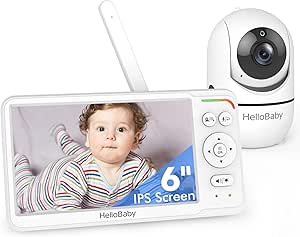


| smart baby monitor | Connectivity |
|---|---|
| Nanit Smart Baby Monitor with | WiFi (local network offline mode) |
| GoodBaby 5" Baby Monitor with | 2.4GHz FHSS encrypted, no WiFi |
| Owlet Dream Sight Smart Baby M | Dual-band WiFi (2.4/5 GHz), Bluetooth pairing |
| Jartoo Smart Baby Monitor with | Hybrid Wi-Fi and No-Wi-Fi (local) |
| VTech Smart HD Plus Smart WiFi | WiFi |
| Nanit Smart Baby Video Monitor | Wi-Fi |
| VTech Smart WiFi Baby Monitor | Wi-Fi |
| Dr.Care VistaView 5" 1080P Sma | — |
| HelloBaby HB6550 No WiFi Baby | 2.4GHz FHSS (no Wi-Fi) |
| 1080P WiFi Baby Monitor with C | 2.4GHz Wi-Fi or no-WiFi FHSS |
| Owlet Dream Sock Smart Baby Mo | Bluetooth, 2.4 GHz Wi-Fi |
| VTech Smart WiFi Baby Monitor | — |
| HelloBaby HB6560 Video Baby Mo | — |
| ARENTI Baby Monitor C3 Kit | WiFi 6, 2.4GHz FHSS encrypted |
| Momcozy Smart WiFi Baby Monito | 2.4GHz WiFi or non-WiFi parent unit |
More Details on Our Top Picks
Nanit Smart Baby Monitor with Floor Stand & 8″ Display
This option stands out for turning monitoring into actionable sleep guidance rather than just a live feed. The AI-powered insights track sleep patterns, predict next naps, and auto-capture milestones, which is something none of the other picks here attempt. Compared with the Owlet Dream Sight, Nanit trades a bit of raw resolution (1080p vs. 2K) for a far deeper analytics layer and the flexibility of viewing via app, the 8-inch touchscreen, Alexa, or Google Home. The local network offline mode is a genuine differentiator — unlike most WiFi monitors, it keeps working when the internet drops. The tradeoff: initial setup demands a subscription and internet access, and the portable display only lasts 3-6 hours off its charger.
Pros:- AI-powered sleep insights with automatic tracking and next-nap predictions
- Four viewing options: app, 8-inch touchscreen, Alexa, and Google Home
- Keeps streaming on the local network during internet outages
- Auto-captures milestones and memories without manual logging
Cons:- Initial camera setup requires both a subscription and internet access
- Portable display battery life is limited at 3-6 hours
Best for: Parents who want sleep coaching and data-driven nap predictions, not just video
Not ideal for: Budget-conscious families unwilling to commit to an ongoing subscription after setup
- Display:8-inch touchscreen
- Video Quality:1080p HD
- Connectivity:WiFi (local network offline mode)
- Compatibility:iOS, Android, Alexa, Google Home
- Display Battery Life:3-6 hours
- Features:Two-way audio, infrared night vision, temperature and humidity sensors, cry/cough detection
Our verdict“If sleep data matters as much as video quality, this is the pick; if you just want a clear picture, the Jartoo or VTech deliver more pixels for the trouble.”
GoodBaby 5″ Baby Monitor with Camera and Audio, No WiFi
For buyers who see WiFi as a liability rather than a feature, this model makes the most sense. The 2.4GHz FHSS encrypted connection means no app, no account, and no hacking surface — a level of simplicity even the Jartoo only offers as a switchable mode. Battery life is the real headline: up to 30 hours in VOX mode, roughly five times what the Nanit’s display manages. The compromise is obvious once you compare it to the Owlet Dream Sight’s 2K image — 480p video looks dated, and there’s no way to check in remotely. But for a closed-loop home setup with full remote pan, tilt, and a 1000ft range, it covers the basics at a fraction of the complexity.
Pros:- Hack-proof no-WiFi FHSS connection with no apps or accounts required
- Up to 30 hours of battery in power-saving VOX mode
- Remote pan, tilt, and zoom with a 1000ft range
- Useful extras: two-way talk, lullabies, night vision, and temperature alerts
Cons:- Only 480p video resolution, well below the 2K standard of rivals
- No app or remote viewing capability by design
Best for: Privacy-focused parents who monitor only from home and want long battery life without any app setup
Not ideal for: Anyone who wants to check the nursery from work or travel — the no-WiFi design blocks all remote viewing
- Screen Size:5 inches
- Range:1000 ft
- Pan/Tilt:355° pan, 120° tilt, 2x zoom
- Battery:3500mAh, up to 30 hrs (VOX), 10 hrs screen on
- Connectivity:2.4GHz FHSS encrypted, no WiFi
- Video Resolution:480p
- Special Features:Two-way audio, temperature sensor, lullabies, VOX mode, feeding timer
Our verdict“The right choice for a simple, secure, home-only setup — just accept that the picture quality is a generation behind.”
Owlet Dream Sight Smart Baby Monitor – 2K HD WiFi Camera
Where the Nanit leads on analytics, this one leads on image clarity and alert intelligence. The 2K sensor delivers noticeably sharper detail than Nanit’s 1080p feed, and the cry/motion notifications filter background noise so a passing truck doesn’t wake your phone. Security is a genuine strength — the SGS Cybersecurity Mark and 256-bit encryption put it ahead of most WiFi cameras on paper. Its real edge, though, is integration: pairing with the Owlet Dream Sock builds a full health-and-video ecosystem no other monitor in this lineup can match. The catch is the paywall — deeper insights and new features sit behind the Owlet360 subscription, and without WiFi the remote experience disappears entirely.
Pros:- 2K HD video noticeably sharper than standard 1080p monitors
- Cry and motion alerts filter background noise to cut false alarms
- SGS Cybersecurity Mark and 256-bit encryption
- Integrates with Owlet Dream Sock for a complete nursery system
Cons:- Deeper insights and new features locked behind a paid Owlet360 subscription
- Requires a WiFi connection for any remote use
Best for: Parents building an Owlet ecosystem, or who prioritize sharp video and smart, filtered alerts
Not ideal for: Families avoiding recurring fees, since the best features require the Owlet360 subscription
- Video Quality:2K HD resolution
- Zoom:4x
- Night Vision:Yes
- Connectivity:Dual-band WiFi (2.4/5 GHz), Bluetooth pairing
- Security:SGS Cybersecurity Mark, 256-bit encryption
- Sensors:Temperature and humidity tracking
- Compatibility:Owlet Dream Sock, Owlet Dream App
Our verdict“The strongest pick for video quality and ecosystem depth — as long as you’re comfortable paying monthly to unlock it all.”
Jartoo Smart Baby Monitor with 2K Camera & 5.5″ Screen
This model solves the dilemma the rest of the lineup forces on you: WiFi or no WiFi. Its hybrid connection lets you run a private local feed at home and switch to app-based remote viewing when you’re away — something neither the GoodBaby (WiFi-free only) nor the VTech Smart HD Plus (WiFi-reliant) can do. The 2K camera with 360° pan and 148° tilt out-covers every fixed-lens rival here, and sharing with up to 20 family members beats the multi-user limits of most competitors. Two caveats keep it from the top spot: the SD card for local recording isn’t included, and the 1860ft range headline collapses to about 520ft through three walls, so floor-plan matters more than the spec sheet suggests.
Pros:- Hybrid Wi-Fi/no-Wi-Fi mode for private local use or remote viewing
- Sharp 2K video with 360° pan, 148° tilt, and 1-5x zoom
- AI cry and motion detection with temperature and humidity monitoring
- Mounting stand included plus a 2-year warranty with registration
Cons:- SD card for local recording is not included
- Range drops from 1860ft open-field to roughly 520ft through three walls
Best for: Families who want both hack-resistant local monitoring and remote app access without buying two devices
Not ideal for: Homes with thick interior walls or large multi-floor layouts, where the range drops sharply
- Display:5.5-inch IPS screen
- Video Resolution:2K UHD
- Pan/Tilt/Zoom:360° pan, 148° tilt, 1-5x zoom
- Range:Up to 1860ft open area (520ft through 3 walls)
- Connectivity:Hybrid Wi-Fi and No-Wi-Fi (local)
- Smart Features:AI cry detection, motion detection, human tracking, temp & humidity
- App Sharing:Up to 20 family members
- Warranty:1-year standard, extra year with registration
Our verdict“The most flexible monitor in this batch — one device covering both the privacy-first and check-in-remotely camps.”
VTech Smart HD Plus Smart WiFi Baby Monitor with 2K Camera and 5.5″ Parent Unit
Compared with app-only monitors like the Owlet Dream Sight, this one spares you from unlocking your phone at 3 a.m. — the 5.5-inch parent unit gives you an always-on bedside screen, with the free MyVTech Baby Plus app as a bonus for remote check-ins, not a requirement. The 2K wide-angle image and 24x zoom hold their own against the Jartoo on sharpness, and the built-in night light plus lullabies let you soothe without entering the room. The weak point is coverage: unlike the Jartoo’s motorized 360° head, this camera’s viewing angle appears fixed, so the pan/tilt controls on the parent unit can’t reframe the shot. The wide lens partly compensates, but placement becomes a one-shot decision.
Pros:- 2K wide-angle resolution with over twice the detail of 1080p monitors
- Free app with remote viewing and multi-user family sharing
- Large 5.5-inch parent unit eliminates phone-checking at night
- Night light, lullabies, and two-way talk soothe baby remotely
Cons:- Remote viewing depends entirely on WiFi and app reliability
- Camera lacks pan/tilt motors despite controls on the parent unit — the view is fixed
Best for: Parents who want a large dedicated bedside screen and free remote viewing without subscription pressure
Not ideal for: Anyone who expects to remotely reposition the camera — the fixed view means mounting position is everything
- Camera Resolution:2K
- Screen Size:5.5 inches
- Zoom:24x
- Lens:Wide angle
- Connectivity:WiFi
- App:MyVTech Baby Plus (free)
- Features:Night light, lullabies, two-way talk, motion and sound alerts, multi-user sharing
Our verdict“A strong choice if a big bedside screen is the priority; skip it if remote camera repositioning is on your must-have list.”
Nanit Smart Baby Video Monitor with Camera & Floor Stand – 1080p Wi-Fi Camera
This option stands out for one thing no other monitor in this lineup does as well: turning overnight footage into actionable sleep data. Automatic tracking of sleep duration, efficiency, and disturbances, plus cough and cry detection, means parents get a nightly breakdown without logging anything by hand. Compared with the Owlet Dream Sight, which focuses on video and cry alerts, Nanit behaves more like a sleep consultant attached to a camera. The floor stand and smart alerts for temperature and humidity round out a genuinely smart package, with bank-level encryption and two-factor authentication for multi-caregiver households.
The tradeoff is real, though. The best features sit behind a paid Nanit Insights subscription once the trial ends, and the camera is useless without Wi-Fi. Families who just want to see and hear their baby should look at the VTech VM901 instead.
Pros:- Automatic sleep tracking with AI-powered insights and NextNap predictions
- 1080p HD streaming accessible remotely via app, Alexa, or Google Home
- Secure multi-caregiver access with 256-bit AES encryption and two-factor authentication
- Customizable smart alerts for motion, sound, temperature, and humidity
Cons:- Full sleep analytics locked behind a paid subscription after the free trial
- Completely dependent on Wi-Fi — no offline fallback
Best for: Data-driven parents who want sleep coaching and nightly analytics, not just a live video feed
Not ideal for: Budget-conscious families unwilling to pay an ongoing subscription for the analytics that justify the price
- Resolution:1080p HD
- Connectivity:Wi-Fi
- Night Vision:Infrared
- Audio:Two-way
- Smart Home:Alexa, Google Home
- Encryption:256-bit AES with two-factor authentication
- Tracking:Sleep duration, efficiency, disturbances, cough/cry, temperature, humidity
- Mounting:Floor stand or wall mount
Our verdict“Buy this if sleep science is the priority; skip it if you want a one-time purchase with no recurring fees.”
VTech Smart WiFi Baby Monitor VM901 with 1080p Camera and 5″ Parent Screen
The VM901 earns its spot by solving the core tension in this category: phone-based convenience versus screen-based reliability. At home, the dedicated 5-inch parent unit means you’re not fumbling with your phone at 3 a.m.; away from home, the free MyVTech Baby app takes over with remote viewing. That dual approach makes it more flexible than the HelloBaby HB6550, which is offline-only and can’t be checked remotely at all, while avoiding the subscription pressure of the Nanit.
Pan, tilt, and zoom work from either the parent unit or the app, and 1080p video with automatic night vision holds up well against pricier 2K rivals like the VTech Smart HD Plus. The compromises are the usual smart-monitor ones: remote features depend entirely on Wi-Fi and phone signal, and the alert system needs some tuning during setup to avoid false notifications.
Pros:- Dedicated 5″ HD parent screen so your phone stays free at night
- Free remote viewing app with no subscription required
- Pan, tilt, and zoom controllable from both the parent unit and the app
- Automatic night vision with clear 1080p picture quality
Cons:- Remote features require working Wi-Fi and phone signal
- Temperature and motion alerts may need setup adjustments to avoid false notifications
Best for: Parents who want a dedicated bedside screen for nights plus app-based check-ins during work hours or travel
Not ideal for: Households with unreliable Wi-Fi, since remote viewing stops working when the connection drops
- Model:VM901
- Camera Resolution:1080p
- Parent Screen:5″ HD display
- Controls:Pan, tilt, zoom
- App:MyVTech Baby (free)
- Connectivity:Wi-Fi
- Alerts:Motion, sound, room temperature
Our verdict“The most balanced pick for families who want both a physical screen and remote access without monthly fees.”
Dr.Care VistaView 5″ 1080P Smart WiFi Baby Monitor with Camera & Clip Mount
Where most parent units in this roundup fade after a night or two off the charger, the VistaView’s removable 5000mAh battery delivers up to 11 hours of streaming — or 15 in VOX mode — and can be swapped rather than replaced when it eventually wears out. That makes it a better fit for all-day monitoring than the VTech VM901, whose screen is more of an at-home convenience unit. The clip mount with 300° rotation and 65° tilt gives it flexibility the wall-only Nanit lacks.
Split-screen viewing on the 5-inch display, AES-256 encryption, and a Wi-Fi-off mode for privacy-conscious nights round out the package. Be aware of the add-ons: the SD card isn’t included, and cloud storage sits behind another subscription — a small annoyance in an otherwise self-contained system.
Pros:- Removable 5000mAh battery with up to 11 hours streaming or 15 hours in VOX mode
- Sharp 1080P video with split-screen display and night vision
- Clip mount offers 300° rotation and 65° tilt positioning flexibility
- AES-256 encryption plus an optional Wi-Fi-off privacy mode
Cons:- SD card for local storage not included
- Cloud storage requires an additional subscription
Best for: Parents who move between rooms or floors all day and need a screen that survives without constant charging
Not ideal for: Buyers wanting everything in the box — you’ll need to supply your own SD card to record footage locally
- Display:5-inch split-screen
- Resolution:1080P
- Battery:5000mAh removable
- Battery Life:Up to 11 hours streaming, 15 hours VOX
- Rotation:300° pan, 65° tilt, 2X/4X zoom
- Signal Range:Up to 1279 feet
- Storage:microSD up to 128GB (not included) or optional cloud
- Family Sharing:Up to 5 members
Our verdict“The strongest choice for battery-first buyers who want smart features without being tethered to an outlet.”
HelloBaby HB6550 No WiFi Baby Monitor with 5″ Screen and Remote Pan/Tilt Camera
For parents whose top concern is privacy rather than connectivity, this pick makes the most sense. By using 2.4GHz FHSS wireless with digital encryption and no internet connection at all, the HB6550 eliminates the hacking surface that Wi-Fi models like the Nanit or Dr.Care VistaView can’t fully escape. The 355° pan and 120° tilt out-sweep nearly every camera here, and expandability to four cameras makes it a quiet workhorse for multi-child homes.
Its up-to-30-hour battery in power-saving audio mode beats the VistaView’s 11-hour streaming figure, and the flame-retardant UL94 V0 enclosure is a thoughtful safety detail. The price of all this security is simple: no smartphone access, ever. If you want to check on the baby from the office, the VTech VM901 is the better fit.
Pros:- No Wi-Fi connection means no remote hacking or privacy exposure
- 355° pan and 120° tilt for near-complete room coverage
- Up to 30 hours of battery life in audio-only power-saving mode
- Expandable to 4 cameras with temperature alerts and two-way audio
Cons:- No remote smartphone access since it operates entirely offline
- Not water resistant, ruling out covered outdoor or porch use
Best for: Privacy-focused families and those with large homes who want an unhackable, multi-room system
Not ideal for: Working parents who need remote smartphone check-ins during the day — this monitor has none
- Screen:5-inch color display
- Connectivity:2.4GHz FHSS (no Wi-Fi)
- Pan/Tilt:355° pan, 120° tilt, 2x zoom
- Battery Life:Up to 30 hours
- Max Cameras:4
- Night Vision:Infrared, invisible LED
- Extras:8 lullabies, room temperature monitoring
- Enclosure:PC/ABS, UL94 V0 flame retardant
Our verdict“The clear winner for buyers who rank security and simplicity above app-based convenience.”
1080P WiFi Baby Monitor with Camera and Audio, 4″ Screen, PTZ 360°, 2.4GHz
This monitor’s defining trick is its hybrid connection: it works over Wi-Fi with the smartphone app, or switches to an AES-encrypted FHSS link with the included 4-inch screen. That flexibility is usually reserved for pricier hybrids like the Jartoo 2K, so getting it at an entry-level price is the whole story here. The 340° pan/tilt and 68° wide lens cover a nursery well, and the up-to-14-hour screen battery holds its own against the Dr.Care VistaView.
The corner-cutting shows in the details, though. Video tops out at 720P streaming despite the 1080P branding, it only supports 2.4GHz Wi-Fi, and there’s no camera stand in the box — an extra purchase and a small hassle. A two-year warranty and 90-day return window soften the risk for first-time buyers.
Pros:- Dual control via included 4″ screen and smartphone app
- 340° pan/tilt with wide 68° lens for full room coverage
- AES-encrypted FHSS mode provides a secure offline fallback
- 2-year warranty and 90-day free return window
Cons:- Streams at 720P despite 1080P marketing, noticeably softer than rivals
- Camera stand not included and base unit requires continuous power
Best for: First-time parents on a tight budget who want both app control and an offline screen mode
Not ideal for: Detail-focused buyers who expect true 1080P video or already have a 5GHz-only router
- Screen:4-inch IPS
- Video Resolution:720P streaming
- Pan/Tilt:340°
- Connectivity:2.4GHz Wi-Fi or no-WiFi FHSS
- Night Vision:No-glow auto-IR, 8m range
- Battery Life:Up to 14 hours (screen unit)
- Range:1000ft (FHSS)
- Encryption:AES, FHSS technology
Our verdict“A sensible low-risk entry point for dual-mode monitoring, provided you accept the softer picture and buy a stand separately.”
Owlet Dream Sock Smart Baby Monitor
Unlike every camera-based option in this lineup, the Owlet Dream Sock doesn’t just show your baby — it measures them, tracking pulse rate and oxygen levels in real time and alerting you when readings leave preset zones. That physiological data is something the VTech VM901-2 or ARENTI C3 simply cannot provide, no matter how sharp their video is. The fabric sock is comfortable enough for all-night wear, and the 16-hour battery covers a full night plus naps. Predictive Sleep Technology adds sleep-routine insights that help you build a schedule rather than just react to crying. The tradeoffs are real, though: setup requires a 2.4 GHz network, deeper analytics sit behind the paid Owlet360 upgrade, and this is a U.S.-only version — international families get nothing but a paperweight.
Pros:- Real-time pulse rate and oxygen monitoring with instant alerts
- Comfortable fabric sock with 16-hour battery life
- Predictive Sleep Technology supports healthy sleep routines
- 256-bit encryption keeps health data private
Cons:- Not compatible with 5 GHz Wi-Fi networks
- Fuller insights require a paid Owlet360 subscription
- U.S. version only — unusable internationally
Best for: Anxious first-time parents of healthy infants who want vital-sign data, not just video
Not ideal for: Families outside the U.S., or anyone unwilling to pay a subscription for full insights
- Age Range:1-18 months
- Weight Range:6-30 lbs
- Battery Life:16 hours
- Connectivity:Bluetooth, 2.4 GHz Wi-Fi
- Tracks:Pulse rate, oxygen levels
- Security:256-bit encryption
Our verdict“If knowing your baby’s heart rate and oxygen matters more to you than video, this is the pick no camera can replace.”
VTech Smart WiFi Baby Monitor with 2 Cameras (VM901-2)
Two kids, two rooms, one parent unit — that’s the whole case for the VTech VM901-2. While most monitors here ship with a single camera, this kit includes two 1080p cameras feeding a 5-inch split-screen display, so you can watch both children simultaneously without toggling. Each camera supports remote pan, tilt, and zoom, and two-way talk works per room, so soothing one child doesn’t wake the other. Compared to the HelloBaby HB6560, which maxes out at two cameras too, the VTech pulls ahead by adding the free MyVTech Baby app for remote viewing from anywhere plus shareable caregiver access — the HelloBaby has no app at all. The catch: away-from-home viewing depends entirely on Wi-Fi, and app setup with account sharing adds friction the plug-and-play alternatives skip.
Pros:- Two cameras with true 1080p split-screen viewing
- Remote pan, tilt, and zoom from parent unit or app
- Free app with anywhere-access and caregiver sharing
- Automatic night vision plus motion and temperature alerts
Cons:- Remote viewing requires a working Wi-Fi connection
- App account setup and sharing adds setup friction
Best for: Parents of twins or siblings in separate rooms who want both kids on one screen
Not ideal for: Anyone who wants a strictly offline, app-free monitor — remote features are Wi-Fi dependent
- Screen Size:5 inches
- Video Quality:1080p
- Display Mode:Split screen
- Cameras Included:2
- Remote Control:Pan, tilt, zoom
- Two-Way Talk:Yes
- App:MyVTech Baby (free)
Our verdict“The simplest way to monitor two rooms at once without buying two complete systems.”
HelloBaby HB6560 Video Baby Monitor with 6” IPS Screen
For parents who want zero internet exposure, the HelloBaby HB6560 makes the strongest case in this batch. Its 2.4GHz FHSS encrypted connection never touches Wi-Fi, an app, or an account — meaning there’s nothing to hack and nothing to configure, a genuine contrast to the ARENTI C3 or Momcozy BM04, which both rely on networked features. The 6-inch IPS screen is the largest display here, wider viewing angles and less eye strain during overnight checks, and the 16-30 hour battery outlasts anything else in the roundup. You still get remote 355°/120° pan-tilt, two-way audio, lullabies, temperature alerts, and sound-level LEDs — a thoughtful touch for deaf or hard-of-hearing parents. The limitations are structural: it pairs only with HB6560 cameras, caps at two total, and can’t be viewed remotely from outside the house.
Pros:- No WiFi, app, or account required — fully private encrypted connection
- Largest-in-class 6-inch IPS screen with wide viewing angles
- 16-30 hour battery life for all-night monitoring
- Sound-level LED indicators make it accessible to deaf parents
Cons:- Only compatible with HB6560 cameras — no mixing with other models
- Hard cap of two cameras limits future expansion
Best for: Privacy-focused parents who want a hack-proof, app-free monitor with long overnight battery
Not ideal for: Anyone who wants to check on the baby from work or travel — there’s no remote access
- Screen Size:6 inches (IPS)
- Battery Life:16-30 hours
- Connection:2.4GHz FHSS encrypted, no WiFi
- Pan/Tilt:355° / 120°
- Audio:Two-way talk
- Expandability:Up to 2 cameras with split screen
- Warranty:1 year replacement
Our verdict“The best choice if your priority is a private, plug-and-play monitor that never touches the internet.”
ARENTI Baby Monitor C3 Kit – 3MP WiFi 6 PTZ Camera with 5″ Wireless Display
Among the camera-focused options here, the ARENTI C3 is the most technically ambitious. Its 3MP sensor delivering 2K-class video outresolves the 1080p VTech VM901-2 and Momcozy BM04, and the 6X digital zoom with 355° pan effectively eliminates nursery blind spots. Unlike most app-only competitors, it splits the difference cleverly: the dedicated 5-inch display uses encrypted 2.4GHz FHSS transmission at home, while WiFi 6 enables smartphone viewing when you’re out — closer to the hybrid approach of the Jartoo than to a pure Wi-Fi cam. Smart extras like cry detection, feeding reminders, and Alexa/Google Assistant support round out a genuinely premium package. Tradeoffs exist: the 20 fps frame rate is slightly choppy, manual focus may need adjusting after repositioning, and the IP30 housing means it shouldn’t go outdoors despite the marketing.
Pros:- 3MP/2K video clarity with 8x infrared night vision
- 355° pan and 6X zoom eliminate nursery blind spots
- Encrypted FHSS display plus WiFi 6 for hybrid local/remote use
- Up to 256GB local storage plus optional cloud
Cons:- 20 fps frame rate looks slightly choppy versus smoother competitors
- Manual focus requires adjustment when repositioning the camera
- IP30 rating makes it unsuitable for real outdoor use
Best for: Tech-inclined parents who want maximum resolution and smart-home integration in one kit
Not ideal for: Parents who want simplicity — manual focus, app setup, and voice-assistant pairing add complexity
- Resolution:3MP / 1296p
- Screen Size:5 inches
- Pan/Tilt:355° / -15° to 78°
- Zoom:6X digital
- Connectivity:WiFi 6, 2.4GHz FHSS encrypted
- Storage:Up to 256GB local + cloud
- Voice Assistants:Alexa, Google Assistant
- Special Features:Cry detection, motion alerts, feeding reminder
Our verdict“The feature-dense pick for parents who want the sharpest picture and smart-home control, and will tolerate extra setup to get it.”
Momcozy Smart WiFi Baby Monitor with 5″ 1080P Camera and Audio
Where the Momcozy BM04 separates itself is shared access for up to 20 family members — grandparents, aunts, and caregivers can all peek in on live video, which no other monitor in this roundup matches. It also takes safety alerts seriously: beyond standard motion detection, it flags covered faces and face-down sleeping, genuinely useful AI features that go beyond the VTech VM901-2’s basic motion and temperature alerts. The dual-connectivity design gives you a dedicated 5-inch parent unit at home and app access away, similar in concept to the ARENTI C3 but simpler to operate. Be aware of the placement rules — the camera needs to sit at least 24 inches above the crib with night vision effective only within about 16 feet — and motion alerts appear only in the app, not the parent unit, which is an odd gap for at-home use.
Pros:- Live video sharing with up to 20 family members
- Covered-face and face-down sleeping alerts add real safety value
- Dual connectivity: parent unit at home, app away
- Continuous or motion-activated recording captures milestones
Cons:- Only supports 2.4GHz Wi-Fi for pairing
- Motion alerts appear only in the app, not the parent unit
- Strict mounting height and distance requirements for clear image and night vision
Best for: Extended families who want grandparents and caregivers watching along from anywhere
Not ideal for: Homes with only 5 GHz networks, or anyone wanting alerts on the parent unit rather than a phone
- Model:BM04
- Screen:5″ 1080P parent unit display
- Connectivity:2.4GHz WiFi or non-WiFi parent unit
- Night Vision:Infrared, effective within 5m/16ft
- Shared Access:Up to 20 family members
- Recording:Continuous or motion-activated
- Certification:FCC certified
Our verdict“The right pick when keeping a wide circle of family connected to the nursery matters as much as the video itself.”
How We Picked
I ranked these monitors by weighing connectivity flexibility first, because it defines what a monitor can and cannot do — a no-Wi-Fi unit is inherently more private but useless for remote check-ins, while a Wi-Fi model depends entirely on your network’s reliability. From there I compared video and audio quality (resolution, night vision clarity, two-way talk), alert intelligence (cry detection versus simple motion or sound triggers), parent-unit design (screen size, battery life, button layout), and total cost of ownership, including whether features hide behind subscriptions.
Setup complexity and daily usability mattered as much as specs: a monitor that takes an hour to configure or drops its connection nightly fails at its core job regardless of resolution. I also factored in mounting flexibility — floor stands, wall mounts, and clip mounts change where a camera can realistically live in a nursery. The final ordering rewards models that balance these factors for typical parents, with specialized picks (vitals tracking, multi-room coverage, budget privacy) slotted where their strengths justify a spot despite narrower appeal.
Factors to Consider When Choosing Smart Baby Monitors
Before locking in a pick from the roundup above, it helps to understand the bigger decisions that shape smart monitor ownership. The right choice depends less on camera specs and more on how you actually plan to use the monitor day to day — and a few common mistakes trip up first-time buyers regularly.
Wi-Fi, No Wi-Fi, or Hybrid?
The single biggest decision is connectivity. Wi-Fi monitors let you check in from work, share access with grandparents, and unlock smart alerts, but they depend on your router, your internet provider, and the manufacturer’s cloud staying online — and cheap cameras sometimes lag or drop frames. No-Wi-Fi monitors use a closed 2.4GHz signal between camera and parent unit, which means zero hacking risk, instant startup, and no account to create, but the range caps out around your house. Hybrid models like the Jartoo give you both, which is why they rank highly, though you pay a premium for the flexibility. A common mistake is buying a Wi-Fi monitor for a household with unreliable internet, then blaming the camera. Test your nursery’s Wi-Fi signal strength before choosing the Wi-Fi route.
Dedicated Screen Versus Phone-Only
Many Wi-Fi monitors stream only to an app, which sounds convenient until your phone is dead, occupied, or silenced for work calls at 2 a.m. Dedicated parent units — like the Nanit’s 8″ display or the VTech’s 5.5″ screen — keep monitoring independent of your phone and often support split-screen viewing for multiple cameras. Phone-only setups (Owlet Dream Sight without an add-on display, generic 1080p Wi-Fi cameras) are cheaper and more flexible when you’re away, but they push notifications and personal alerts onto the same device you use for everything else. If you’re a heavy sleeper who relies on loud alerts, a parent unit with its own volume and vibration usually outperforms phone notifications. Parents of newborns tend to regret phone-only setups more than any other monitor choice.
Alerts and Detection: Smart Features That Earn Their Name
“Smart” gets slapped on every monitor, but the meaningful distinction is between basic sound/motion alerts and true AI cry or movement detection. Basic alerts fire at any noise — a fan, a truck outside, a dog — and train you to ignore them. AI-based detection, like Nanit’s breathing motion tracking or Jartoo’s detection suite, filters for what actually matters and reduces false alarms dramatically. Some features also sit behind subscriptions, so a monitor’s sticker price can understate its real cost over two or three years of use. Check which features work without a paid plan before buying, and decide whether sleep analytics — often the paid tier’s main draw — are something you’ll genuinely use or a novelty that fades after month two.
Night Vision and Camera Quality
Most monitoring happens in the dark, so night vision performance matters more than daytime resolution. A 2K sensor with weak infrared LEDs produces a grainier nighttime image than a well-tuned 1080p camera. Look for cameras that cover the full crib without a fisheye distortion and offer pan/tilt if your mounting options are limited — the HelloBaby and ARENTI models excel here. Resolution marketing also misleads: a 2K feed compressed through a phone app can look softer than a 1080p feed on a dedicated screen. If you can, check real-world night samples rather than trusting spec sheets. Also consider field of view — wide angles show the whole room but make your baby look tiny; narrower views need precise aiming.
Multi-Room and Growing-Family Planning
If you’re planning a second child or want coverage of a playroom, camera expandability changes the math entirely. The VTech VM901-2 ships with two cameras, and several others support add-on units with split-screen viewing. Buying a single-camera system and replacing it in two years costs more than buying an expandable system now. Match this against connectivity, though — a multi-camera no-Wi-Fi system splits its signal and can shorten range or battery life. Also check whether adding a camera requires the same brand’s ecosystem exclusively, since proprietary pairings lock you in. Families in larger homes should prioritize models known for strong 2.4GHz range or mesh-friendly Wi-Fi performance.
Privacy, Security, and Account Hygiene
Any camera with internet access is a potential target, and baby monitor security incidents still happen regularly. No-Wi-Fi monitors eliminate this risk entirely, which is a legitimate reason to choose them over smarter alternatives. If you go the Wi-Fi route, favor brands that support two-factor authentication, avoid models with forced cloud storage of footage you don’t control, and change default passwords immediately. Some brands store clips in the cloud by default — fine for convenience, but know what’s being uploaded. Grandparent access is a double-edged sword: shared accounts are convenient but widen your exposure surface. A few minutes of account setup discipline makes Wi-Fi monitoring dramatically safer.
Frequently Asked Questions
Is a no-Wi-Fi baby monitor really less risky than a Wi-Fi smart monitor?
Yes, in a structural way. A no-Wi-Fi monitor like the GoodBaby 5″ or HelloBaby HB6560 transmits over a closed 2.4GHz signal between camera and parent unit, so there’s no internet connection, no account, and no cloud for an outsider to reach. A Wi-Fi monitor’s security depends on your password hygiene, the manufacturer’s servers, and their app security practices. That said, modern Wi-Fi monitors from established brands with two-factor authentication are reasonably safe when set up properly. The tradeoff is absolute: no-Wi-Fi means you cannot check in remotely, ever. Choose based on whether remote viewing is a genuine need or just an appealing feature.
Do I need the Owlet Dream Sock if I already have a video monitor?
The Dream Sock answers a different question than any camera: instead of showing you your baby, it tracks heart rate and oxygen levels and alerts you to irregularities. Video monitors — even smart ones with cry detection — can’t do this. Many parents use the Sock alongside a camera monitor, which is why it earns a spot in this lineup despite being an outlier. Keep expectations realistic: it’s a wellness and awareness tool, not a medical device, and its readings can occasionally trigger false alerts that cause anxiety. It makes the most sense for anxious first-time parents or babies with flagged health concerns; confident parents with a solid video setup can skip it without guilt.
Are subscription features on smart monitors worth paying for?
It depends entirely on how long you’ll use them. Nanit-style subscriptions typically unlock sleep analytics, breathing motion summaries, and video history — genuinely useful during the first year when sleep patterns are your biggest preoccupation, but often neglected once your baby sleeps reliably. A good approach is buying the hardware, using the free tier for a month, and only subscribing if you find yourself actually reading the insights. The mistake to avoid is assuming the sticker price includes everything; some monitors gate even basic clip saving behind a plan. If you hate recurring costs, lean toward monitors with local storage or no cloud features at all, like the dedicated parent-unit models in this guide.
What’s the minimum parent screen size I should accept?
For overnight glances, 5 inches is the practical floor — small enough to sit on a nightstand, large enough to see breathing movement without squinting. The 4″ screen on generic PTZ models works but feels cramped, especially with split-screen viewing for two cameras. The HelloBaby HB6560’s 6″ IPS panel and the Nanit’s 8″ display sit at the luxury end, and panel quality matters as much as size: an IPS screen stays visible from an angle when you’re lying down, while cheaper TN panels wash out. If you’ll mostly watch from your phone anyway, screen size matters less — but if the parent unit is your primary window at night, don’t economize here.
Can one monitor cover two children in different rooms?
Yes, but only if the system supports add-on cameras with simultaneous or auto-switching view. The VTech VM901-2 ships with two cameras out of the box, and the ARENTI C3 Kit’s PTZ design helps when children share a room from different angles. The catch is audio: most systems play sound from one camera at a time or cycle between them, which means you might miss a quieter cry from the second room while focused on the first. Auto-switching modes mitigate this but add lag. For children in very different sleep schedules, two inexpensive single-camera monitors sometimes work better than one expandable system — a cheaper and more reliable setup than many parents expect.
Conclusion
Matching the right monitor to your situation comes down to one honest question: do you need remote access? If the answer is yes and you want the most complete package, the Nanit Smart Baby Monitor with Floor Stand & 8″ Display is the best overall pick — it blends smart analytics with a phone-independent display, and its main drawback is long-term subscription cost. For best value, the HelloBaby HB6550 and GoodBaby 5″ deliver dependable no-Wi-Fi monitoring at a fraction of smart-monitor prices, ideal if privacy and simplicity outrank app features.
The Owlet Dream Sock is the clear best premium choice for health-focused parents, pairing vitals tracking with the Owlet camera ecosystem. For beginners, the VTech VM901 offers the gentlest learning curve — a dedicated 5″ screen plus Wi-Fi when you want it, without overwhelming setup. And for specific needs: the Jartoo Hybrid covers households that want Wi-Fi and no-Wi-Fi flexibility, the VTech VM901-2 handles two rooms out of the box, and the HelloBaby HB6560’s 6″ screen and 30-hour battery suit marathon overnight watchers. Whatever you choose, buy for how you’ll actually monitor at 3 a.m. — not for the longest spec sheet.
Cold & flu season Picks
humidifiers
As an affiliate, we earn on qualifying purchases.




![Every Parent Dreads That Call From School… 📞😱 [Litterbox Comics]](https://motherbabykids.com/wp-content/uploads/2026/10/every-parent-dreads-that-call-from-school-litterbox-comics-featured-260x140.jpg)