To guarantee food safety for your young kids, focus on proper hygiene, like washing hands before preparing meals, and avoid cross-contamination by keeping raw meats separate. Always cut foods into small, manageable pieces to prevent choking and supervise mealtime to spot any issues. Be vigilant about food allergies by checking labels and serving new foods in small portions. Keeping emergency medications nearby and staying informed helps protect your child’s health; discover more tips below to keep them safe.
Key Takeaways
- Ensure proper handwashing and hygiene before food preparation and meals.
- Cut foods into small, manageable pieces to prevent choking hazards.
- Identify and avoid common allergens; check labels carefully.
- Cook foods thoroughly to eliminate bacteria and store leftovers promptly.
- Supervise children during meals and keep emergency allergy medications accessible.
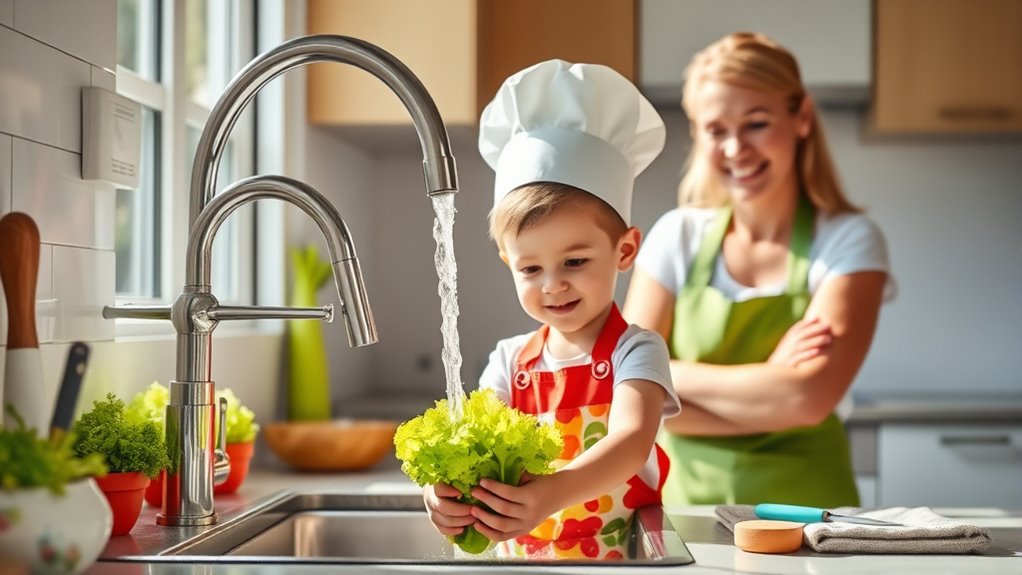
Ensuring food safety for young kids is essential because their immune systems are still developing and can be more vulnerable to foodborne illnesses. As a parent or caregiver, your goal is to create a safe eating environment that minimizes risks like food allergies and choking hazards. Being aware of common allergens and taking steps to prevent choking can considerably reduce health emergencies.
Food allergies are a serious concern for young children, and it’s important to recognize that allergic reactions can be quick and severe. Some kids are allergic to foods like nuts, dairy, eggs, wheat, soy, or seafood. To keep your child safe, always check ingredient labels carefully, especially when introducing new foods. When serving foods, consider offering small portions first to observe any adverse reactions. If your child has known allergies, ensure that all caregivers and family members are aware and prepared to respond in case of an allergic reaction. Keep emergency medication, such as antihistamines or epinephrine auto-injectors, accessible at all times.
Monitor ingredients carefully and keep emergency medications accessible for quick response to food allergy reactions.
Choking hazards are another critical safety issue that demands your attention. Young children often put objects or food in their mouths without fully understanding the risks. To prevent choking, cut foods into small, manageable pieces. For example, grapes, hot dogs, and raw vegetables should be sliced into thin, bite-sized portions. Avoid giving children hard candies, nuts, popcorn, or sticky foods that can easily block the airway. Always supervise your child during mealtime and avoid distractions like screens, so you can intervene quickly if needed. Encourage your child to chew thoroughly before swallowing, and teach them to sit down while eating to reduce the risk of choking.
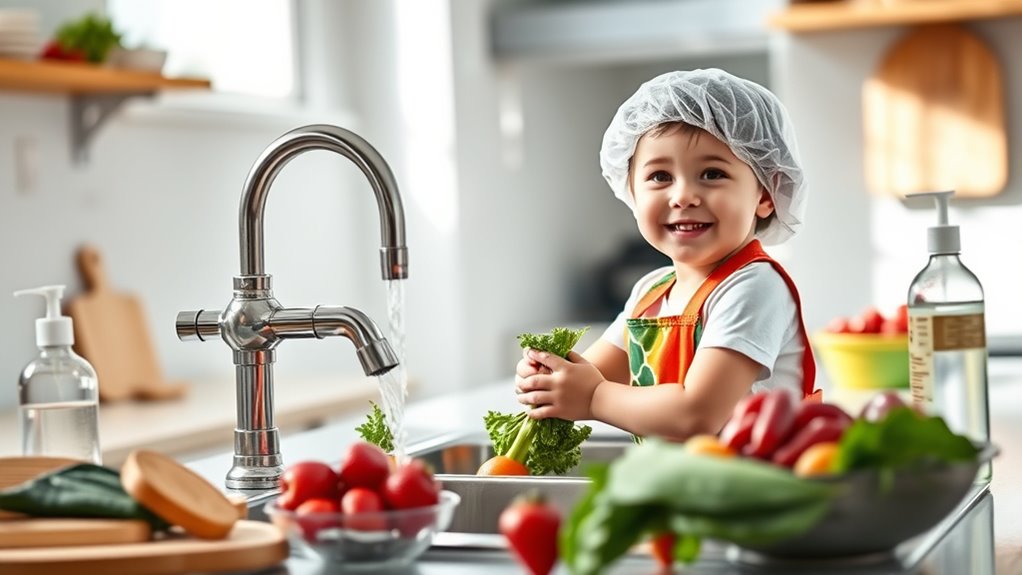
Proper food handling also plays an indispensable role in safety. Wash hands thoroughly before preparing or serving food to prevent contamination. Keep raw meats separate from fruits and vegetables, and cook foods to the appropriate temperatures to eliminate bacteria. Store leftovers promptly in the refrigerator and avoid giving your child foods that are past their expiration date or look suspicious. Additionally, understanding basic food safety practices can greatly reduce the risk of foodborne illnesses.
Lastly, stay informed about safe food practices and keep an open line of communication with your child’s healthcare provider. Regularly review your child’s allergies and choking prevention strategies, especially when introducing new foods or changing routines. By taking these precautions, you create a safer environment where your young child can enjoy eating without unnecessary risks. Your attentiveness and proactive approach are key to protecting your child’s health and fostering positive eating habits.
kids food allergy emergency kit
As an affiliate, we earn on qualifying purchases.
As an affiliate, we earn on qualifying purchases.
Frequently Asked Questions
How Can I Tell if My Child’s Food Is Contaminated?
You can tell if your child’s food is contaminated by doing a visual inspection and smell test. Look for any changes in color, texture, or mold, and check for any unusual spots or slime. Smell the food—if it has a sour, rancid, or off odor, don’t give it to your child. Trust your senses; if something seems off, it’s safer to discard it and prepare fresh food.
Are Food Allergies Common in Young Children?
Yes, food allergies are quite common in young children, affecting about 1 in 13 kids. You’ll notice allergy symptoms like hives, swelling, or trouble breathing. If you suspect a food allergy, try an elimination diet, removing suspected foods to see if symptoms improve. Always consult a pediatrician for proper testing and guidance. Stay vigilant, as some allergies can be severe and require emergency action.
What Should I Do if My Child Swallows a Foreign Object?
If your child swallows a foreign object, stay calm and act quickly. Check if they’re choking or coughing, which indicates a partial airway blockage. If they can’t breathe or cough forcefully, immediately call emergency response and perform age-appropriate choking rescue techniques, like back blows or abdominal thrusts. Keep an eye on them for signs of distress and seek medical attention promptly to prevent complications from choking hazards.
How Do I Handle Food Recalls for Children’s Products?
When a children’s product is recalled, you should first check the product labeling for specific recall instructions. Follow the recall procedures promptly, which often involve stopping use of the product and returning or disposing of it safely. Keep an eye on official notices from manufacturers or safety agencies, and report any concerns. Acting quickly guarantees your child’s safety and helps prevent potential harm from recalled products.
Are Organic Foods Safer for Young Kids?
Organic foods often appear safer for young kids, but it’s not a guarantee. You should check organic labeling to verify the product meets strict standards and has lower pesticide levels. While organic options typically reduce chemical exposure, they aren’t completely pesticide-free. So, you stay smarter by selecting organic for cleaner, clearer, and cautious choices, but always wash fruits and vegetables thoroughly to protect your little one’s health.
children's food safety cutting boards
As an affiliate, we earn on qualifying purchases.
As an affiliate, we earn on qualifying purchases.
Conclusion
By following these simple food safety tips, you create a shield around your little one’s health, like a guardian angel watching over them. Always wash hands, keep foods at the right temperature, and supervise meal times. Remember, your careful attention transforms everyday eating into a safe adventure, ensuring your child’s growth and happiness. With each mindful step, you’re helping nurture a healthy, happy future—because their safety is the recipe for their bright tomorrow.
baby food storage containers
As an affiliate, we earn on qualifying purchases.
As an affiliate, we earn on qualifying purchases.
kids choking prevention utensils
As an affiliate, we earn on qualifying purchases.
As an affiliate, we earn on qualifying purchases.