

In the first trimester, your body undergoes rapid changes as your baby develops, starting with increased hCG levels that cause nausea, fatigue, and breast tenderness. Around week 4, the neural tube forms, and by weeks 6 to 8, major organs and limb buds begin to develop. Your body adjusts with increased blood volume and uterine growth, while hormonal shifts support fetal growth. Stay with us to discover how each week brings new milestones and adaptations.

Turn the school run and nap time into listening time
- Thousands of audiobooks, podcasts and originals
- Listen on your phone, tablet or Echo — also offline
- Cancel anytime
Key Takeaways
- Hormonal levels like hCG and progesterone rise, causing symptoms such as nausea, fatigue, and breast tenderness.
- The embryo develops rapidly, forming the neural tube, limb buds, and major organs between weeks 4 and 8.
- Physical changes include increased uterine size, breast swelling, and higher blood volume to support fetal growth.
- Ultrasounds can detect the fetal heartbeat as early as week 6, indicating healthy development.
- Regular prenatal care helps monitor fetal milestones and manage early pregnancy symptoms effectively.
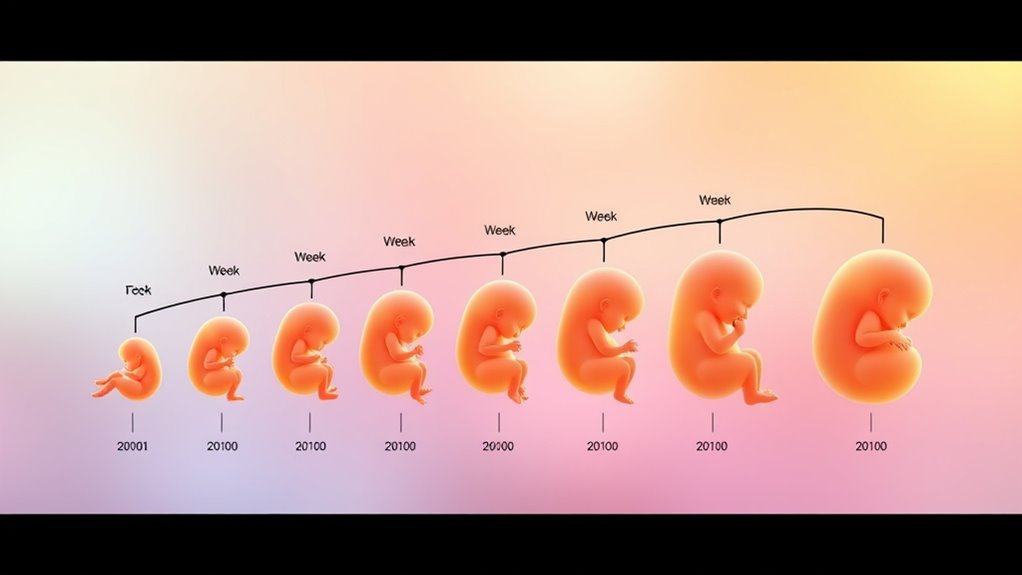
During your first trimester, your body undergoes rapid and remarkable changes as your baby begins developing. This period is vital for fetal development, laying the foundation for all future growth. As your pregnancy progresses, you’ll notice your body responding to significant hormonal shifts that support this new life inside you. These hormonal changes, primarily involving human chorionic gonadotropin (hCG), progesterone, and estrogen, influence everything from your energy levels to your emotional state. They also prepare your body to nurture and protect your developing baby.
Your body’s hormonal shifts during pregnancy support growth and emotional well-being.
In the very first weeks, your body starts producing higher levels of hCG, which is why many women notice early pregnancy symptoms like nausea, fatigue, and breast tenderness. This hormone is indispensable for maintaining the pregnancy because it signals your body to produce enough progesterone, which keeps your uterine lining intact. During this time, your fetus begins as a tiny ball of cells, but rapid cell division is already underway. By around week 4, your baby’s neural tube, which will become the brain and spinal cord, starts forming, marking an important milestone in fetal development.
As weeks pass, your body continues to adapt to these hormonal shifts. You might experience mood swings, heightened senses, or food cravings and aversions, all driven by fluctuating hormone levels. Your breasts may swell and become tender as your body prepares for breastfeeding, and you may notice an increase in urination due to hormonal influences on your kidneys. At the same time, your blood volume increases, and your heart works harder to pump the extra blood needed to supply oxygen and nutrients to your growing baby. Additionally, maintaining proper nutrition and hydration becomes increasingly important during this stage.
Between weeks 6 and 8, your fetus begins to develop more distinct features. Limb buds appear, and the baby’s heart starts beating, which you might be able to detect with an ultrasound as early as week 6. During this period, fetal development accelerates, with major organs beginning to form. Your body’s hormonal shifts continue to support these changes, ensuring your baby has the necessary environment to grow. You may also experience increased fatigue, which is your body’s way of conserving energy for this intense period of growth.
prenatal vitamins for first trimester
As an affiliate, we earn on qualifying purchases.
As an affiliate, we earn on qualifying purchases.
Frequently Asked Questions
How Can I Distinguish Between Normal Symptoms and Complications?
You can differentiate normal symptoms from complications by paying attention to hormonal fluctuations and bleeding concerns. Normal symptoms like nausea or fatigue usually improve over time, but if you experience heavy bleeding, severe pain, or dizziness, these could be signs of complications. Trust your instincts—if something feels off or different from usual pregnancy symptoms, contact your healthcare provider promptly to ensure your safety and peace of mind.
Are There Specific Foods to Avoid During First Trimester?
Imagine your body as a delicate fortress—you need to protect it fiercely. During your first trimester, avoid alcohol, raw seafood, unpasteurized dairy, and deli meats to guarantee your diet restrictions keep you and your baby safe. Stick to safe food choices like cooked vegetables, fruits, lean meats, and pasteurized dairy. This way, you prevent risks and give your little one the best start, all while feeling confident in your nutrition choices.
When Should I Schedule My First Prenatal Appointment?
You should schedule your first prenatal appointment as soon as you find out you’re pregnant, ideally by 8 weeks. During this visit, your healthcare provider will check your hormone levels, order prenatal tests, and assess your overall health. Early visits help monitor your baby’s development and address any concerns. Don’t wait too long—early care establishes the foundation for a healthy pregnancy and ensures you get essential screenings.
What Are the Early Signs of Pregnancy Loss?
You might mistake early pregnancy loss signs for normal pregnancy symptoms, but watch for heavy bleeding, severe cramping, or passing tissue—these are clear red flags. Emotional changes like intense sadness or anxiety can also signal trouble. If you experience these symptoms, don’t ignore them; seek medical help promptly. Early detection is essential, so trust your instincts and contact your healthcare provider if anything feels off.
How Can I Manage Morning Sickness Effectively?
To manage morning sickness effectively, try using nausea remedies like ginger tea or candies, which can soothe your stomach. Eating safe snack options, such as crackers or toast, helps prevent nausea from worsening. Keep small, frequent meals and stay hydrated throughout the day. Rest when needed and avoid strong smells. These strategies can help you feel more comfortable and manage morning sickness better during pregnancy.
Conclusion
As you journey through the first trimester, each week is like a chapter in an exciting story of new life taking shape. Remember, every change brings you closer to meeting your little miracle. Embrace the ups and downs, for they’re the brushstrokes of this beautiful masterpiece unfolding inside you. With patience and care, you’re nurturing a tiny seed that will blossom into a radiant new beginning, filling your world with joy and wonder.
Fall Picks
fall essentials
As an affiliate, we earn on qualifying purchases.