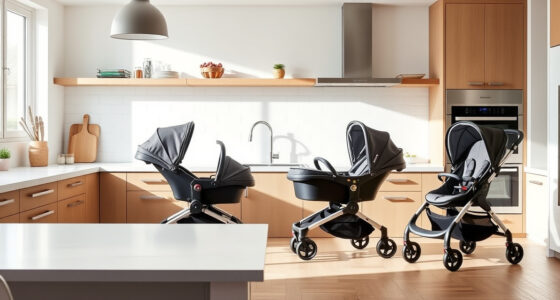
You should replace stroller parts like wheels, brakes, and harnesses whenever they show signs of damage, wear, or no longer work properly to keep your child safe. Look for cracked wheels, loose or squeaky brakes, or frayed harness straps. Regular inspections help catch issues early. If you’re unsure when to replace, learn the key signs and best practices to keep your stroller safe and functioning smoothly.

Turn the school run and nap time into listening time
- Thousands of audiobooks, podcasts and originals
- Listen on your phone, tablet or Echo — also offline
- Cancel anytime
Key Takeaways
- Replace wheels when cracked, wobbling, or no longer spinning smoothly to ensure safety and proper maneuverability.
- Swap out brakes if they become unresponsive, squeaky, or fail to lock securely, compromising stalling ability.
- Change harness straps when frayed, broken, or compromised to maintain proper restraint and safety.
- Inspect regularly; replace parts promptly if visible damage, rust, or deterioration affects performance.
- Follow manufacturer guidelines and replace parts every 1-2 years or upon noticeable wear for optimal safety.
As an affiliate, we earn on qualifying purchases.
Recognizing When Your Stroller Needs Maintenance or Parts Replacement
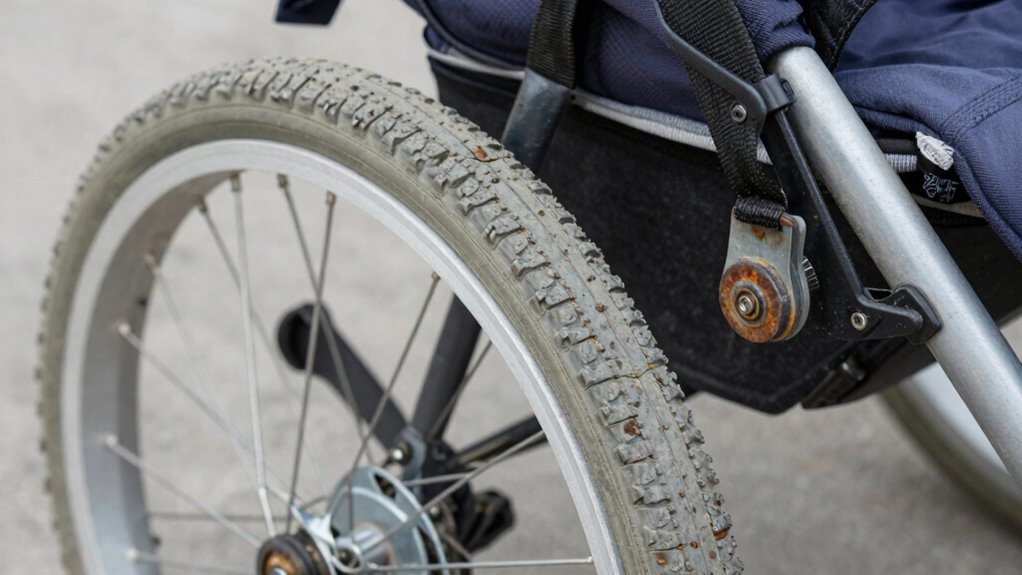
Your stroller will eventually show signs it needs maintenance or parts replacement. One clear indicator is when stroller accessories, like cup holders or trays, become loose or damaged. If you notice these parts aren’t functioning properly, it’s time to check for other issues. Also, pay attention to stroller weight limits—exceeding them can accelerate wear and tear, making replacement necessary sooner. If your stroller feels less stable or you see visible damage, don’t delay repairs. Regularly inspecting the frame, wheels, and harness can help you catch problems early. Staying attentive to these signs ensures your stroller remains safe and comfortable for your child, while avoiding potential accidents or costly repairs down the line. Proper maintenance keeps your stroller running smoothly longer. Additionally, understanding ethical choices around repair and replacement can help you make more responsible decisions that consider safety, longevity, and environmental impact. Being aware of wear and tear also guides timely replacements before issues become dangerous or costly. Recognizing signs of deterioration in stroller components can further prevent unexpected failures. Regularly checking for rust or corrosion helps extend the lifespan of metal parts and maintain safety. Paying attention to component deterioration allows for proactive replacements, preventing accidents.
How to Tell If Your Stroller Wheels Are Worn or Damaged
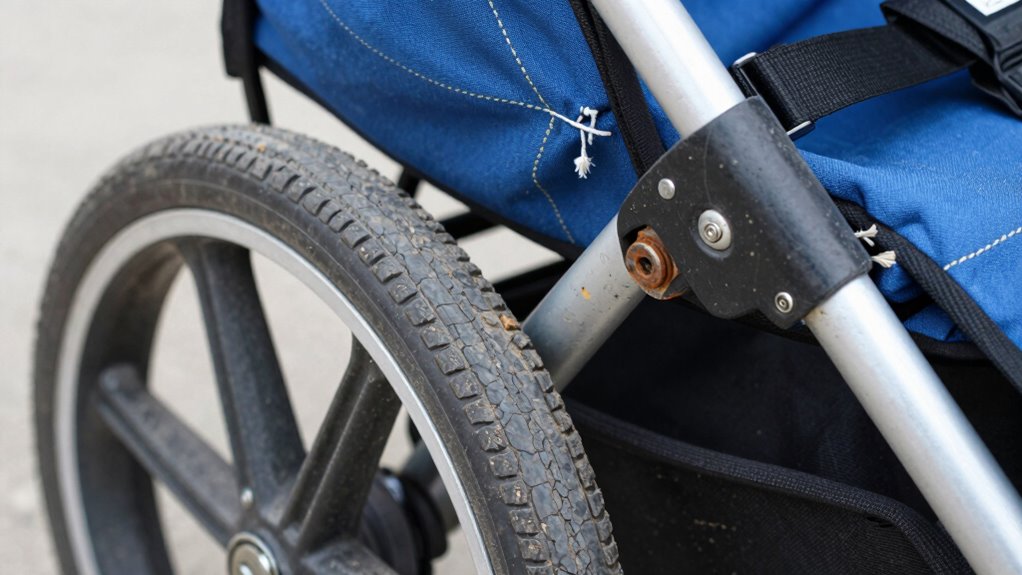
Worn or damaged stroller wheels can compromise safety and make pushing more difficult. Regular stroller maintenance helps identify issues early, preventing accidents and costly part replacements. To tell if your wheels need attention, check for:
Worn stroller wheels can compromise safety—inspect regularly and replace damaged parts promptly.
- Visible cracks or splits in the rubber or plastic
- Uneven or excessive wear on the treads
- Wobbling or looseness when spinning the wheels
- Difficulty steering or pushing smoothly
If these signs are present, it’s time for part replacement. Damaged wheels can reduce stability and increase the risk of accidents. Make sure to inspect your stroller regularly and address worn or damaged parts promptly to ensure safe, easy navigation. Proper stroller maintenance keeps your stroller in prime condition and extends its lifespan. Consistent inspections are essential for maintaining the safety and functionality of your stroller. Additionally, understanding the environmental impact of tissue paper can inspire eco-friendly repair and disposal practices for your stroller parts. Incorporating routine checks into your stroller upkeep can further prevent unexpected failures and prolong component life. Regularly assessing the filtration efficiency of your stroller’s components may also help in maintaining overall cleanliness and safety.
Signs Your Stroller Brakes Are Failing or Not Engaging Properly
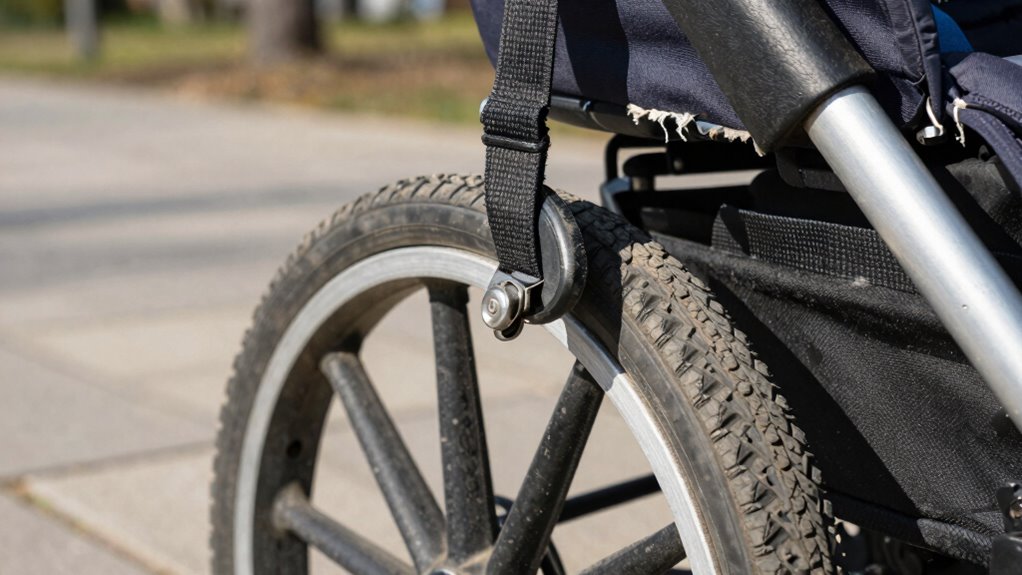
If your stroller’s brake pedal feels stiff or hard to press, it’s a sign something might be wrong. When brakes don’t respond or fail to lock properly, safety is at risk. Look for visible wear or damage on the brake components to determine if repairs are needed. Regularly inspecting your stroller’s safety features can help prevent accidents and ensure reliable performance. Additionally, understanding water safety principles can be useful if your stroller is used near water or in aquatic environments. Ensuring proper cabling connections and checking for cable failures in the stroller’s brake system can also help maintain optimal function. Being aware of work-life balance practices can reduce stress related to stroller maintenance and safety checks, making routine inspections more manageable. Incorporating preventative maintenance routines can extend the lifespan of your stroller parts and enhance overall safety.
Stiff Brake Pedal
A stiff brake pedal is a clear warning sign that your stroller’s braking system may be failing or not engaging properly. When you notice resistance or difficulty pressing the brake pedal, it could indicate debris, rust, or worn components affecting performance. This issue can compromise safety and make it harder to secure your stroller, especially when using accessories or storage solutions that add weight. You might see:
- The brake pedal feels unusually hard to press
- The stroller doesn’t lock into place easily
- Resistance persists even when brakes are released
- Difficulty engaging or disengaging the brake pedal
Ignoring these signs can lead to brake failure. Regular maintenance and timely replacement parts ensure your stroller remains safe and functional. Check your brake system often, especially if you use accessories or store items that might strain the brakes.
Unresponsive Brake Engagement
When your stroller’s brakes don’t engage as they should, it’s a clear sign that something’s wrong with the brake system. An unresponsive brake can compromise safety, so you need to address it promptly. This issue often indicates that your brake maintenance might be overdue or that parts within the brake system are worn or damaged. You might notice that applying the brake pedal or lever doesn’t stop the stroller, or it feels loose and unresponsive. Regular brake maintenance helps ensure the system functions properly, but if the brake system isn’t responding, it’s time to inspect or replace faulty components. Ignoring unresponsive brakes can lead to accidents, so don’t delay in troubleshooting and maintaining your stroller’s braking system. Additionally, wiring issues within the brake mechanism could be contributing to the problem and should be checked to ensure safety. Routine inspections can help identify early signs of brake wear and prevent potential failure. Using the right oil for the brake components and ensuring proper lubrication can also improve brake responsiveness and longevity. Incorporating proper lubrication techniques can further enhance brake performance and prevent corrosion or sticking of parts. Moreover, understanding the signs of wear can assist you in determining when replacements are necessary before complete failure occurs.
Visible Wear or Damage
Visible wear or damage is often the most obvious sign that your stroller brakes are failing or not engaging properly. You might notice scratches, rust, or worn spots on the brake components or wheels. Cracks or bends in the brake mechanism can also signal trouble. If your stroller’s fabric appears frayed or stained, it may indicate frequent use or exposure to the elements, affecting brake performance. Additionally, consider how you store your stroller; inadequate stroller storage can accelerate damage. Regular fabric cleaning helps maintain overall condition, but neglected wear can lead to brake failure. Be alert to loose or squeaky brakes, uneven wheel movement, or difficulty locking the brakes—it’s time for inspection or replacement. Addressing visible damage early keeps your stroller safe and functional. Monitoring wear and tear can help you catch issues before they compromise safety, especially since component deterioration may go unnoticed until a failure occurs.
Checking the Harness for Wear, Tear, or Damage

Before using the stroller again, you should carefully inspect the harness for any signs of wear, tear, or damage. A thorough harness inspection is vital to guarantee your child’s safety. Look for frayed straps, loose stitching, or any thinning areas that indicate wear and tear. Check the buckles and clasps to confirm they lock securely and aren’t cracked or broken. If you notice any deterioration or suspect the harness isn’t in ideal condition, it’s best to replace it promptly. Damaged harnesses can compromise safety during rides, so don’t ignore signs of wear. Regular checks help catch issues early, ensuring the harness continues to protect your child effectively. Never compromise on harness integrity—replace it if there’s any doubt about its condition.
How Often Should You Inspect and Replace Stroller Parts
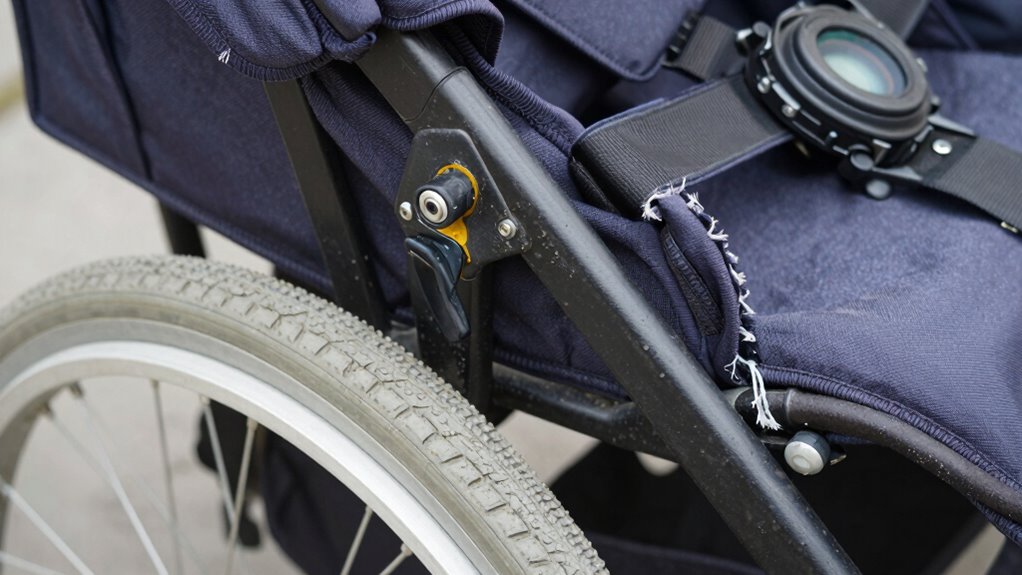
You should inspect your stroller regularly—at least once a month—to catch any signs of wear or damage early. Keep an eye out for frayed fabric, loose joints, or squeaking parts, which indicate it’s time for a closer look. Typically, replace parts like wheels or harnesses every one to two years to guarantee safety and functionality.
Regular Inspection Frequency
Regularly inspecting your stroller guarantees safety and prolongs its lifespan. You should check it at least once a month, especially after outdoor adventures or heavy use. During inspections, consider stroller cleaning to remove dirt and debris that can hide damage. Pay close attention to critical parts like wheels, brakes, and harnesses.
- Look for cracks or worn treads on wheels after frequent use
- Test brakes for responsiveness regularly
- Check harness buckles for secure locking
- Review parent reviews for common issues and tips
Consistent inspections help identify early signs of wear, ensuring your stroller stays safe and reliable. Making these checks routine allows you to catch problems before they worsen, keeping your child secure and your stroller in top condition.
Signs of Wear and Tear
Recognizing signs of wear and tear early can prevent accidents and costly repairs. Regularly inspecting stroller parts helps you spot issues like worn wheels, frayed harnesses, or damaged brakes. Keep an eye on stroller accessories and customization features, making sure they stay secure and functional. If you notice cracks, thinning rubber, or loose components, it’s time to replace those parts. Here’s a quick guide:
| Part | Signs of Wear | When to Replace |
|---|---|---|
| Wheels | Cracks, uneven wear | When damaged or unstable |
| Brakes | Reduced responsiveness | When no longer effective |
| Harness | Fraying, loose straps | When compromised or frayed |
Consistent checks make certain your stroller remains safe and comfortable for your child.
Recommended Replacement Timeline
To guarantee your stroller remains safe and functional, it’s important to follow recommended inspection and replacement intervals. Regularly check stroller wheels, brakes, and harnesses for signs of wear, and replace parts as needed. Typically, inspect these components every 3 to 6 months, especially if your stroller exceeds its weight limits or experiences frequent use. Keep in mind that stroller brand compatibility can affect replacement schedules—some brands require specific parts or recommended timelines.
- Visual checks for cracks, fraying, or damage
- Testing brakes for proper function
- Ensuring harness straps are secure and intact
- Monitoring stroller weight limits for strain
Sticking to these intervals helps prevent accidents and prolongs your stroller’s lifespan.
Step-by-Step: How to Replace Common Stroller Parts
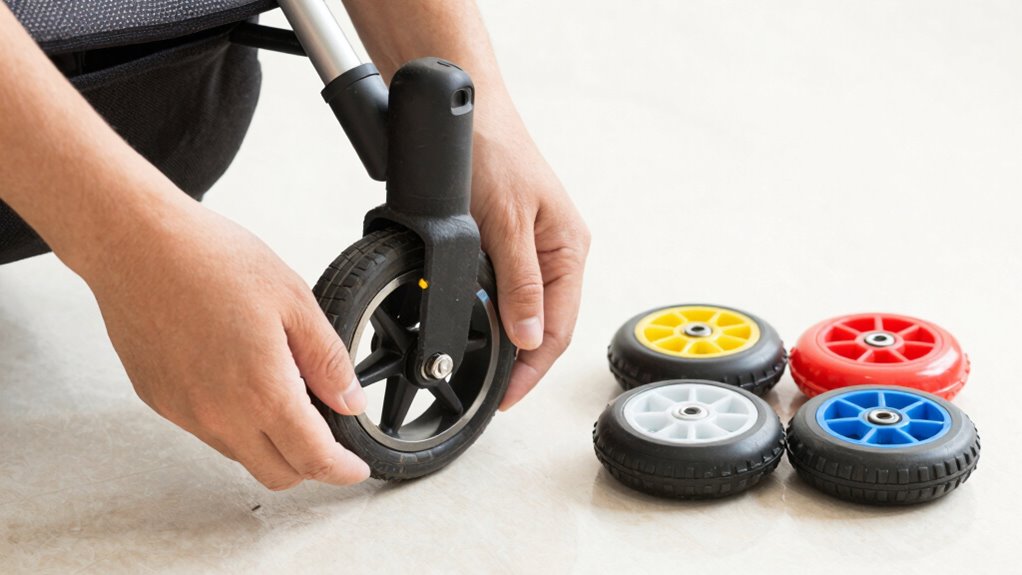
Replacing stroller parts might seem intimidating, but breaking it down into simple steps makes the process straightforward. Start with a maintenance checklist to identify which parts need replacing—wheels, brakes, or harness components. Gather the necessary stroller accessories, such as screwdrivers or replacement parts, before you begin. For wheels, remove any fasteners holding the old wheels in place, then attach the new ones securely, making sure they spin freely. When replacing brakes, disconnect the brake mechanism, clean the area, and install the new brake parts, ensuring they engage properly. For harness replacements, detach the old straps from the frame, thread the new harness through the designated slots, and secure all buckles tightly. Taking your time and following these steps ensures safe and effective replacements.
Safety Tips for Choosing and Installing Replacement Parts

When selecting replacement parts for your stroller, prioritizing safety is crucial to guarantee your child’s well-being. Follow proper replacement guidelines to ensure stroller safety and peak performance. Always verify that the parts are compatible with your stroller model. When installing, double-check that each component fits securely and functions correctly. To help you stay safe, consider these tips:
Prioritize safety by ensuring compatibility, proper installation, and manufacturer-approved parts for your stroller.
- Use parts approved by the manufacturer and avoid generic replacements.
- Follow the manufacturer’s instructions carefully during installation.
- Inspect parts for damage or wear before installing.
- Test the stroller thoroughly after replacement to confirm stability and safety.
Adhering to these safety tips minimizes risks and ensures your stroller remains a secure environment for your child. Proper maintenance and attentive replacement practices are key to long-term stroller safety.
Frequently Asked Questions
Can I Use Universal Stroller Parts for All Brands?
You can’t always rely on universal stroller parts for all brands because of compatibility issues. Universal compatibility isn’t guaranteed, as brand variations often mean different sizes, fittings, and mechanisms. Always check the manufacturer’s recommendations before buying replacement parts. Using parts designed specifically for your stroller brand guarantees proper fit and safety. If in doubt, consult your stroller’s manual or contact the manufacturer to avoid potential issues.
Are There Specific Tools Needed to Replace Stroller Wheels?
Replacing stroller wheels is easier than you think—no need for a toolkit that could launch a spaceship. You generally only need basic tools like a screwdriver or an Allen wrench, which are often included or can be found at home. Universal compatibility makes DIY repair simple, allowing you to swap out wheels without specialized tools. Always check your stroller’s manual for specific tools, ensuring a smooth, hassle-free replacement process.
How Do I Dispose of Old Stroller Parts Responsibly?
You should recycle or dispose of old stroller parts responsibly by checking local recycling options, especially for metal and plastic components. If any parts contain hazardous waste, like batteries or certain plastics, take them to designated hazardous waste disposal centers. Avoid throwing them in regular trash to prevent environmental harm. Contact your local waste management for guidance on proper disposal methods, ensuring you’re eco-friendly and compliant with safety regulations.
What Signs Indicate a Stroller Brake Needs Immediate Replacement?
If you experience brake failure or find stopping difficulty, it’s time to replace your stroller brake immediately. Signs include the brake not engaging properly, feeling loose or unresponsive, or if the stroller rolls despite the brake being engaged. Don’t delay; these issues compromise safety. Regularly check your brakes for wear and tear, and substitute them promptly to ensure your child’s safety and smooth stroller operation.
Is Professional Repair Recommended for Complex Stroller Part Replacements?
For complex stroller part replacements, professional repair is highly recommended to guarantee safety and proper function. While DIY safety is important, attempting complicated repairs yourself could void warranty coverage or cause further damage. Certified technicians have the right tools and expertise, giving you peace of mind. Always check your warranty before choosing a repair option, and consider professional service for critical parts like brakes and harness systems.
Conclusion
Keeping your stroller in top shape is like tending a garden—you need to regularly check for signs of wear and address them before they become a thorn. By staying vigilant and replacing parts when needed, you guarantee your little one’s safety and your peace of mind. Remember, a well-maintained stroller isn’t just gear; it’s the sturdy bridge that keeps your adventures safe and smooth, no matter where your journey takes you.
Fall Picks
fall essentials
As an affiliate, we earn on qualifying purchases.