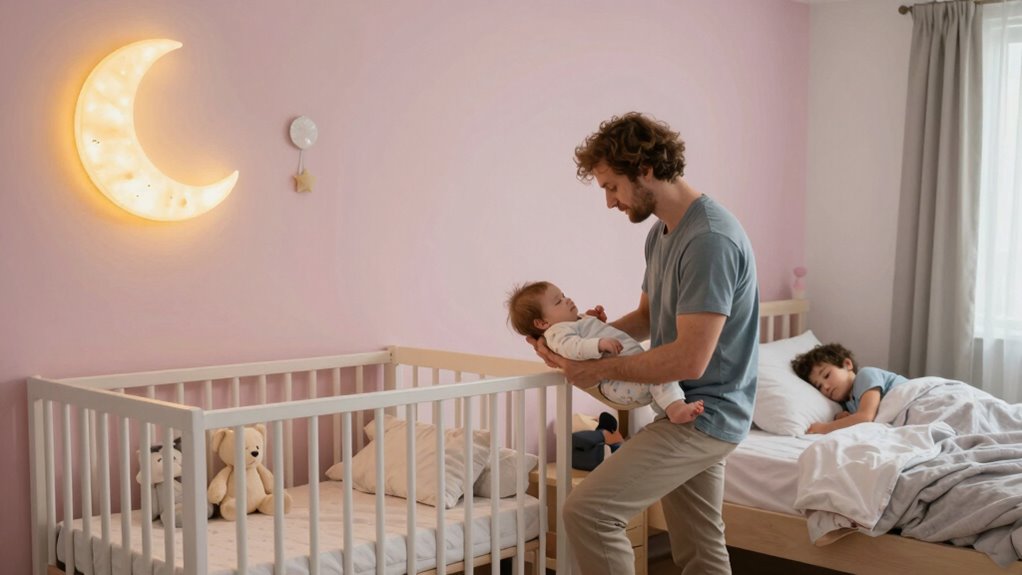

Balancing safety, bonding, and sleep quality can be tricky when choosing between room sharing and a separate nursery. Sharing your room can boost closeness and quick responses but might lead to more nighttime disruptions, affecting rest. A nursery offers a quieter environment and longer sleep stretches for your baby but may reduce immediate safety reassurance. To make the best choice, consider your family’s routines and home setup—there’s more to weigh, and understanding these tradeoffs can help you decide what’s right for your family.
Key Takeaways
- Room sharing promotes quick responsiveness and bonding but can increase nighttime disturbances, affecting sleep quality for both parent and baby.
- Nurseries offer a controlled, quieter environment that supports longer, undisturbed sleep cycles but may reduce immediate safety reassurance.
- Safety considerations, such as hazard-free setups and environment design, are crucial in both options to balance safety with sleep quality.
- Parental stress and sleep disruption are often overlooked tradeoffs, with shared rooms generally reducing anxiety but risking more interruptions.
- Individual family needs, routines, and space constraints significantly influence which sleep setup optimizes rest and safety.
baby monitor with night vision
As an affiliate, we earn on qualifying purchases.
As an affiliate, we earn on qualifying purchases.
Should You Share Your Room or Keep It Separate? Key Factors to Consider
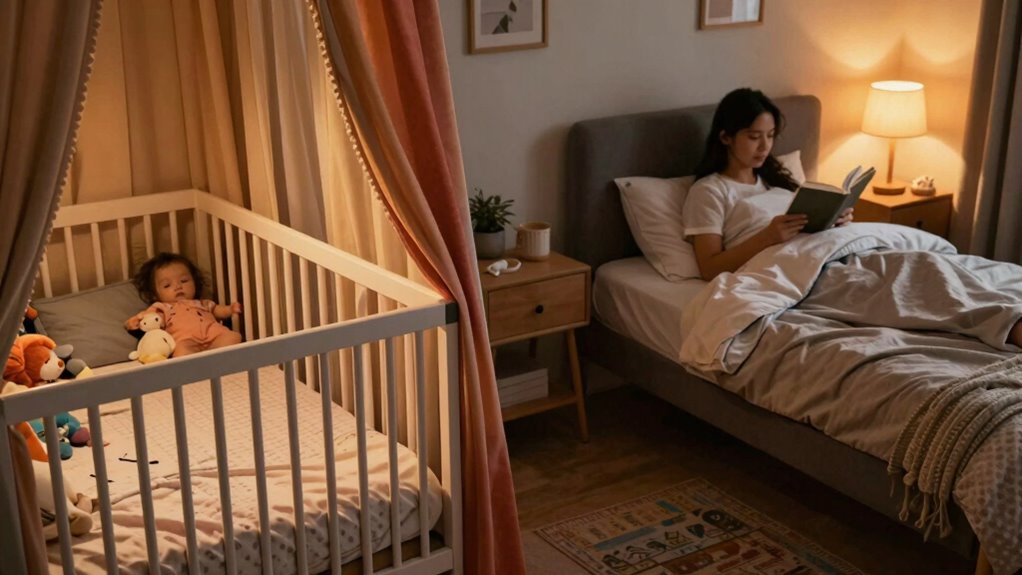
Deciding whether to share your room or keep it separate depends on several important factors. Bed sharing safety is a primary concern, so consider your comfort level and your baby’s health when making this choice. If you opt for room sharing, a well-organized nursery setup becomes essential to ensure easy access and a safe sleep environment. Think about your ability to monitor your baby during the night and how sharing might impact your sleep quality. Additionally, contrast ratio can influence how well you can see and respond to your baby’s cues during nighttime caregiving. Proper lighting and monitoring devices can enhance your responsiveness and safety during these moments. Incorporating sleep environment optimization strategies can further improve both your and your baby’s sleep quality. Creating a comfortable and safe sleep space involves choosing the right mattress and pillow to support healthy sleep habits for both of you. Conversely, keeping the nursery separate offers more privacy and may reduce nighttime disruptions. Evaluate your living space, your sleep habits, and your comfort with bed sharing safety protocols. Ultimately, choosing the right setup hinges on what promotes a safe, restful environment for both you and your baby. Incorporating the right performance upgrades can even influence your ability to stay alert and responsive during nighttime caregiving.
crib mattress for newborns
As an affiliate, we earn on qualifying purchases.
As an affiliate, we earn on qualifying purchases.
How Room Sharing Can Boost Bonding but Disrupt Sleep

Sharing a room with your baby can strengthen your bond through more frequent interaction and closeness. However, it might also lead to more nighttime disturbances, making it harder for both of you to get restful sleep. Weighing these benefits and drawbacks can help you decide if room sharing is right for your family. Additionally, understanding modern family expectations can guide you in making choices that support your family’s well-being. Recognizing family routines can also help establish a balance between closeness and rest, especially when considering sleep strategies like sleep training methods. Incorporating natural light into your space can improve mood and promote healthy sleep patterns for both parents and babies. Being aware of essential oils for sleep can also support a calming environment conducive to restorative rest.
Enhanced Parent-Child Interaction
Room sharing naturally fosters closer bonds between you and your child, as it provides more opportunities for interaction and daily engagement. When you share a space, you can respond quickly to your child’s needs, strengthening parent-child bonding. This proximity encourages gentle touch, eye contact, and comforting routines that build trust. Additionally, sharing a room can facilitate emotional development by providing a secure environment for your child. Engaging in these routines can also promote early emotional regulation skills, helping your child manage feelings more effectively. Moreover, understanding bank SWIFT/BIC codes can be useful for secure financial transactions related to childcare expenses. To further support your child’s well-being, incorporating herbal baths and spices like turmeric and ginger can promote relaxation and overall health. It’s also helpful to consider safe sleep practices to ensure your child’s safety during co-sleeping arrangements. The increased contact can also lead to more responsive caregiving, deepening your connection. While these interactions are valuable for emotional development, they may inadvertently disrupt your sleep if your child moves or wakes frequently. Overall, room sharing enhances parent-child interaction and bonding, but it requires careful attention to safety and sleep quality.
Increased Nighttime Disturbances
While close proximity during room sharing strengthens your bond with your child, it can also lead to more nighttime disturbances. The presence of nighttime noise from your child’s movements or sounds can cause frequent sleep interruptions for both of you. This heightened sensitivity often results in fragmented sleep, making it harder to achieve deep, restorative rest. To manage this, consider these strategies:
- Use white noise machines to mask disruptive nighttime noises.
- Establish consistent sleep routines that help your child settle quickly.
- Create a sleep-friendly environment that minimizes external disturbances.
- Recognize how fostering growth mindsets can help children develop resilience to sleep disruptions and manage their sleep habits more effectively.
- Understanding the impact of emotional dysregulation on sleep patterns can guide parents in addressing nighttime anxieties or mood swings that affect sleep quality.
- Developing parents’ emotional awareness can improve their responses to sleep challenges and reduce their own stress during restless nights.
- Being aware of cultural symbols for strength and resilience may provide additional comfort and motivation to cope with sleep challenges.
- Incorporating sleep hygiene practices can further enhance sleep quality despite the challenges of room sharing.
baby sleep sound machine
As an affiliate, we earn on qualifying purchases.
As an affiliate, we earn on qualifying purchases.
Why a Nursery Might Help Your Baby Sleep Longer and More Quietly
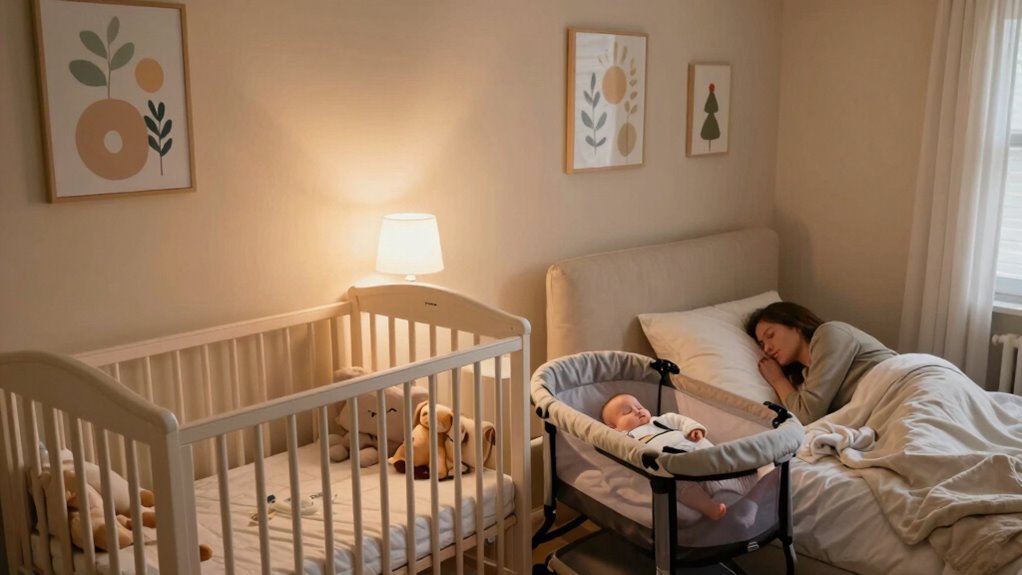
Having a dedicated nursery creates a consistent sleep environment for your baby, making it easier for them to settle down. It also reduces nighttime disturbances from your movements or noises, helping them stay asleep longer. These factors can contribute to quieter, more restful nights for both of you. Additionally, effective packing and styling for your baby’s nursery can streamline nighttime routines, further promoting better sleep. Maintaining a structured sleep environment can reinforce healthy sleep habits and improve overall restfulness.
Consistent Sleep Environment
A consistent sleep environment can substantially improve your baby’s ability to settle and stay asleep longer. Maintaining sleep consistency helps your little one recognize when it’s time to rest, reducing night awakenings. To achieve this, consider these key factors:
- Keep the room at a steady temperature and low noise level.
- Use the same sleep cues, like a specific lullaby or white noise.
- Ensure the sleep space is safe, dark, and free from distractions.
Reduced Nighttime Disturbances
Creating a dedicated nursery can considerably reduce nighttime disturbances by providing a more controlled and consistent sleep environment. This setup minimizes disruptions from external noises and light, helping your baby stay asleep longer. As a result, your little one can develop sleep independence, learning to soothe themselves back to sleep without needing constant reassurance. Additionally, a quiet nursery fosters opportunities for nighttime bonding—quiet moments that strengthen your connection without waking the entire household. Consider how this arrangement affects your baby’s sleep patterns:
| Benefit | Description | Impact |
|---|---|---|
| Less Noise | Isolated from household activity | Longer, quieter sleep |
| Light Control | Adjustable lighting options | Easier to maintain darkness |
| Consistent Routine | Dedicated sleep space | Promotes predictable sleep cycles |
A nursery enhances your baby’s sleep quality while supporting healthy independence.
baby room divider safety gate
As an affiliate, we earn on qualifying purchases.
As an affiliate, we earn on qualifying purchases.
How Sharing or Separating Affects Parents’ Rest and Stress Levels
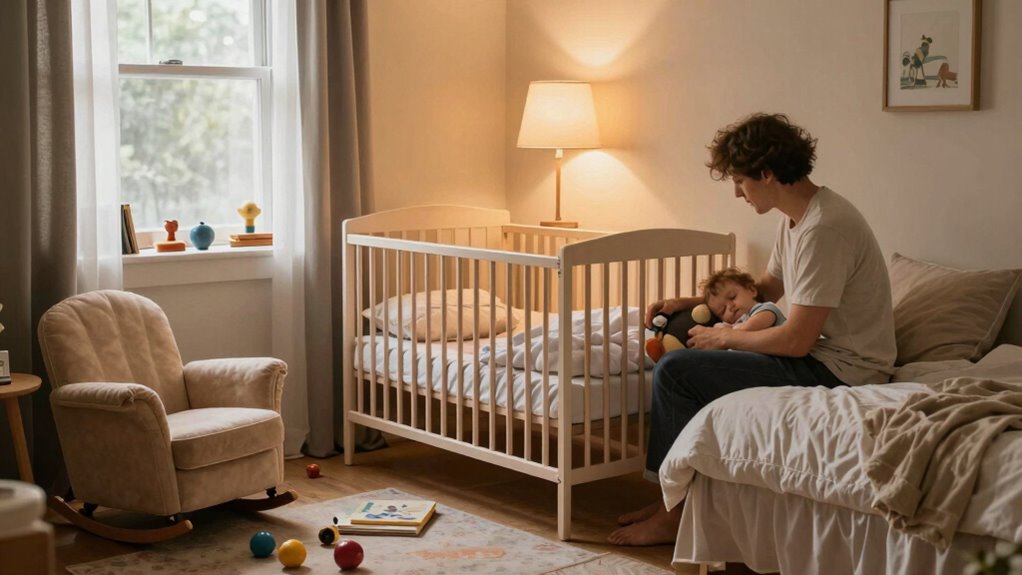
When children share a room, parents often experience fewer nighttime disruptions, which can lead to better rest and lower stress levels. Shared sleeping arrangements foster emotional closeness, helping you feel more connected and soothed by your child’s presence. Additionally, this setup can support your child’s independence development as they learn to self-soothe and manage nighttime needs. Consider these effects:
- Reduced anxiety about your child’s safety, decreasing parental stress.
- Fewer interruptions, allowing deeper, more restorative sleep.
- Enhanced emotional bonds, leading to a calmer household overall.
However, separation might increase your sleep disturbances due to worries about safety or sleep quality. Balancing these factors impacts your stress levels and overall rest, influencing your well-being as a parent.
Balancing Safety and Sleep Quality: What’s the Tradeoff?
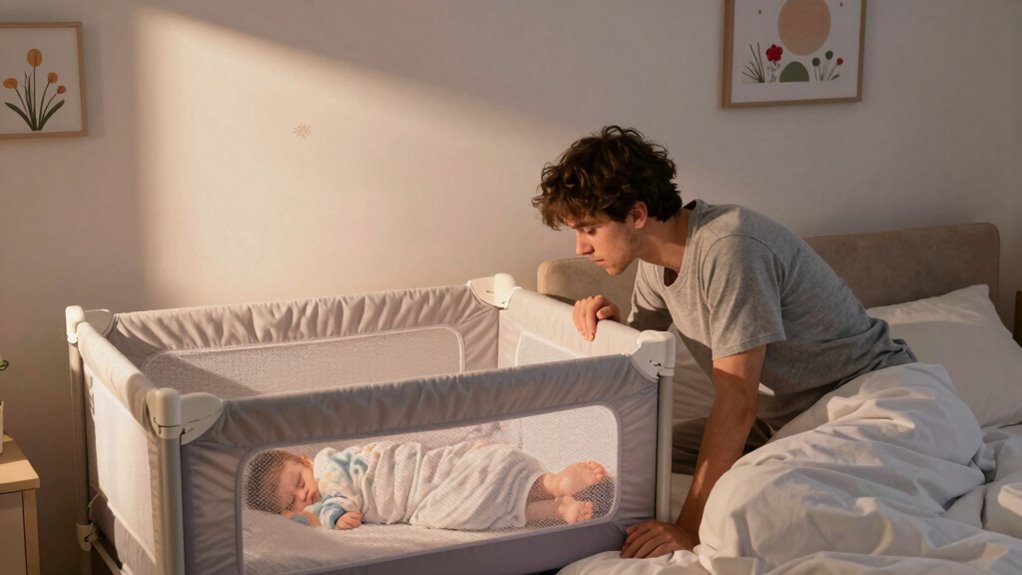
Balancing safety and sleep quality often involves weighing the comfort of close proximity against the peace of mind that comes with separation. When sharing a room, you benefit from enhanced room safety, as you can quickly respond to your baby’s needs. However, this closeness can sometimes interfere with sleep hygiene, making it harder for both of you to get restful sleep. Separating your baby into a nursery might improve your sleep quality but raises concerns about room safety, especially if the environment isn’t properly set up. Ultimately, you need to contemplate how to maintain a safe sleeping environment—using firm mattresses, avoiding hazards, and monitoring temperature—while also prioritizing sleep hygiene to ensure everyone gets restorative rest. Finding the right balance depends on your family’s specific needs.
How to Minimize Sleep Disruptions in Any Setup
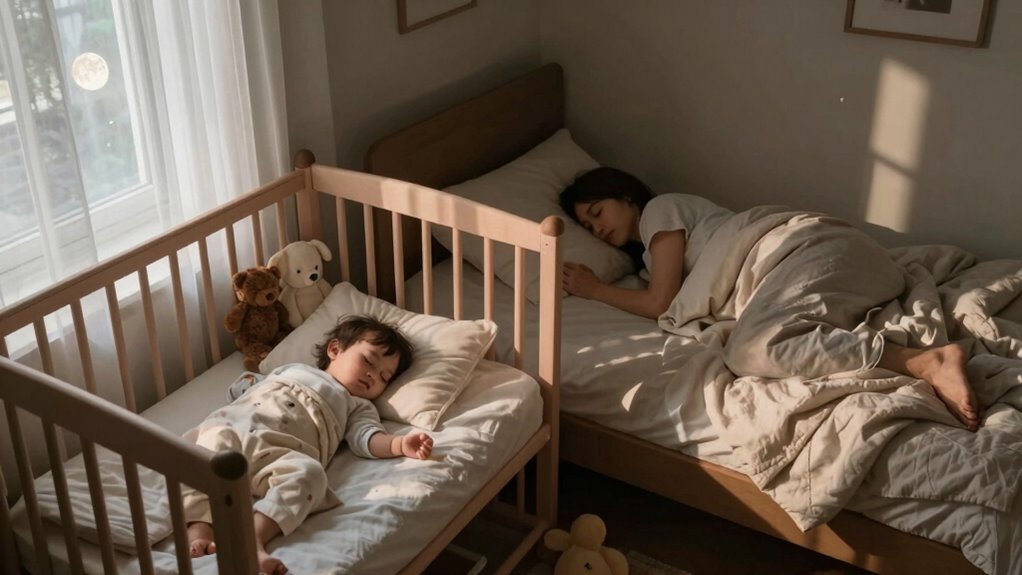
Whether your baby sleeps in your room or a separate nursery, disruptions can still occur and disturb everyone’s rest. To minimize these interruptions, focus on effective noise management and consistent sleep training. First, establish a quiet, dark environment to reduce external stimuli. Second, use white noise machines or fans to mask household sounds and create a steady background hum. Third, stick to a predictable bedtime routine, reinforcing sleep cues and helping your baby learn to self-soothe. Consistent routines make sleep training more effective, decreasing night wakings over time. Additionally, consider sound-proofing measures where possible, and keep disruptive activities to a minimum during sleeping hours. These steps help create a peaceful sleep environment, regardless of your setup, leading to more restful nights for everyone.
Creating a Sleep Environment That Works for Both Options
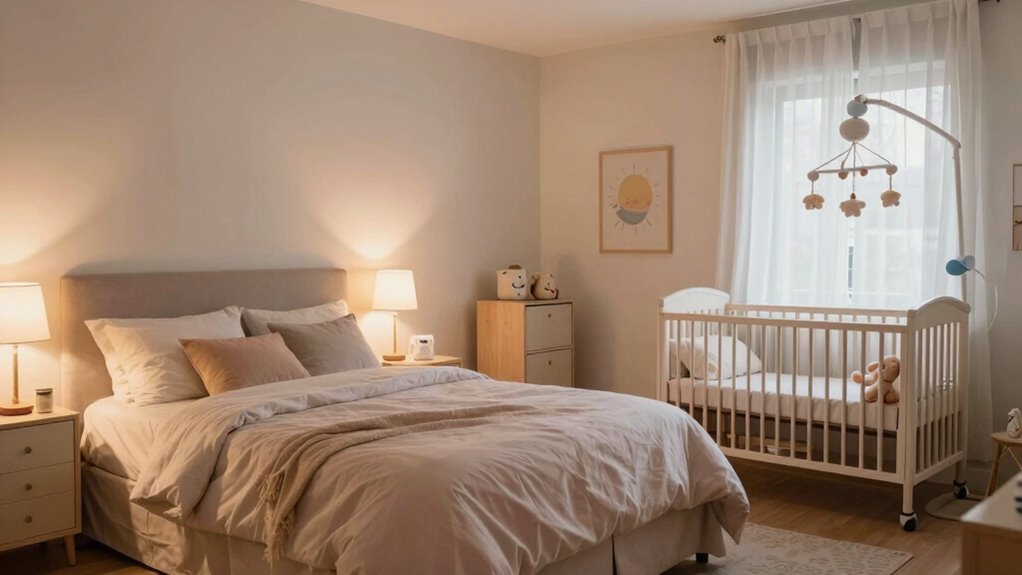
Creating a sleep environment that works for both room sharing and nursery setups involves designing a space that promotes restful sleep regardless of where your baby sleeps. Focus on a safe, cozy atmosphere that encourages good sleep habits. For co-sleeping safety, keep the bed free of pillows and heavy blankets, and ensure the mattress is firm. When designing a nursery, choose calming colors and blackout curtains to foster consistent sleep cues. Use the table below to visualize your space:
| Room Sharing Setup | Nursery Design |
|---|---|
| Bed close but safe | Separate, cozy crib |
| Minimal clutter | Dark, quiet environment |
| Soft lighting | Appropriate sleep cues |
Both setups benefit from a consistent sleep environment that prioritizes safety and comfort.
Making the Best Choice for Your Family’s Sleep and Well-Being
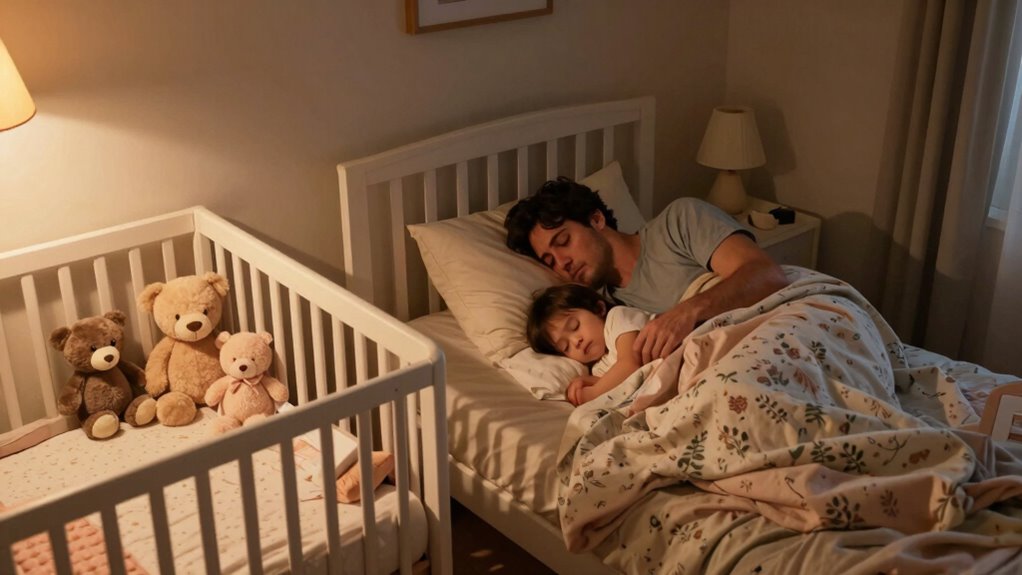
Choosing between room sharing and a separate nursery depends on your family’s unique needs and circumstances. To make the best choice for your child’s sleep and well-being, consider these factors:
- Bedtime routines — whether your routines are easier to implement in one space or require separation for consistency.
- Sleep training — some parents find it simpler to sleep train in a separate nursery, while others prefer the closeness of room sharing.
- Safety and comfort — assess your home environment to determine which setup promotes better sleep quality and security.
Reflect on your child’s temperament, your parenting style, and your home layout. Prioritize what fosters restful sleep, healthy habits, and your peace of mind, ensuring your decision supports your family’s long-term well-being.
Frequently Asked Questions
How Do Cultural Differences Influence Room Sharing Decisions?
Cultural norms and parenting beliefs heavily influence your decision to share a room or not. In some cultures, co-sleeping is seen as nurturing and natural, while others prioritize independence and opt for separate spaces. You might follow traditions that emphasize close family bonds or modern practices that promote individual sleep routines. Understanding these cultural influences helps you choose what feels right for your family’s values and your child’s well-being.
What Long-Term Developmental Impacts Are Linked to Each Setup?
You might find that room sharing enhances emotional attachment, promoting a sense of security that benefits long-term cognitive development. Studies show children who share rooms with parents often develop stronger emotional bonds, which support healthier social skills later. On the other hand, a nursery can foster independence, but it may slightly delay emotional attachment, potentially impacting early cognitive growth. Balancing these tradeoffs helps support your child’s overall development.
When Should Parents Reconsider Changing Sleep Arrangements?
You should reconsider changing sleep arrangements when privacy concerns or sibling rivalry arise, affecting your child’s sleep quality or emotional well-being. If your child struggles with independence or feels crowded, shifting to a separate nursery might help. Keep an eye on behavioral cues and communication to decide if a change will promote better sleep and emotional development. Trust your instincts and prioritize what best supports your child’s needs.
How Can Parents Manage Noise Levels in Shared Rooms?
You can manage noise levels in shared rooms by using white noise machines to mask disruptive sounds and creating noise barriers like bookshelves or curtains to block noise transfer. Keep sound levels consistent and avoid sudden loud noises, which can wake your child. Consider positioning the crib away from noisy areas and using soft textiles to absorb sound. These strategies help create a calmer sleep environment for everyone.
Are There Specific Sleep Training Methods Suited for Each Option?
Think of sleep training as tuning a delicate instrument—each method resonates differently depending on your setup. If you co-sleep, gentle approaches like gradual withdrawal or pick-up-put-down work best, fostering closeness while encouraging independence. For a nursery, more structured strategies like the Ferber method or extinction can be effective. Tailor your co-sleeping strategies or sleep training to fit your child’s temperament and your family’s rhythm for smoother nights ahead.
Conclusion
Choosing between room sharing and a nursery isn’t easy, but understanding the tradeoffs helps. Did you know that babies who sleep in their own rooms tend to sleep 30 minutes longer on average? Whether you prioritize bonding or uninterrupted rest, weighing safety, sleep quality, and stress levels is key. By tailoring your setup to your family’s needs, you can find a balance that promotes everyone’s well-being and helps you all get better sleep.