To make certain your child’s hearing stays safe, choose headphones with volume-limiting features set to safe levels, and opt for lightweight, adjustable designs with soft cushions. Regularly check headphones for damage and use parental controls to limit volume and listening time. Teach your child about hearing health and encourage breaks to prevent fatigue. Looking for trustworthy labels and certifications can also boost safety. Continue exploring for tips on protecting your child’s hearing even better.

Turn the school run and nap time into listening time
- Thousands of audiobooks, podcasts and originals
- Listen on your phone, tablet or Echo — also offline
- Cancel anytime
Key Takeaways
- Choose headphones with volume-limiting features set to safe maximum levels for children.
- Regularly inspect and maintain headphones to ensure they are damage-free and functioning properly.
- Educate kids about safe listening habits and recognize signs of hearing fatigue or damage.
- Use parental controls and device settings to limit volume levels and listening durations.
- Select certified headphones with safety labels like CE, FCC, or ASTM to ensure sound exposure limits are met.
As an affiliate, we earn on qualifying purchases.
How to Choose Kid-Friendly Headphones for Safe Listening
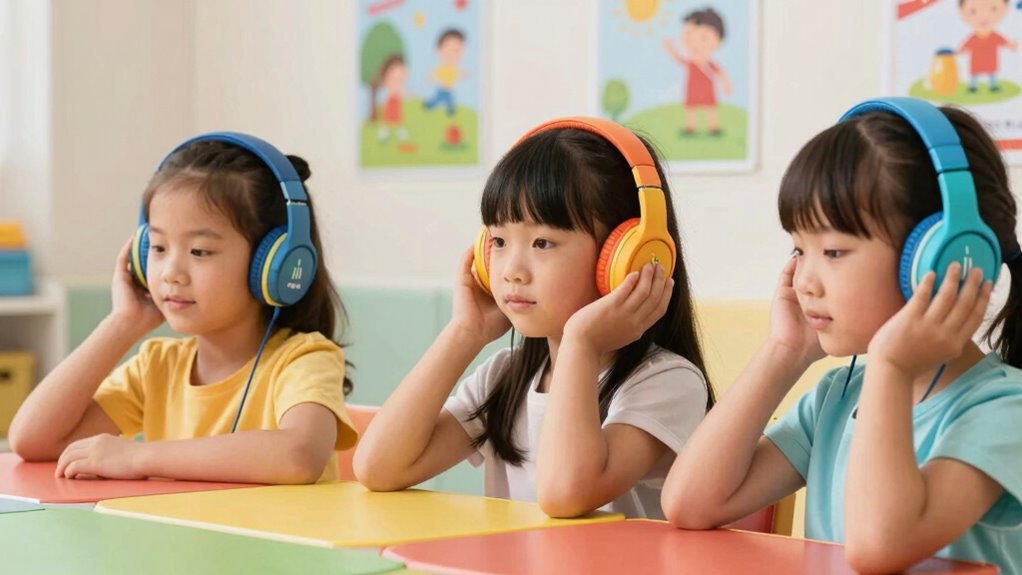
When choosing headphones for kids, safety should be your top priority. You want to guarantee they protect your child’s hearing while providing comfort during use. Look for headphones with volume-limiting features, ideally set to a safe maximum level, to prevent accidental loud sounds. Comfort is equally important; choose lightweight, adjustable headbands and soft ear cushions that fit snugly without causing discomfort. Child safety also includes sturdy construction to withstand rough handling. Opt for models with age-appropriate designs that are easy for kids to put on and take off. Prioritizing both child safety and headphone comfort helps your child enjoy their audio experiences without risking hearing damage or discomfort. This thoughtful approach supports healthy listening habits from an early age.
Why Safe Listening Matters for Kids’ Hearing Health
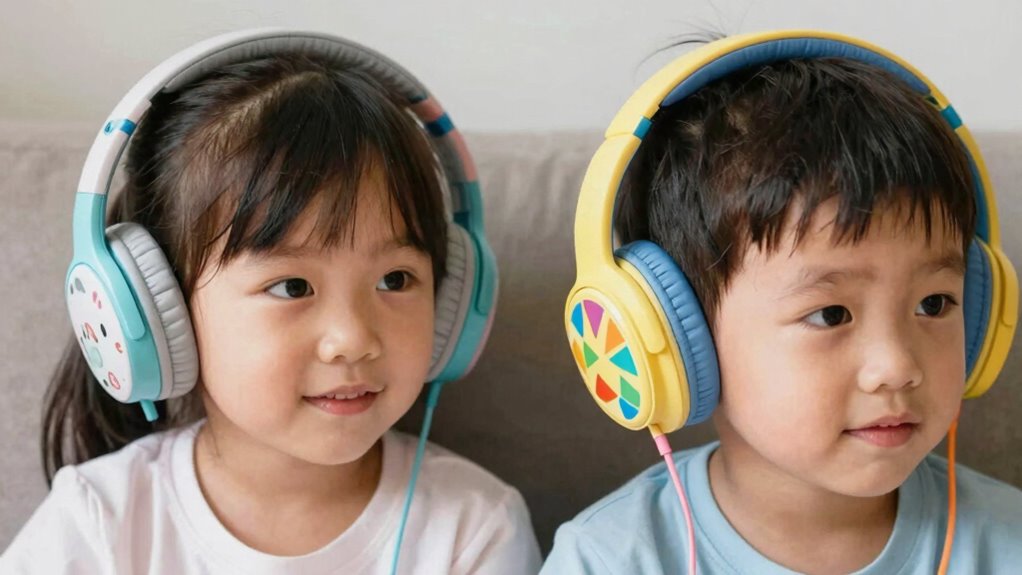
Protecting your child’s hearing is essential because exposure to loud sounds can cause irreversible damage over time. Noise-induced hearing loss isn’t just a concern for adults; kids are vulnerable too. Continuous exposure to high volume levels can harm their delicate ears and impact speech development and learning. Using ear protection and keeping volume levels safe reduce this risk. Awareness of sound levels and proper device settings further helps prevent hearing damage. Additionally, selecting headphones with volume-limiting features can provide an extra layer of safety for young listeners.
How to Set Volume Limits and Parental Controls Effectively
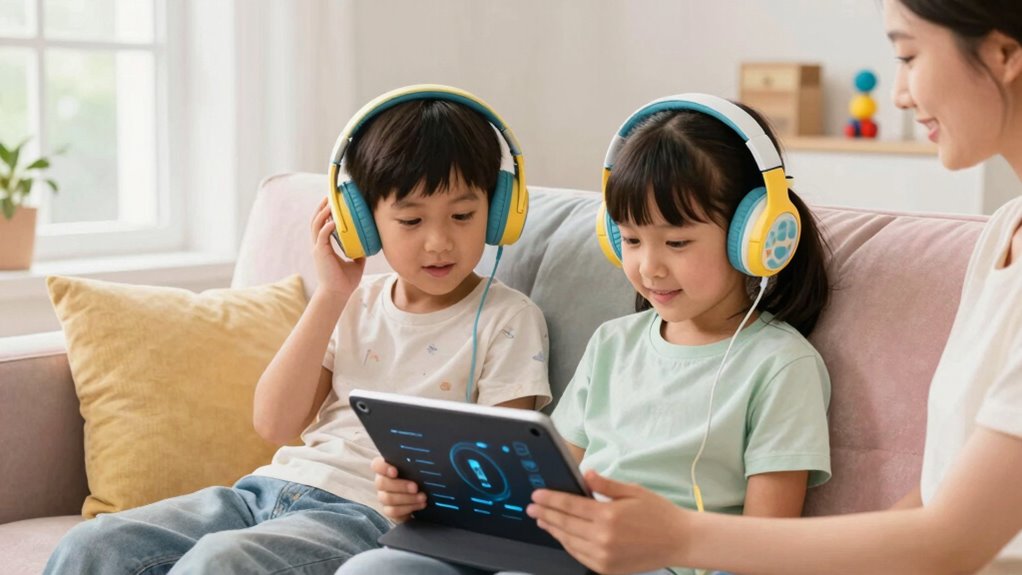
To keep your child’s hearing safe, start by choosing appropriate volume limits that prevent excessive sound exposure. Next, make sure to use the parental control features available on the headphones or devices to enforce these limits consistently. By actively selecting settings and monitoring usage, you can help protect your child’s hearing without constant supervision. Additionally, familiarize yourself with accessibility features like Guided Access, which can help manage your child’s device activity and create a safer listening environment. Implementing sound level monitoring tools can further ensure your child stays within safe listening ranges at all times. Being aware of essential oils for ear health can also provide natural support for ear discomfort, complementing your efforts to safeguard hearing. Understanding how SWIFT/BIC codes facilitate secure financial transactions can teach older children about responsible digital practices related to technology use and privacy. Incorporating volume safety awareness into your child’s daily routine can promote lifelong healthy listening habits.
Choosing Appropriate Limits
Setting appropriate volume limits and parental controls is essential to guarantee your child’s safe listening habits. Start by calibrating the volume to a safe level, ensuring it’s not too loud for extended periods. Use the headphone’s volume calibration feature to set a maximum limit that prevents accidental exposure to high sound levels. Consider the headphone’s durability as well; choosing sturdy headphones helps withstand daily use and accidental drops, maintaining consistent safety features. When selecting limits, think about your child’s age, activity, and the environment they’re in. Regularly review and adjust these settings as needed, especially if your child grows or their listening habits change. Clear boundaries, combined with reliable hardware, create a safer listening experience that promotes healthy hearing habits. Additionally, being aware of astrological influences can sometimes help parents understand their child’s personality traits and preferences, aiding in setting appropriate boundaries. To support ongoing safety, stay informed about latest headphone technology that can further enhance parental control options.
Using Parental Control Features
Using parental control features makes it easier to enforce safe listening habits consistently. Many kids’ headphones offer options to set volume limits directly through apps or built-in controls. Look for models with noise cancelling technology, which reduces background noise and allows your child to listen at lower volumes without sacrificing sound quality. Wireless connectivity makes it simple to manage settings remotely, giving you control without tangling cords. You can set maximum volume levels and restrict access to certain features, ensuring your child listens safely. Regularly review and update these controls as your child grows or their needs change. Understanding sound levels and their impact on hearing health helps you make informed decisions about managing your child’s listening habits. Additionally, choosing headphones with customizable parental controls ensures you can adapt settings as your child’s listening preferences develop. Being aware of recommended volume thresholds can further guide you in setting appropriate limits for your child’s safety. Monitoring listening duration helps prevent prolonged exposure, which is also important for maintaining hearing health. Incorporating hearing health guidelines into your routine can further support your child’s auditory well-being. By actively managing volume limits with parental controls, you create a safer listening environment that promotes healthy hearing habits over time.
How to Tell if Your Kid’s Hearing Is Tired or Damaged
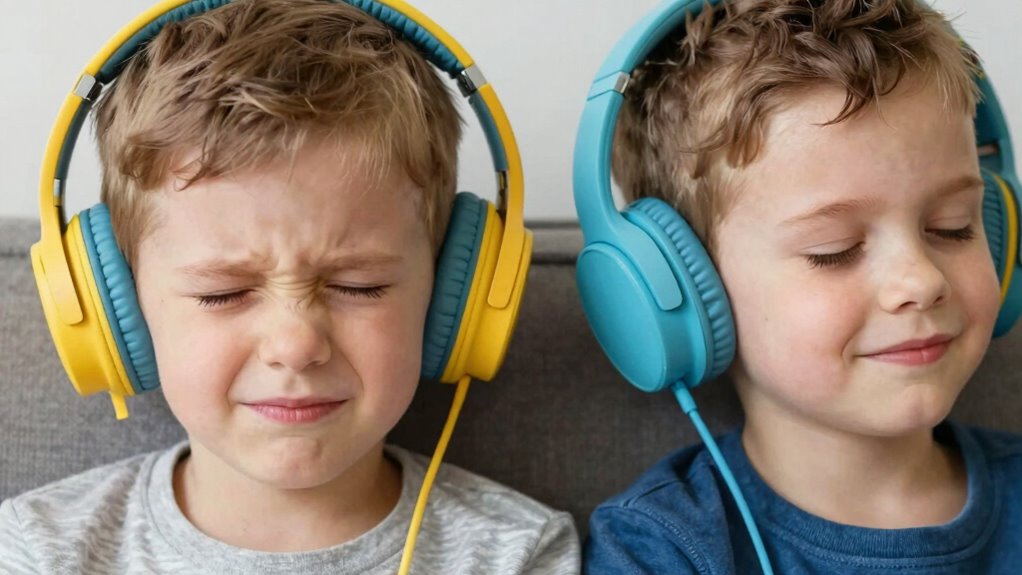
Kids’ hearing can sometimes show signs of fatigue or damage, and paying attention to these cues can help you catch problems early. If your child complains of ringing in their ears, difficulty hearing conversations, or seems unusually sensitive to sounds, it could indicate hearing damage. Listening fatigue might cause them to become easily distracted, tired, or irritable after listening to music or videos for extended periods. Watch for signs like frequent asking to repeat things or turning up the volume excessively. These behaviors suggest their ears may be overwhelmed or strained. Additionally, understanding sound exposure limits can help you set safe listening habits for your child. Recognizing early warning signs such as these can prompt timely interventions and protect your child’s long-term hearing health. It’s also beneficial to educate your child about safe listening practices to foster healthier habits early on. Recognizing these early warning signs and implementing protective measures can make a significant difference. Persistent hearing issues warrant a professional evaluation. By recognizing these early warning signs, you can take steps to protect your child’s hearing health and prevent long-term damage.
Tips for Promoting Healthy Listening Habits at Home and on the Go

To help your child enjoy their favorite sounds without risking their hearing health, it’s important to promote healthy listening habits both at home and when you’re on the go. Encourage them to explore diverse music preferences, which can reduce the desire to listen at high volumes. Set clear time limits for headphone use and remind them to take breaks to prevent fatigue. Additionally, teach your child about headphone maintenance—keeping devices clean and in good condition ensures better sound quality and safety. Choose headphones with volume-limiting features to protect their ears. Regularly check the headphones for damage, loose parts, or worn-out cushions, and replace them when needed. These small steps help foster safe listening habits and protect your child’s hearing health over time. Incorporating appropriate gear such as noise-canceling headphones can further enhance their listening experience while safeguarding their hearing. Also, educating your child on hearing health awareness can empower them to make safer choices regarding their audio habits. Understanding the importance of sound exposure limits can help set realistic expectations for safe listening.
What to Look for on Labels and Certifications When Buying Kids’ Headphones
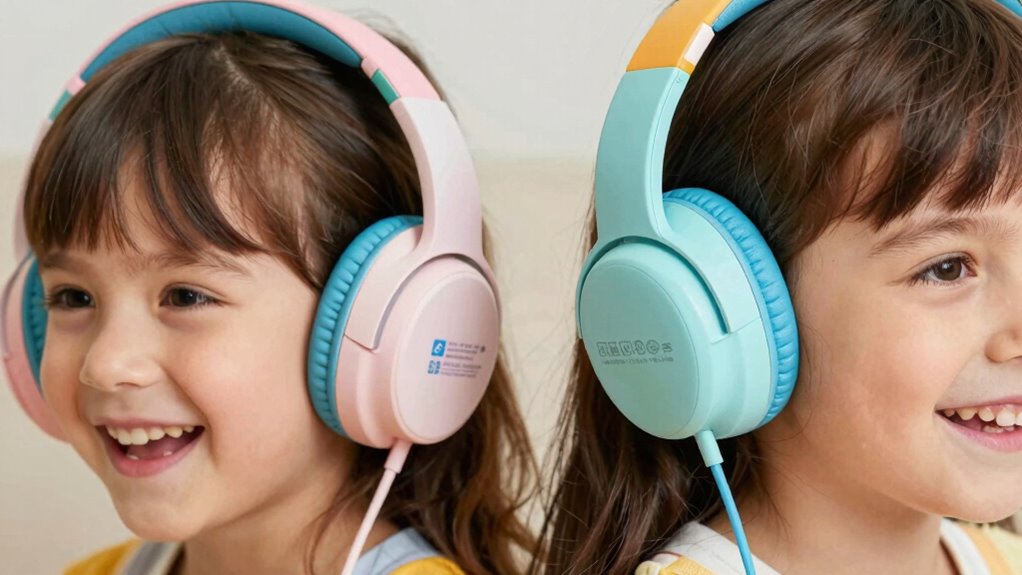
When shopping for headphones, paying attention to labels and certifications can make a significant difference in ensuring your child’s safety. Look for label symbols that indicate compliance with safety standards, such as CE or FCC marks. These symbols show the headphones meet specific certification standards for safety and electromagnetic interference. Also, check for labels specifying volume limits designed for children, which help prevent hearing damage. Certifications like ASTM or EN standards indicate the product has been tested for durability and safe use by kids. Avoid headphones without clear labels or certification marks, as these may not meet safety requirements. Choosing products with proper labels and certifications guarantees you’re buying a safe, reliable pair that protects your child’s hearing health. Additionally, understanding the significance of ear wax odor can help in recognizing potential health issues related to ear hygiene.
Frequently Asked Questions
Can Kids Wear Headphones for Extended Periods Safely?
Kids can wear headphones for extended periods if you make certain they stay within volume limits and the headphone fit is comfortable. Keep the volume at 60% or lower to protect their hearing, and choose headphones that fit snugly without causing discomfort. Regular breaks are important, too, so encourage your child to take pauses. Monitoring these factors helps make extended headphone wear safer for your kid.
Are Wireless Headphones Safer Than Wired for Children?
Sure, wireless headphones are safer than wired ones, right? Not exactly. Bluetooth safety concerns are minimal, but wired headphones often boast better durability for kids who tug and chew. With wireless, you avoid tripping over cords, but you might worry about Bluetooth radiation—though it’s mostly harmless. Ultimately, choose based on durability and comfort, not just the illusion of safety, because your kid’s headphones should survive their adventures.
How Often Should Kids’ Hearing Be Professionally Checked?
You should have your child’s hearing checked at least once a year with professional hearing tests to ensure their ear health stays ideal. Regular check-ups help catch early signs of hearing loss or ear problems, especially if they use headphones frequently. By staying proactive, you can protect their ear health and address any issues promptly, giving your child the best chance for healthy hearing as they grow.
Do Noise-Canceling Headphones Protect Hearing Better?
When it comes to protecting your child’s hearing, noise-canceling headphones are a real game-changer. They offer better noise reduction and sound isolation, which means your kid can enjoy their music or videos at lower volumes. This helps prevent hearing damage, especially in loud environments. So, don’t just turn a blind eye—these headphones can be a smart choice to keep their ears safe while still enjoying their favorite sounds.
What Signs Indicate My Child Is Experiencing Hearing Loss?
If you notice your child frequently asking to repeat things, turning up the volume on devices, or seems less responsive to sounds, these could be signs of hearing damage. Early detection is key; look for signs like difficulty understanding speech or withdrawal from conversations. Regular check-ups with an audiologist can help identify issues early, ensuring you catch hearing loss before it worsens. Stay attentive and proactive for your child’s hearing health.
Conclusion
So, enjoy your kid’s new headphones—just don’t forget to actually listen. While you might think those safe volume limits are just a parental fad, they’re really your kid’s chance to keep hearing the world’s wonders. Ironically, the best way to protect their hearing is to set limits that they might pretend aren’t there. Because in the end, the quiet moments of safe listening are what truly let their world stay loud and clear.
Fall Picks
fall essentials
As an affiliate, we earn on qualifying purchases.