
Early childhood vision screening is vital for catching common eye problems like lazy eye, crossed eyes, and refractive errors early on. Advanced tools and techniques make these screenings quick and less stressful for your child, enabling swift detection even if they can’t communicate well. Regular exams during this formative period help prevent long-term vision issues and support healthy development. Keep going to discover how these innovations are transforming pediatric eye care and ensuring brighter futures for kids.
Key Takeaways
- Early vision screening detects developmental issues like amblyopia and strabismus before they impact learning.
- Pediatric eye exams are tailored to be quick, engaging, and suitable for young children’s cooperation levels.
- Advanced devices such as photoscreeners enable rapid, objective, non-verbal assessments suitable for early childhood.
- Regular screening helps identify silent vision problems, allowing timely interventions like glasses or therapy.
- Utilizing screening technology improves detection accuracy and ensures ongoing monitoring of a child’s visual health.

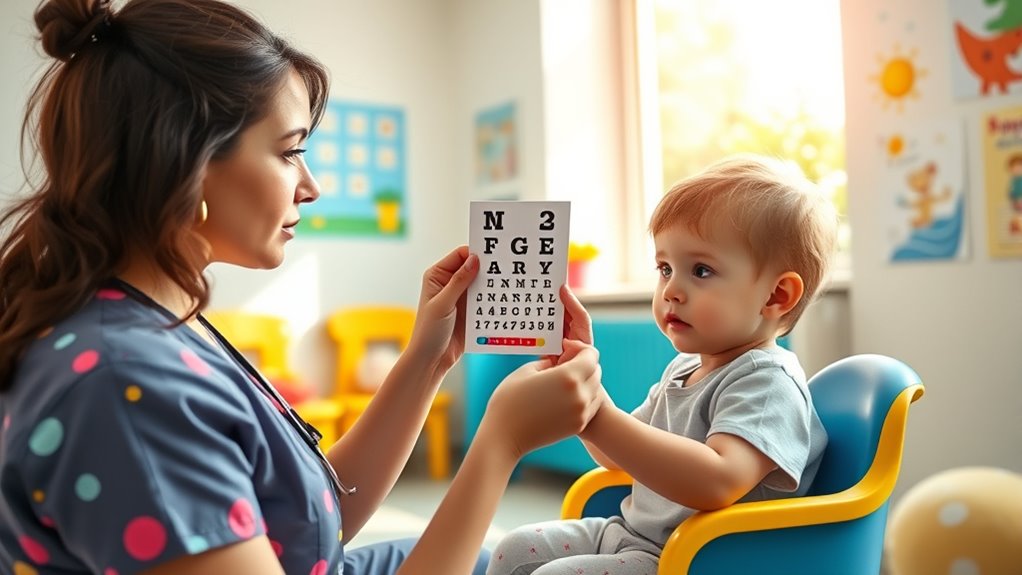
Early childhood is a critical period for detecting vision problems that can affect a child’s development and learning. During these formative years, your child’s eyesight is still developing, making early detection essential to prevent long-term issues. Regular pediatric eye exams are the best way to identify potential problems early on. These exams are designed to be age-appropriate, quick, and thorough, allowing your child’s eye care professional to evaluate visual acuity, eye alignment, and overall eye health.
Advancements in screening technology have considerably improved the way we identify vision issues in young children. Traditional eye exams can sometimes be challenging for little ones, especially if they’re unable to communicate what they see, but modern screening technology simplifies and accelerates this process. Devices like photoscreeners and autorefractors can quickly assess a child’s vision without the need for a verbal response or extensive cooperation. These tools are especially useful during routine pediatric visits, ensuring that no problem goes unnoticed.
Modern screening tools like photoscreeners and autorefractors make early detection quick and easy.
When you take your child for a pediatric eye exam, the eye care provider might use specialized screening technology to detect common issues such as amblyopia (lazy eye), strabismus (eye turn), or refractive errors like nearsightedness and farsightedness. Early detection through these screenings is vital because many childhood vision problems are silent initially; your child may not even realize they have trouble seeing. By catching issues early, you can intervene with treatments such as glasses, patches, or vision therapy before they affect your child’s ability to learn and develop normally.
Screening technology also enhances the accuracy of these assessments, especially in children who may be uncooperative or have difficulty focusing during traditional eye exams. Because these devices are non-invasive and quick, they’re less intimidating, making the experience more comfortable for your child. They also provide objective results that help eye care professionals determine whether further testing or treatment is needed. This proactive approach ensures that your child’s vision is monitored regularly and issues are addressed promptly.
Frequently Asked Questions
When Should My Child Have Their First Eye Exam?
You should schedule your child’s first eye exam around their first birthday, as early vision milestones are essential for healthy eye development. Regular check-ups help catch issues like nearsightedness or strabismus early. By monitoring eye development during these formative years, you guarantee your child’s vision stays on track, supporting their overall growth and learning. Early detection and intervention are key to maintaining good eye health as they grow.
Are Vision Screenings Covered by Insurance for Preschoolers?
Surprisingly, insurance often covers vision screenings for preschoolers, easing your cost considerations. While some plans might require a co-pay or have limits, many recognize early eye health as essential. It’s worth checking with your provider, because neglecting coverage could lead to unnecessary expenses later. So, yes, insurance can help, making eye screenings more accessible and affordable, ensuring your child’s vision gets the attention it deserves without breaking the bank.
How Effective Are Home Vision Tests for Young Children?
Home vision tests can be somewhat effective, especially with recent technology advancements that make them easier to use. As a parent, your involvement is vital; you can help spot signs of vision problems early. However, these tests aren’t a substitute for professional screenings. Use them as a complementary tool, but always follow up with an eye care specialist for thorough assessments and accurate diagnosis.
What Are Signs of Vision Problems in Infants?
You should watch for signs like poor eye tracking or limited color perception in your infant, which can indicate vision problems. If your baby struggles to follow moving objects or shows a lack of interest in vibrant colors, it’s time to consult a pediatrician. Early detection is key, even if you think these signs are normal. Trust your instincts and get a professional eye exam to guarantee your child’s developing vision.
Can Early Vision Screening Prevent Learning Disabilities?
Yes, early vision screening can help prevent learning disabilities by catching vision problems that may hinder learning and development. When you prioritize eye health awareness and support your child’s vision development from a young age, you enable timely interventions. This proactive approach guarantees any issues are addressed early, reducing the risk of future learning challenges. Regular screenings foster better academic success and overall well-being for your child.
Conclusion
By prioritizing vision screening in early childhood, you help identify issues before they affect learning and development. Some might argue it’s unnecessary for young kids, but catching problems early guarantees better outcomes and reduces long-term costs. Don’t wait until children struggle academically or socially; proactive screening empowers you to support their growth. Remember, early intervention makes a lasting difference—so you should make vision screening a routine part of childhood health care.