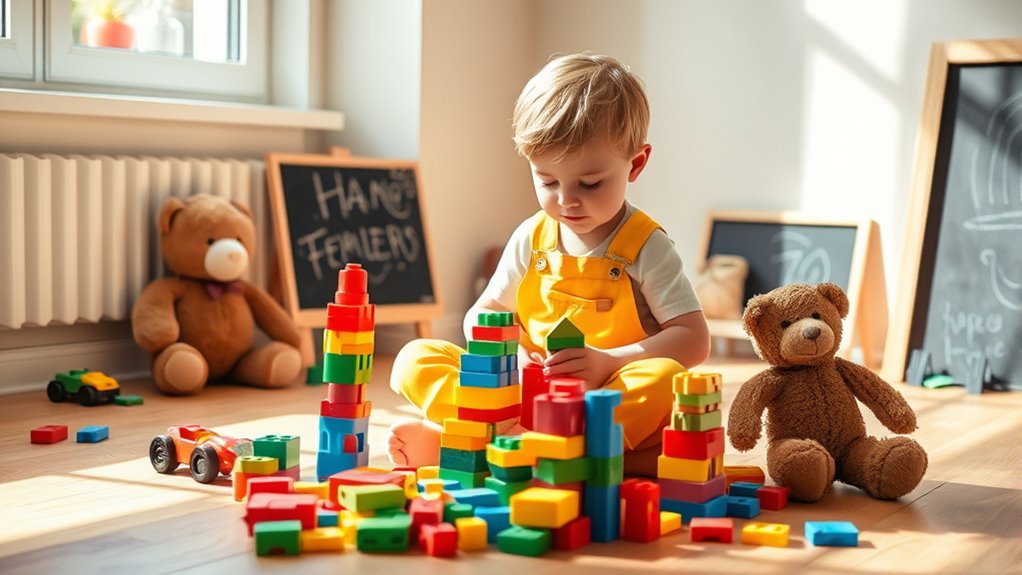

Symbolic play is a key way children use their imagination to understand the world around them. By transforming objects and actions into symbols, they develop abstract thinking, problem-solving, and creativity. It also boosts language skills, social understanding, and emotional intelligence as children explore roles and scenarios. Engaging in symbolic play reflects their growing cognitive abilities and offers a safe space for experimentation. Continue to explore how this play shapes their thinking and learning journey.
Key Takeaways
- Symbolic play involves children transforming objects/actions into representations, fostering imagination and cognitive development.
- It enhances abstract thinking, problem-solving, and mental imagery skills essential for reasoning.
- Through symbolic play, children develop language skills, storytelling abilities, and understanding of social roles.
- Engaging in symbolic play supports executive functions like memory, attention, self-control, and planning.
- It provides a safe environment for experimentation, reflecting cognitive growth and emotional understanding.

Symbolic play is a fundamental aspect of childhood development that allows children to transform objects and actions into representations of other things. When you watch a child pretend a block is a phone or a stick is a sword, you’re witnessing the power of fantasy imagination at work. This type of play isn’t just about fun; it plays a crucial role in shaping cognitive development. By engaging in symbolic play, children learn to think abstractly, problem-solve, and understand the world from different perspectives. It encourages them to create mental images and scenarios that go beyond immediate reality, fostering flexible thinking and creativity.
Symbolic play fosters creativity, problem-solving, and cognitive growth through imaginative transformation of objects and actions.
As you observe a child’s imaginative scenarios, you see how their fantasy imagination fuels their cognitive growth. They begin to grasp that one object can stand for another, and that actions can have different meanings depending on context. This ability to symbolize helps develop language skills, as children often narrate their pretend stories and assign names to their imaginary characters. Over time, this process strengthens their understanding of symbols and representations, laying the foundation for more complex thinking skills such as reasoning and planning. Additionally, engaging in STEM toys can support the development of problem-solving skills that complement symbolic play.
Engaging in symbolic play also enhances a child’s ability to understand social cues and develop empathy. When children role-play as a parent, teacher, or superhero, they explore different social roles and consider others’ feelings and motives. This mental simulation boosts their emotional intelligence and improves their capacity to navigate social interactions. Additionally, symbolic play challenges children to coordinate their ideas and actions, fostering executive function skills such as memory, attention, and self-control. They learn to organize their thoughts to carry out a pretend scenario or solve a problem within their play.
For you, encouraging symbolic play provides a window into a child’s cognitive and emotional development. It’s a natural way for children to experiment with ideas, test boundaries, and understand the consequences of actions—all within a safe, imaginative space. As they grow, their play becomes more complex, reflecting their expanding cognitive abilities and understanding of the world around them. Supporting this form of play helps nurture their creativity, critical thinking, and social skills, which are essential for lifelong learning and adaptation. In essence, symbolic play is not just a childhood pastime; it’s a vital process that shapes how children think, learn, and connect with others.

COUOMOXA Magnetic Building Blocks for Toddlers: STEM Educational Toys for 3 4 5+ Years Old Kids – Magnetic Stick Montessori Game for Family for Boys Girls 3-5
【BEGINNER-FRIENDLY POINT-LINE-PLANE】This 42pcs magnetic set uses rods (lines) and balls (points) to help 3-5 year olds easily understand…
As an affiliate, we earn on qualifying purchases.
As an affiliate, we earn on qualifying purchases.
Frequently Asked Questions
How Does Symbolic Play Influence Language Development?
You notice how pretend play boosts your child’s language development by encouraging them to use words and sentences in imaginative scenarios. The role of pretend helps children practice vocabulary, storytelling, and social interactions. This type of play provides cognitive benefits, like understanding symbols and concepts, which directly enhances their ability to communicate. By engaging in symbolic play, your child builds a strong foundation for effective language skills and creative thinking.
What Are Common Signs of Delayed Symbolic Play?
Like a mirror held up to a child’s development, delayed symbolic play shows through limited toy substitution and infrequent role reversal. You might notice your child struggles to use objects to represent other things or avoids pretending to be someone else. They may prefer repetitive actions over imaginative scenarios. These signs suggest they might need extra support to develop their symbolic thinking skills and fully engage in play.
How Can Parents Encourage Symbolic Thinking in Children?
You can encourage your child’s symbolic thinking by engaging in storytelling techniques and creative role playing. Use everyday objects to inspire imagination, ask open-ended questions, and encourage your child to invent stories or scenarios. Play pretend games together, assigning roles and exploring different perspectives. These activities boost their ability to think symbolically, fostering cognitive development and helping them understand abstract concepts through fun and meaningful interactions.
What Are Cultural Differences in Symbolic Play?
Cultural differences in symbolic play are like night and day! In some cultures, storytelling is an epic adventure, with children mimicking role-playing customs from ancient tales, making imagination soar to the stars. Elsewhere, play might focus on everyday chores or community roles, reflecting local traditions. These differences shape how children understand symbols, stories, and social roles, helping them connect with their cultural identity through vibrant, meaningful play experiences.
How Does Symbolic Play Relate to Problem-Solving Skills?
Symbolic play boosts your problem-solving skills by encouraging creativity enhancement and cognitive flexibility. When you engage in pretend scenarios, you learn to think outside the box and adapt to new situations. This type of play helps you develop the ability to see multiple solutions, think critically, and approach challenges with innovative ideas. As a result, your overall problem-solving abilities improve, making you more resourceful and adaptable in everyday life.

Alritz Pretend Play Teacher Set, School Stuff, Role Play Preschool Learning Activities Classroom Set for Girl Boys Include Dolls, Toy Laptop, Black Board, Birthday Gift 5 6 7 8 9+ Years Old
Companions for Kids: 3 dolls – a bear, an elephant and a lion – with their own names,…
As an affiliate, we earn on qualifying purchases.
As an affiliate, we earn on qualifying purchases.
Conclusion
So, seize the significance of symbolic play and thinking. By supporting your child’s spontaneous, symbolic scenarios, you’re strengthening their social skills, problem-solving, and imagination. Watch as their world widens with wonder and wisdom. Remember, playful pathways pave the way for profound, perceptive thinking. Foster fun, fuel development, and find fulfillment in their flourishing futures. Your involvement ignites incredible insights, inspiring intelligent, inventive thinkers—today, and tomorrow.
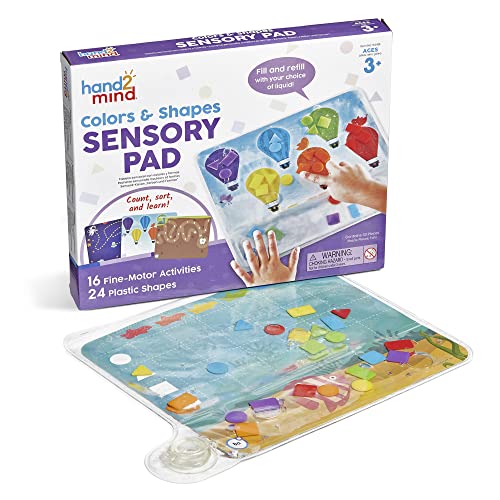
hand2mind Colors and Shapes Sensory Pad, Fine Motor Skills Toys for 3 Year Old, Sensory Toys for Sensory Play, Occupational Therapy Toys, Calming Toys for Kids, Shape Sorting Toy, Calm Down Corner
QUIET TIME ACTIVITIES FOR KIDS 3-5: Invite children to count, sort, and explore sensory materials with the Colors…
As an affiliate, we earn on qualifying purchases.
As an affiliate, we earn on qualifying purchases.

LOYO Kids Role Play Dress Up Clothes for 3-8 Years Old Play, 4 Sets Astronaut/Doctor/Fireman/Construction Costume for Kids And Toddlers Boys Halloween Costumes
Your little one no longer need to hesitate about their dream career, now they can realize all their…
As an affiliate, we earn on qualifying purchases.
As an affiliate, we earn on qualifying purchases.