
To simplify batch cooking for busy parents, start by evaluating your family’s meal preferences and dietary needs, then plan a weekly schedule that includes prepping versatile recipes like casseroles or grain bowls. Organize your kitchen with clear containers, labels, and efficient storage systems, and use time-saving techniques such as pre-chopping ingredients or employing pressure cookers. Master quick reheating tips to save time during busy weekdays. Keep exploring ways to optimize your system for stress-free, nutritious meals everyone will love.
Key Takeaways
- Plan family-friendly, versatile recipes that can be easily scaled and stored for quick weekday meals.
- Organize your kitchen with labeled containers, designated storage zones, and efficient shelving to streamline meal prep.
- Batch chop vegetables and pre-cook grains or proteins to reduce daily cooking time.
- Use meal prep automation and energy-efficient appliances to save time and maintain kitchen efficiency.
- Establish a routine with specific days and times for batch cooking to ensure consistency and reduce last-minute stress.

Airtight Food Storage Containers with Lids, Vtopmart 24 pcs Plastic Kitchen and Pantry Organization Canisters for Cereal, Dry Food, Flour and Sugar, BPA Free, Includes 24 Labels,Black
Help Organize Your Kitchen and Pantry— Imagine every time walking to your kitchen or pantry, found everything is…
As an affiliate, we earn on qualifying purchases.
As an affiliate, we earn on qualifying purchases.
Assess Your Family’s Meal Needs and Preferences
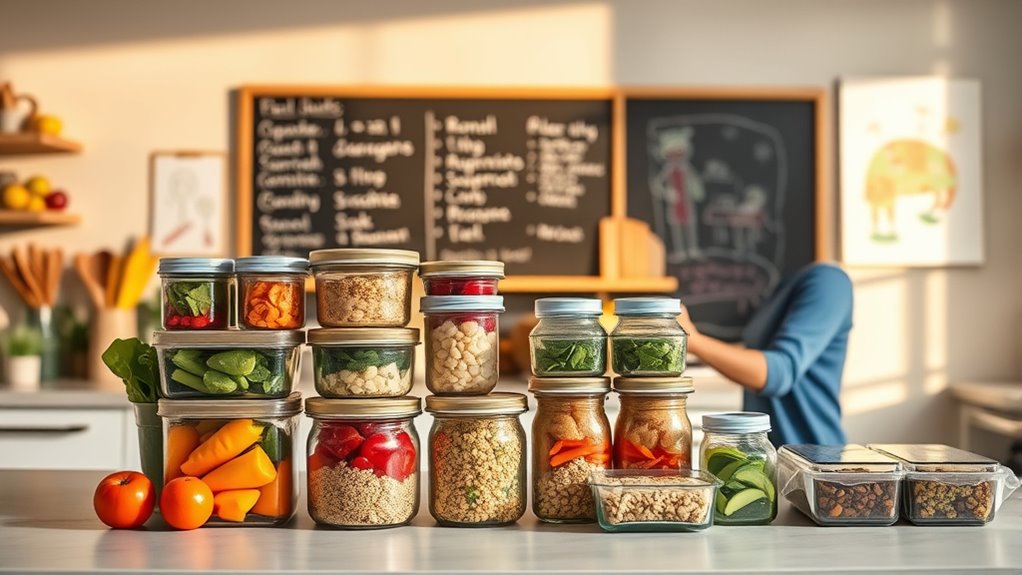
Before you begin batch cooking, it’s important to understand your family’s meal needs and preferences. This helps with mealtime negotiation and guarantees everyone stays satisfied. Talk to your family about their favorite foods and any dietary restrictions or allergies. Observe what meals they typically enjoy and which ones they tend to skip. When grocery shopping, focus on ingredients that suit everyone’s tastes, avoiding unnecessary purchases. Knowing your family’s preferences streamlines your shopping list and reduces waste. It also makes mealtime more enjoyable, as everyone feels listened to and included. By evaluating these needs early, you’ll set a solid foundation for creating batch meals that are both practical and appealing. Additionally, understanding your family’s food preferences can help you choose recipes that are more likely to be enjoyed, leading to fewer leftovers and less food waste. This step saves time and minimizes frustration during busy weekdays, especially when considering meal planning strategies that align with family tastes.

prepAmeal 9-in-1 Electric Pressure Cooker 6QT Multi-Functional Programmable Non-Stick Pot, Slow Cooker, Rice, Steamer, Sauté, Yogurt Maker, Warmer, 6 Quart
9-IN-1 Multi-Functional Pot : 1 Electric Pressure Cooker replaces 9 common kitchen appliances including Pressure Cooker, Slow Cooker,…
As an affiliate, we earn on qualifying purchases.
As an affiliate, we earn on qualifying purchases.
Plan a Weekly Batch Cooking Schedule
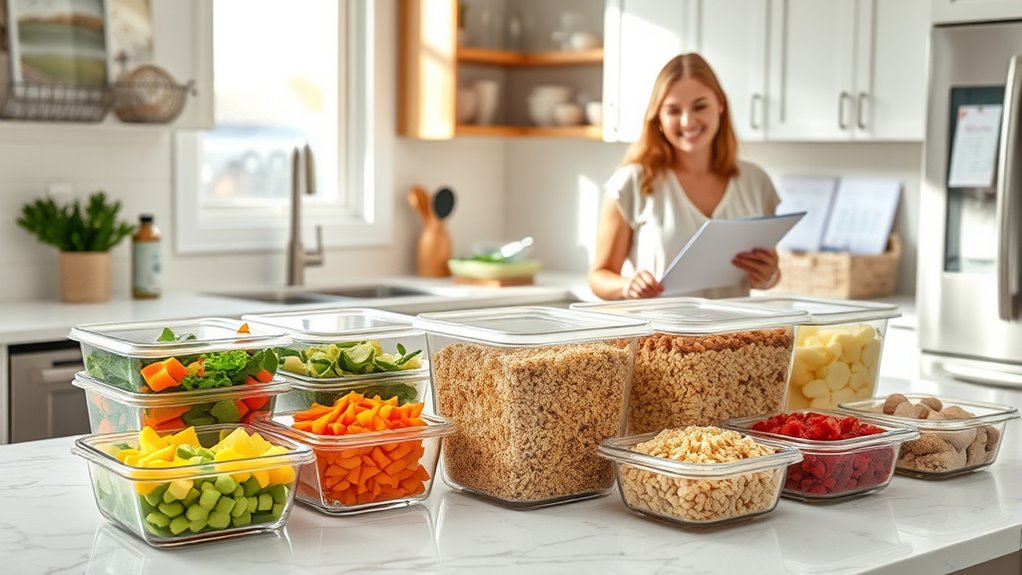
Creating a weekly batch cooking schedule helps you stay organized and guarantees your family’s meals are prepared in advance. By planning your cooking sessions, you can incorporate meal prep automation, saving time during busy weekdays. Allocate specific days and times for cooking, so it becomes a routine rather than a chore. This approach also boosts grocery shopping efficiency, as you know exactly what ingredients you need for the week. Prepare large batches of versatile ingredients, like cooked grains or roasted vegetables, to use in multiple meals. Keep your schedule flexible enough to accommodate unexpected events, but consistent enough to develop a reliable system. Incorporating kitchen upgrades can further streamline your cooking process and make meal prep more enjoyable. Additionally, using organization tools such as labels and storage containers can help you quickly identify ingredients and leftovers, reducing waste and saving time. Investing in innovative planters can encourage healthier eating habits by growing herbs and vegetables at home, making meal prep even easier. A well-structured plan minimizes last-minute stress and ensures your family enjoys healthy, homemade meals every day.

GoodCook Meal Prep Containers, Single Compartment 10-Pack, BPA-Free Reusable Food Storage, Black, Microwave & Freezer Safe, Stackable Meal Prep Containers for Lunches and Snacks
REUSABLE MEAL PREP CONTAINER SET: Includes 10 pre-portioned containers and 10 lids, perfect for lunches and snacks
As an affiliate, we earn on qualifying purchases.
As an affiliate, we earn on qualifying purchases.
Gather and Organize Your Kitchen Supplies
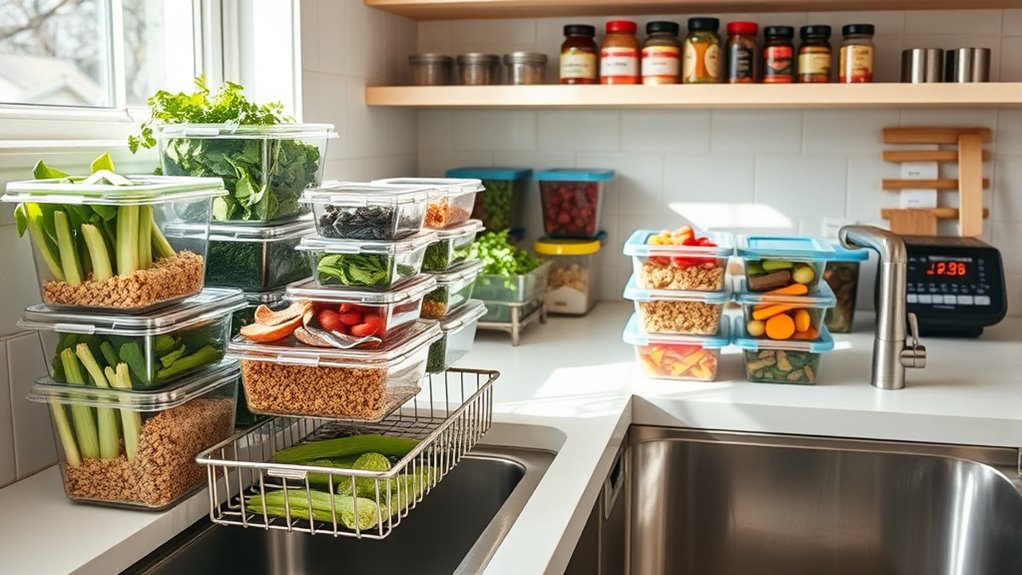
To streamline your batch cooking process, start by gathering and organizing all necessary kitchen supplies. Proper utensil organization helps you quickly find spatulas, knives, and measuring cups, saving time during meal prep. Label your pantry shelves clearly so ingredients are easy to locate and restock. Use bins or containers to group similar items, reducing clutter. Here’s a simple layout for ideas:
| Organization Tip | Implementation |
|---|---|
| Utensil Organization | Use drawer dividers or hooks |
| Pantry Labeling | Label shelves and containers |
| Storage Solutions | Clear containers for ingredients |
Additionally, adopting space-maximizing storage solutions can further improve your kitchen efficiency. Incorporating efficient organization methods can make a noticeable difference in your workflow. For example, utilizing self organizing storage systems designed specifically for kitchen tools can help keep everything in its place.

Vtopmart 6 Pack Clear Stackable Storage Bins with Lids, Large Plastic Containers with Handle for Pantry Organizer and Storage,Perfect for Bathroom,Cabinet,Kitchen,Fridge,Closet Organization
✅Functional Storage for Any Space: You can use these pantry bins for various things throughout your home to…
As an affiliate, we earn on qualifying purchases.
As an affiliate, we earn on qualifying purchases.
Choose Versatile Recipes for Easy Meal Prep
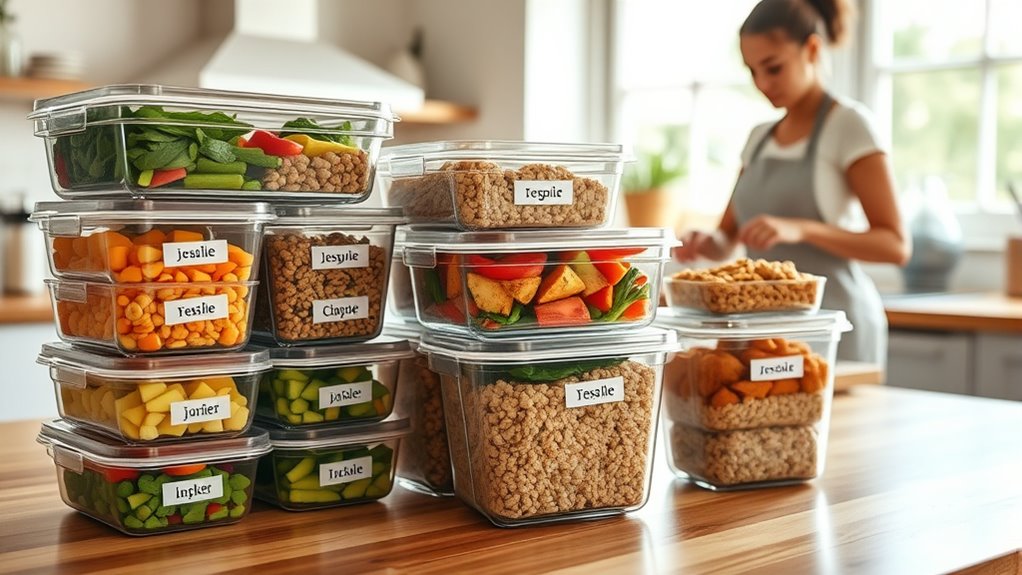
Having your kitchen organized makes choosing the right recipes much easier. Focus on versatile recipes that can adapt to different ingredients and dietary needs, making meal prep smoother. Use seasonal ingredient swaps to keep meals fresh and cost-effective, and consider dietary restriction considerations to cater to everyone’s needs. Recipes like stir-fries, casseroles, and grain bowls work well because they’re adaptable and forgiving. Incorporating ingredients that provide hydration and nourishment can further enhance the health benefits of your meals. Additionally, choosing recipes with multiple uses can help streamline your shopping and cooking routines. Select dishes that double as breakfast, lunch, or dinner options. Incorporate ingredients that can be easily swapped based on season or availability. Use proteins that work in multiple recipes, like chicken or beans. Opt for recipes that can be scaled up or down effortlessly. Keep spice and condiment options on hand to customize flavors easily. Incorporating flexible cooking techniques can also make meal prep more efficient and adaptable to your schedule.
Set Up a Storage System for Prepped Meals
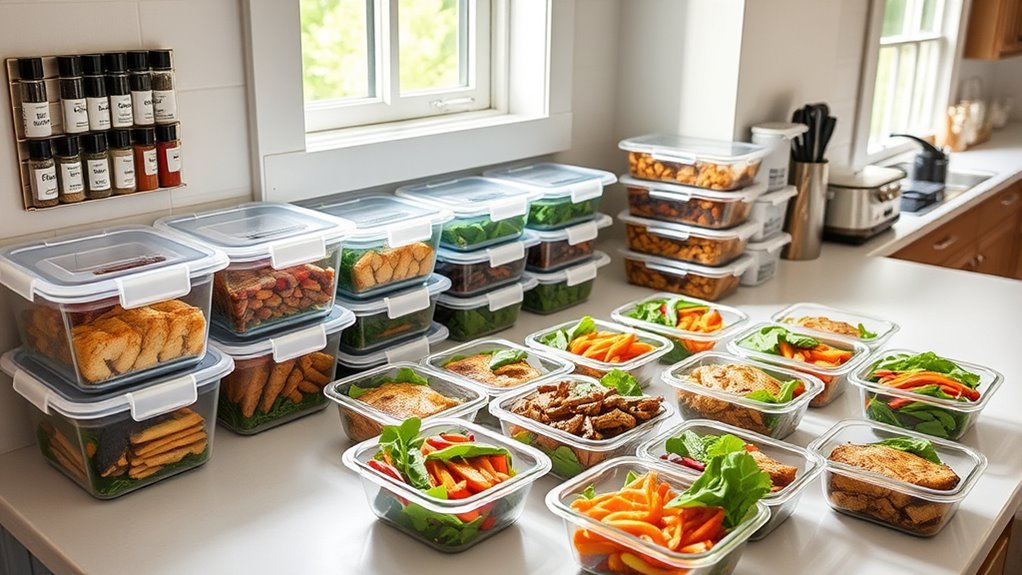
To keep your prepped meals fresh and accessible, start by using organized containers with clear labels. Assign a specific storage area in your fridge or freezer to make grabbing meals quick and easy. This setup saves time and reduces mealtime stress for busy parents like you. Incorporating smart storage solutions can also help monitor freshness and prevent food waste through efficient water conservation.
Organized Containers and Labels
Setting up an organized storage system for prepped meals starts with choosing the right containers and labeling them clearly. Opt for stackable containers to maximize space and keep your fridge or freezer tidy. Use color coded labels to quickly identify meal types or dietary needs, saving time during busy mornings. Clear, airtight containers help you see contents at a glance and prevent spills. Consistently label each container with contents and date to guarantee freshness and easy tracking. Consider using reusable labels for eco-friendliness and convenience. Invest in a variety of sizes to accommodate different portions and meal types. Keeping containers uniform helps with stacking and storage efficiency. Incorporating cookie categories into your labeling system can help you manage your storage more effectively. Incorporating Rustic farmhouse decor elements into your kitchen can make meal prep more inviting and comfortable. This system simplifies meal planning, reduces waste, and keeps your kitchen organized.
Designated Storage Areas
Establishing dedicated storage areas for your prepped meals keeps your kitchen organized and makes mealtime retrieval effortless. Clear zones prevent clutter and save time during busy mornings or evenings. Use specific shelves or drawers labeled for meal prep, so you always know where to find your stored dishes. Effective storage solutions include stackable containers, pull-out bins, and labeled sections for proteins, grains, and vegetables. Here’s a simple system to organize your meal prep storage:
| Storage Area | Items Stored | Notes |
|---|---|---|
| Fridge | Prepped meals | Keep cold and fresh |
| Freezer | Bulk meals | Use airtight containers |
| Pantry | Grains, snacks | Store in labeled jars |
| Drawer | Utensils, labels | Easy access for prep |
| Shelves | Extra containers | For overflow |
This setup streamlines meal prep and keeps everything neat. Incorporating organized storage systems can further enhance efficiency and reduce stress during busy mornings.
Implement Time-Saving Cooking Techniques
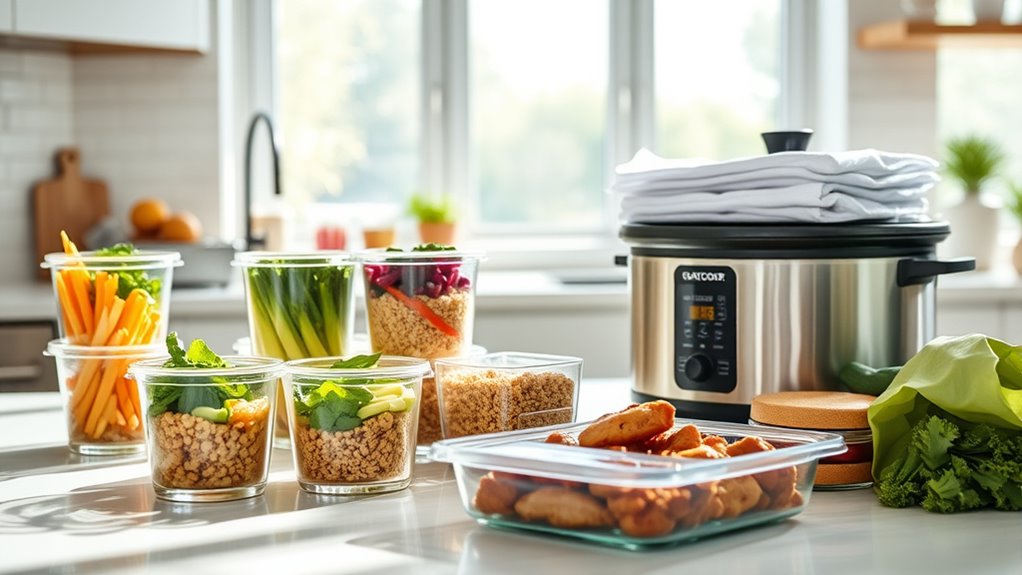
Implementing time-saving cooking techniques can make a significant difference in your busy schedule. By mastering quick cooking techniques and meal prep shortcuts, you can streamline dinner prep and reduce stress. Focus on methods that cut down on cooking time without sacrificing flavor or nutrition. For example, use pressure cookers or instant pots to prepare meals faster, or employ one-pan cooking to minimize cleanup. Batch chopping vegetables in advance saves time during busy evenings. Additionally, utilizing pre-cooked or frozen ingredients can speed up meal assembly. These small adjustments help you maximize efficiency and free up more time for family and other priorities. Incorporating appliance maintenance plans and selecting energy-efficient appliances can also help ensure your kitchen runs smoothly and reliably, reducing unexpected delays. Incorporating intelligence gathering techniques into your meal planning can also help you anticipate busy periods and prepare accordingly. These strategies, when used regularly, create a smoother, more manageable cooking routine.
Tips for Reheating and Serving Batch-Cooked Meals
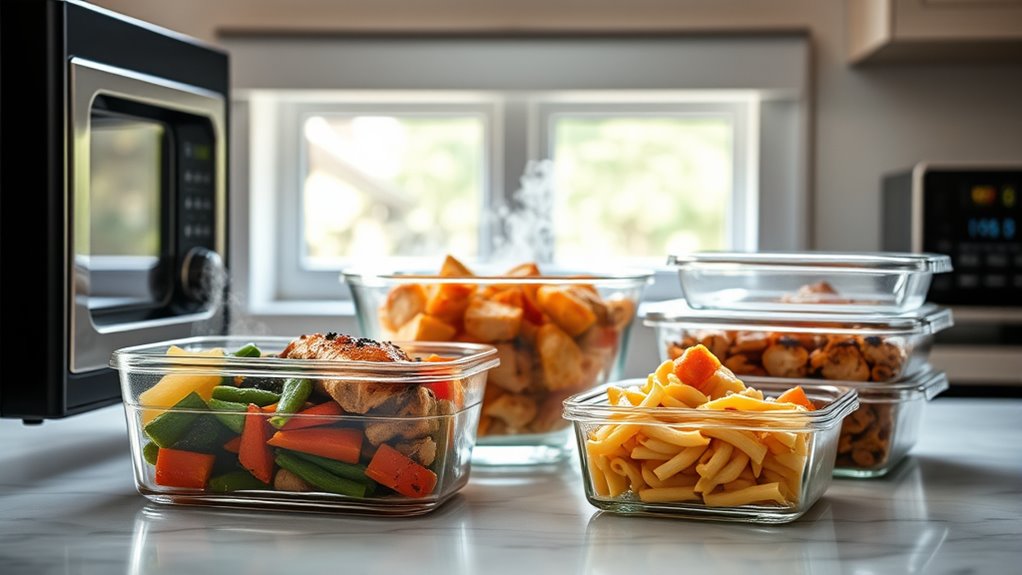
Reheating and serving batch-cooked meals efficiently can keep your busy evenings stress-free. To guarantee microwave safety, always use microwave-safe containers and cover your food to prevent splatters. Stir or rotate dishes halfway through heating to promote even warmth and avoid cold spots. When reheating, check that the internal temperature reaches at least 165°F (74°C) to ensure food safety. For meal presentation, transfer leftovers to fresh plates or bowls, and garnish if desired to make the meal more appealing. Reheat leftovers in small portions to reduce uneven heating and save time. Additionally, understanding proper sound design techniques can contribute to creating a more inviting atmosphere during meal times. Incorporating safe food handling practices can further reduce the risk of foodborne illnesses. Being aware of glycolic acid benefits can help you select appropriate skincare for post-meal skincare routines, promoting healthy skin even during busy schedules. By paying attention to microwave safety and presentation, you’ll make reheated meals more enjoyable and stress-free, helping you serve nutritious, inviting dinners even on hectic nights.
Frequently Asked Questions
How Can I Involve My Kids in Batch Cooking Safely?
You can involve your kids in batch cooking safely by giving them age-appropriate tasks like washing vegetables or stirring ingredients. Use kid-safe utensils, such as plastic knives or silicone spatulas, to prevent injuries. Always supervise closely, especially around hot surfaces or sharp tools. Encourage teamwork and patience, making it a fun learning experience. This way, your children stay safe while helping out and developing important cooking skills.
What Are Budget-Friendly Ingredients for Batch Cooking?
You can save money by using budget-friendly ingredients like dried beans, rice, pasta, and seasonal vegetables. When meal planning, consider ingredient substitutions—swap out expensive meats for cheaper options like chicken thighs or canned tuna. Buying in bulk and choosing store brands also helps. These strategies make batch cooking more affordable, allowing you to prepare nutritious meals without breaking the bank while keeping your family satisfied.
How Do I Adjust Recipes for Dietary Restrictions?
Feeling like a culinary magician, you can easily adjust recipes for dietary restrictions with clever ingredient swaps. Just imagine replacing gluten-filled pasta with spiralized zucchini or swapping dairy milk for almond milk—recipe substitutions that keep flavor intact. Use ingredient swaps thoughtfully, and you’ll master the art of inclusive cooking, all while saving time. Your meals will please everyone, no magic wand required—just a little savvy in the kitchen!
What Tools Help Streamline the Batch Cooking Process?
You can streamline your batch cooking with essential tools like meal prep containers and portion control tools to organize meals efficiently. Digital timers help keep cooking on track, while slow cookers simplify prep and reduce active time. Use freezer bags for easy storage and meal planning apps to coordinate recipes and schedules. These tools make batch cooking more manageable, saving you time and reducing stress during busy weeks.
How Can I Prevent Meal Boredom With Batch-Prepped Foods?
To prevent meal boredom with batch-prepped foods, focus on variety enhancement and flavor variety. You can mix up ingredients, spices, and sauces to create different tastes each time. Incorporate fresh herbs, rotate proteins, or add new veggies to keep meals exciting. Also, consider repurposing leftovers into entirely new dishes, so your family stays interested and satisfied without feeling like they’re eating the same thing every day.
Conclusion
Think of your batch cooking routine as planting a garden—you nurture it once, and it blooms all week long. When you organize your meals and tools now, you’ll save time and stress later. Just like a busy parent once shared, “Batch cooking turned dinner from chaos into calm,” proving that with simple systems, you can enjoy more family moments and fewer mealtime worries. Start small, stay consistent, and watch your weekly stress fade away.