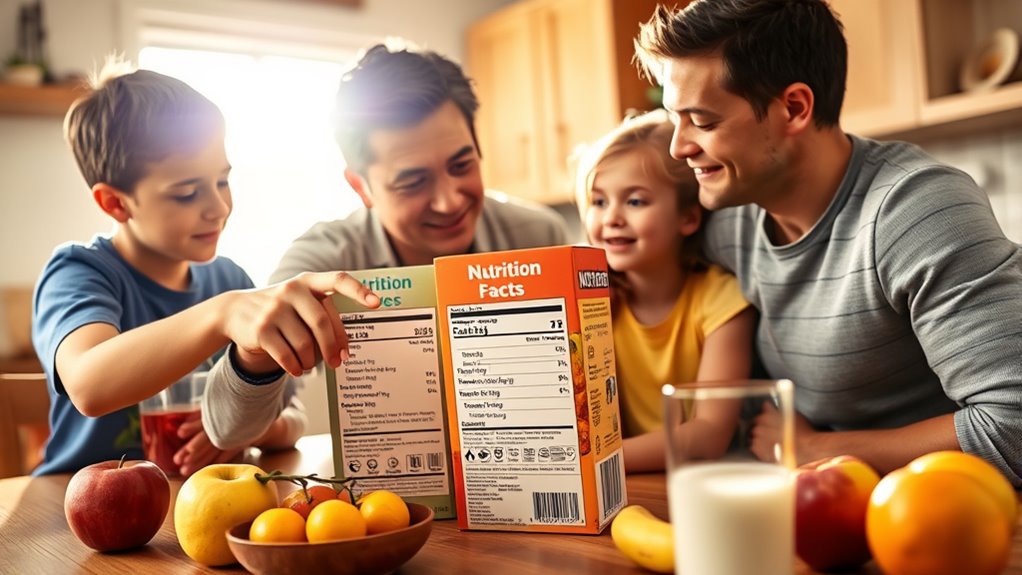

To make healthier choices for your family, focus on checking ingredient lists to spot added sugars and unhealthy fats. Pay attention to serving sizes to avoid overconsumption, and compare calorie and nutrient values across products to find the best options. Look for foods with fiber, protein, and essential vitamins, while monitoring added sugars and sodium. Mastering these steps helps ensure better family nutrition—keep going to discover more tips for smarter shopping.
Key Takeaways
- Always check the ingredients list to identify added sugars, unhealthy fats, preservatives, and allergens.
- Pay attention to serving sizes to avoid overconsumption and understand actual intake.
- Review calories per serving and compare nutrient breakdowns for healthier food choices.
- Focus on key nutrients like fiber, protein, vitamins, and minerals to support balanced nutrition.
- Practice reading labels regularly to make informed, healthier decisions for your family’s diet.
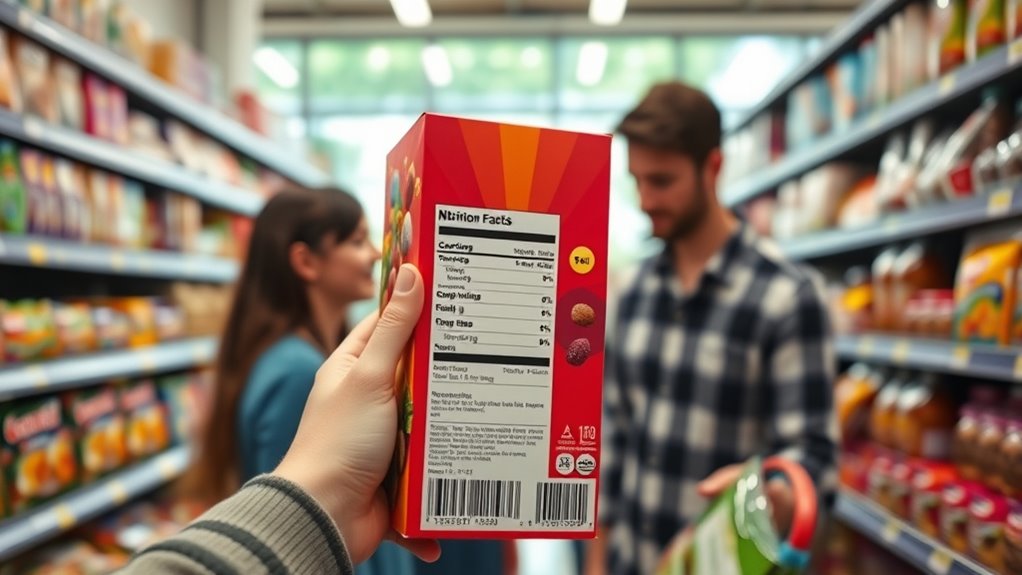
Understanding how to read nutrition labels is essential for making healthier food choices. When you look at a package, the nutrition label provides vital information that can help guide your decisions, especially when managing what your family eats. One of the first skills you need is ingredient identification. By reading the ingredients list carefully, you can spot added sugars, unhealthy fats, preservatives, or allergens that might not be obvious from the front of the package. This skill helps you choose products with whole, natural ingredients and avoid those that are overly processed or contain unwanted additives. For example, if you’re trying to limit sugar intake, checking the ingredients list can reveal hidden sources of sugar that might not be listed prominently on the front label.
Portion control is another key aspect of reading nutrition labels. Packages often contain multiple servings, and it’s easy to overlook this detail, leading to consuming more calories, fats, or sugars than intended. Always check the serving size and compare it to what you plan to serve or eat. This helps you accurately assess how much you’re consuming, rather than relying on the total amount in the package. For example, a snack bag might contain several servings, and eating the entire bag would markedly increase your intake of calories and unhealthy ingredients. By understanding the serving size, you can better manage your family’s nutrition and avoid accidental overconsumption.
In addition to ingredient identification and portion control, paying attention to the calories per serving and the breakdown of nutrients can help you make smarter choices. Focus on foods low in added sugars, saturated fats, and sodium, especially if you’re trying to promote healthier eating habits for your family. Comparing labels across similar products helps you select options that are better aligned with your health goals.
Another helpful tip is to look for labels that highlight key nutrients like fiber, protein, vitamins, and minerals. These can be indicators of a more nutritious product. Remember, reading nutrition labels isn’t just about avoiding unhealthy ingredients; it’s also about finding foods that support your family’s overall health and well-being. Additionally, becoming familiar with the Keto diet principles can help you identify foods that are compatible with specific dietary goals. By consistently practicing ingredient identification, portion control, and paying close attention to serving sizes, you empower yourself to make more informed, healthier choices every day.
Frequently Asked Questions
How Can I Teach Kids to Understand Nutrition Labels Effectively?
You can teach kids to understand nutrition labels effectively by turning it into fun, interactive games and using visual aids. Show them how to spot key info like calories and ingredients, making it engaging. Use colorful charts or diagrams to illustrate nutrients and portions. This hands-on approach helps kids grasp concepts quickly, making nutrition labels less intimidating and more interesting, encouraging healthy choices early on.
What Are Common Misinterpretations of Serving Sizes on Labels?
Serving sizes often cause more confusion than a maze, leading to portion confusion and misleading serving sizes that trick many shoppers. You might think a serving is the whole package, but it’s usually just a small portion. This misunderstanding can make nutrition facts seem better or worse than they really are. Always check the serving size carefully, and remember, what’s listed might not match what you typically eat.
How Do I Compare Products Using Nutrition Labels Quickly?
To compare products quickly, start by checking the ingredient list for similarities and differences, focusing on added sugars and unhealthy fats. Then, look at the nutrition facts to compare serving sizes, calories, and sugar content. Pay attention to the amount of added sugars and total sugars, as these impact health. This method helps you make smarter choices based on ingredient comparison and sugar content, saving you time and promoting better nutrition.
Are There Specific Labels Suitable for Children’s Dietary Needs?
Think of child-friendly labels as your secret decoder ring in the grocery store. These labels often feature pediatric nutrition symbols that highlight products tailored for kids’ dietary needs. Look for clear, easy-to-understand labels designed specifically for children, which help you quickly identify nutritious options. These symbols guarantee you’re choosing foods that support your child’s growth and health, making shopping less like a trip to the past and more like a savvy modern move.
How Often Should I Check Expiration Dates Alongside Nutrition Labels?
You should check expiration dates alongside nutrition labels every time you shop or before using food items. Maintaining expiration awareness guarantees you consume safe, fresh products and helps you spot label accuracy issues. Regularly verifying expiration dates prevents consuming spoiled food and ensures you’re making informed choices about nutritional content. Make it a habit to review both labels and dates to protect your family’s health and get the most out of your food purchases.
Conclusion
Think of reading nutrition labels as your map through a bustling marketplace. With each label, you navigate the maze, choosing the freshest, most nourishing items to fuel your family’s journey. By mastering this skill, you become the brave captain steering your ship away from unhealthy waters and toward vibrant, healthy shores. Remember, every label is a treasure chest—unlock it, and discover the keys to your family’s wellbeing. Your health adventure starts with those tiny, powerful details.