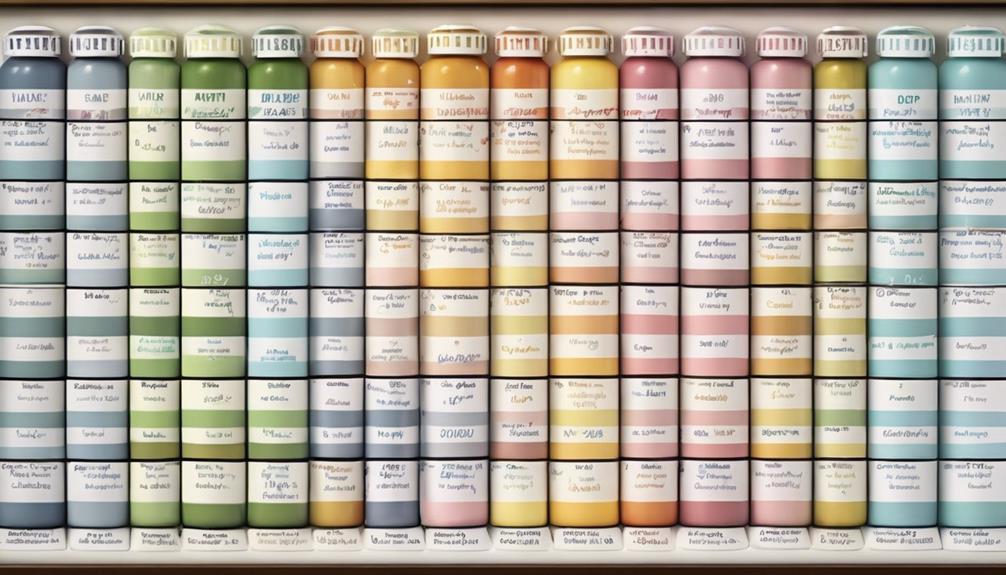
To store milk safely at home or daycare, start by washing your hands thoroughly and using sterilized, food-grade containers that are properly labeled with dates. Keep refrigerated at or below 40°F and freeze milk promptly in space-efficient, leak-proof bags or bottles. Thaw frozen milk in the fridge or under warm water, never refreezing once thawed. By following these guidelines, you’ll help maintain the milk’s freshness and safety—discover more tips to guarantee your little one’s well-being.
Key Takeaways
- Use sterilized, food-grade containers and label with the date to ensure freshness and safety.
- Refrigerate milk within two hours at or below 40°F (4°C), and freeze promptly for longer storage.
- Thaw frozen milk safely in the fridge overnight or under warm running water; avoid refreezing thawed milk.
- Discard milk after the recommended storage duration and never refreeze thawed milk.
- Maintain consistent storage practices at home and daycare, and handle milk with clean hands to prevent contamination.
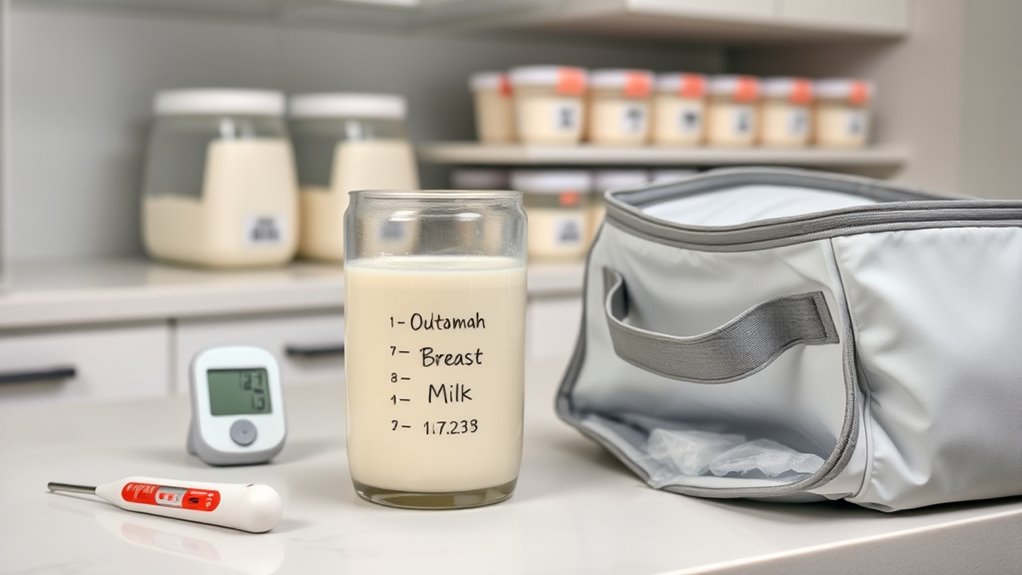
Properly storing milk is essential to keep it fresh and safe to drink. Whether you’re handling breast milk or formula, understanding the importance of breast milk safety and choosing the right storage container options can make all the difference in maintaining quality and preventing spoilage. When it comes to breast milk, safety is your top priority. You want to prevent bacterial growth and preserve nutrients, so proper storage practices are crucial. Always clean your hands thoroughly before handling milk, and use sterilized containers to minimize contamination. The storage container options available range from specialized breast milk storage bags to clean, BPA-free bottles. Each option has its benefits: milk storage bags are convenient for freezing and take up less space, while bottles with tight-fitting lids are ideal for refrigeration and everyday use. Make sure the containers you choose are made from food-grade materials, free of harmful chemicals, and easy to clean. Label each container with the date you expressed the milk, so you can keep track of freshness and avoid using expired milk. When storing breast milk or formula, always leave some space at the top of the container because liquids expand as they freeze. This helps prevent the containers from bursting or leaking. Temperature control is vital—refrigerate milk promptly after expressing or purchasing, ideally within two hours, and keep the fridge at or below 40°F (4°C). If you plan to freeze the milk, do so as soon as possible, and avoid storing it near the fridge door where temperature fluctuations are common. Thaw frozen milk safely by transferring it to the fridge overnight or holding the container under warm running water. Never refreeze thawed milk, as this increases the risk of bacteria growth. When storing milk at home or daycare, consistency helps maintain safety. Use the oldest milk first and never mix fresh with older milk in the same container. Remember, breast milk safety isn’t just about storage—it’s about how you handle, label, and monitor the milk to ensure it stays nutritious and safe for your baby. Proper storage practices protect your little one from potential illnesses and help preserve the valuable nutrients in breast milk. By selecting suitable storage container options, maintaining proper temperature, and following recommended guidelines, you can confidently store milk at home or daycare, ensuring your baby always has access to fresh, safe milk whenever they need it.

Medela Breast Milk Collection and Storage Bottles with Solid Lids – 6pk/5oz-150mL Breastmilk Container, Compatible Breast Pumps and Made Without BPA
COMPLETE COMPATIBILITY: Tailored to work seamlessly with all Medela pumps that come with bottles, ensuring a hassle-free and…
As an affiliate, we earn on qualifying purchases.
As an affiliate, we earn on qualifying purchases.
Frequently Asked Questions
Can I Refreeze Thawed Breast Milk?
You shouldn’t refreeze thawed breast milk once it’s been warmed, as this can compromise its safety and quality. To guarantee proper breast milk sterilization, use clean, BPA-free milk container types for storage. If you haven’t warmed the milk, you can refreeze it within a 24-hour window. Always follow guidelines to prevent bacterial growth and maintain milk nutrients, prioritizing your baby’s health.
How Do I Label Stored Milk Properly?
You want to be the milk labeling champion, right? Well, start with clear, waterproof labels—no magic marker smudges here. Use permanent ink on sturdy storage containers, and include the date you expressed the milk. Remember, proper labeling practices guarantee you know which milk to use first and keep your little one safe. It’s simple: date it, container it, and never forget to keep your milk organized!
What Are Signs of Spoiled Breast Milk?
You’ll notice spoiled breast milk by its sour odor, which is quite different from fresh milk’s mild smell. Check for milk discoloration—if it appears lumpy, yellow, or has changed color, discard it. Also, trust your senses: if it smells off or looks unusual, it’s best to throw it out. Always make certain of proper storage and handling to keep your milk fresh and safe for your baby.
How Long Can Milk Sit at Room Temperature?
Did you know that breast milk can sit at room temperature for up to four hours without compromising milk safety? If you leave milk out longer, bacteria can grow rapidly, making it unsafe for your baby. For ideal safety, it’s best to refrigerate or use freshly expressed milk within this time frame. Always check for signs of spoilage before feeding, and when in doubt, err on the side of caution to protect your little one’s health.
Is It Safe to Mix Fresh and Stored Milk?
You shouldn’t mix fresh and stored milk directly because differences in milk temperature can promote bacterial growth. Always verify both are at similar temperatures before combining. Use clean, sterile storage containers and gently swirl the milk instead of shaking to mix. This helps maintain the milk’s quality and safety, reducing contamination risks. When in doubt, it’s best to feed the freshest milk first or store separately to keep everything safe and fresh.

Medela Easy Pour Breastmilk Storage Bags 100 Count 7oz/210ml Disposable, Leakproof, Fast Freeze, Breast Milk Protection Recyclable & BPA Free
Completely Leakproof: The double-layer and double-zipper design provides extra secure sealing for added leak protection, giving you peace…
As an affiliate, we earn on qualifying purchases.
As an affiliate, we earn on qualifying purchases.
Conclusion
Following proper milk storage guidelines guarantees your little one stays safe and healthy. Did you know that improperly stored breast milk can spoil in as little as 4 hours at room temperature? By keeping milk at the right temperature and following guidelines at home and daycare, you reduce waste and protect your baby’s health. Stay vigilant and organized with your storage routines—your baby’s well-being depends on it. Proper storage truly makes a difference!

DRKIO 6 Pack Glass Baby Food Storage Containers – 4 Oz Baby Food Jars with Lids Baby Food Maker Microwave Dishwasher Freezer Safe 100% Leak Proof BPA Free Reusable
PREMIUM BABY FOOD-GRADE MATERIAL: Prioritizing durability and baby health, our containers are crafted from superior, thicker food-grade glass…
As an affiliate, we earn on qualifying purchases.
As an affiliate, we earn on qualifying purchases.

Vtopmart Breastmilk Storage Container 4PCS Set, Clear Freezer and Fridge Organizer Bins, Plastic Storage Bins for Breast Milk, Baby Pouches, Formula, Bottles and Yogurts, 4.3’’ Width, 14.7" Long
Perfect Size —- The set comes with 4 narrow organizer bins. The size of each clear organizer bin…
As an affiliate, we earn on qualifying purchases.
As an affiliate, we earn on qualifying purchases.