To prevent your newborn from slumping in their car seat, verify the seat fits properly by checking size limits, compatibility with your vehicle, and correct installation. Adjust the recline angle using a bubble level tool and make sure the harness is snug and lying flat without twists. Regularly recheck the fit as your baby grows, fine-tuning straps and seat position. Keep your baby supported and secure for every trip—continue to learn the essential steps to keep them safe and comfortable.
Key Takeaways
- Ensure the harness is snug, lying flat against the baby’s chest, with no slack around shoulders or hips.
- Check the seat’s recline angle using a bubble level to keep the baby’s head in a neutral, upright position.
- Regularly verify the seat remains securely anchored with minimal movement and the straps are properly tightened.
- Support the baby’s head and neck with correct positioning and avoid accessories that could cause slumping.
- Reassess fit and seat angle as the baby grows, ensuring no signs of slumping or discomfort during trips.

Graco Extend2Fit Convertible Baby Car Seat, Rear and Forward Facing, Adjustable Extension Panel for Extra Legroom, Gotham
Convertible car seat grows with your child from rear-facing harness (4-50 lb) to forward-facing harness (26.5-65 lb)
As an affiliate, we earn on qualifying purchases.
As an affiliate, we earn on qualifying purchases.
Why Proper Car Seat Fit Prevents Your Baby’s Slump

A proper car seat fit is essential because it keeps your baby upright and well-supported during car rides. When your newborn is snugly positioned, it prevents slumping that can interfere with their infant sleep and feeding routines. A secure fit guarantees their head stays aligned, reducing the risk of neck strain or airway obstruction. If your baby slumps, it can disrupt their comfort, making it harder to settle into sleep or feed effectively. Proper positioning supports their developing muscles and keeps them safe, especially during longer trips. When the car seat fits correctly, your baby remains in a natural, comfortable posture that promotes restful sleep and smooth feeding. Additionally, support vs. boundaries is crucial to ensure that your baby’s physical and emotional needs are balanced during car rides. Maintaining the correct ergonomic positioning helps prevent long-term musculoskeletal issues. Ensuring the seat’s proper installation is just as important as the fit itself to maximize safety. Properly adjusting the harness and secure attachment can further enhance safety and comfort. Regularly checking the tissue paper packaging and disposal practices can also contribute to a safer environment for your child. Ultimately, a secure fit helps maintain your baby’s health, safety, and comfort throughout every journey.

Graco SnugRide SnugFit Infant Car Seat, Baby Car Seat with Anti Rebound Bar for Extra Safety, No-Rethread Harness, LATCH Equipped Carseat, Baby Essentials, Gift for New Parents, Gotham
SnugRide performance helps protect rear-facing infants from 4-30 lb and up to 32"
As an affiliate, we earn on qualifying purchases.
As an affiliate, we earn on qualifying purchases.
How to Choose the Right Car Seat Size and Model for Your Newborn

Choosing the right car seat size and model is essential for your newborn’s safety and comfort. Make sure the seat fits your baby’s weight and height, and check if it’s compatible with your vehicle. Paying attention to these details guarantees a secure and proper fit every time. Additionally, consider the traditional Indonesian decor principles to ensure the seat complements your home environment if the car seat will be displayed as part of your decor. It’s also helpful to evaluate the fit and safety standards of the seat to ensure it meets current regulations and provides optimal protection for your little one. Incorporating industry trends can also help you select a model that offers the latest safety features and innovations. Being aware of regulatory compliance can further ensure the seat adheres to established safety regulations, giving you extra peace of mind. Moreover, checking the adjustability features of the seat can ensure a proper fit as your newborn grows.
Correct Seat Size
Selecting the correct car seat size is essential to guarantee your newborn’s safety and comfort. A properly sized seat ensures your baby remains secure and prevents issues like slump or discomfort. When choosing, consider the weight and height limits specified by the manufacturer, as these directly impact fit. Don’t forget to explore compatible car seat accessories, such as padding or head supports, which can enhance baby comfort without compromising safety. An ill-fitting seat can lead to poor positioning, increasing the risk of injury and discomfort. Always follow the manufacturer’s guidelines for size and fit. Remember, a seat that’s too big or too small won’t provide the necessary support, so choosing the right size is key to a safe and cozy ride for your newborn. Additionally, maintaining proper seat positioning can promote better posture and reduce the chances of slump during travel. Ensuring the seat is correctly adjusted for growth can also extend its effective use and safety lifespan. Regularly checking the fit over time helps ensure your newborn remains properly supported as they grow. Paying attention to proper installation techniques will further enhance the overall safety and stability of the car seat. Incorporating safety standards during selection guarantees your car seat meets current safety regulations, providing peace of mind during travel.
Model Compatibility Tips
To guarantee your newborn’s car seat fits properly, it’s important to verify that the model you choose is compatible with your vehicle and meets your baby’s specific size and weight requirements. Check your car’s owner manual and the car seat’s specifications to confirm a proper fit, avoiding awkward gaps or tight spots. Consider car seat aesthetics, as a well-designed seat can make installation easier and boost your confidence in safety. Additionally, review manufacturer warranties, which protect your investment and provide peace of mind if issues arise. Make sure the model you select is compatible with your vehicle’s latch system or seat belt configuration. Ensuring correct installation procedures is crucial for a secure fit and your child’s safety. In addition, reviewing the rhythm of your installation can help prevent errors and ensure consistent safety practices. Familiarizing yourself with the car seat safety standards can further enhance your confidence in choosing the right model. Selecting a model that adheres to recognized safety standards can give you peace of mind knowing your newborn is protected. Simply understanding the technologies involved in modern car seats can help you make more informed decisions. Choosing the right size and model ensures a secure fit, comfort for your newborn, and peace of mind during every trip.

UnbuckleMe Car Seat Buckle Release Tool – Easy Opener Aid for Arthritis, Long Nails, Older Kids – Button Pusher for Infant, Toddler, Convertible 5 pt Harness car Seats – As Seen on Shark Tank (Gray)
As Seen on Shark Tank, the car seat clip opener that eliminates thumb pain and broken nails from…
As an affiliate, we earn on qualifying purchases.
As an affiliate, we earn on qualifying purchases.
How to Check Your Newborn’s Car Seat for Proper Fit and Positioning
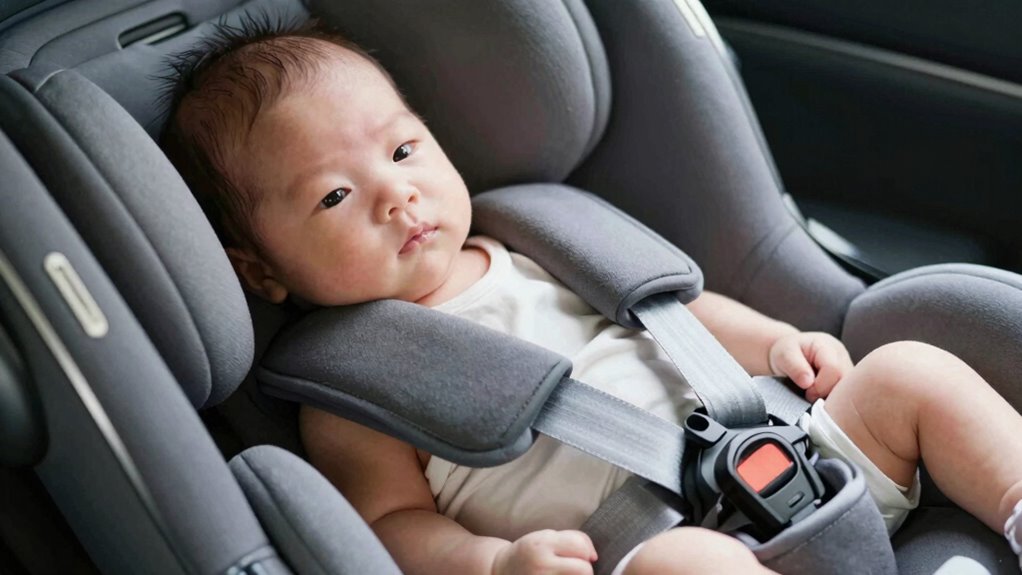
Ensuring your newborn’s car seat fits correctly is essential for their safety and comfort. Start by checking the car seat installation, making sure it’s securely anchored and doesn’t move more than an inch side to side or front to back. The harness should be snug, with the straps lying flat without twists, and the chest clip positioned at armpit level. Proper positioning also involves supporting your baby’s head and body, preventing slumping or slouching, which can compromise airway safety. Keep in mind that baby sleep positions are best supported by a properly adjusted harness that keeps your newborn upright and well-secured. Regularly verify that the seat remains tight and correctly aligned as your baby grows, ensuring ongoing safety and comfort during every trip. Additionally, proper seat adjustment plays a crucial role in maintaining a safe and comfortable environment for your newborn. For added security, consider correct harness tension to prevent any slack and enhance overall safety.

Graco SnugRide Lite LX Infant Car Seat, Lightweight Rear-Facing Seat for Babies 4–30 lb, 4-Position Adjustable Base, LATCH Installation & ProtectPlus Engineered, Studio
Infant car seat helps protect rear-facing infants 4-30 lb and up to 32"
As an affiliate, we earn on qualifying purchases.
As an affiliate, we earn on qualifying purchases.
Signs Your Newborn Car Seat or Harness Isn’t Fitting Correctly

If your newborn’s car seat or harness isn’t fitting correctly, you might notice some clear signs that it’s time for adjustments. One key indicator is if the harness is too loose, allowing your baby to move excessively or slide out easily. Verify the harness is snug, with no slack, especially around the shoulders and hips. Pay attention to airbag safety: if your car has airbags, confirm the seat is placed correctly—forward-facing seats shouldn’t be too close to an active airbag, which can be dangerous. Also, check that car seat accessories like padding or inserts aren’t interfering with the harness fit. If these elements cause slack or misalignment, it’s time to readjust or remove them for a safer, proper fit.
How to Make Sure Your Baby’s Harness Fits Just Right
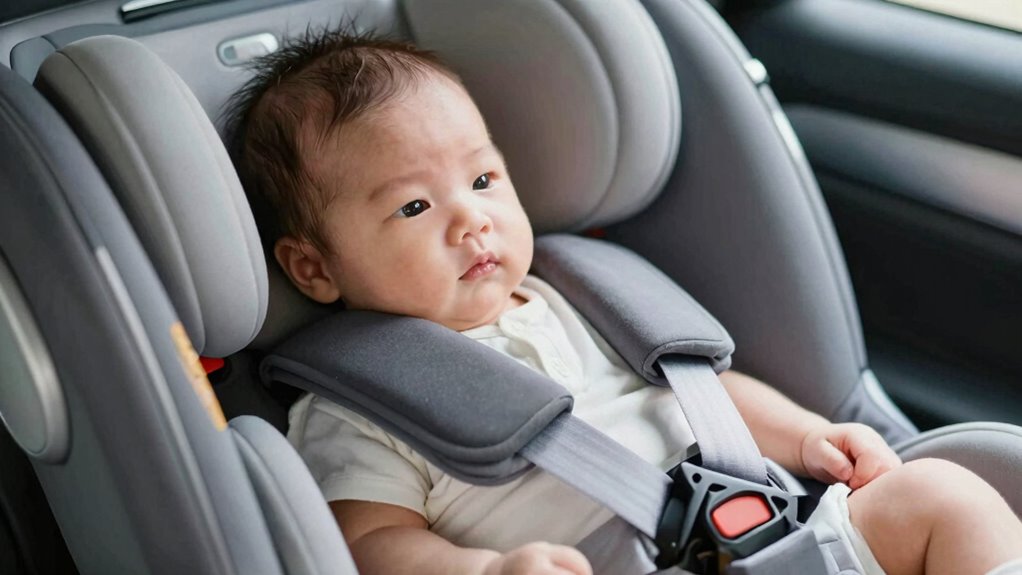
Making sure your baby’s harness fits just right starts with a simple check: the harness should be snug without causing discomfort. You shouldn’t be able to pinch any slack at the shoulder straps, and the harness should lie flat against your baby’s chest. Remember, car seat accessories like padded inserts or head supports might affect fit, so verify they’re compatible and don’t compromise safety. Seasonal adjustments also matter—thicker clothing or layers can add bulk, so tighten the harness accordingly to keep it snug without restricting movement or breathing. Regularly check the fit as your baby grows or if the weather changes. Proper harness fit is essential for safety, so take the time to get it just right.
Adjusting the Seat Angle to Support Your Baby’s Head and Neck

To keep your newborn’s head and neck well-supported, you need to adjust the seat to the proper recline angle. Make sure the baby’s head stays in a neutral position, not tilted forward or backward. Using a bubble level tool can help you find the correct angle and make certain of your baby’s safety and comfort.
Proper Seat Recline Angle
Ensuring your baby’s head and neck are well supported starts with adjusting the seat to the proper recline angle. This helps prevent slumping and ensures safe positioning during travel. Check your car seat’s manual for the recommended recline setting for newborns, typically nearly upright but not fully reclined. Proper seat angle also makes car seat maintenance easier, as it reduces strain on the harness and keeps your baby comfortable. When traveling, consider using travel accessories like wedge inserts or padding to maintain the correct angle, especially if your vehicle’s seat isn’t ideal. Regularly verify the recline angle, especially after installing new accessories or adjusting your seat, to ensure your newborn remains snug and secure on every trip.
Baby’s Head Positioning
Proper head positioning is essential for your baby’s safety and comfort during car rides. To prevent their head from slumping forward, you need to adjust the seat angle so their head and neck are well-supported. A recline that’s too upright can cause their chin to fall onto their chest, risking airway obstruction, while an overly flat seat can lead to poor posture. Think of your car seat as part of your nursery decor—secure, supportive, and designed for restful positioning. Keep feeding schedules in mind; a well-positioned seat helps your baby stay comfortable during longer trips or naps. Regularly check that their head remains in a safe, neutral position, ensuring both safety and comfort on every journey.
Using Bubble Level Tool
Using a bubble level tool makes it easier to set your baby’s car seat at the correct angle for ideal head and neck support. Proper adjustment guarantees your baby’s head stays in a safe, slightly reclined position, which promotes better sleep and reduces slump. When the seat angle is right, your baby’s airway remains open, preventing breathing issues. To use the tool effectively, place it on the seat’s base or side, then adjust until the bubble is centered. Keep in mind that car seat materials, like foam and padding, can affect comfort and positioning, so ensure they’re not compressing unevenly. Regularly check the seat angle, especially if you notice your baby slumping or waking frequently, to maintain excellent support and safety during every ride.
Common Mistakes That Can Cause a Slumped Car Seat Position

A common mistake that leads to a slumped car seat position is neglecting to tighten the harness straps properly. Loose straps can cause your baby to settle into an unsafe, slumped posture, compromising travel safety. To avoid this, pay close attention to these key points:
- Not adjusting straps to the correct tightness during installation.
- Ignoring the manufacturer’s guidelines for harness snugness.
- Failing to double-check the seat’s recline angle after installation.
- Overlooking the importance of parental guidance in ensuring proper fit.
Tips to Secure Your Car Seat Tightly and Safely Every Time

Ensuring your car seat is securely fastened every time requires your active attention and a few simple steps. First, tighten the harness snugly so it’s no slack around your baby’s shoulders. Check that the car seat is firmly anchored using the vehicle’s lower anchors or seat belt, avoiding any wiggle. During diaper changing or infants’ sleep breaks, double-check the straps and base for stability. Proper installation reduces the risk of slumping and keeps your newborn safe. Remember, a secure seat provides peace of mind and comfort.
| Tip | Why it matters |
|---|---|
| Tighten harness during diaper changes | Prevents slumping when the baby moves |
| Secure base tightly to the vehicle | Keeps the seat stable during sleep |
| Recheck straps after infant sleep | Ensures continued safety and fit |
When and How to Re-Check Your Baby’s Car Seat as They Grow
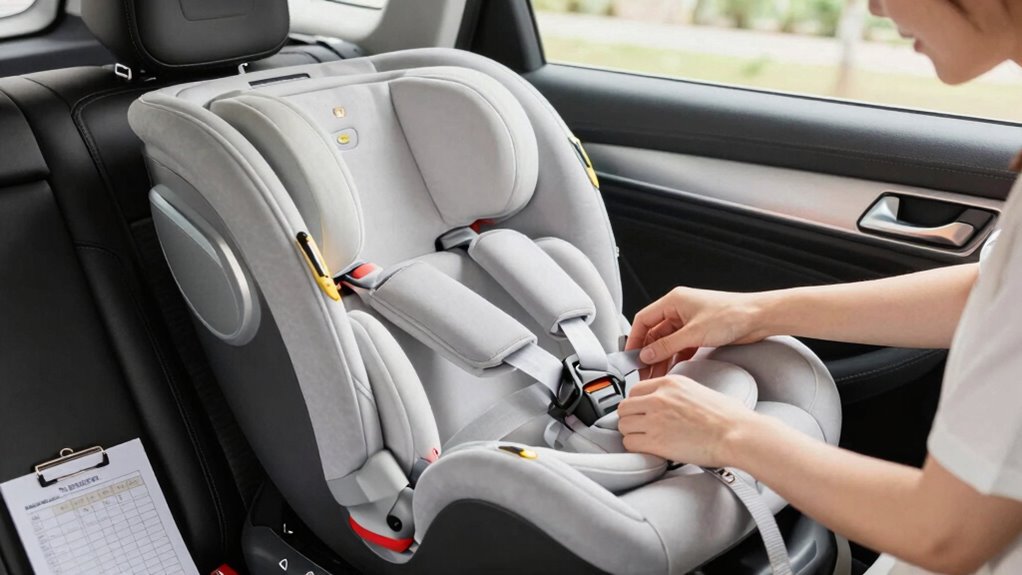
As your baby grows, it’s important to regularly check if the car seat still fits properly. Keep an eye on their height and weight, and make adjustments as needed. You should also confirm that the seat’s position and harness fit are correct to ensure continued safety.
Monitoring Growth Changes
Since your baby is growing quickly, it’s important to regularly check that the car seat still fits properly and provides maximum safety. Monitoring growth changes ensures your baby stays secure during travel. Here are four key moments to re-check the fit:
- When your baby outgrows height or weight limits listed on the seat label.
- After a growth spurt or if your baby seems squished or slouched.
- When you notice your baby’s head is close to the top of the seat’s headrest.
- If you change routines, like switching from breastfeeding tips to solid foods, which can influence overall comfort and positioning.
Keep a close eye on diapering essentials and comfort cues, and routinely verify the harness fit to prevent slump and ensure safety as your baby grows.
Adjusting Seat Position
How do you know when it’s time to readjust your baby’s car seat position? You should verify regularly as your baby grows, especially during nursery decor updates or if you notice them sitting differently. When your little one reaches a new weight or height milestone, reposition the seat to maintain proper fit and safety. Always ensure the harness straps are snug and the seat remains at the correct recline angle. Remember, proper seat positioning supports healthy spine development and prevents slump. While adjusting the seat, keep breastfeeding tips in mind—comfort and safety are key. Re-evaluate the seat’s position whenever your baby’s growth pattern changes or if you feel they’re not sitting properly. Regular checks help keep your baby safe and secure during every ride.
Recognizing Fit Signs
Regularly inspecting your baby’s car seat makes sure it continues to fit properly as they grow. Look for signs that your baby has outgrown the seat, such as the harness no longer fitting snugly or the head leaning forward. Keep an eye on these indicators:
- The shoulders no longer fit within the harness slots.
- The baby’s head is close to the top of the seat.
- You notice difficulty adjusting or tightening the straps.
- The stroller compatibility has changed, affecting transport options.
Also, check if your diaper bag essentials still fit comfortably without overstuffing, which can impact seat safety. Re-checking fit signs guarantees your baby stays secure and comfortable, especially as they grow and become more active.
Extra Safety Tips to Keep Your Baby Comfortable and Secure on Every Trip

To make certain your baby stays safe and comfortable during every trip, it’s indispensable to follow some extra safety tips beyond proper seat installation. Make sure you’re prepared by planning for feeding and diaper changes before hitting the road. Carry breastfeeding tips to soothe your baby and keep them comfortable, especially during long drives. Keep a small diaper changing kit accessible so you can quickly attend to needs without unnecessary stops. Secure your baby snugly in the car seat, ensuring straps are appropriately tight without causing discomfort. Regularly check the harness fit and seat position during the trip. These simple precautions help prevent discomfort, fussiness, and unsafe slumping, ensuring your baby remains safe and secure throughout every journey.
Frequently Asked Questions
How Often Should I Reassess My Newborn’s Car Seat Fit?
You should reevaluate your newborn’s car seat fit every few months or whenever your baby grows considerably. Regular adjustment frequency ensures the seat continues to provide proper support and safety. Check the fit reassessment after milestones like weight or height changes, or if you notice the harness isn’t snug enough. Staying vigilant helps prevent slumping and keeps your baby secure during every ride.
Can a Poorly Fitting Harness Cause Long-Term Neck or Spinal Issues?
A poorly fitting harness can indeed impact your baby’s long-term neck support and spinal health. If the harness is too loose, it may cause unnecessary movement, straining neck muscles and misaligning the spine over time. Proper fit guarantees your newborn’s head, neck, and spine stay well-supported and secure, reducing risks of future issues. Regularly check and adjust the harness to maintain ideal fit as your baby grows.
Are There Specific Brands Known for Better Newborn Car Seat Fit?
Back in the day, finding the perfect fit was a breeze, and now, some brands excel at it. Brands like Graco, Chicco, and Britax are known for better newborn car seat fit because they prioritize brand compatibility and easy seat adjustment. You’ll want to look for models with adjustable harnesses and head supports, ensuring your baby stays secure and comfortable. Always double-check fit and compatibility before making a purchase.
What Is the Safest Way to Clean and Maintain the Car Seat for Optimal Fit?
To keep your newborn car seat fitting safely and snugly, follow proper cleaning tips and maintenance routines. Regularly remove and vacuum the seat to eliminate crumbs and debris, and spot clean with mild soap and water. Check the harness and buckle for wear, ensuring they work properly. Avoid harsh chemicals and direct sunlight, which can degrade materials. Maintaining the seat clean and well-maintained helps prevent slumping and ensures your baby’s safety.
How Do Weather Conditions Affect the Car Seat’s Fit and Safety?
Did you know that extreme temperatures can reduce a car seat’s effectiveness by up to 50%? Weather impact is significant; cold weather can make the plastic brittle, while heat can weaken the fabric and foam. Temperature considerations are vital—always check your car seat’s instructions for recommended temperature ranges. Adjust the harness and positioning if weather conditions change, ensuring your newborn stays safe and properly secured regardless of the weather outside.
Conclusion
By following this checklist, you can confidently verify your newborn’s car seat fits perfectly and keeps them safe and comfortable. Don’t worry if it feels overwhelming at first—regularly checking the fit as your baby grows makes it simple. Remember, a properly secured car seat isn’t just about safety; it’s about peace of mind. With a little attention, you’ll protect your little one on every trip without added stress.