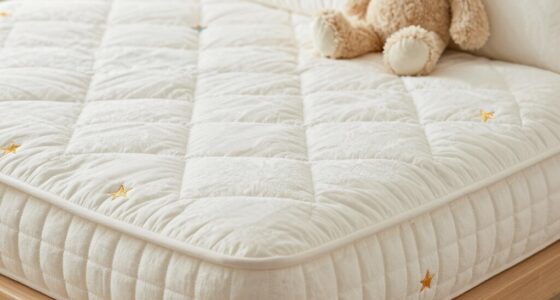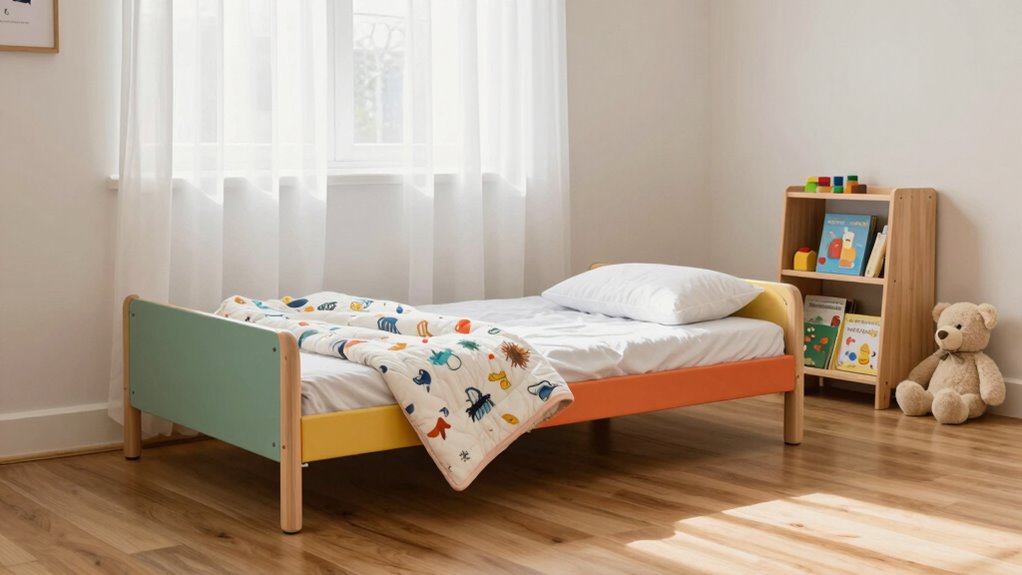

When childproofing your Montessori floor bed, start by securing furniture and decor to prevent tip-overs and removing hazards like sharp objects, cords, and small choking items. Check that outlets have safety covers and that cords are managed out of reach. Creating barriers or boundaries around the bed helps define the safe sleep zone. Continue exploring these tips to learn how to keep your child’s space secure as they grow and explore more confidently.

Turn the school run and nap time into listening time
- Thousands of audiobooks, podcasts and originals
- Listen on your phone, tablet or Echo — also offline
- Cancel anytime
Key Takeaways
- Secure furniture and nearby objects to prevent tipping or falling hazards.
- Cover electrical outlets with safety plugs and keep cords out of reach.
- Remove small, choking, or sharp objects from the child’s accessible area.
- Install boundary markers or barriers around the bed to define safe sleep zones.
- Ensure the sleep area is free of clutter, loose bedding, and potential tripping hazards.
Montessori floor bed safety gates
As an affiliate, we earn on qualifying purchases.
As an affiliate, we earn on qualifying purchases.
Why Childproofing Your Montessori Bedroom Matters
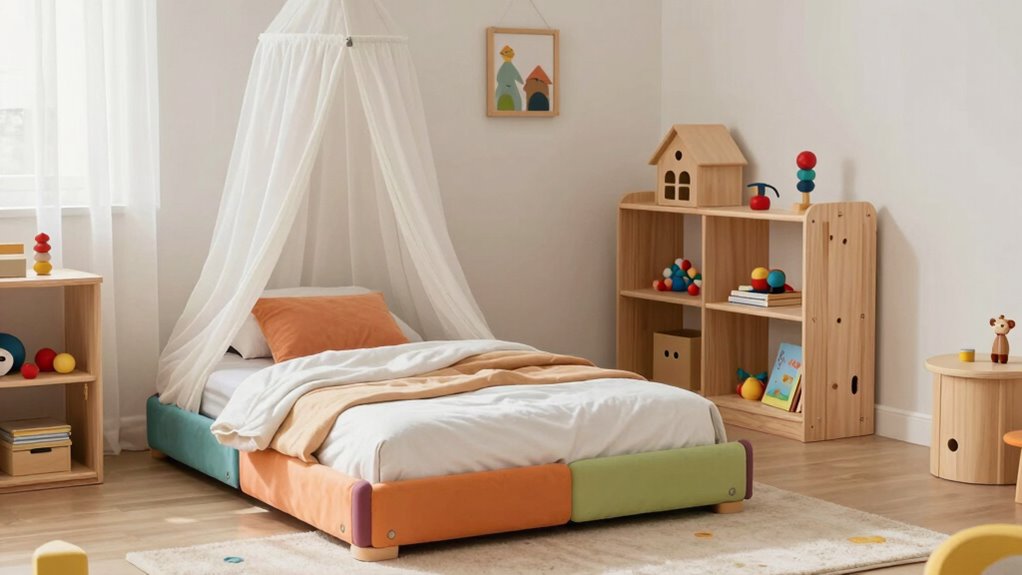
Childproofing your Montessori bedroom is essential because it creates a safe environment where your child can explore freely without unnecessary risks. It’s important to consider nursery decor that is both functional and secure, avoiding sharp edges, heavy furniture, or choking hazards. A well-childproofed space encourages independence, allowing your child to choose their activities comfortably. Additionally, a safe bedroom promotes consistent bedtime routines, helping your little one feel secure and relaxed when it’s time to sleep. When hazards are minimized, you foster a calm atmosphere that supports healthy sleep habits. Proper lighting and projector placement can also prevent accidents and create a cozy environment. Incorporating childproofing techniques can further enhance safety and peace of mind for caregivers. Understanding home design principles ensures that the room remains both attractive and secure for your child’s development, especially when integrating child-safe materials into the decor.
How to Identify Common Hazards in Your Child’s Room
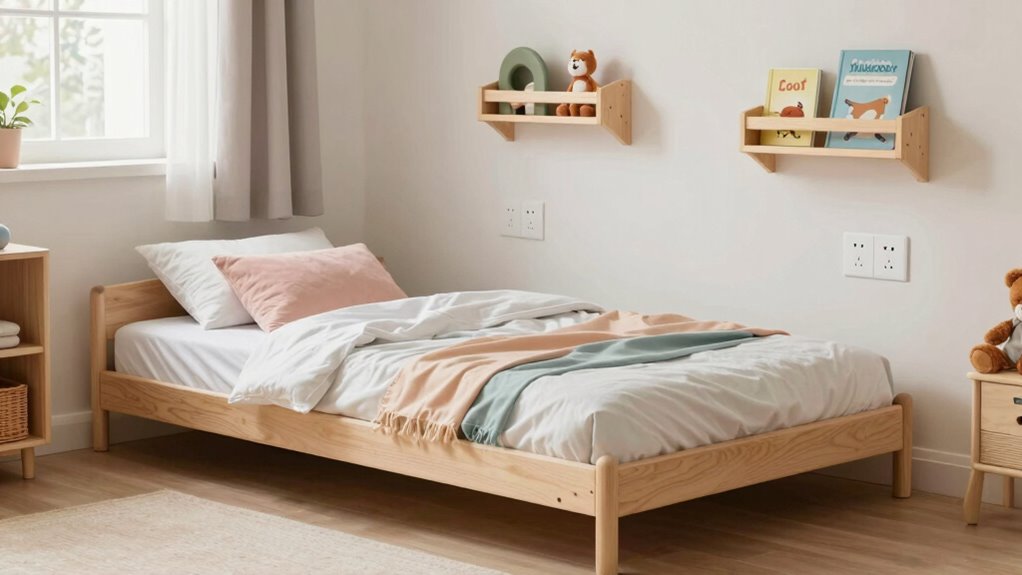
Start by checking that objects in your child’s room are placed safely, away from their reach or in stable spots. Look for electrical outlets and cords that could pose a risk if pulled or tampered with. Addressing these hazards now helps create a safer environment for your little one to explore and grow. Additionally, consider installing bath mats in areas prone to slipping to reduce fall risks. Regularly inspecting childproofing measures can help ensure your child’s space remains safe as they develop new skills. Being aware of home hazard assessments and understanding infection risks and prevention can further enhance your child’s safety in their environment. Incorporating safe storage practices can also prevent accidental access to dangerous items and promote organization.
Safe Object Placement
To guarantee your child’s safety around Montessori floor beds, it’s essential to regularly assess the placement of objects in the room. Start by checking decorative wall art, ensuring it’s securely mounted and out of reach to prevent falls or choking hazards. Avoid placing heavy or fragile items at low levels where your child might pull or bump into them. Consider plant safety as well; keep plants non-toxic and ensure they are stable, so your child can’t topple them. Remove any small objects or sharp-edged decor that could pose choking or injury risks. Creating a safe environment involves mindful object placement, keeping the room free of hazards, and ensuring everything is secure enough to withstand curious exploration. This proactive approach minimizes potential dangers and promotes a safe, nurturing space. Additionally, understanding free floating furniture and decor can help prevent tipping accidents and ensure a safer room environment. Regularly checking for unstable furniture and securing it properly is also crucial to prevent tipping or falls. Incorporating childproofing techniques such as corner protectors and outlet covers further enhances safety. Remember to also inspect shelving and storage items to ensure they are not easily pulled down by little hands. Routinely evaluating room layout helps identify new hazards as your child grows and becomes more mobile.
Electrical and Cord Hazards
Ensuring that electrical outlets and cords are safely arranged is a vital step in creating a secure Montessori environment. You should check all outlets for covers or safety plugs to prevent accidental shocks. Keep cords out of reach by using cord management solutions like clips or sleeves, which prevent tangling and pulling. Avoid running cords across walkways or under rugs, as this creates tripping hazards and compromises electrical safety. Regularly inspect cords for damage, fraying, or loose connections, and replace any compromised ones immediately. Childproofing your space involves minimizing accessible electrical hazards and organizing cords, so your child can explore safely. Additionally, understanding electrical hazards can guide you in identifying potential risks and ensuring comprehensive childproofing. Being aware of regulatory and environmental considerations can help you ensure your childproofing measures comply with safety standards and environmental best practices. Proper cord management and safety checks are essential for preventing accidents and maintaining a secure environment, ultimately fostering your child’s independence in a safe space. Incorporating safety guidelines from reputable sources can further enhance your safety measures and promote a safer play area. Conducting regular safety assessments can help identify new hazards as your child grows and becomes more mobile. Prioritizing proper cord management and electrical safety helps create a calm, secure environment conducive to independent exploration.
Secure Furniture and Decor to Prevent Tip-Over Risks
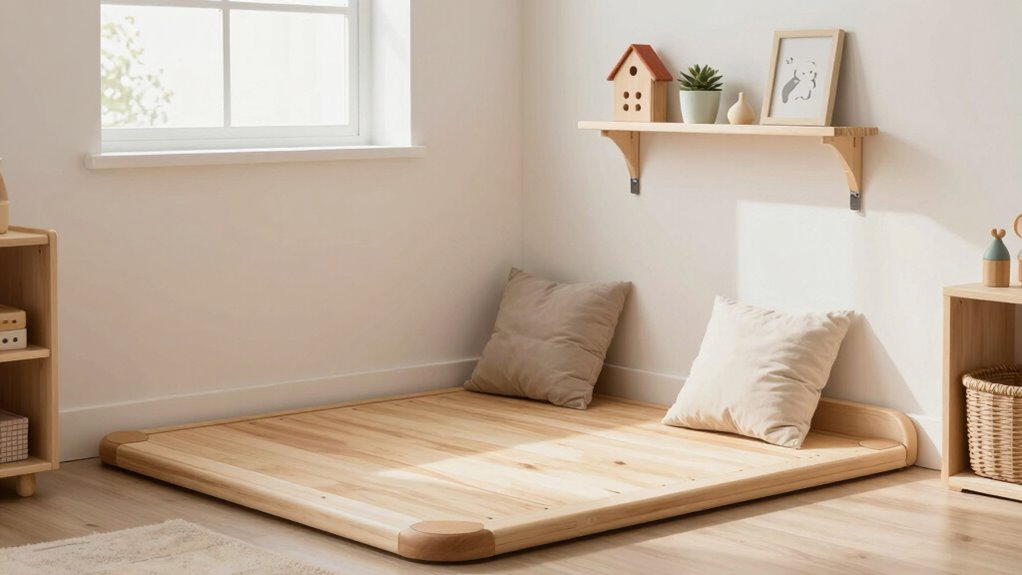
Because tip-over accidents can happen suddenly and unexpectedly, securing furniture and decor is essential for creating a safe environment around Montessori floor beds. To prevent injuries, use wall anchors and furniture straps to stabilize heavy or tall items. Install wall anchors on bookshelves, dressers, and cabinets to keep them from tipping. Attach furniture straps between large furniture pieces and the wall for added stability. Regularly check that anchors and straps remain tight and secure. Consider the placement of decor—avoid top-heavy or unstable items that could fall. Keep cords out of reach and ensure small objects are stored safely. Additionally, selecting furniture with built-in safety features can further reduce the risk of accidents. Reviewing your cabling and mounting setup can help identify potential hazards and improve overall safety. Incorporating measurement tools such as levels can assist in ensuring furniture is properly aligned and stable. These simple measures reduce the risk of furniture tip-over, creating a safer space for your child to explore freely.
How to Choose Non-Toxic Materials for a Safe Montessori Space
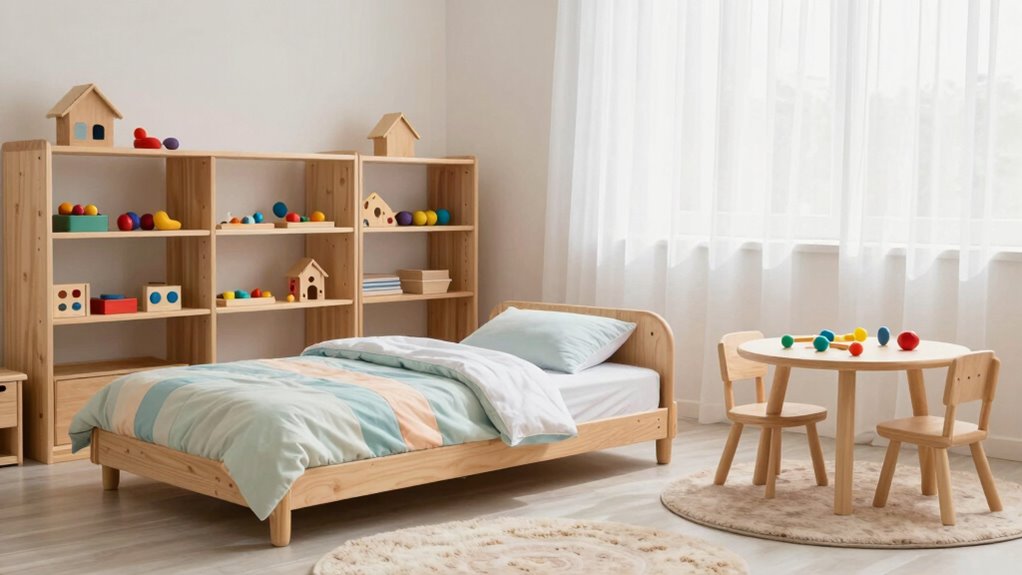
Choosing non-toxic materials for a Montessori space is essential to create a safe and healthy environment for your child. Focus on natural materials like wood, cotton, and wool, which are less likely to emit harmful chemicals. When selecting furniture and decor, look for products with non-toxic finishes, such as water-based or plant-based paints and sealants. Avoid items treated with synthetic varnishes, dyes, or preservatives that can contain volatile organic compounds (VOCs). Always check labels and certifications to ensure materials meet safety standards. Opt for organic fabrics and natural dyes whenever possible. By prioritizing natural materials and non-toxic finishes, you help reduce exposure to toxins, supporting your child’s well-being and fostering a truly safe Montessori space.
Setting Up Barriers and Boundaries for Safe Sleep

To guarantee your child sleeps safely in their Montessori floor bed, you need to set up effective barriers and boundaries. You should secure the perimeter and create clear visual cues to prevent accidental falls or wandering. Additionally, removing hazardous items from the sleep area keeps the space safe and clutter-free.
Secure the Perimeter
How can you guarantee your child’s safety during sleep? Start by securely establishing the perimeter around the bed. Use perimeter barriers to prevent falls and keep your child within a safe zone. Furniture anchoring is essential to stabilize any nearby furniture that could tip or shift. Make sure your floor bed is low enough that falls won’t cause injury, and add soft mats if needed. Regularly check that barriers are secure and in good condition. Here are key steps:
- Anchor furniture to the wall
- Install perimeter barriers around the bed area
- Remove sharp or dangerous objects nearby
- Ensure the floor is clear of obstacles
- Maintain a tidy, hazard-free space
Create Visual Boundaries
Creating clear visual boundaries around your child’s Montessori floor bed helps define a safe sleep zone and prevents accidental falls. Use boundary markers like low rugs, floor tapes, or simple furniture to create distinct visual cues. These boundaries help your child recognize where their sleeping area ends, promoting independence and safety. Bright or contrasting colors in boundary markers catch their eye and reinforce the limits. Keep the markers low and unobtrusive to avoid creating hazards or clutter. Consistent visual cues help your child understand their space and reduce nighttime confusion or wandering. By establishing these visual boundaries, you support a secure environment that encourages good sleep habits and reduces the risk of accidents during rest.
Remove Hazardous Items
Before setting up your child’s Montessori floor bed, removing any hazardous items from the sleep area is vital. Hazard identification helps you spot potential dangers that could harm your child during sleep. Focus on safe item removal to prevent accidents. Start by clearing out small objects, choking hazards, and sharp items. Ensure cords, loose bedding, and heavy items are out of reach. Keep the space clutter-free to reduce the risk of falls or suffocation. Remember, a safe sleep environment promotes peace of mind for both of you.
- Small toys or objects within reach
- Sharp or pointed items
- Loose bedding or pillows
- Cords or strings near the bed
- Heavy or unstable furniture
Ensuring Proper Ventilation and Room Temperature for Safety

Ensuring proper ventilation and maintaining an appropriate room temperature are essential for your child’s safety and comfort when using Montessori floor beds. Good ventilation options prevent stuffiness and reduce the risk of respiratory issues, while proper room temperature control keeps your child comfortable without overheating or chilling. To optimize airflow, consider options like air purifiers, fans, or open windows. Use a thermometer to monitor room temperature, ideally between 68-72°F (20-22°C). Proper ventilation and temperature management help create a safe environment, promoting better sleep and overall well-being.
| Ventilation Options | Room Temperature Control |
|---|---|
| Open windows regularly | Use thermostats or heaters |
| Air purifiers | Portable fans or AC units |
| Ceiling fans | Humidifiers or dehumidifiers |
| Cross-ventilation | Temperature sensors |
| Air exchange systems | Layered bedding for comfort |
How to Make Electrical Outlets and Cords Safe for Kids
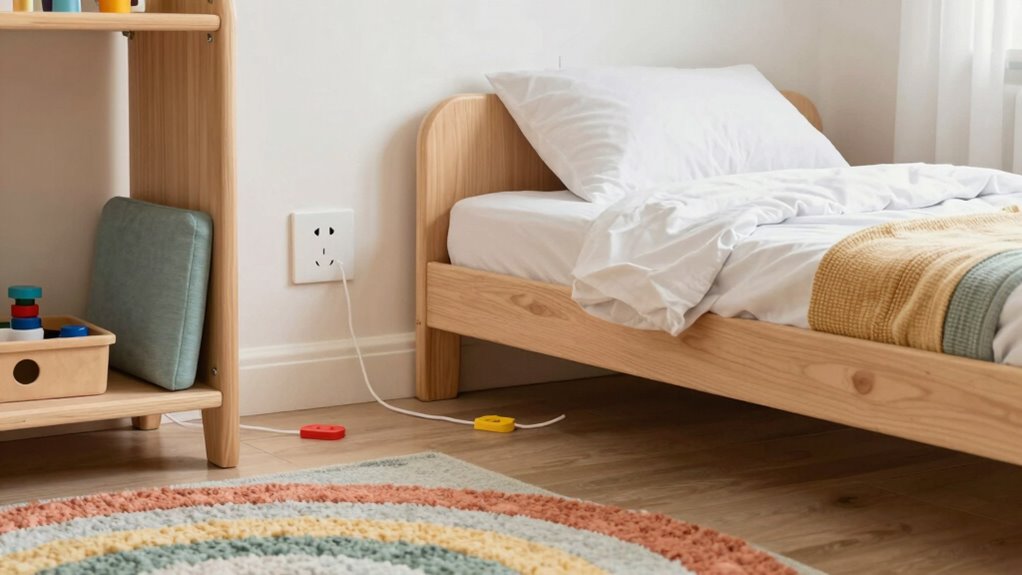
To keep your child safe around electrical outlets and cords, you need to take proactive steps to prevent accidents. Start with a childproofing checklist that prioritizes safety essentials. Use outlet covers or safety plugs to block unused sockets. Keep cords out of reach by tucking them behind furniture or using cord organizers. Avoid running cords across the floor where kids can trip or pull them. Regularly inspect cords for damage and replace them immediately. Consider installing outlet safety covers that are difficult for children to remove. Keep electrical appliances unplugged when not in use. By taking these precautions, you create a safer environment for your child and reduce the risk of electrical hazards.
Organizing Toys and Clutter to Minimize Risks and Promote Independence
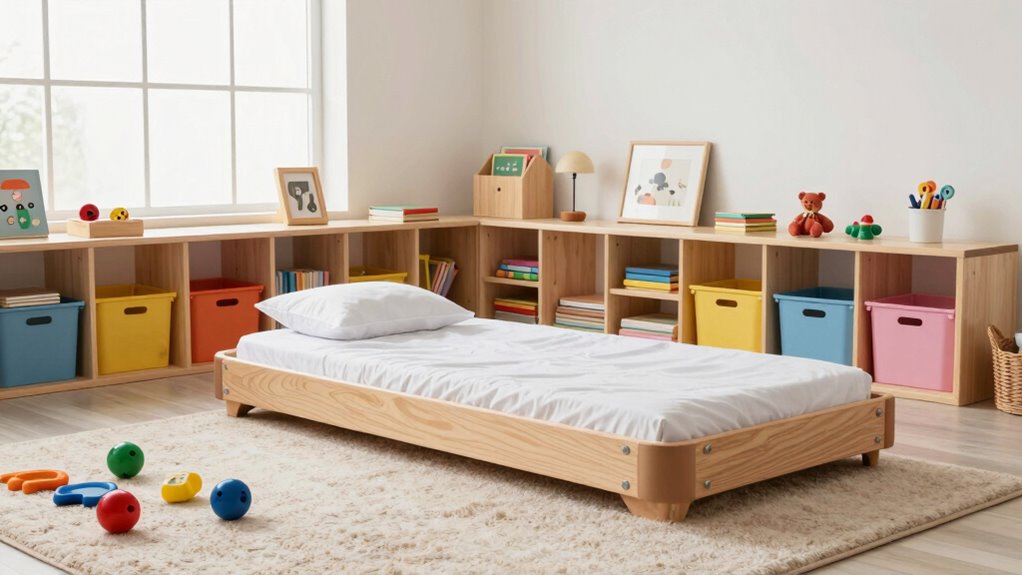
Organizing toys with simple storage solutions helps keep your child’s space safe and inviting. Regularly clearing clutter reduces tripping hazards and encourages independence. Using child-friendly organization methods makes it easy for your little one to find and put away their toys.
Storage Solutions for Toys
Keeping toys neatly stored not only reduces clutter but also helps your child find and put away their belongings easily, fostering independence. Effective toy storage solutions simplify clutter management and make tidying up part of their routine. Use low shelves or baskets that are accessible, so your child can independently select and return toys. Label bins with pictures to guide them. Consider rotating toys to prevent overwhelm and keep their interest high. Here are some ideas to optimize toy storage:
- Open shelving for easy access
- Baskets or bins for quick clean-up
- Low drawers for smaller toys
- Clear containers for visibility
- Rotating toy sets regularly
Clear Clutter Regularly
Regularly clearing clutter from your child’s play area helps maintain a safe environment and supports their growing independence. By doing so, you reduce tripping hazards and make it easier for your child to access their toys safely. Use a childproofing checklist to identify potential dangers and ensure everything is secure. During your safety inspection, look for small objects or sharp edges that could pose risks. Organize toys and clutter in a way that encourages your child’s independence, allowing them to choose and put away items easily. Consistent tidying also helps you spot any broken or unsafe toys promptly. Keeping the play area clutter-free creates a calm, inviting space where your child can explore and learn safely, fostering confidence and autonomy.
Child-Friendly Organization
To help your child develop independence and stay safe, arranging toys and clutter in a child-friendly way is essential. By organizing belongings with Montessori aesthetics in mind, you create a space that encourages toddler independence. Use low shelves and open baskets to make items accessible, fostering easy cleanup and decision-making. Keep dangerous or fragile items out of reach. Incorporate these tips:
- Store toys at your child’s eye level for easy access
- Use labeled containers for simple sorting
- Limit clutter to prevent tripping hazards
- Separate toys by type to promote organization
- Rotate toys regularly to maintain interest
This approach minimizes risks and nurtures your child’s autonomy, making cleanup a natural part of their routine while supporting their growing independence.
Tips for Maintaining Safety as Your Child Grows and Explores
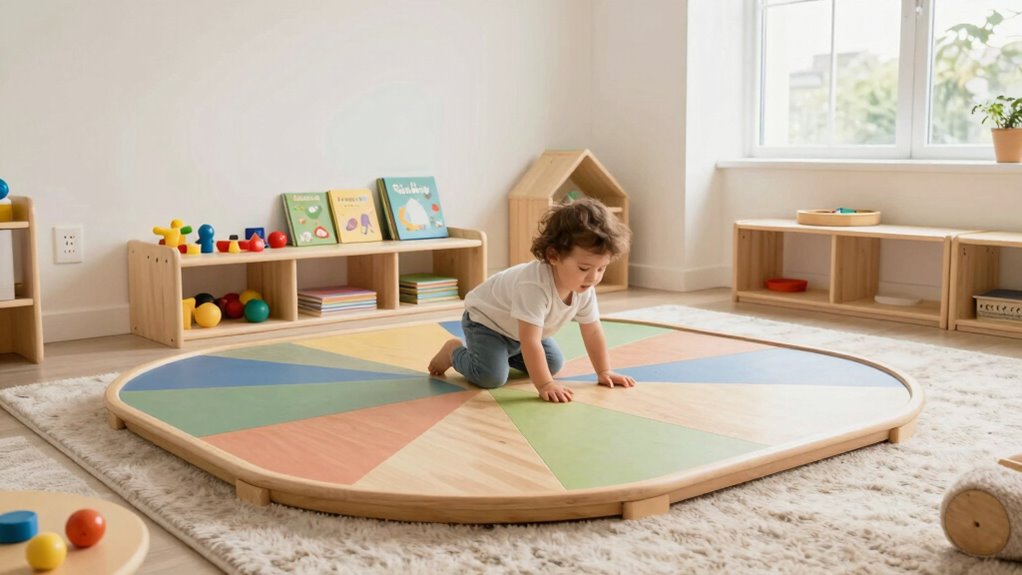
As your child grows and becomes more curious, it’s essential to stay vigilant about their safety around Montessori floor beds. Keep a close eye on outdoor areas, ensuring garden safety by removing sharp tools, toxic plants, and debris that could cause harm. When outside, always supervise your child, especially near fences or gates that might not be secure. Regularly check the environment for hazards like loose stones or hidden holes. As they explore more independently, teach them boundaries and safe play practices. Reinforce basic safety rules, like not climbing on furniture or jumping from the bed. Consistent supervision and a safe, clutter-free outdoor space help your child explore confidently while minimizing risks. Staying proactive guarantees their growing curiosity remains a positive experience.
When to Reassess and Update Childproofing Measures

Children grow and change rapidly, which means your childproofing measures need to develop alongside them. Regular hazard reassessment is essential to maintain continued safety. You should revisit your childproofing checklist whenever your child reaches a new developmental stage or shows curiosity about new areas. Keep an eye out for potential hazards that may have emerged, such as loose furniture or accessible cords. Reassess more frequently if you notice new behaviors or if you’ve made recent changes to your home. This proactive approach helps prevent accidents before they happen. Consider these key moments to update your measures:
- Child begins to crawl or walk
- New furniture or decor is added
- Child shows interest in unsafe objects
- Home renovations or repairs occur
- A close call or incident prompts review
Frequently Asked Questions
How Often Should I Check for New Hazards as My Child Grows?
You should check for new hazards frequently, especially as your child grows and becomes more mobile. Incorporate regular safety routines to stay ahead of potential dangers and prevent accidents. Every few weeks or whenever your child reaches a new stage, reevaluate your environment. This ongoing hazard prevention guarantees your child’s space remains safe, allowing them to explore freely while minimizing risks. Staying vigilant is key to maintaining a safe, child-friendly environment.
Are There Specific Montessori-Approved Safety Products I Should Use?
You might wonder if there are specific Montessori-approved safety products to use. The answer is yes—look for childproofing products designed with Montessori safety principles in mind. Focus on non-toxic, natural materials that allow your child to explore freely without restrictions. Items like soft corner protectors and secure outlet covers are great choices. These products guarantee your child’s safety while respecting Montessori’s emphasis on independence and natural curiosity.
How Can I Encourage My Child to Follow Safety Rules Independently?
You can encourage your child to follow safety rules independently by establishing clear child safety routines and consistently reinforcing them. Use positive reinforcement and gentle reminders to help your child understand the importance of safety. Involve your child in setting rules, making them feel responsible. As they practice these routines daily, their independence grows, and safety becomes second nature. Your consistent support helps foster confidence and lifelong safety habits.
What Are Signs That My Child’s Room Safety Measures Are Ineffective?
You’ll notice signs like your child trying to access unsafe objects, frequent falls, or visible hazards like loose cords or sharp edges. Conduct regular hazard identification and safety assessments to spot issues early. If your child shows curiosity about dangerous items or seems unbothered by potential risks, it indicates your safety measures might be ineffective. Stay vigilant, update safety measures as needed, and keep supervising to make certain your child’s room remains a secure environment.
How Do I Balance Safety With Encouraging Independence in a Montessori Space?
You balance safety with independence by creating a Montessori space that encourages child-led exploration while establishing safety habit formation. Allow your child to explore freely, but guarantee hazards are minimized and accessible. Use soft materials and secure furniture to prevent injuries, and teach safety routines gradually. This approach fosters independence, builds confidence, and keeps your child safe, helping them learn boundaries through safe, supervised exploration.
Conclusion
Creating a safe Montessori floor bed environment is a continuous journey, blending the simplicity of open space with the complexity of potential hazards. While your child’s independence grows, so do the risks—yet, it’s this very exploration that fosters confidence. By thoughtfully childproofing, you balance freedom with safety, turning a room into a sanctuary of growth and discovery. Embrace each update as a step forward, knowing safety and independence flourish side by side in your child’s Montessori space.
Columbus Day / Indigenous Peoples' Day Picks
long weekend sales
As an affiliate, we earn on qualifying purchases.